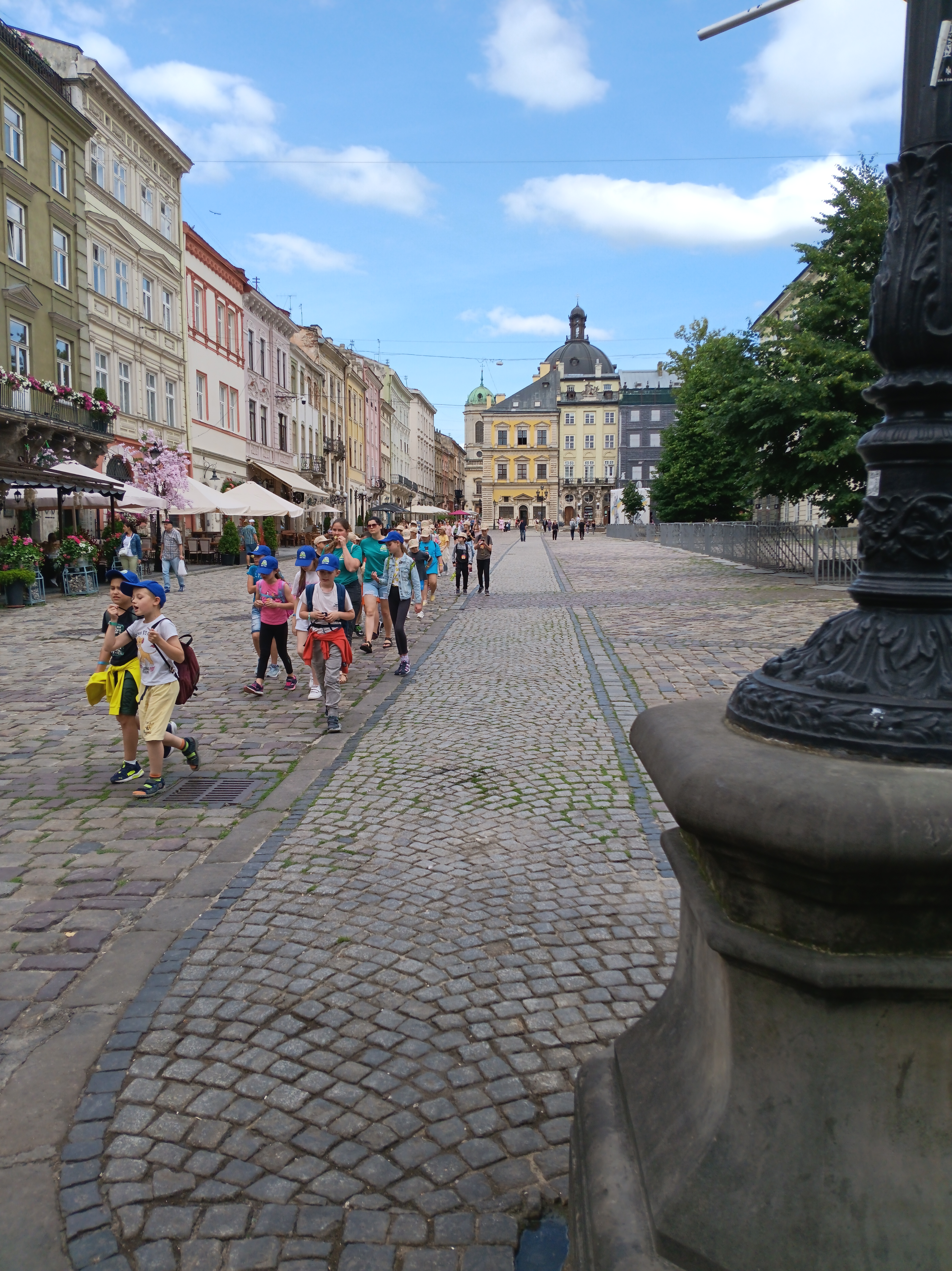
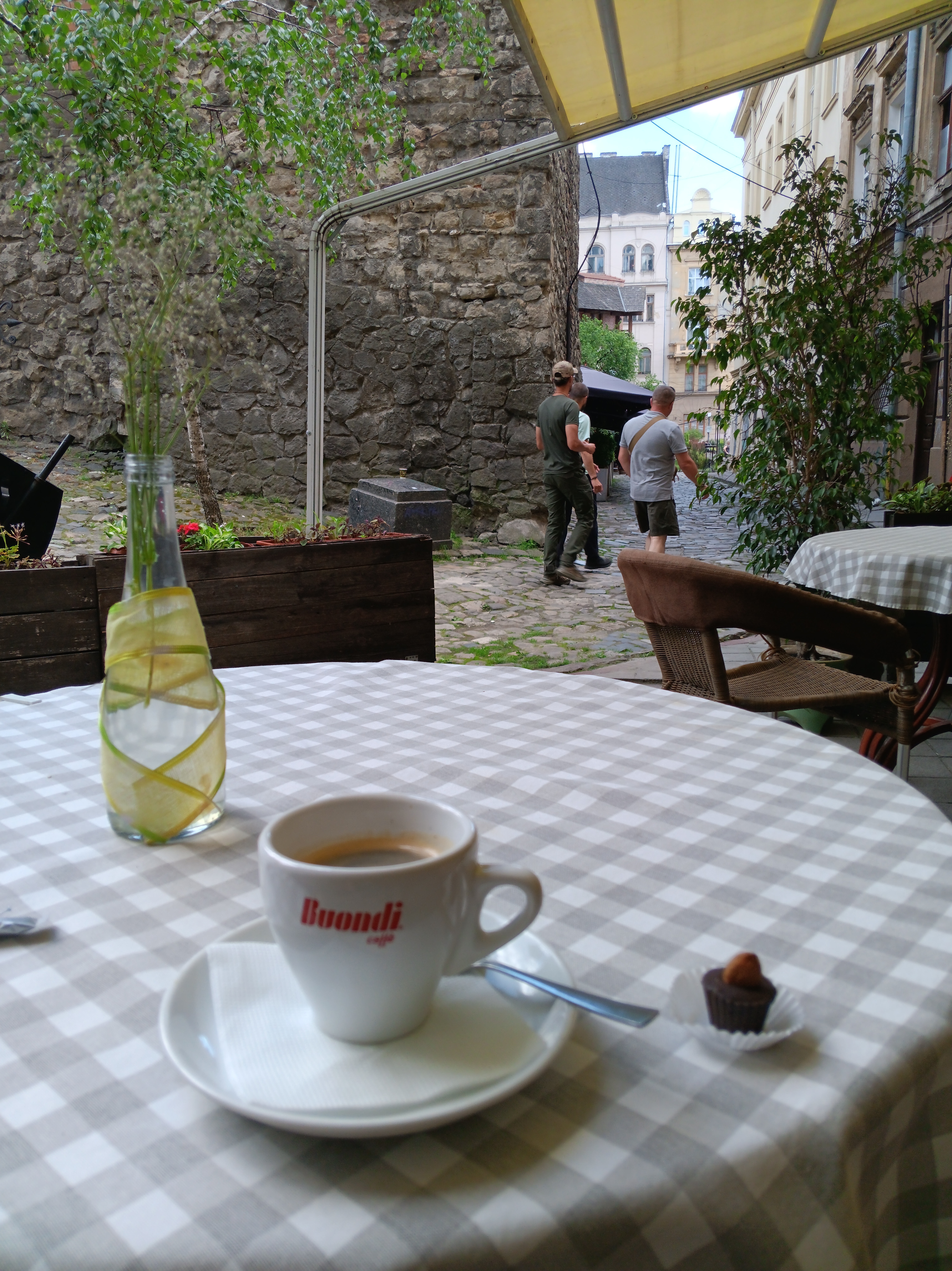
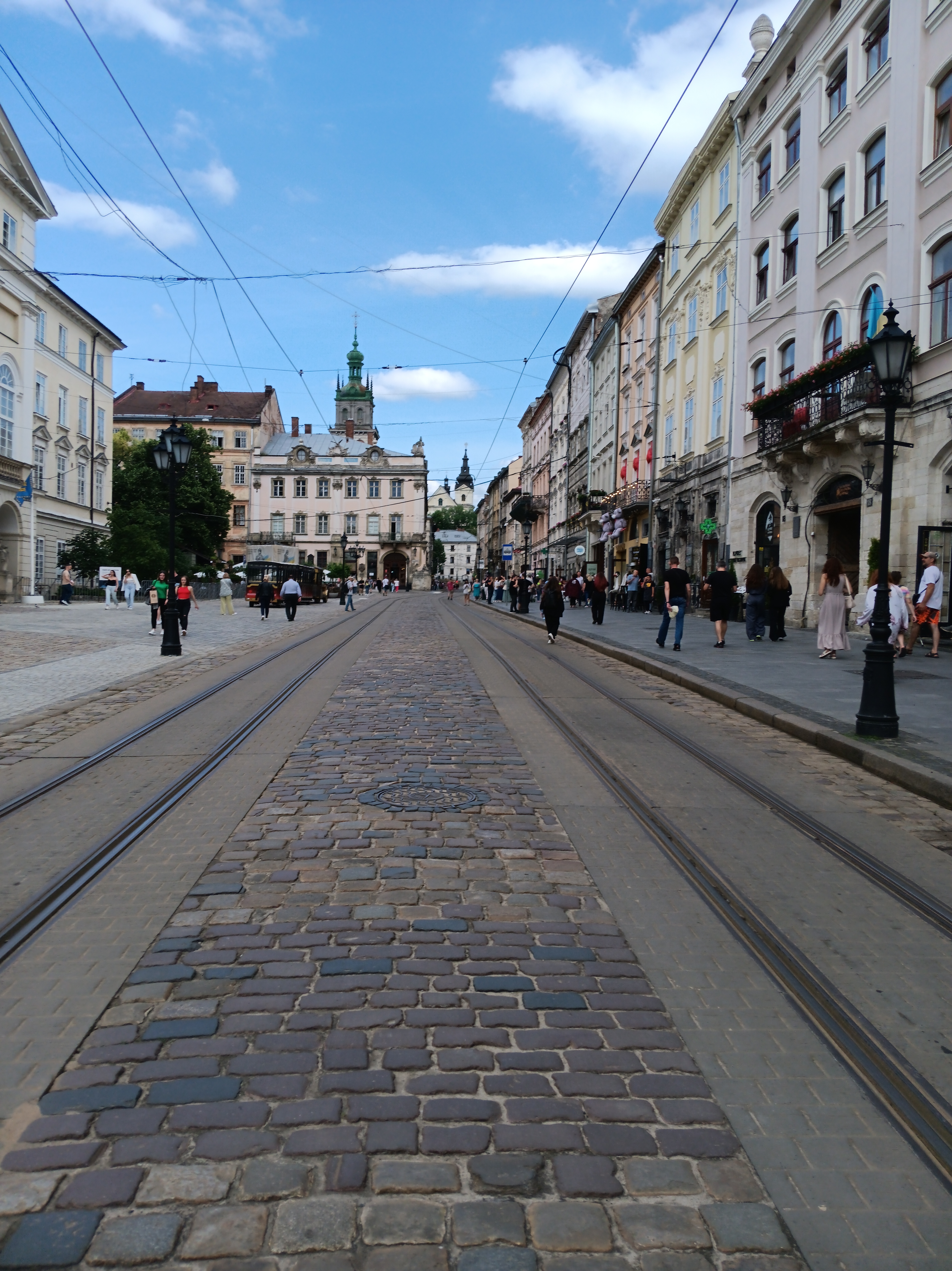
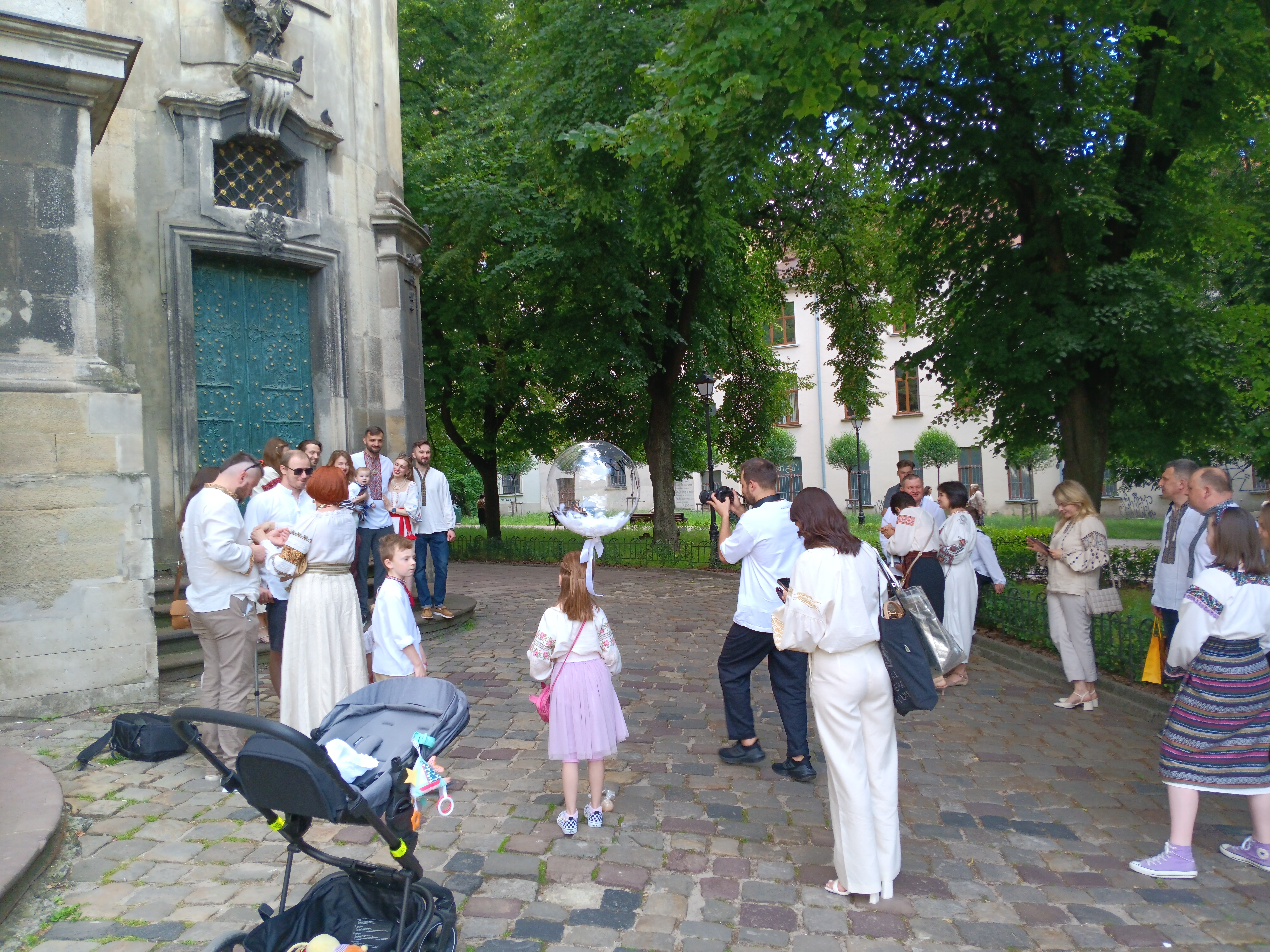
Lviv, Ukraine, 2024: A Traveler’s Perspective on History, Culture, and Conflict

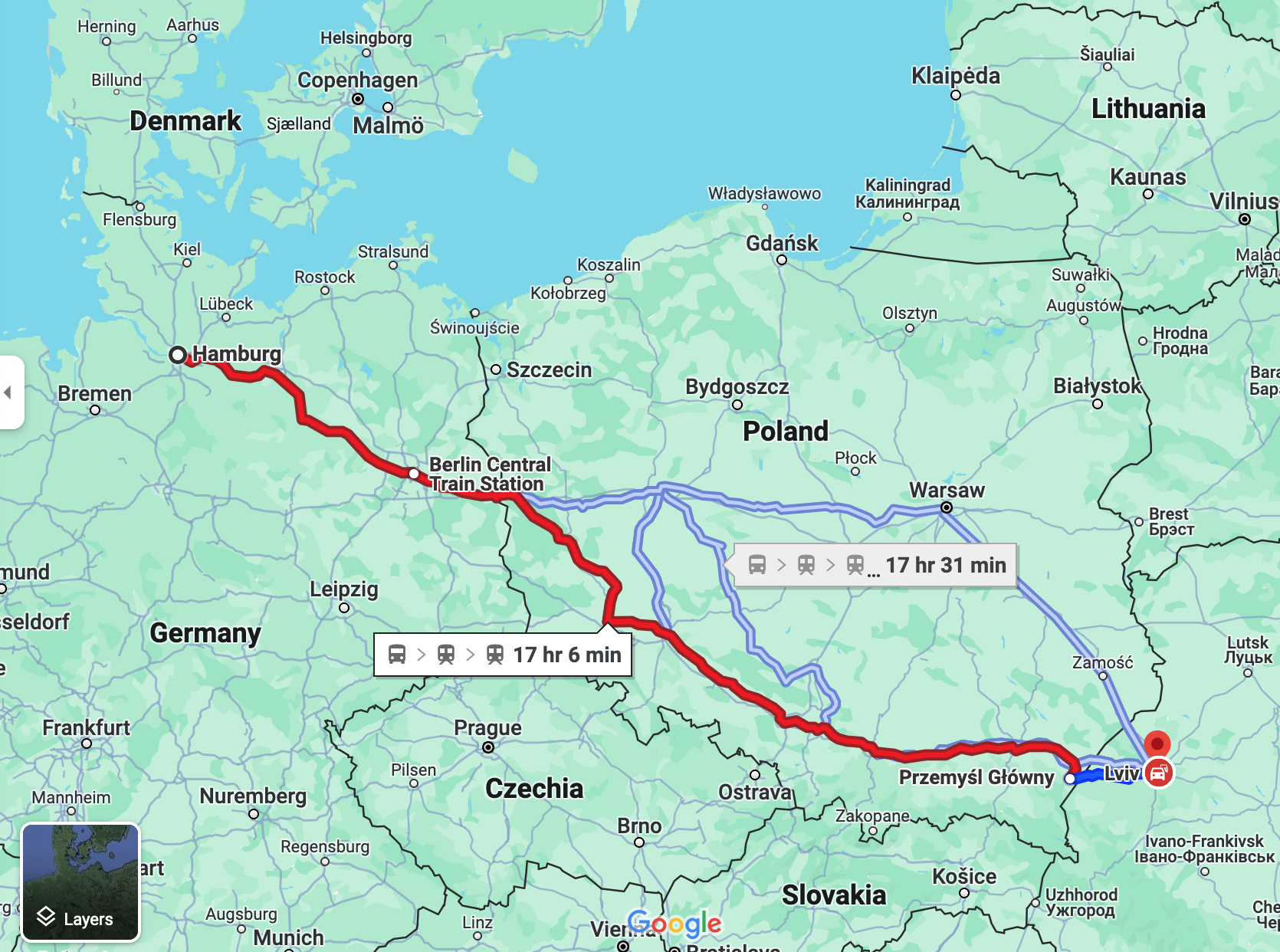
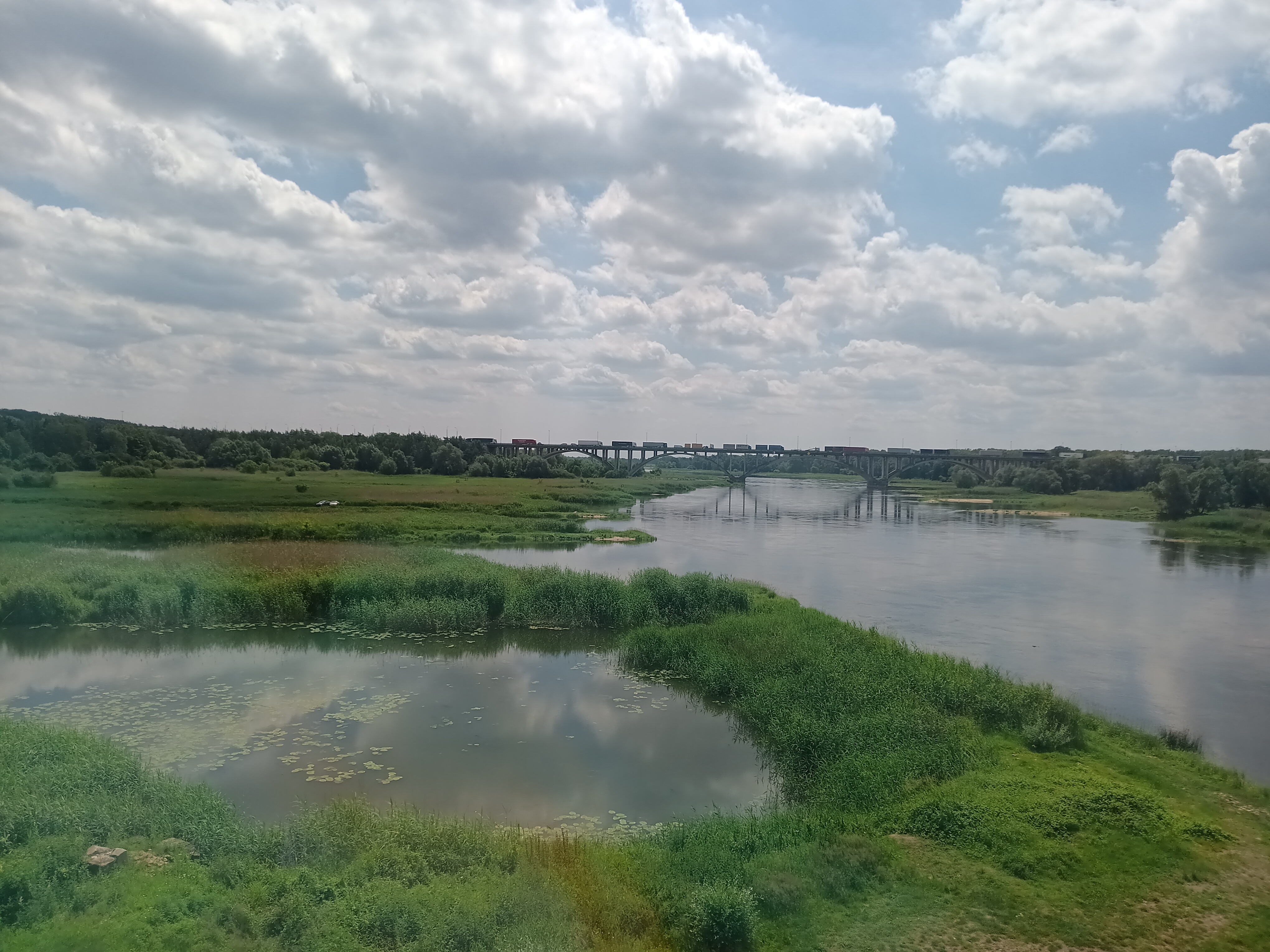
Lviv lies about 40 miles east of the Polish border in Ukraine. It is closer to peaceful Hamburg in Germany (1200 km) than it is to destroyed Mariupol in Ukraine (1250 km). Leaving Hamburg by train, I arrived 20 hours later in Lviv where I spent the next 7 days. As a scientist I planned to collect my own data to calibrate media reportings. I wanted to test second-hand opinions to perhaps revise them based on first-hand observations to better anticipate the future and my actions within it. How can I best support Ukraine in its current war with Russia?

The U.S. Department of State advises “Ukraine – Level 4: Do not travel” in dark red letters, because it is a country at war. I ignored this advice, but nevertheless registered details of my travel plans with the Smart Traveler Enrollment Program. I also followed my government’s advice on how to prepare for travel to high-risk areas such as making a notarized will and to communicate daily with my wife. I do the same when backpacking for 30 days in Yosemite, Adam Ansel, and John Muir Wilderness areas in California. Looking back, I believe that visiting Lviv is less dangerous than visiting Fordyce, Arkansas (population 3,400). Death by random shooting in this town is about 1 person killed for every 1000 residents as of yesterday. In Lviv death by random Russian missile is about 1 person killed for every 100,000 residents. The last Russian missile hit Lviv (population 700,000) a year ago and killed 7 people. Air defences, too, have improved the last 12 month thanks to Norwegian, U.S., and German systems.

My voyage to eastern and across central Europe brought me into spaces that were violently contested during the last 1000 years. Recall that the current border between Poland and Ukraine was drawn in 1939 when Adolf Hitler of Germany and Joseph Stalin of the Soviet Union divided Poland (as well as Finland, Estonia, Latvia, and Lithuania) a mere 10 days before World War Two. The Yale historian Timothy Snyder calls these lands “Bloodlands” where the totalitarian regimes of Germany and the Soviet Union killed between 10 and 20 Million women, children, and men from 1933 to 1945. My father was born 1934 and my family celebrated his 90th birthday the weekend before I left for Lviv.

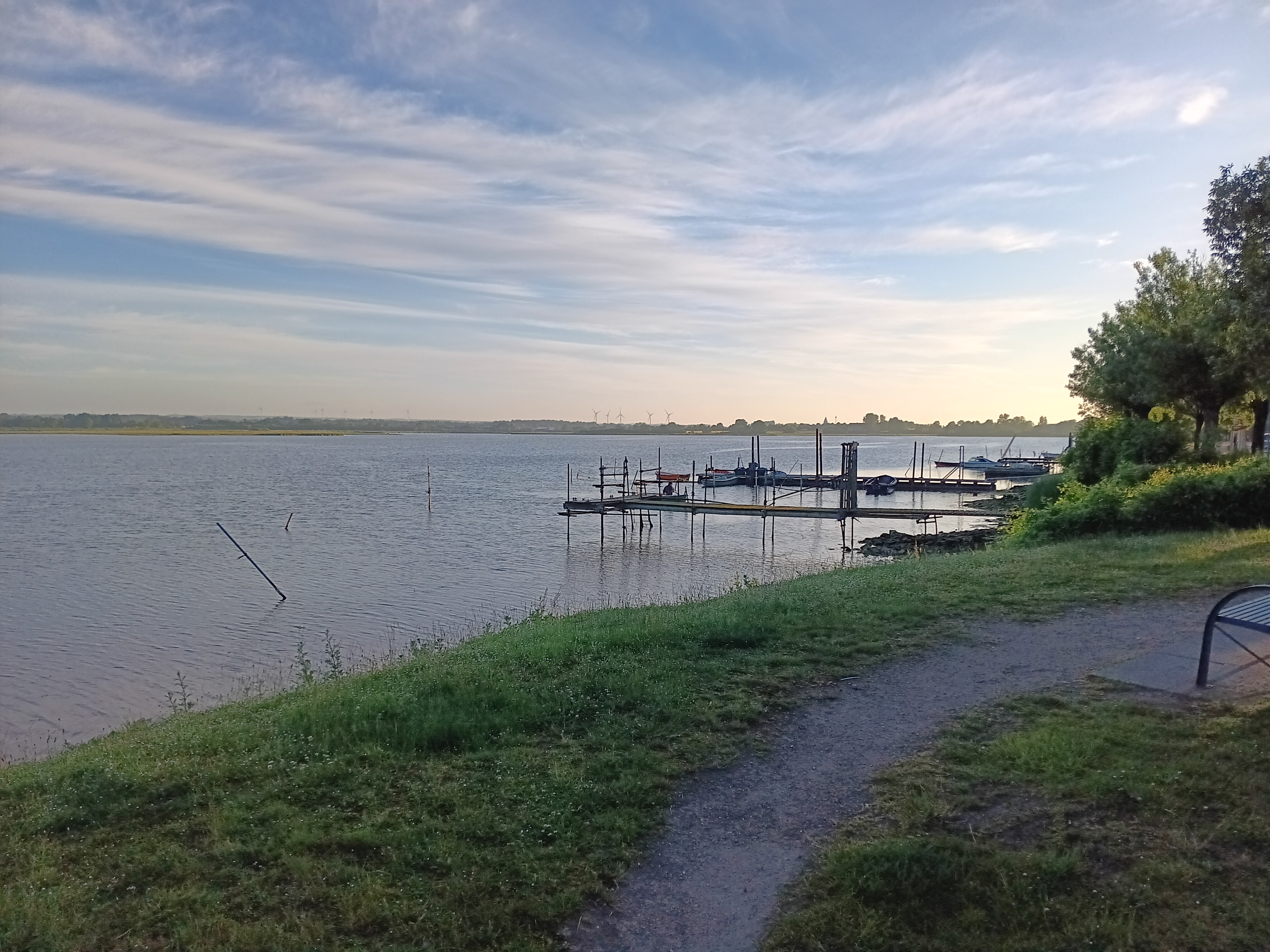
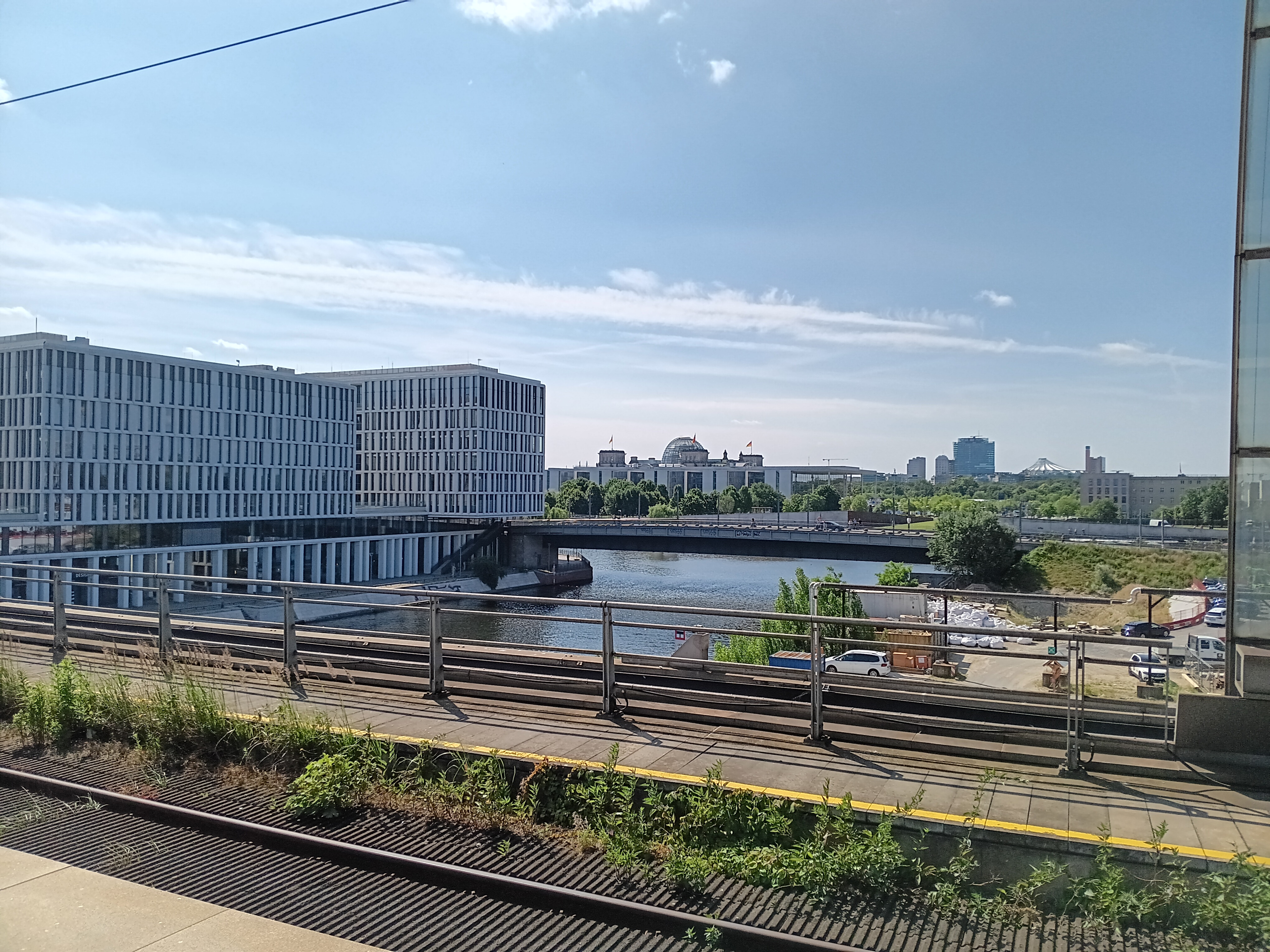
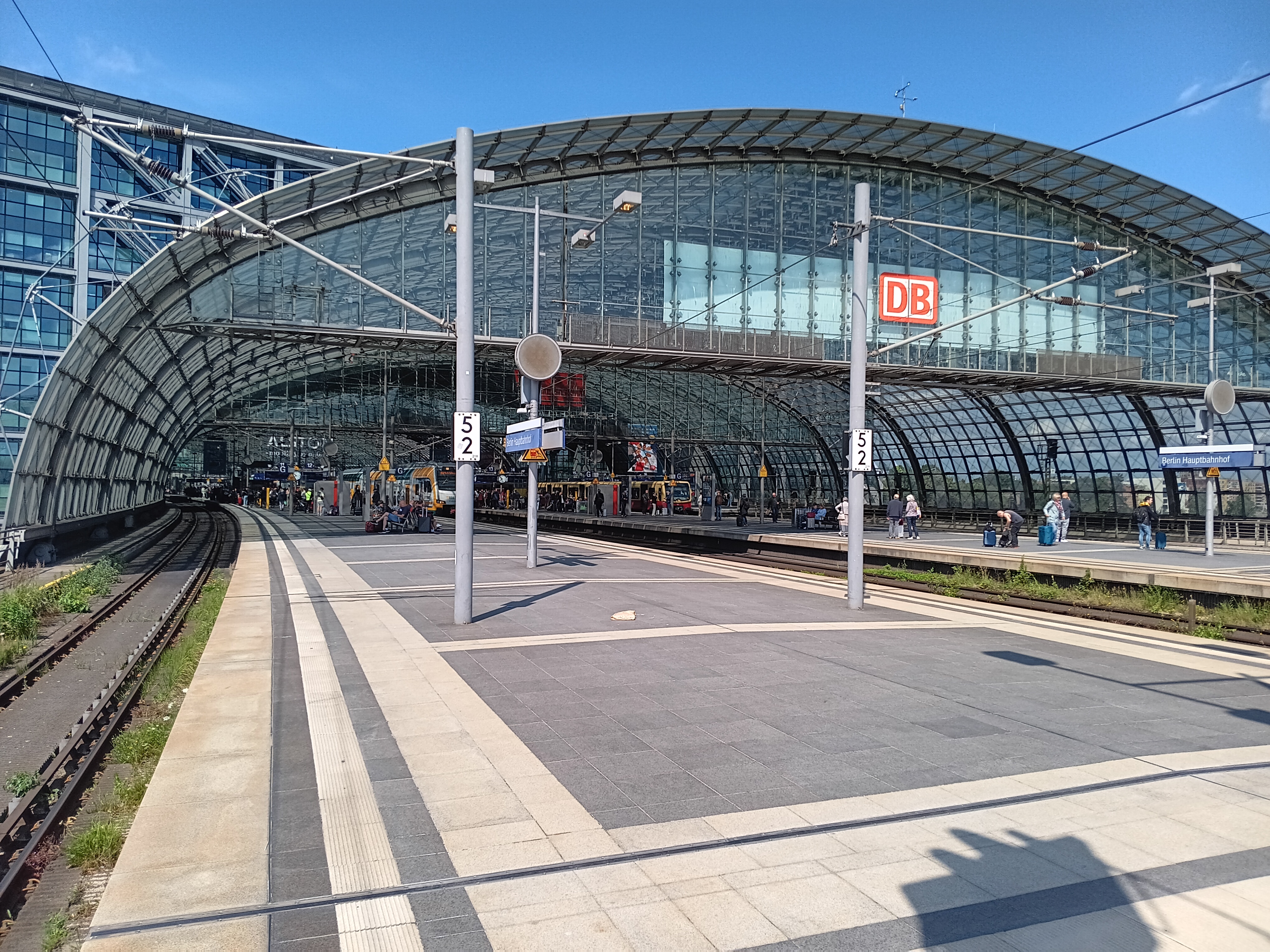
My voyage started at my parents home in Neustadt on the western edge of the Baltic Sea at 6 am. A first train got me to the old Hanseatic town of Luebeck, a second train to Hamburg, and a third train to Berlin. Here I bought the missing train ticket #5 from Przemysl in Poland to Lviv in Ukraine before boarding train #4 from Berlin to Przemysl. My reserved seat for the next 10 hours placed me opposite to a young Ukrainian artist traveling home to Kyiv. Along the way she introduced me to Lviv where she had lived in a prior life. Her pointers of Lviv places to visit, eat, and walk provided me with major initial reference points. As she had crossed the border into Ukraine many times before, we went for a evening stroll in Przemysl and found a busy beer-garden where we had a beer and gin tonic. Despite this “delay,” we still had to wait for 3 hours to be allowed on the next train that was 2 hours late. A large group of perhaps 20 Orthodox Jewish men with U.S. passports were waiting as well. I asked one of them what language they were speaking and he replied “Jiddish.” Bente Kahan’s music from her album “Farewell Cracow” was on my mind even more now than it was prior to this voyage. Once this last train left Poland just before midnight, the mood became somber.

Ukrainian border guards checked passports on the train while different heavily armed military personel counted the number of passengers at least 3 times independently of each other. It was pitch dark outside without any lights visible anywhere. The train, too, had lights dimmed. After a very short 45 minutes the train to Kyiv made its first stop in Lviv and I got off.

It was about 3:30 am local time and I had no idea how to get the 2 miles from the train station to my bed. During the general curfew from midnight to 5 am all public transportation stops. Nobody at Lviv’s station spoke English and I could not read the cyrillic signs. So I stumbled along dead tired hoping, first, that my GPS would lead the way and, second, police enforcing the curfew may be sympathetic towards a tired and lost American tourist.

Sun light came out when I arrived in my small appartment at 4 am. The Wifi worked flawlessly and I called my wife via WhatsApp. It was only 9 pm in Delaware and we talked for an hour on what had happened this long day. Then I let my Ukrainian AirBnB host, Olya, know that I had arrived:

Olya: Everything went well. A person found me at the train station. He did not speak English, but I had pen and paper prepared as well as lat/lon of your place on my GPS that I use for hiking in the woods. He followed my direction and got me within 200 m. The rest was easy including the hour-long WhatsApp phone call with my wife from inside your appartment using your Wifi. It “only” took me 22 hours total door-to-door, so I will now head for some sleep … which is hard, because it is light outside, curfew is over, and I already saw so many cool stuff in the dark that I want to head outside to explore more, but my wife told me to sleep a few hours and wise man is one who listens to his wife … or so i am told by wiser men than myself. ~Andreas

I was writing the above lines with this view of the bed, desk, fridge (red), and the door to the bathroom, shower, washing machine and dryer. The entrance is the door on the right. This was my home away from home for the next 7 days where I rested after long walks to explore Lviv, its culture, history, public life, and people. The internet speeds in Lviv were faster than those in either Germany or at home in Delaware.

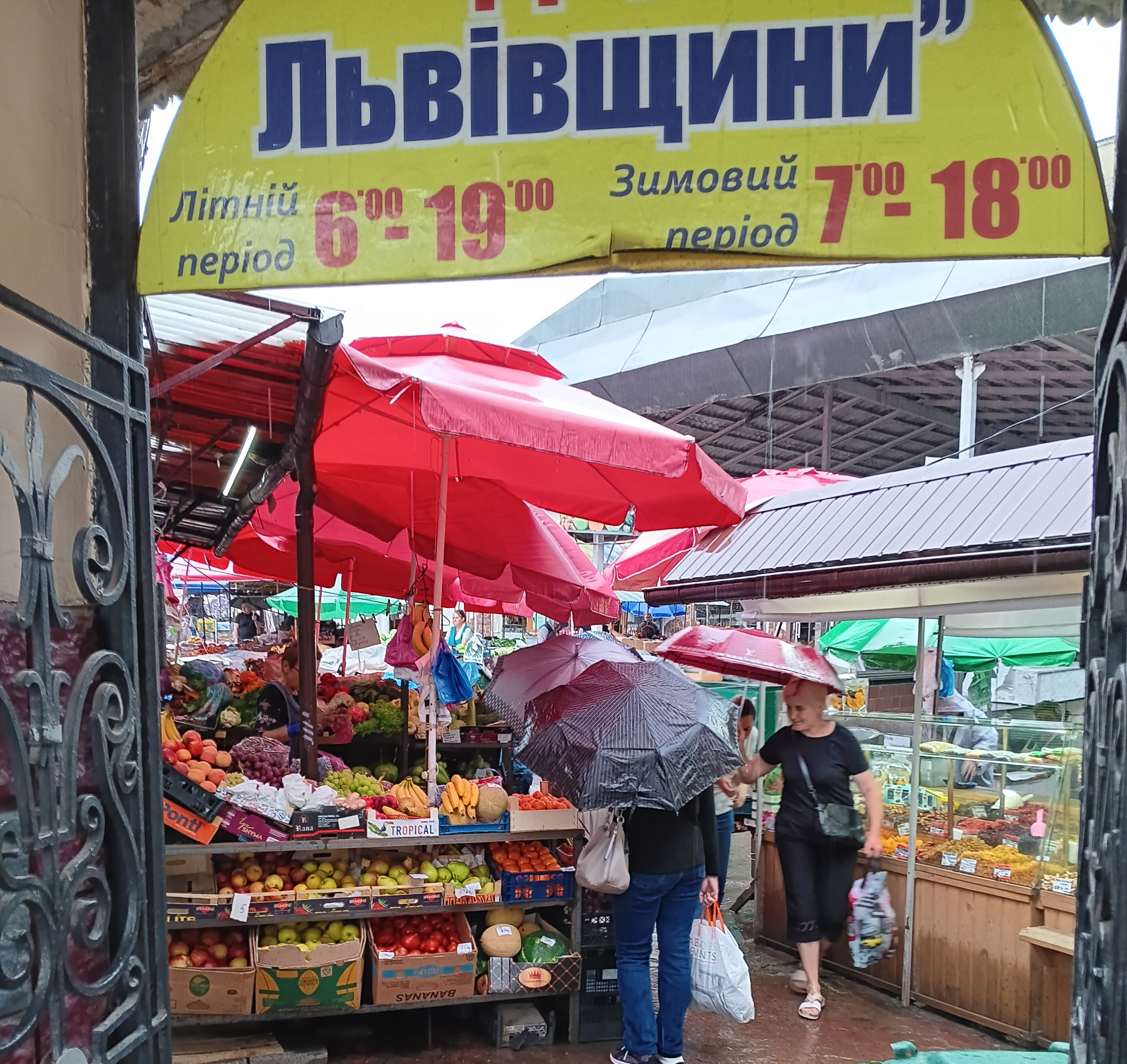
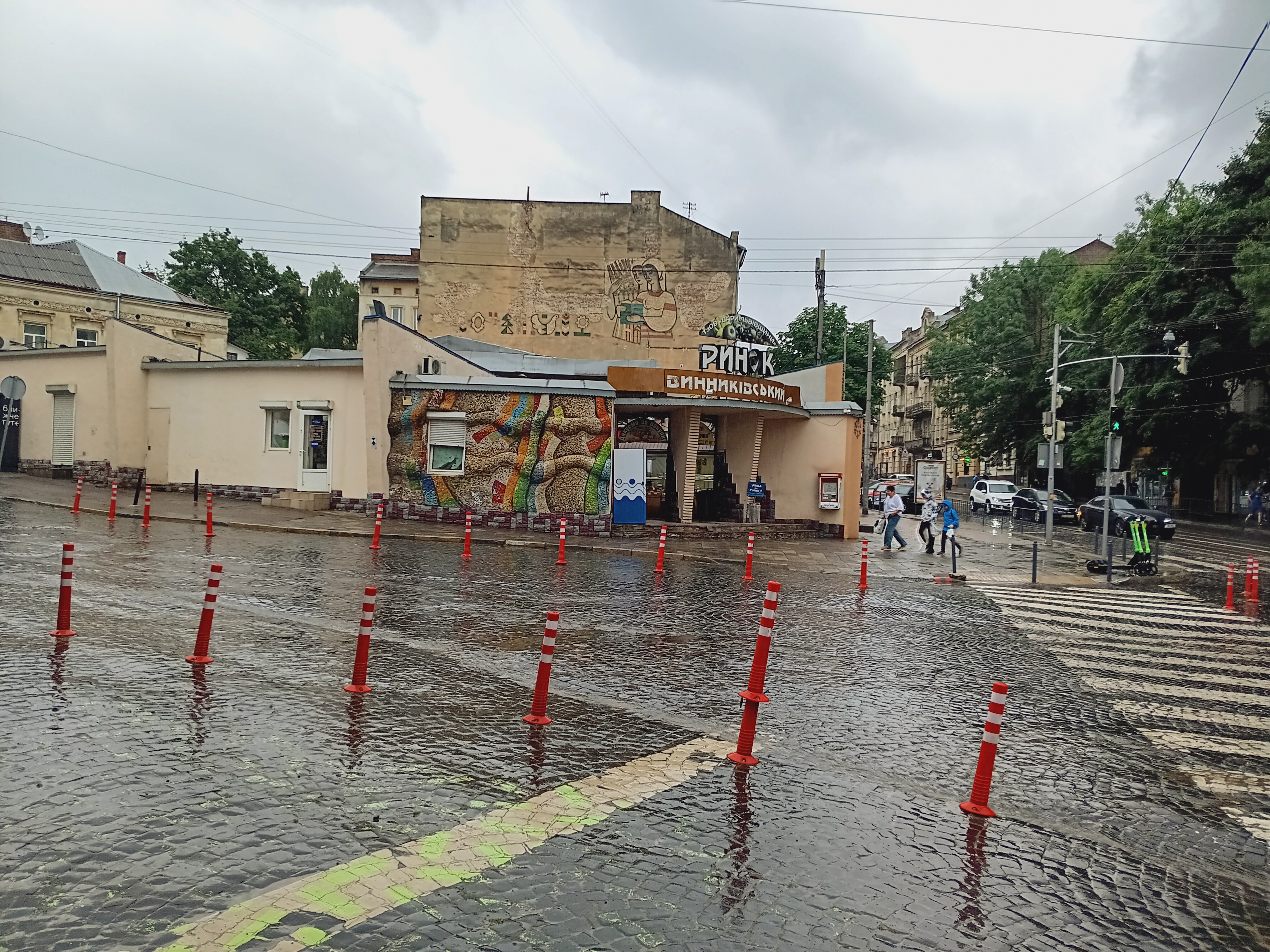
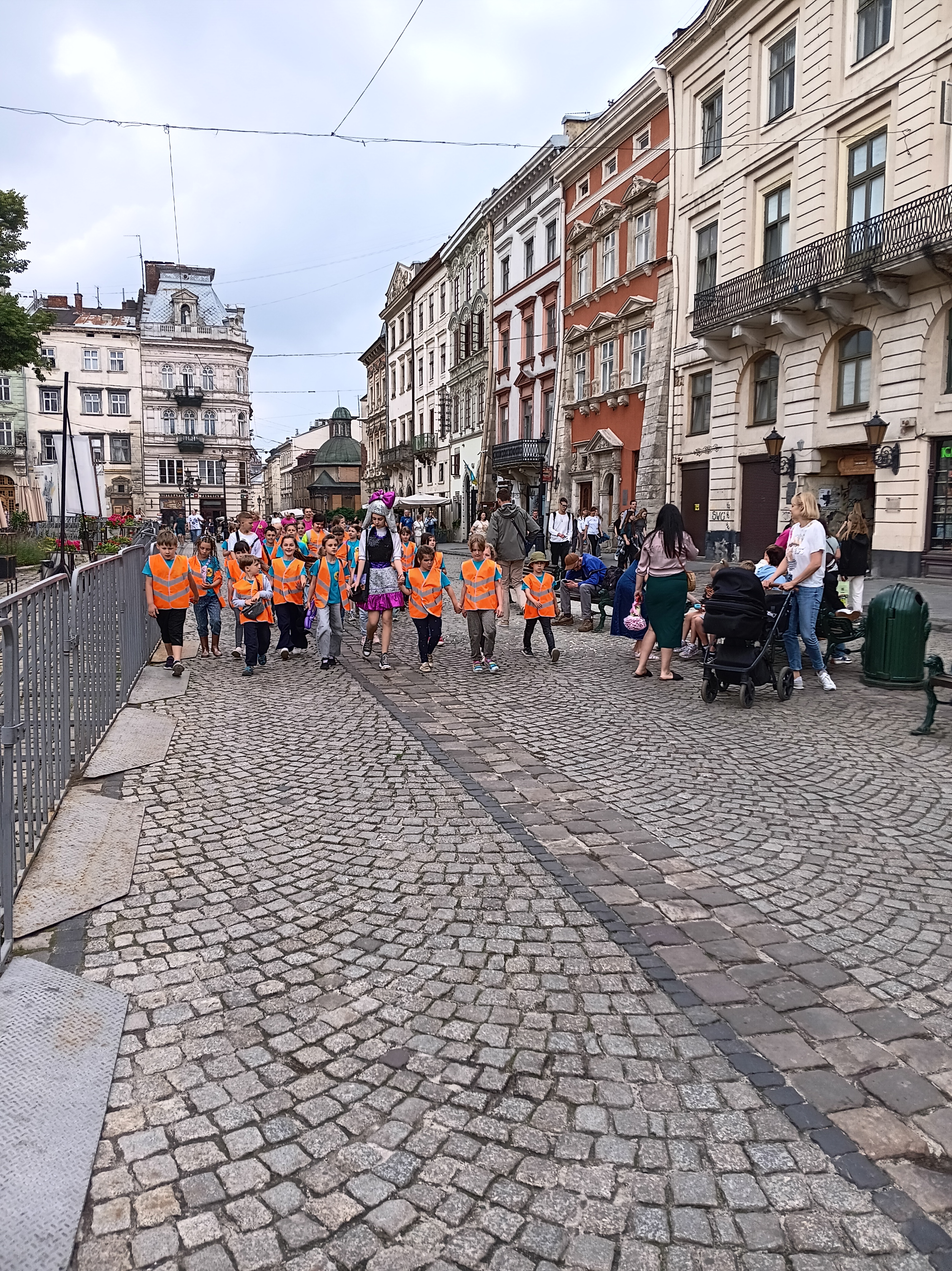
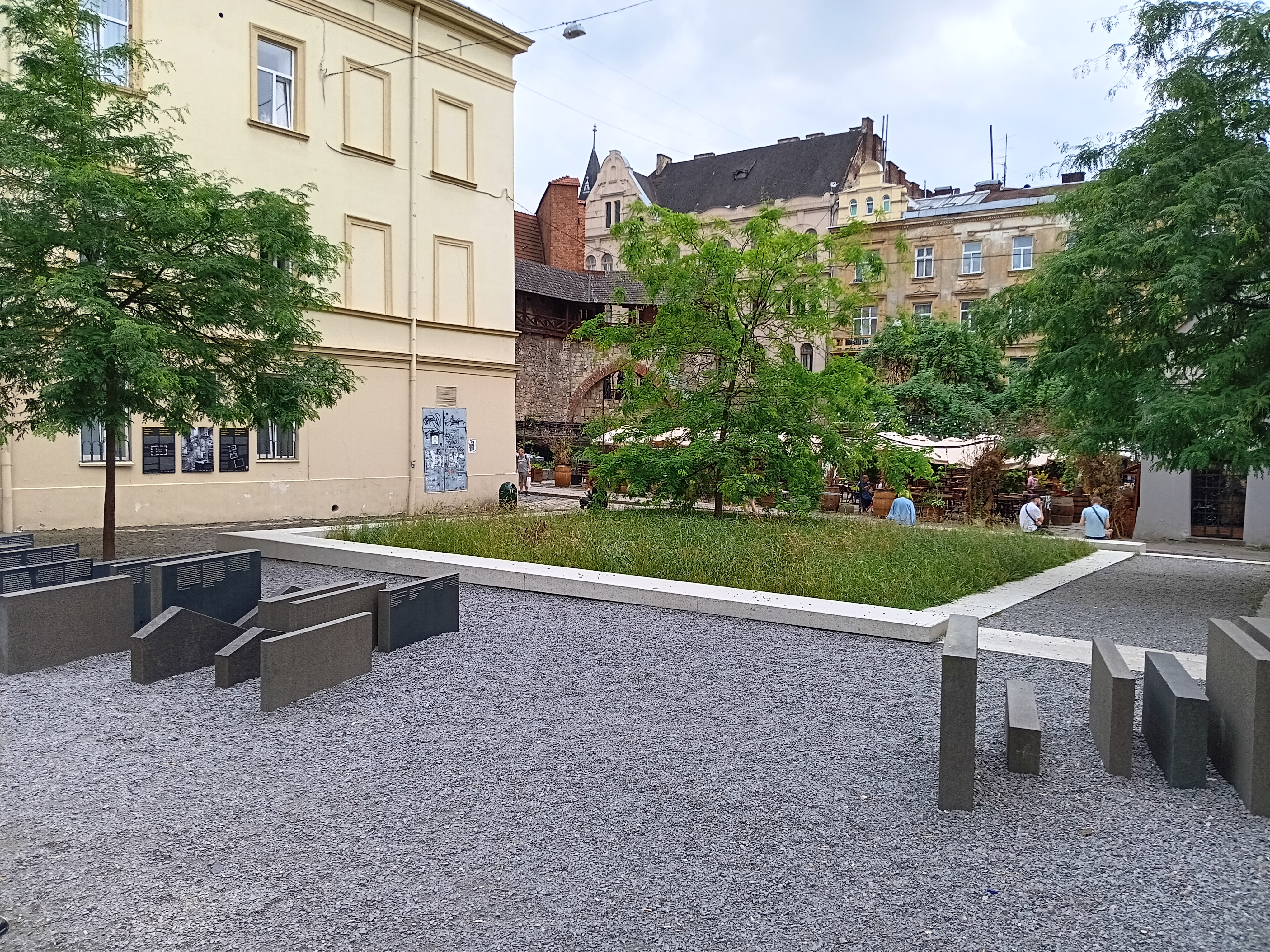
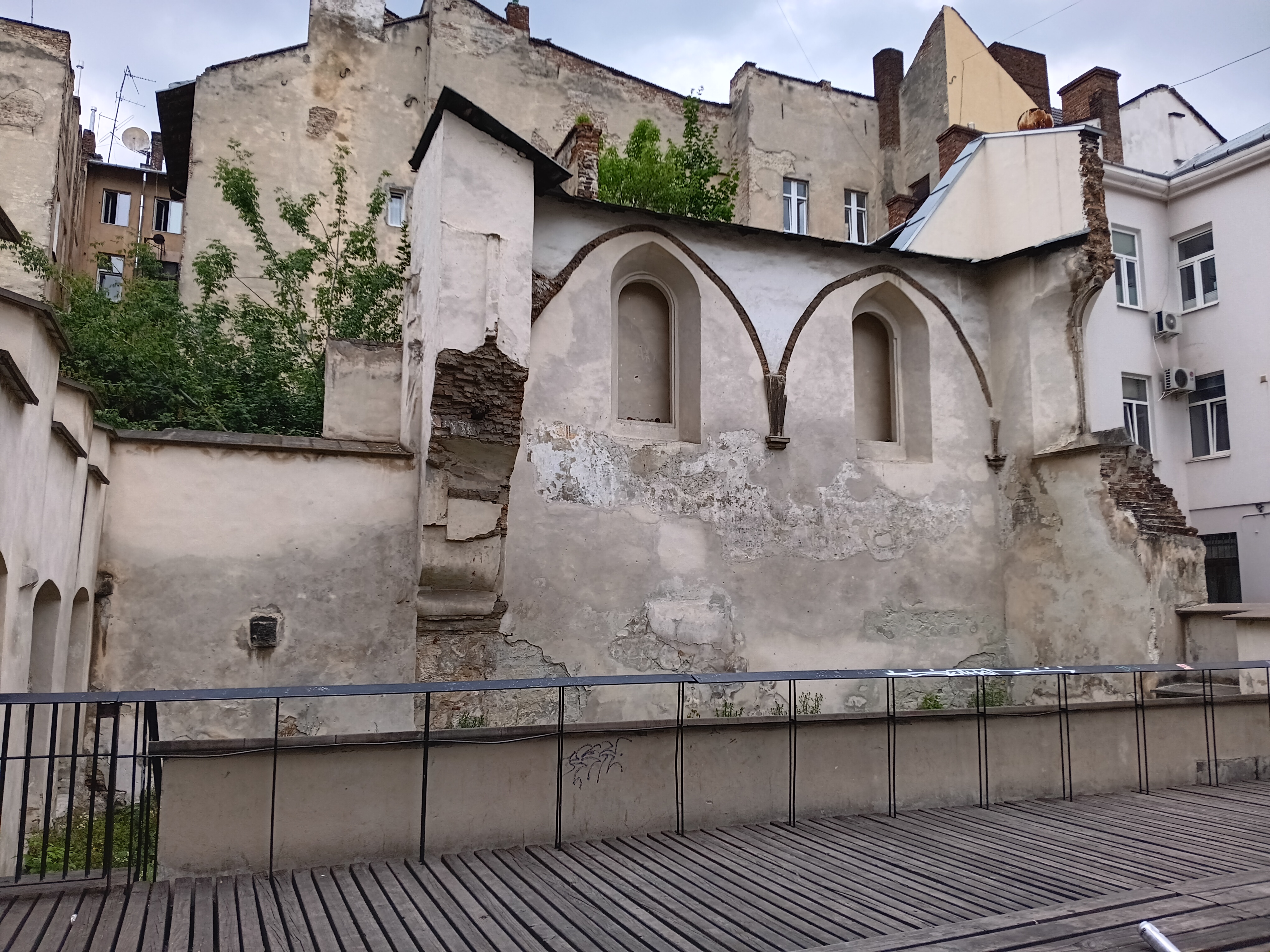
As a teaser for my next post I show the first three photos that I took the next morning after 4 hours of sleep within 5 minutes walking from my bed in Lviv.

Viking and Inuit in Greenland

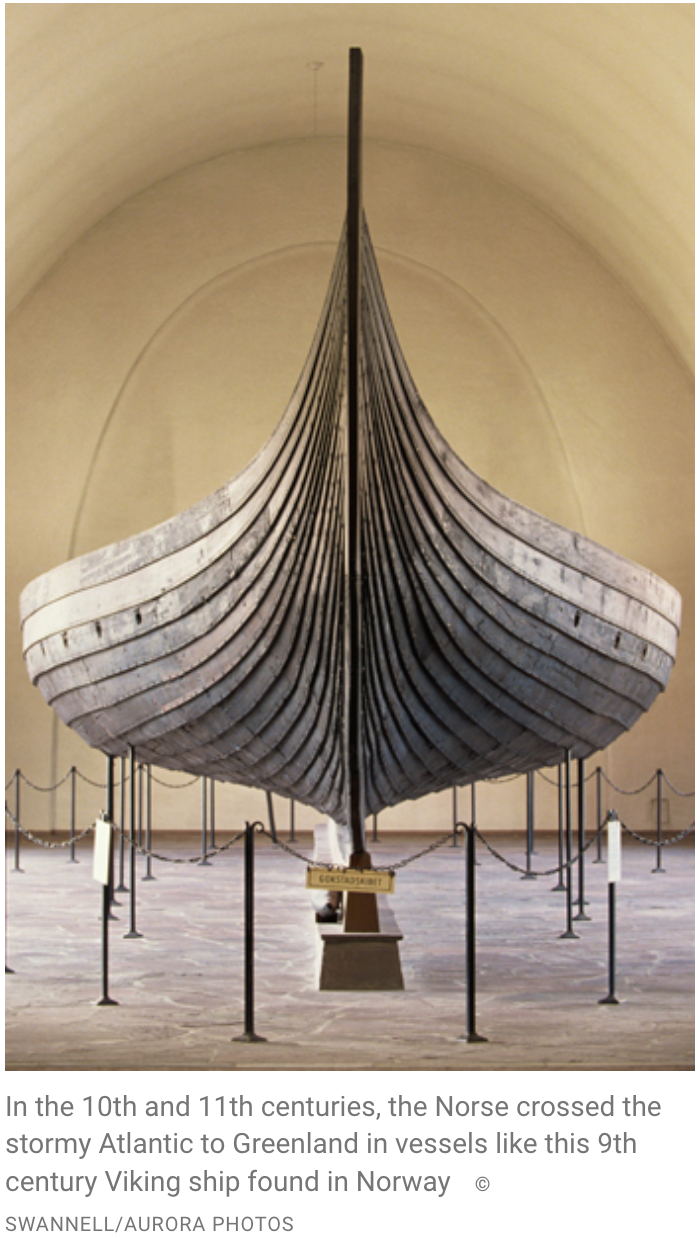
While Viking rulers of Kyiv in Ukraine formally converted to Christianity in 988 CE at the outer limits of eastern Europe, two small viking settlements emerged at the southern tip of Greenland close to the Americas. The Norse settlers of Greenland left Iceland with 25 ships, but 11 of these either turned back to Iceland or were lost at sea. The remaining 14 boats arrived near 61 N latitude to establish an “Eastern” settlement which over time grew to more than 190 farms and 12 churches. Farther north near 64 N latitude a smaller “Western” settlement eventually grew to about 90 farms and four churches near Nuuk, today’s capital of Greenland. The “Western” settlement had a warmer and milder continental climate, because their farms were located far inland within a wide and complex fjord system that sheltered the farmers from atrocious coastal storms. The “Eastern” settlement was hit harder by these storms, because here the farms were closer to shore, closer to the icesheet, and closer to the center of the North-Atlantic storm activity.

North-Atlantic location map with Norse trading routes between Europe and Greenland adapted from Jackson et al. (2018)

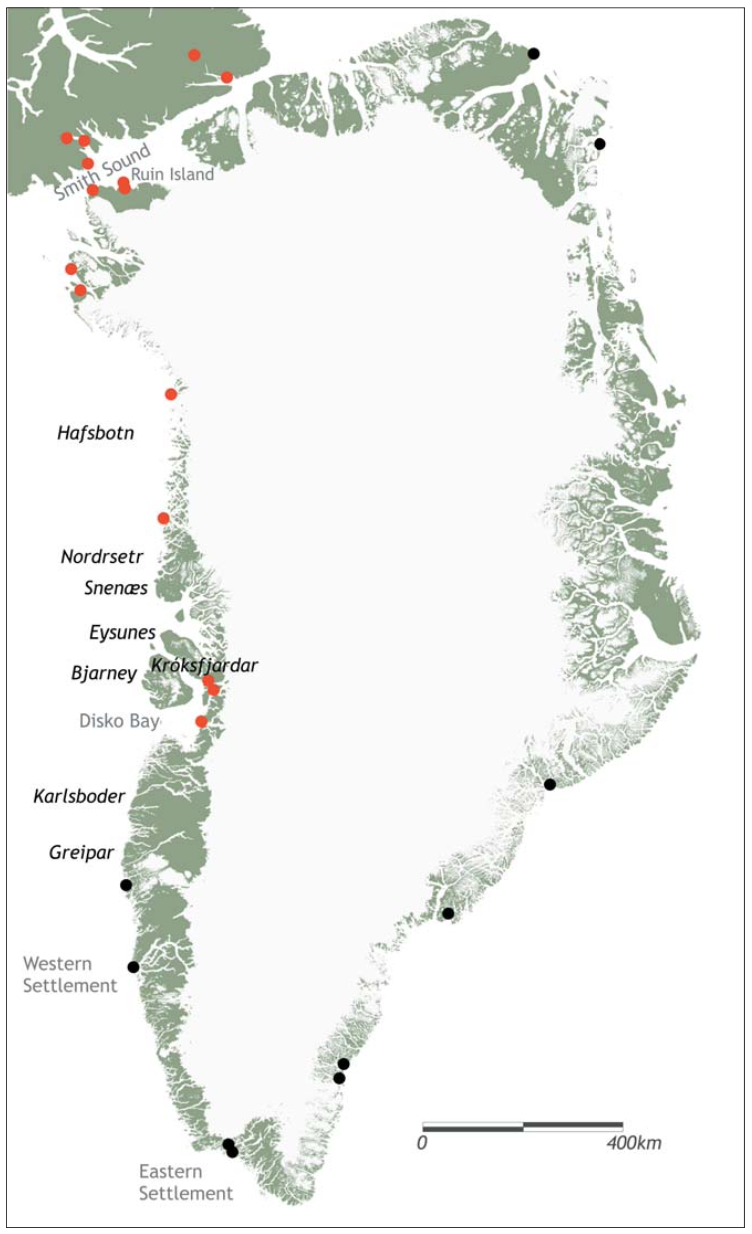
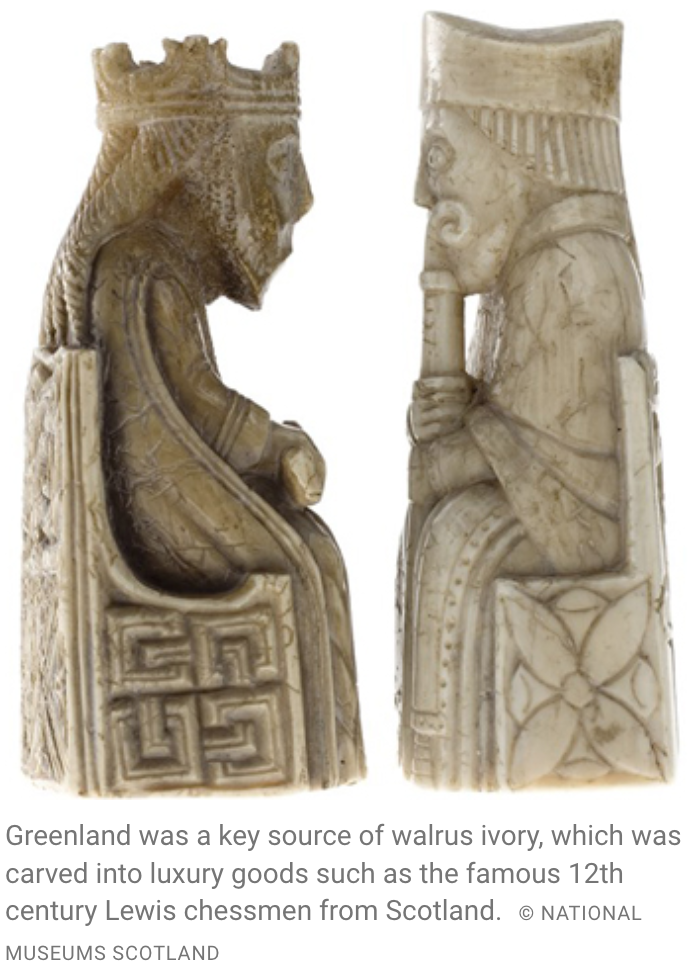
For about 200-300 years the settlements flourished and reached a population of about 4,000 people. They paid taxes to the King of Norway, donated tithes to their churches, and imported clothing, iron, and food stuff from Scandinavia. They paid with ivory from narwhales and walrus that they hunted in Disko Bay at 69 N latitude. Three viking hunters scratched their names in stone on a cairn they built about 1333 CE on an island near Upernavik at 73 N latitude (Francis, 2011). At these “Northern Hunting Grounds” the vikings from both “Eastern” and “Western” settlements likely met the Inuit of the Thule culture who at the time were moving south along West Greenland after a 3000 km migration from coastal Alaska within a few generations.

Runestone of Kingittorsuaq found at 72°57′55″N 56°12′45″W stating “Erlingur the son of Sigvat and Bjarni Þorðar’s son and Eindriði Oddr’s son, the washingday (Saturday) before Rogation Day, raised this mound and rode…” [Photo Credit: Ukendt /Nationalmuseet, Danmark]

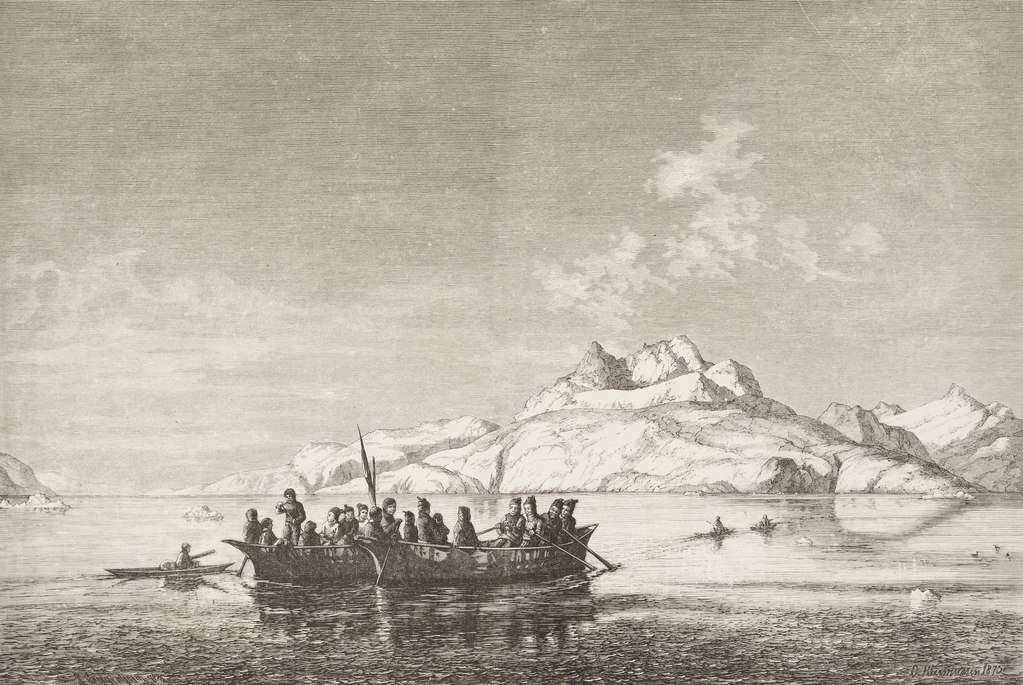
The modern Inuit of the Thule culture arrived in Greenland about 200-300 years after the vikings did. They arrived on foot, by dog sled, and in umiaks from the Bering Sea area of Alaska and Siberia (Friesen, 2016). They were equally adept to hunt caribou on land with bow and arrow, seals on sea ice with spears, and whales on open ocean with sophisticated harpoons. They crossed Smith Sound at 79 N latitude about 1300 CE to reach Greenland spreading south towards the viking settlements and north-east towards Fram Strait separating Greenland from Svalbard. On a beach off Independence Fjord in North-East Greenland at almost 83 N latitude Eigil Knuth found the frame of one of their skin-hulled umiak in 1949 (Knuth, 1952).

Umiak in Greenland as depicted by Carl Rasmussen in 1875 adapted from https://en.wikipedia.org/wiki/Umiak

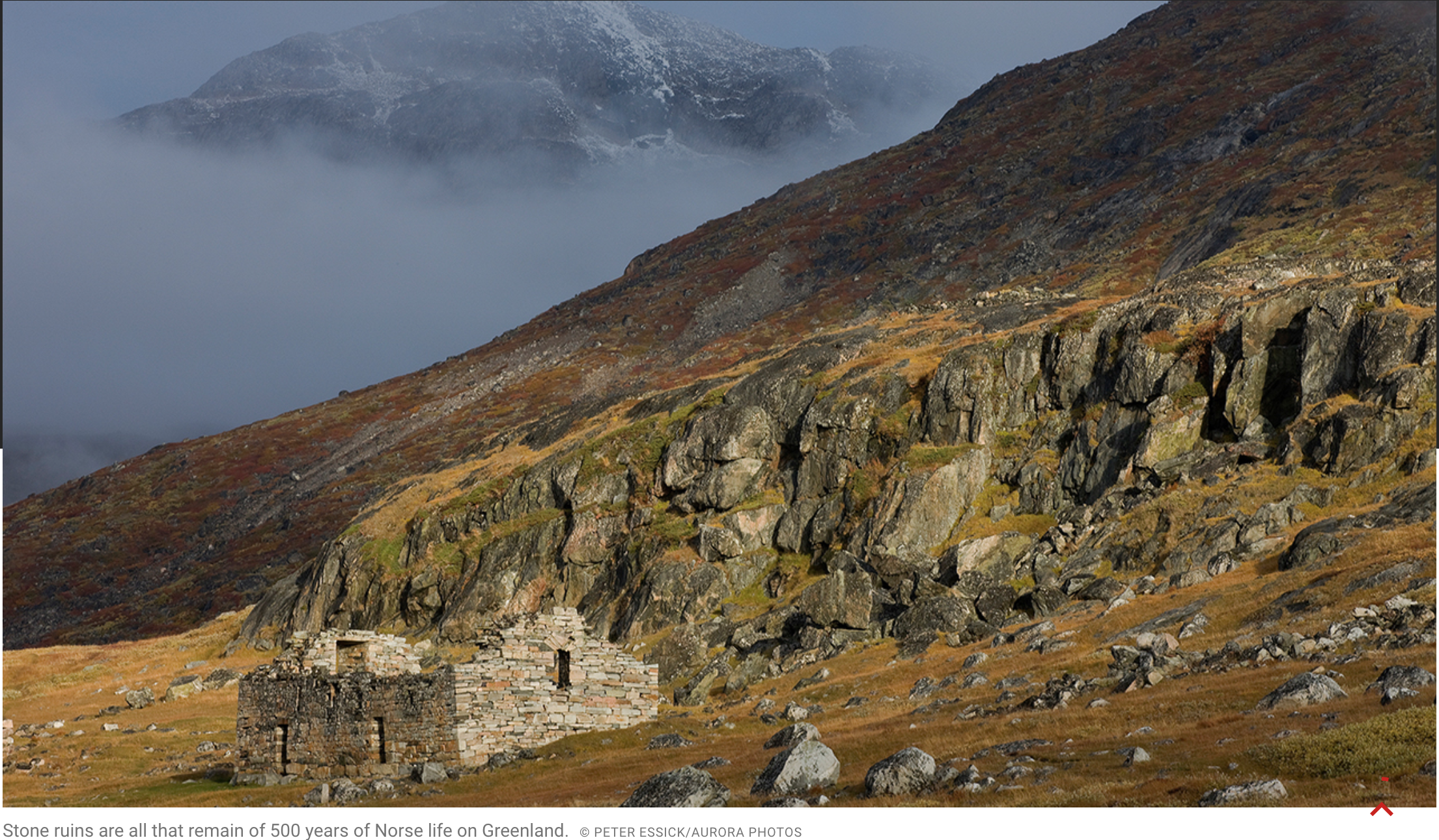
The vikings built “permanent” houses of stone, farmed the land, and kept sheep, goat, and cows. They hunted walrus and narwhal for its ivory to trade with Europe to import metals, clothes, and foods. Their diet until about 1300 CE was high on terrestrial and low on marine resources as indicated by isotopic studies of their bone structure. This changed when a cooling climate challenged animal husbandry in Greenland and the Norse transitioned towards a marine-based diet of fish, seals, and marine mamals (Jackson et al., 2018).

Map of Greenland and Ellesmere Islands adapted from Gullov (2008). Red symbols indicate Norse artifacts found at Inuit sites occupied in the 13th and 14th century while black dots represent location of such artifacts at 15th and 16th century.

In contrast, the Inuit embraced a more mobile life-style as entire family units moved large distances to new sites from year to year and seasonally from summer to winter camps. Their hunting was tied to the sea ice and they developed fancy techniques to hunt larger whales, walrus, and polar bears for food, fuel, and clothing. Their technologies and behaviors adapted rapidly in an extreme environment and climate that kept changing in time. Inuit often viewed themselves and their animal prey as mutually connected with energies flowing from animal to Inuit and vice versa. Both were part of one nature which changes in time on many different cycles that one needs to read and understand for survival. This view differed from that of the more pastoral vikings who saw themselves and their homes as “safe inner spaces” and everything on the outside as “wild and hostile” nature. They constantly tried to modify, improve, and control the landscape while the Inuit moved and adapted within it (Jackson et al., 2018).

Viking settlement on Greenland (left), chess figures from walrus ivory (center), and viking longboat from the 10th century.

The vikings vanished without a trace in the 15th century. Their fate is still researched and debated in academic and popular outlets alike. In contrast, the Inuit expanded their range along all of Greenland where in the 18th and 19th centuries they were “re-discovered” in the South by Danish and Moravian colonists and missionaries and in the North by the English Navy, American adventurers, and Danish scientists.

In 1910 two Danes Knut Rasmussen and Peter Freuchen established a trading post at North Star Bay near 77 N Latitude. They called “Thule.” Over the next 20 years Thule became a focal point of about 200 nomadic Inughuit that all are direct descendants of the Thule culture Inuit. There are about 700 of them today and most still live in Qaanaaq. Linguist Stephen Pax Leonard lived among them for a year in 2010/11 when he produced a 10 minute video that documents contemporary Inuit life and language.

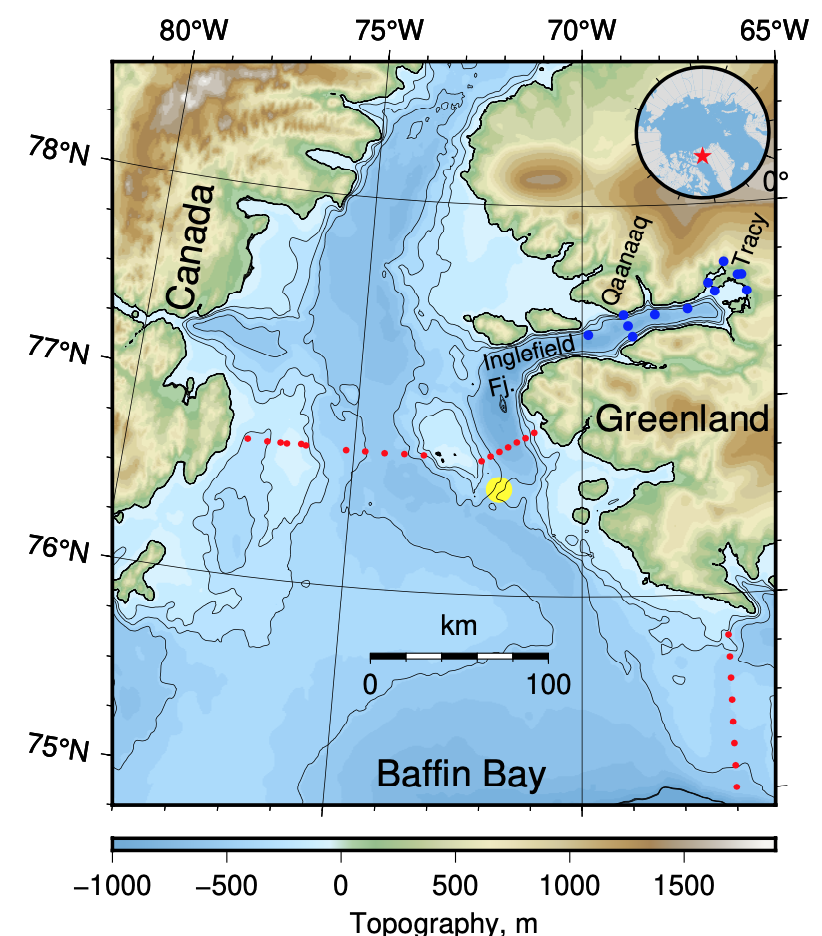
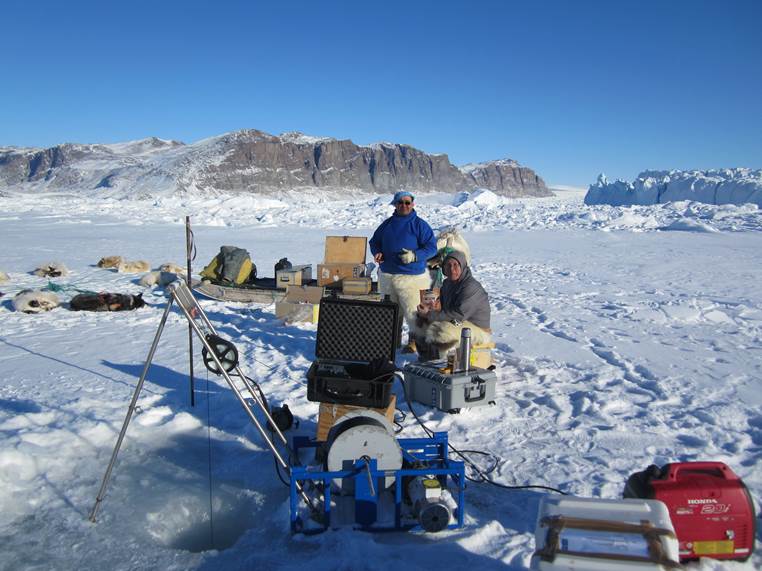
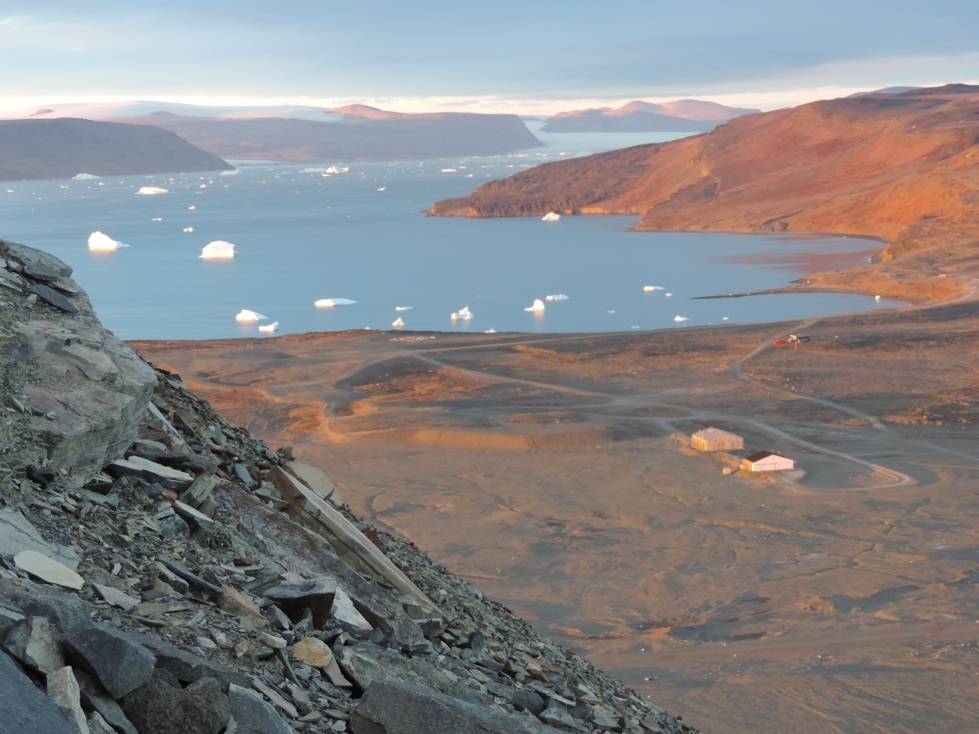
Contemporary photos of Qaanaaq and Thule region. Photos on left panel by Dr. Steffen Olsen near Tracy Glacier in Inglefield Fjord while images in right panel are of North Star Bay and Thule Air Base by the author.

References:

Francis, C.S., 2011: The Lost Western Settlements of Greenland, 1342, California State Univ. Sacramento, MA Thesis, 84 pp.

Friesen, T.M., 2016: Pan-Arctic Population Movements, Chap.-28 of “The Prehistoric Arctic,” Oxford Univ. Press, 988 pp.

Gullov, H.C., 2008: The Nature of Contact between Native Greenlanders and Norse, J. North Atlantic, 1, 16-24.

Jackson, R., J. Arneborg, A. Dugmore, C. Madsen, T. McGovern, K. Smiarowski, R. Streeter, 2018: Disequilibrium, Adaptation, and the Norse Settlement of Greenland, Human Ecology, 46 (5), https://doi.org/10.1007/s10745-018-0020-0.

Kintsch, E., 2016: Why did Greenland’s Vikings disappear? Science, 10.1126/science.aal0363, accessed as https://www.science.org/content/article/why-did-greenland-s-vikings-disappear

Knuth, E., 1952: An Outline of the Archaeology of Peary Land, Arctic, 5(1), pp. 17-33.

Behavior of Cetaceans in Response to Salinity in Maryland and Greenland

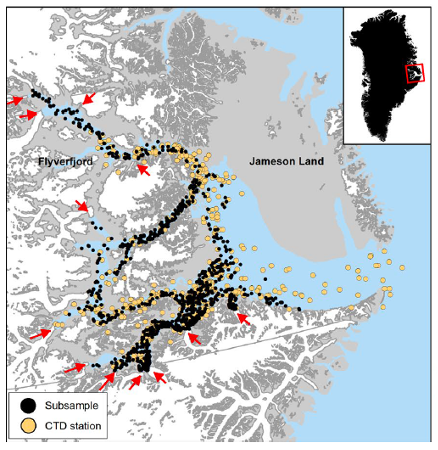
Having spent my whole life in Maryland, I know very little about narwhals or Greenland. When presented a figure of the distribution of 12 tracked narwhals (Figure 1), I noticed that these mammals spent the majority of their time away from the mouth of the fjord (Heide-Jørgensen et al., 2020), and that the fjord looked similar to the geography of the Chesapeake Bay in Maryland. To understand why the narwhals may prefer water near the tributaries to the fjord, I compared it to recorded locations of dolphins in the Chesapeake Bay.

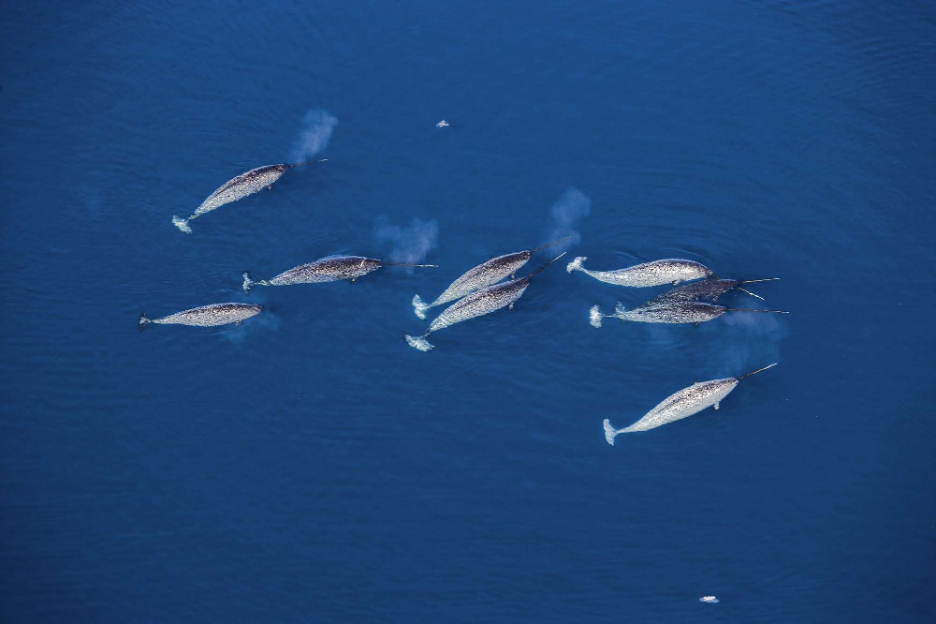
Narwhals migrating through Lancaster Sound, Canada. Photo Credit: Paul Nicklen, https://paulnicklen.com/stills/narwhals/

            Data collected during a study on temperature-dependent habitat selection for narwhals displays 10 locations per day of 12 narwhals in Scoresby Sound in Greenland for a total of 1,000 positions (Heide-Jørgensen et al., 2020). The narwhals were tracked using satellite-linked time-depth recorders. The mapped positions of the narwhals (black dots) are more concentrated away from the mouth of the fjord complex where Atlantic water enters. Instead, they gather in tributaries on the western side of the fjord where there are active glaciers (red arrows).

Figure 1: Positions of 12 narwhals (black dots) tracked in Scoresby Sound fjord, Greenland. Positions were recorded 10 times per day, then resampled to 1,000 positions. Red arrows indicate active glaciers and yellow dots indicate positions where CTD profiles were collected (Heide-Jørgensen et al., 2020).

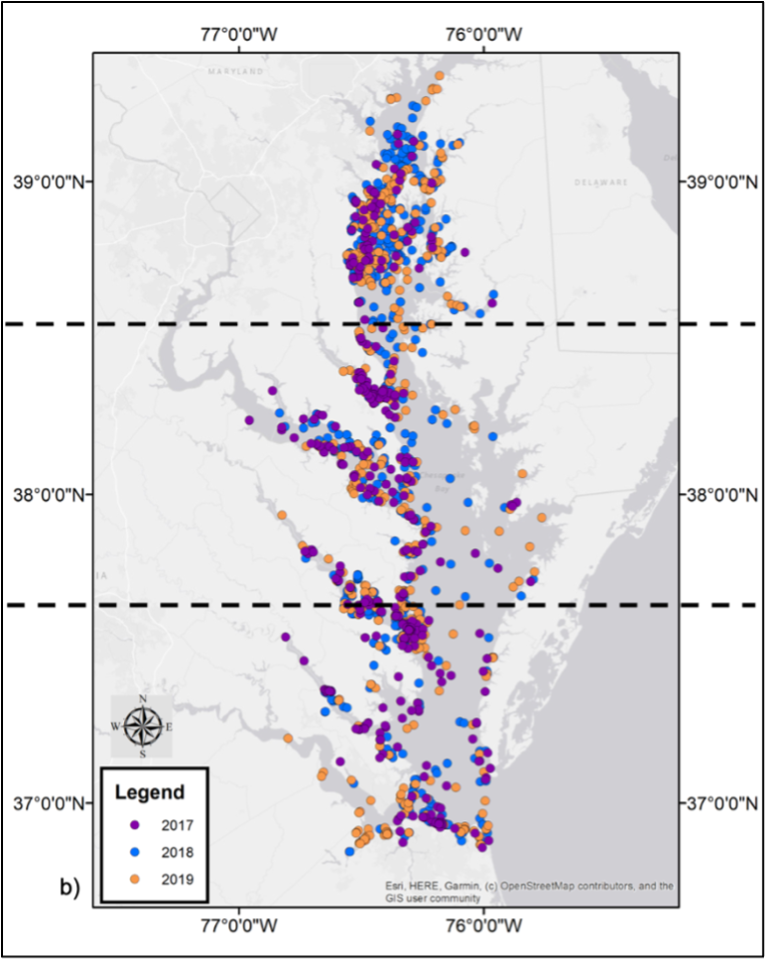
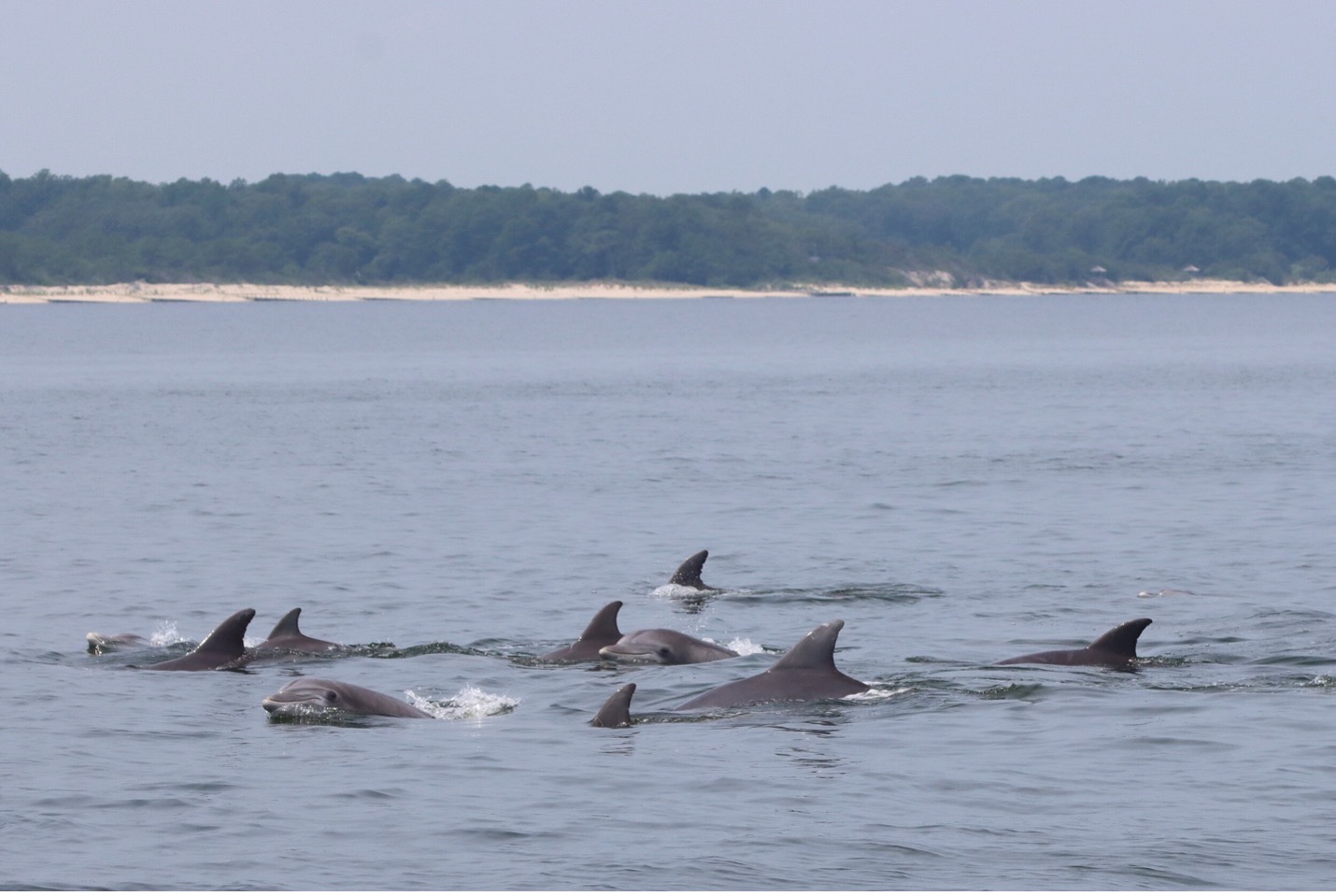
            The University of Maryland’s Chesapeake Dolphin Watch program (https://www.umces.edu/dolphinwatch) maps citizen dolphin sightings throughout the Chesapeake Bay. Figure 2 below displays the locations of dolphin sightings in 2017 (purple dots), 2018 (blue dots), and 2019 (orange dots). The figure also divides the bay into the upper bay, middle bay, and lower bay, with the lower bay closest to the Atlantic Ocean (Rodriguez et al., 2021). Within these divides, the majority of dolphin sightings are recorded in the upper bay, and overall more dolphins were sighted on the western side of the bay. The dolphin sighting distribution in the Chesapeake Bay in 2017-2019 resembles narwhal distribution in Scoresby Sound, Greenland. Both dolphins and narwhals appear to be found away from the mouth and instead in the tributaries.

Figure 2: Dolphin sightings in the Chesapeake Bay in 2017 (purple dots), 2018 (blue dots), and 2019 (orange dots). The bay is divided into upper, middle, and lower sections with the lower section being closest to the Atlantic Ocean (Rodriguez et al., 2021).

            Because of my familiarity with the Chesapeake Bay, I know that fresh water enters the bay from the tributaries and meets with salty water that enters from the Atlantic Ocean, which can be confirmed with salinity data available from the Chesapeake Bay Program (Reynolds, 2019). Applying this understanding to the Scoresby Sound, salinity is lowest where fresh glacial melt enters the fjord from the tributaries, as marked by red arrows in Figure 1, and salinity is highest where salty ocean water at enters the fjord at the mouth. Because the distribution of dolphins in the Chesapeake and narwhals in Scoresby Sound appear similar, and the bay and fjord have a similar pattern of salinity, I hypothesize that narwhals and dolphins prefer low salinity water.

Bottlenose dolphins in the Potomac River, a tributary of the Chesapeake Bay. Photo Credit: Ann-Marie Jacoby, Potomac-Chesapeake Dolphin Project, https://potomac.org/blog/2021/10/4/dolphin-disease-blog

            However, while the narwhals in Scoresby Sound were tracked using satellite-linked time-depth recorders, the dolphins in the Chesapeake are mapped from civilian sightings. In Maryland, most people that live along the Chesapeake Bay live in cities and suburbs along the western shore of the Bay (U.S. Census Data from 2020, https://www.census.gov/data.html). Of the approximate 986,305 people that live along the western shore, there were 90 dolphin sightings in 2017, or about 0.912 dolphins per 10,000 people. Fewer people live on the eastern shore of the Chesapeake Bay, and of the approximate 244,798 people, 29 dolphin sightings were reported in 2017, or about 1.18 dolphins per 10,000 people. From this data, more dolphin locations were recorded on the western shore of the Chesapeake Bay as a result of more people living there.

            Due to sampling bias, this citizen sighting data from the Chesapeake DolphinWatch program cannot be used to support the hypothesis that dolphins and narwhals tend to stay away from incoming salty water from the ocean because they prefer low salinity water. To better test the hypothesis, more accurate data of dolphin positions in the Chesapeake Bay would need to found by using satellite tracking devices similar to the ones used on the narwhals in Scoresby Sound.

Editor’s Note: Ms. Eleanor Smith wrote this essay as an extra-curricular activity developed from a science communication assignment for MAST383 – Introduction to Ocean Sciences. The editor teaches this course at the University of Delaware and was assisted by Ms. Terri Gillespie in a final formal edit.

References

Exchange for Local Observations and Knowledge of the Arctic. (n.d.). About Narwhals. Retrieved from ELOKA: https://eloka-arctic.org/communities/narwhal/about_narwhals.html

Heide-Jørgensen, MP, Blackwell, SB, Williams, TM, et al.: Some like it cold: Temperature-dependent habitat selection by narwhals. Ecol Evol. 2020; 10: 8073– 8090. https://doi.org/10.1002/ece3.6464, 2020.

Reynolds, D.: Bay health impacted by record flows. Chesapeake Bay Program, https://www.chesapeakebay.net/news/blog/bay-health-impacted-by-record-flows, 2019.

Rodriguez LK, Fandel AD, Colbert BR, Testa JC, Bailey H.: Spatial and temporal variation in the occurrence of bottlenose dolphins in the Chesapeake Bay, USA, using citizen science sighting data. PLoS ONE 16(5): e0251637. https://doi.org/10.1371/journal.pone.0251637, 2021.

Greenland Glacier-Driven Ocean Circulation

Greenland’s coastal glaciers melt, shrink, and add to globally rising sealevel. They also drive local ocean currents that move icebergs around unless they are stuck on the bottom. The glaciers’ melt is cold fresh water while the adjacent ocean is both salty and warm. Checking on what we may expect against observations, I here use data from NASA’s Ocean Melts Greenland initiative that dropped ocean probes from an airplane into the ice waters off coastal Greenland to measure ocean temperature and salinity.

For six years these data show how the coastal ocean off Greenland varies from location to location next to glaciers as well as from year to year. More specifically, I picked Melville Bay in North-West Greenland for both its many glaciers and many dropped NASA ocean sensors. The ocean data allow me to estimate ocean currents by using a 100 year old physics method. I just taught this to a small class of undergraduate science students at the University of Delaware. My students are strong in biology, but weak on ocean physics. This essay is for them.

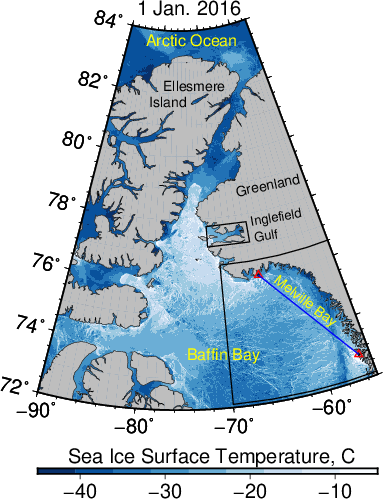
Melville Bay is a coastal area off north-west Greenland between the town of Upernavik (Kalaallisut in Greenlandic) near 73 N latitude where 1100 people live and the village of Savissivik (Havighivik in Inuktun) at 76 N latitude where 60 Inuit live. There are no other towns or settlements between these two villages that are about as far apart as Boston is from Philadelphia, PA. Imagine there were no roads from Boston to New York to Philadelphia but only one large glacier next to another large glacier. This is Melville Bay.

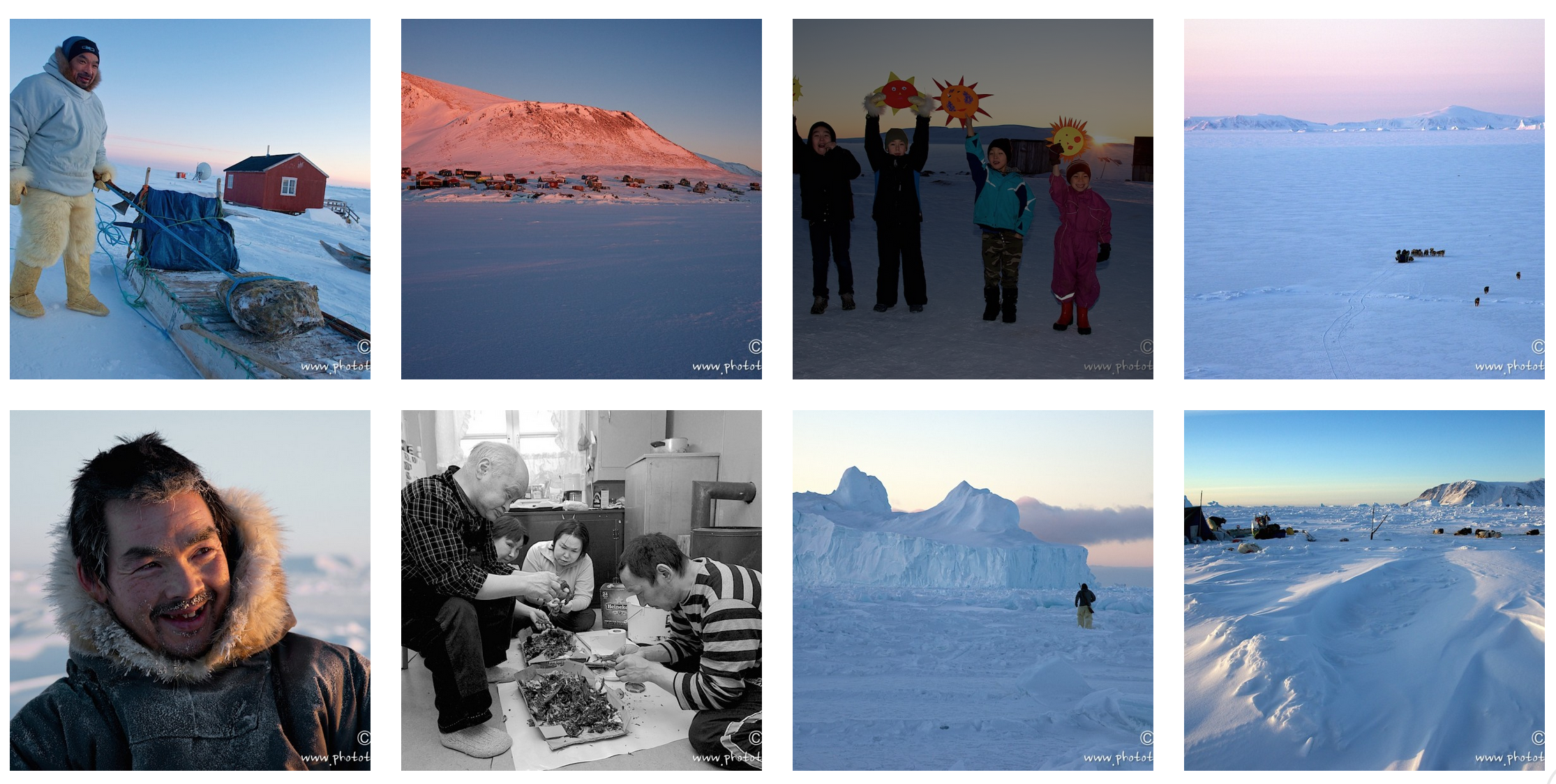
Below I show an excellent set of photos of Savissivik by a French husband and wife team who visited in 2013/14. Their photographic gallery captures elements of contemporary subsistence living in remote Greenland where animals like seals, birds, fish, narwhal, and polar bears provide food, fuel, clothing, and income.

NASA dropped some 50 ocean sensors into Melville Bay froma plane during the short summer seasons each year 2016 through 2021. I met NASA pilots, engineers, and scientists doing their experiments when I was doing mine from a snowmobile in April of 2017 and again with Danish friends from a Navy ship in August of 2021, but these are stories for another day.

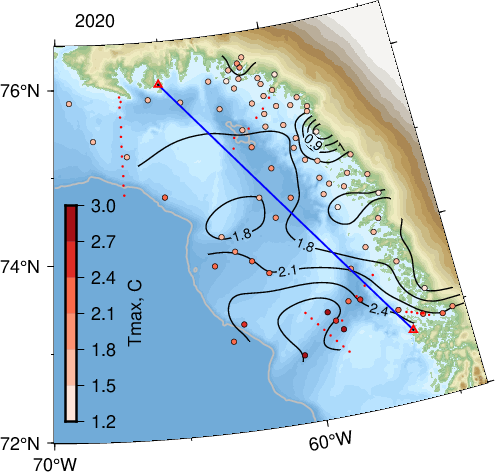
Let me start with a map of where NASA dropped their ocean profiling floats into Melville Bay and thus introduce the data. While the surface waters are usually near the freezing point, waters 300-400 meters deep down are much warmer. They originate from the Atlantic Ocean to the south and one of the goals of NASA’s “Ocean Melts Greenland” campaigns was to determine if and how these Atlantic waters reach the coastal glaciers. Most glaciers of Melville extend into this warm ocean layer and thus are melted by the ocean.

In the map above I paint the maximal temperatures in red and the bottom depths in blue tones. The profile on the right shows data for all depths at one station. As salinity increases uniformly (red curve) the temperature increases to a maximum near 300-m depth (black curve). It is this maximal subsurface temperature that I extract for each station and then put on the contour and station map on the left. The straight blue line connects Upernavik in the south with Sassivik in the north. It is an arbitrary line, coast-to-coast cutting across Melville Bay.

The warmest warm waters we find near Upernavik in the south and within a broad submarine canyon that brings even warmer waters from Baffin Bay towards the coast. Temperatures here exceed 2.4 or even 2.7 degrees Celsius. Most coastal waters along Melville Bay have a temperature maximum of about 1.5 to 1.8 degrees Celcius (about 35 Fahrenheit) and this “warm Atlantic” ocean water melts the coastal glaciers. The ocean melts the glaciers summer and winter while the warm air melts it only in summer.

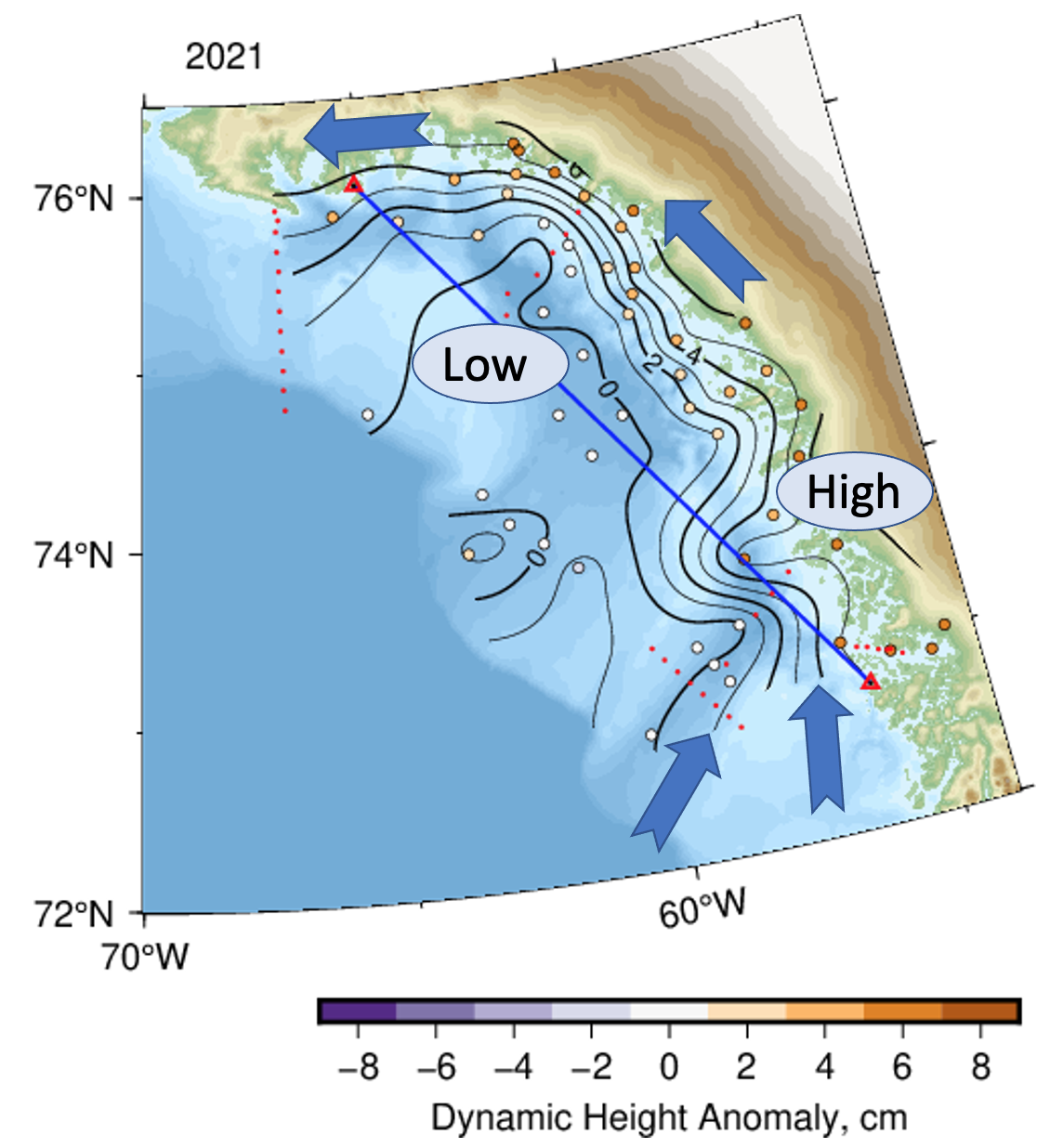
There is more, because the glaciers’ melt also discharge fresh water into the ocean where it mixes to to form a layer of less dense or buoyant water. The buoyant waters create a local sealevel that is a little higher along the coast than farther offshore. The map above indicates that this “little higher sealevel” comes to about 4 cm or 2 inches. If this pressure difference across the shore is balanced by the Coriolis force, as it often does, then an along-shore coastal current results. This coastal current would move all icebergs from south to north unless they get stuck on the bottom. Along the northern coastline of Melville Bay the surface flow is from east to west. The coastal current is strongest near Savissivik where we find a (geostrophic) surface current larger than 40 cm/s. At that speed an iceberg would move more than 21 miles per day. Such strong surface flows are exceptional and diminish rapidly with depth. Hence a freely floating iceberg with a draft of several hundred meters would move much slower than the surface current.

I met a hunter from Savissivik in April of 2017 and for a fast-moving night we discussed the state of local fishing, hunting, living, traveling, and working on the sea ice next to the glaciers of Melville Bay. He invited me to become his apprentice. As such I would now ask him about the surface currents outside his home. Which way does he observe the icebergs to move in summer or winter? Has hunting on the sea ice in winter changed over his life time? When is it safe to travel there with a dog-sled? Could he and I perhaps work together during the spring to deploy ocean sensors through the sea ice? I am dreaming again …

Adaptations of Genetically Isolated Polar Bears in Southeast Greenland

Ms. Amanda Winton wrote this essay as an extra-curricular activity developed from a science communication assignment for MAST383 – Introduction to Ocean Sciences. The editor teaches this course at the University of Delaware and was assisted by Ms. Terri Gillespie in a final formal edit. ~Editor

“… The intense winds blow against my white fur. The chunks of white, frosty glacial ice float below me. I lift my eyes, scanning my surroundings for my next meal. I see a dark gray mass sliding along the ice a few hundred feet away. My mouth waters as my paws ready for the hunt. I have not eaten, nor seen any prey, in 12 days. I begin my slow and steady pursuit. The terrain below me is rough, unlike the abundant flat sea ice that was my ancestors’ hunting grounds.

It is a little bit more difficult to maneuver, taking more time to get to my prey than I would have hoped. Minutes later, I jump into the water, about to swim to the ice my prey is lounging on. Unfortunately, I grossly underestimated how far away it is, and by the time I swim to this meal, it’s gone. Now I am left with no food, and my stomach grumbles for the fifth time today.”

This short, first-person narrative is written from the perspective of a Greenland polar bear in the summertime. In particular, this polar bear is part of a subpopulation that hunts on a glacial mélange within fjords, rather than on larger frozen ice caps. Of course, I do not know what polar bears think in their pursuits, migration, or other actions. I can only use my own experiences and compassion to imagine their point of view and desires. Based on my biocentric view, all animals have their own importance in the world and are worthy of preservation. Since human intervention causes polar bears to struggle in their own environment, people have the responsibility to save them and recover their habitat.

Figure 1. This depicts the types of glaciers that can be present in different places, depending on the snow and ice available as well as the pressure and heat present. [adapted from National Snow and Ice Data Center]

Polar bears are losing their land due to the indirect and direct effects of human interaction with the environment, called climate change. Atmospheric warming leads to scarce and thinner glaciers, as well as less advancement in the growth season. The breakup of ice in the spring due to melting occurs nine days earlier than it did before global warming was identified in 1938 (Maslin, 2016), and the freezing of ice in the fall occurs ten days later (EPA, 2022). Not only is there less ice, but the ice exists for a shorter period of time. This leads to less territory, which can be detrimental to any species.

When Glacier National Park in Montana was established in 1910, about 150 glaciers existed. Now, less than 30 remain (Glick, 2021). Polar bears are forced to look for land and food elsewhere because they do not have as much space to hunt and breed. There is not much land or food present, so the natural selection rate for this animal is increasing dramatically every day, at a rate as fast as climate change (Peacock, 2022). Polar bears are forced by their environment to either die or adapt. This is not an easy adaptation, either.

Polar bears are forced to adapt quickly, since glacier ice is very limited in the Arctic. On the southeast coast of Greenland, polar bears have implemented a new habitat: fjords. These bears live at the front of glaciers in fjords, called the glacial mélange, which is a mixture of sea ice, icebergs, and snow. Only polar bears in southeast Greenland live there all year round, using this habitat to breed, hunt, and sleep.

Figure 2. This Glacier-Ocean-Mélange System depicts the forces acting upon this mechanism at all times. These forces are important for keeping the system at equilibrium and habitable for polar bears. [adapted from Amundson et al. (2020)]

In a recent research study led by Kristin Laidre, Northeast and Southeast Greenland polar bear population migrations were tracked. The median distance of the polar bears in the northeast was 40km per four days. The median distance traveled for the southeast population was 10km per four days, which is statistically significantly lower. Laidre et al. (2022) found that the southeast polar bears traveled between neighboring fjords, or stayed in the same fjord all year. This adaptation shows behavioral plasticity (Peacock, 2022), as Southeast Greenland bears have not become locally extinct.

This subpopulation of polar bears is one out of 20, and is very small. They are smaller in size and have a slower reproduction rate, most likely due to trouble finding a mate in a small population, as well as their long generation time and low natality. It’s important to preserve this genetically isolated population to preserve their genetic diversity. Without this element, birth defects, either mental or physical, will occur. This leads to a population less fit for its environment. Genetic diversity is necessary for surviving natural selection and thriving in an ecosystem. 

Figure 3. This photograph presents polar bears walking in the snowy fjords. Fjords are not flat, which makes it harder for these bears to travel, versus the flat ice that other polar bears have been hunting on for centuries. [adapted from Laidre et al. 2022]

“… I leave my fjord the next day, hoping to find another nearby, hopefully unoccupied. To my luck, one appears in my field of vision a few hundred meters away. To my surprise, a bob of seals rests on the glacial mélange. They are oblivious and unsuspecting of my presence. Minutes pass, and my stomach no longer rumbles. A successful hunt is always satisfactory. Now I can focus on my next need: my desire to find a mate and pass on my strong genes. It will not be too hard for me as I am a big male, with thick, insulated fur. I advance through the neighboring fjord, hopeful and confident. My story is just beginning.”

References:

Amundson, J., Kienholz, C., Hager, A., Jackson, R., Motyka, R., Nash, J., Sutherland, D., 2020: Formation, flow and break-up of ephemeral ice mélange at LeConte Glacier and Bay, Alaska. Journal of Glaciology, 66(258), 577-590. doi:10.1017/jog.2020.29.

Environmental Protection Agency, 2022: Climate Change Indicators: Arctic Sea Ice, https://www.epa.gov/climate-indicators/climate-change-indicators-arctic-sea-ice.

Dunham, W., 2022: Isolated Greenland Polar Bear Population Adapts to Climate Change. Reuters, Thomson Reuters, https://www.reuters.com/business/environment/isolated-greenland-polar-bear-population-adapts-climate-change-2022-06-16.

Glick, D., 2021: The Big Thaw. National Geographic, https://www.nationalgeographic.com/environment/article/big-thaw.

Greenfieldboyce, N., 2022: In a Place with Little Sea Ice, Polar Bears Have Found Another Way to Hunt, KTOO, https://www.ktoo.org/2022/06/20/in-a-place-with-little-sea-ice-polar-bears-have-found-another-way-to-hunt/.

Laidre, K. L. and 18 others, 2022: Glacial Ice Supports a Distinct and Undocumented Polar Bear Subpopulation Persisting in Late 21st-Century Sea-Ice Conditions, vol. 376(6599), 1333–1338, https://doi.org/10.1126/science.abk2793.

Maslin, M. , 2016: Forty years of linking orbits to ice ages, Nature, 540, 208–209, https://doi.org/10.1038/540208a.

Ogasa, N., 2022: Some Polar Bears in Greenland Survive on Surprisingly Little Sea Ice, Science News, https://www.sciencenews.org/article/polar-bear-greeland-sea-ice-glacial-melange-climate-change.

Peacock, E., 2022: A new polar bear Population, Science, vol. 376(6599), 1267–1268, https://doi.org/10.1126/science.abq5267.

National Snow and Ice Data Center, 2022: Glaciers, https://nsidc.org/learn/parts-cryosphere/glaciers/science-glaciers.