Category Archives: Germany

Exploring Greenland’s Coastal Currents: A Journey of Discovery with Icebreaker Polarstern

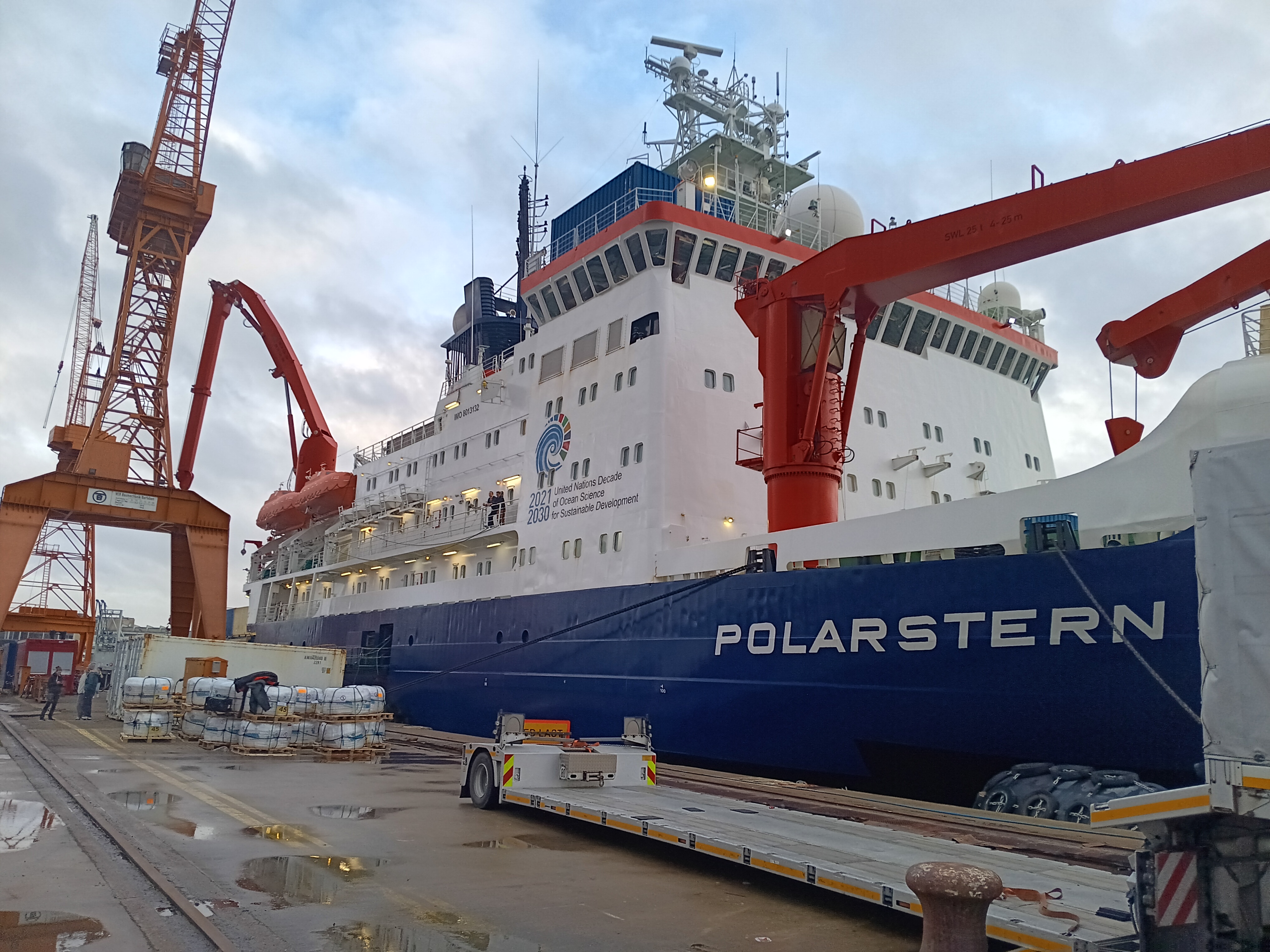
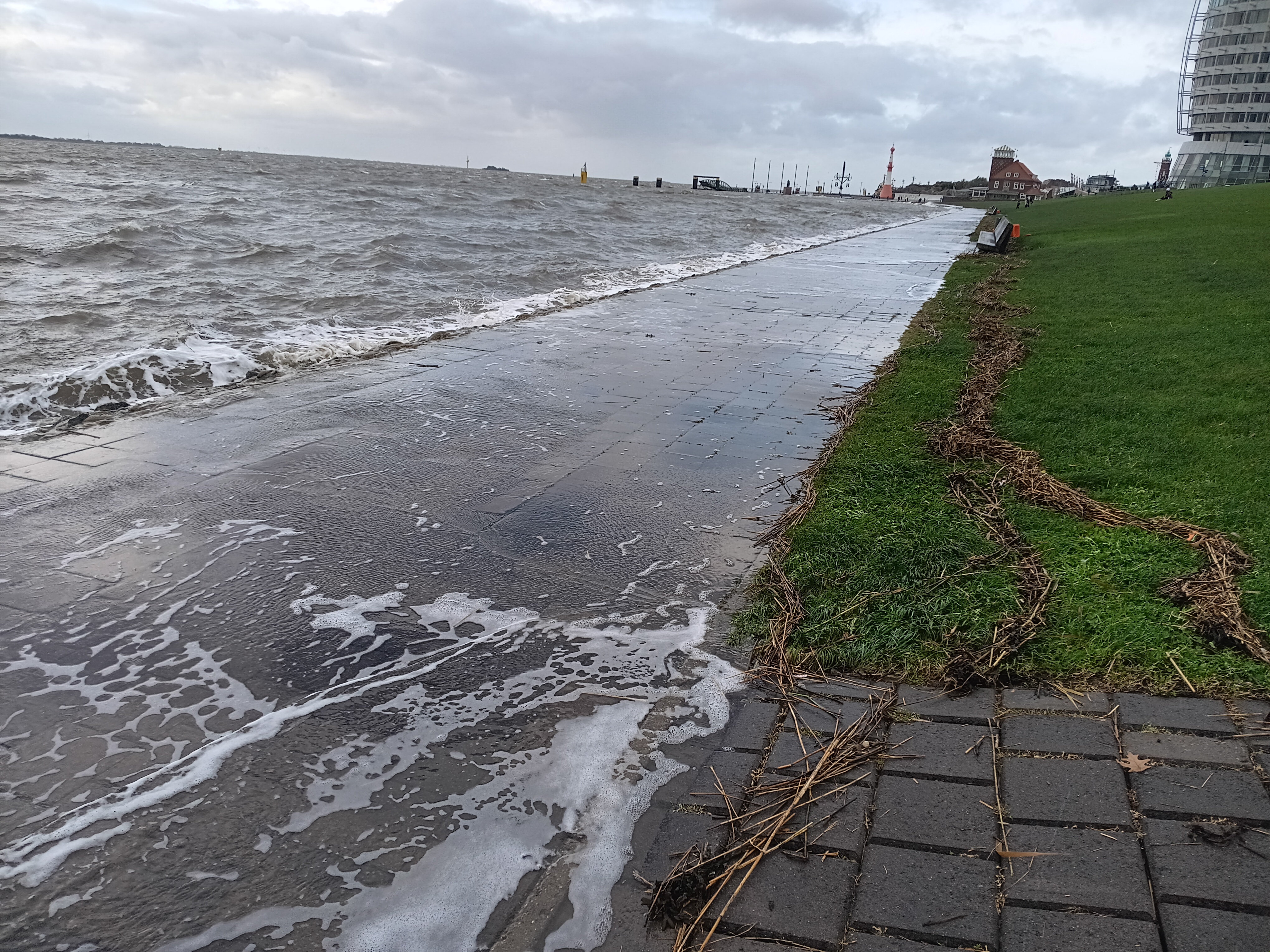
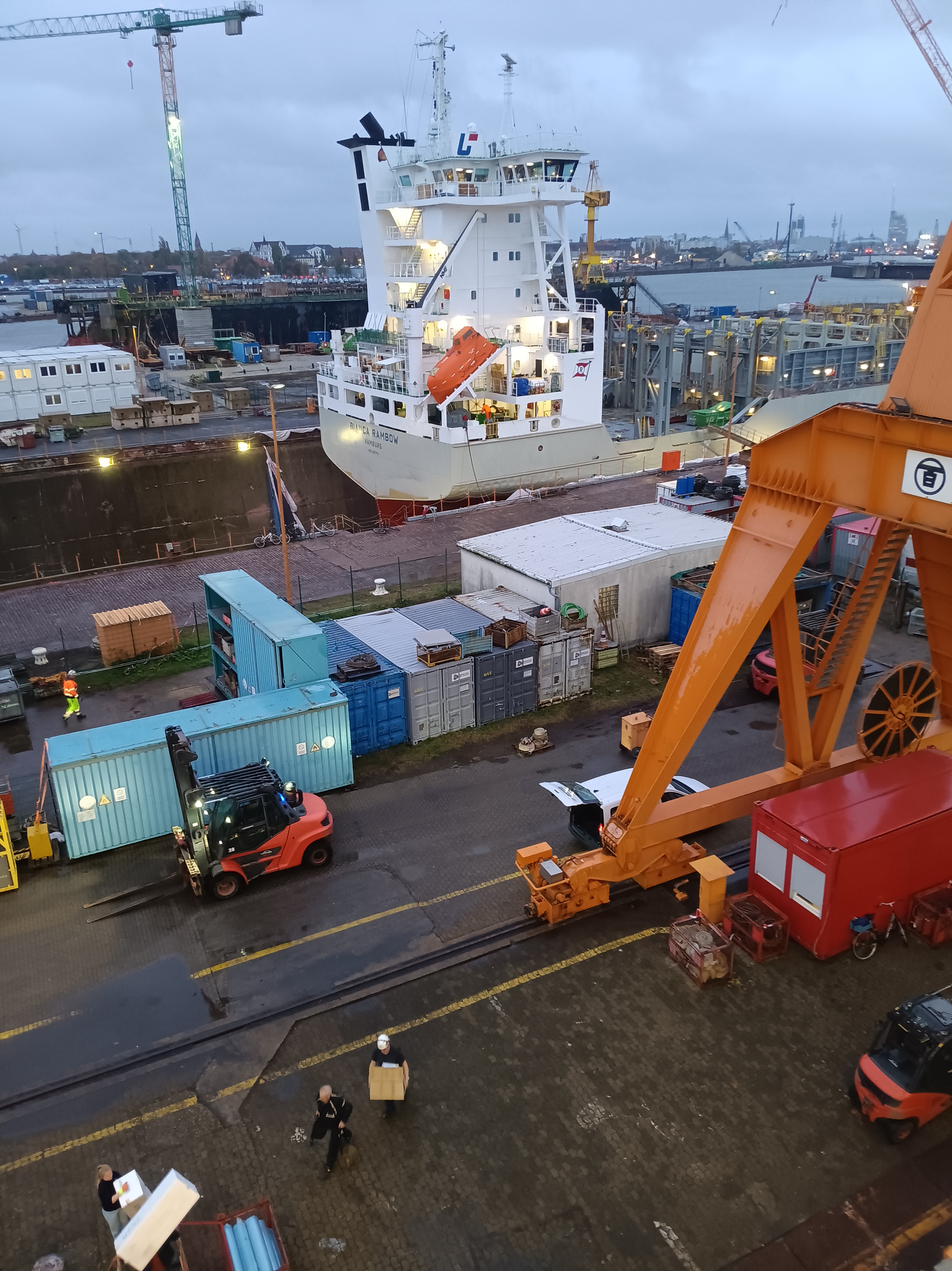
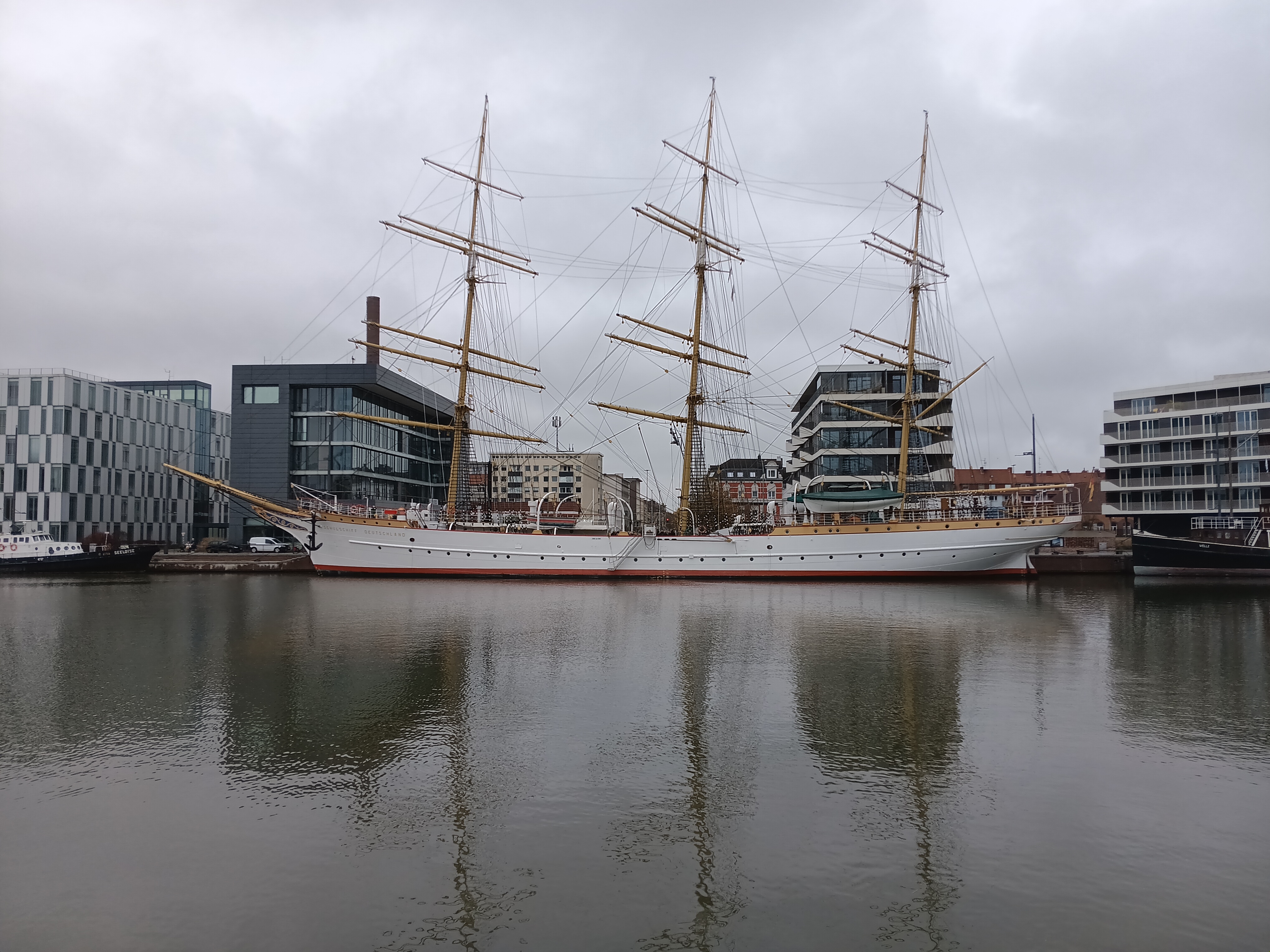
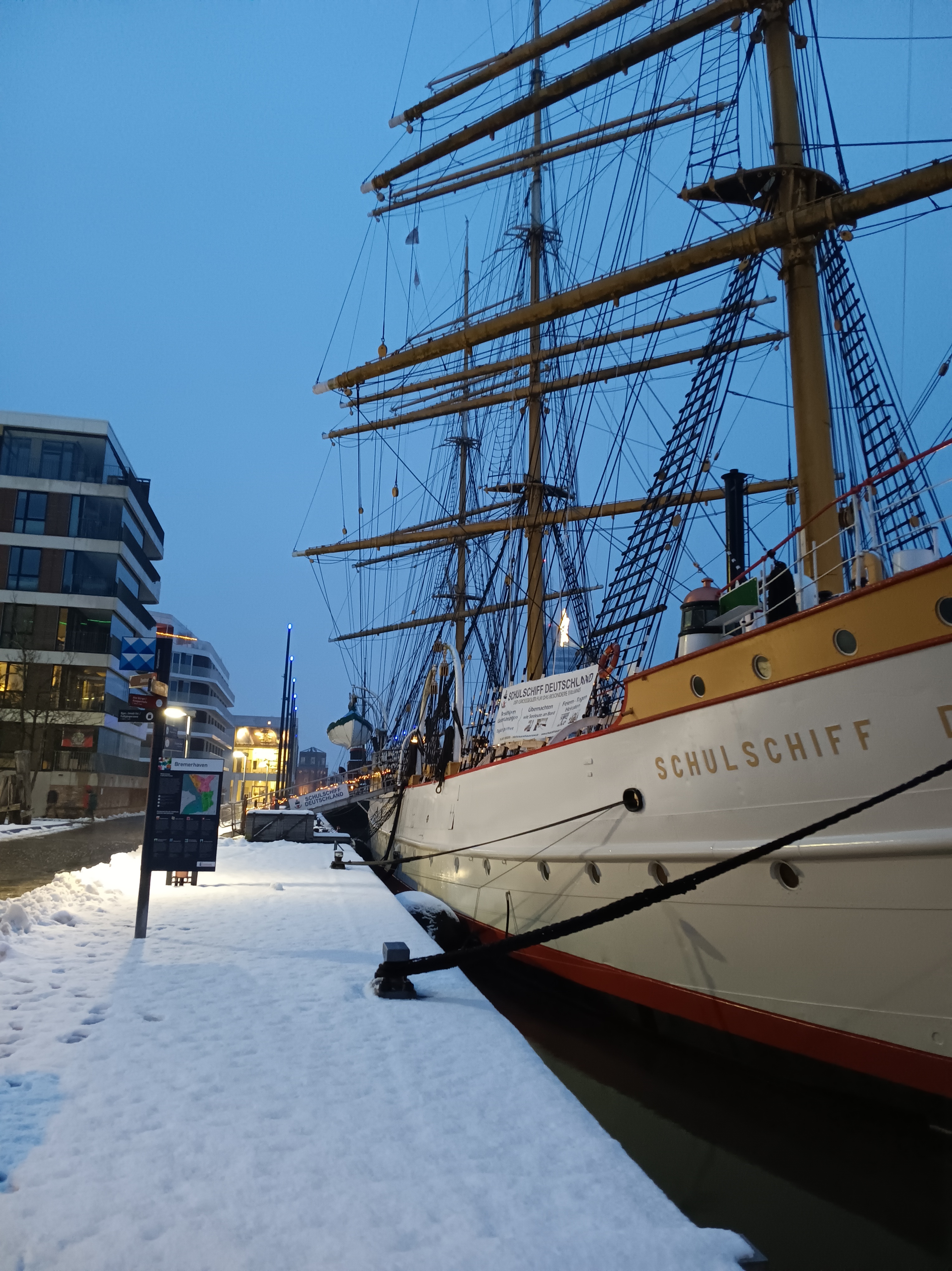
Icebreaker Polarstern reached its home port of Bremerhaven in Germany just before Orkan “Joshua” hit northern Germany hard. The ship returned after 3 month at sea with 48 crew and 46 scientists working on ocean biology, chemistry, and physics. The 7-week expedition from Svalbard to Greenland and back to Germany culminated 3 years of planing and preparations led by the Alfred Wegener Institute (AWI). As one of 46 scientists I stepped onto the ship almost two months ago in Longyearbyen. We planned to explore what moves ice and fresh Arctic water into the Atlantic Ocean with sensors to probe the coastal circulation.  Analyzing these data, I will now live in Bremerhaven for a few months.

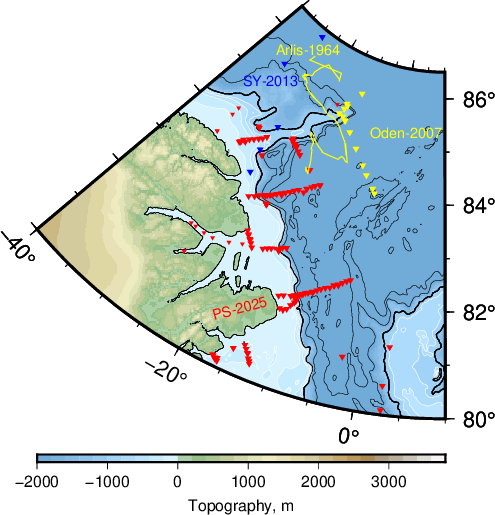
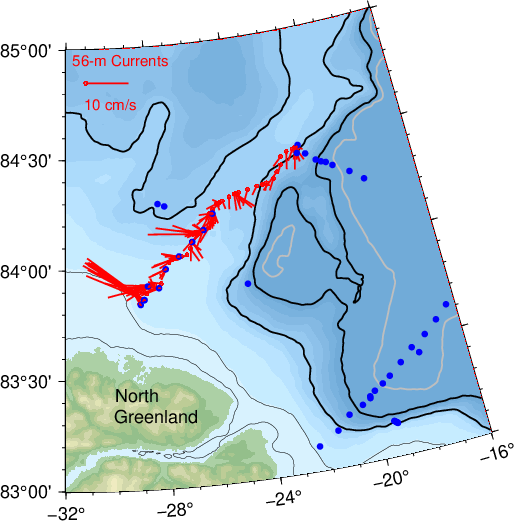
The map above shows where we went to the north of Greenland. I am coloring the coastal ocean shallower than 1000 m in light blue and the deeper ocean in dark blue. Our 2025 Polarstern data are the red symbols while yellow and blue symbols show data locations from 1964 ice island, 2007 icebreaker,  and 2013 helicopter surveys. This area contains the last and thickest sea ice of the Arctic Ocean and prior ocean observations originate from floating ice islands that both the Soviet Union and the U.S.A. used during the Cold War 1947-91 such as the Arlis-1964 track (yellow line). Helicopter surveys collected a few data in 2013 (blue symbols) while the Swedish icebreaker Oden collected data along two lines farther offshore (yellow symbols).

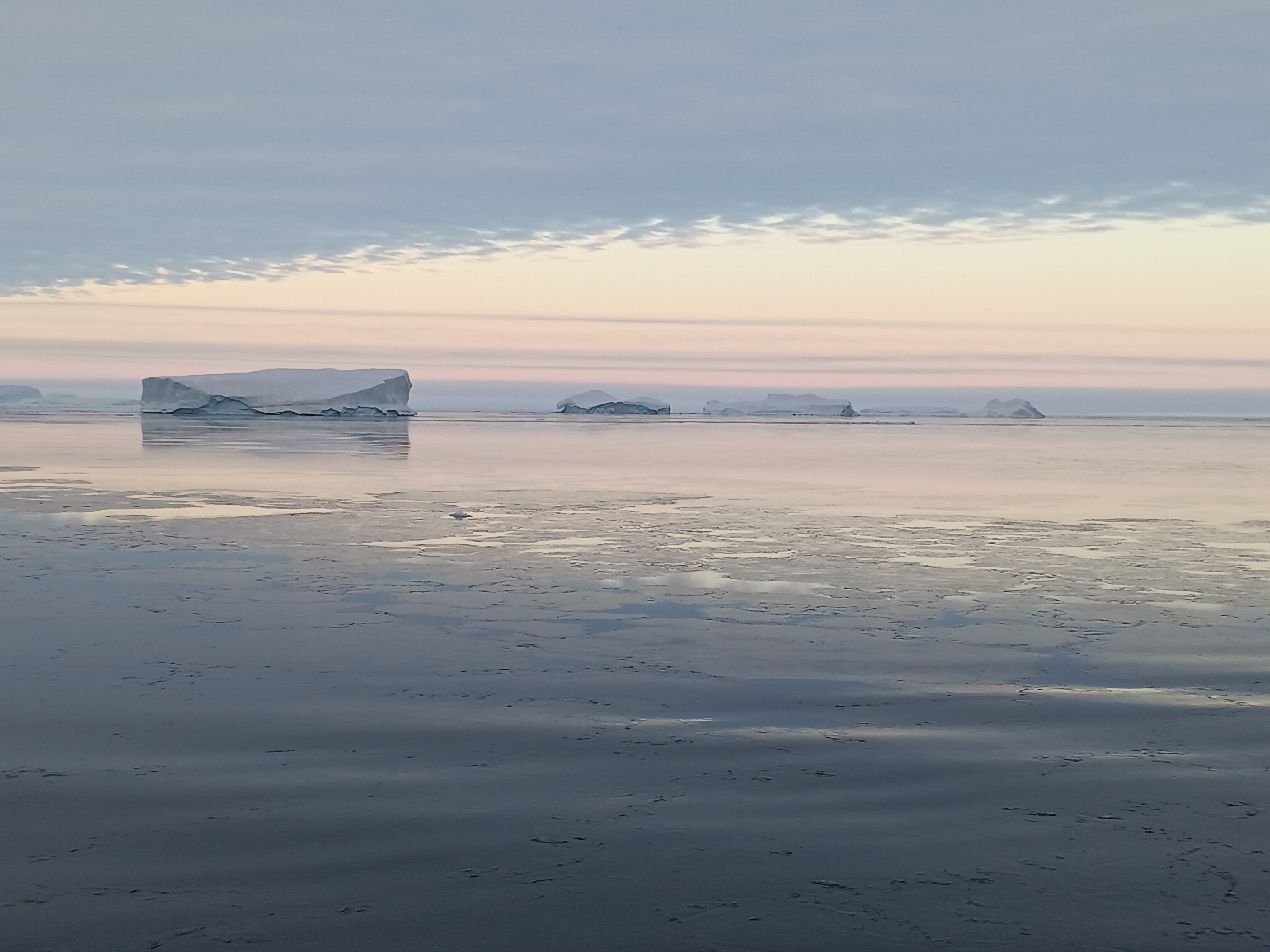
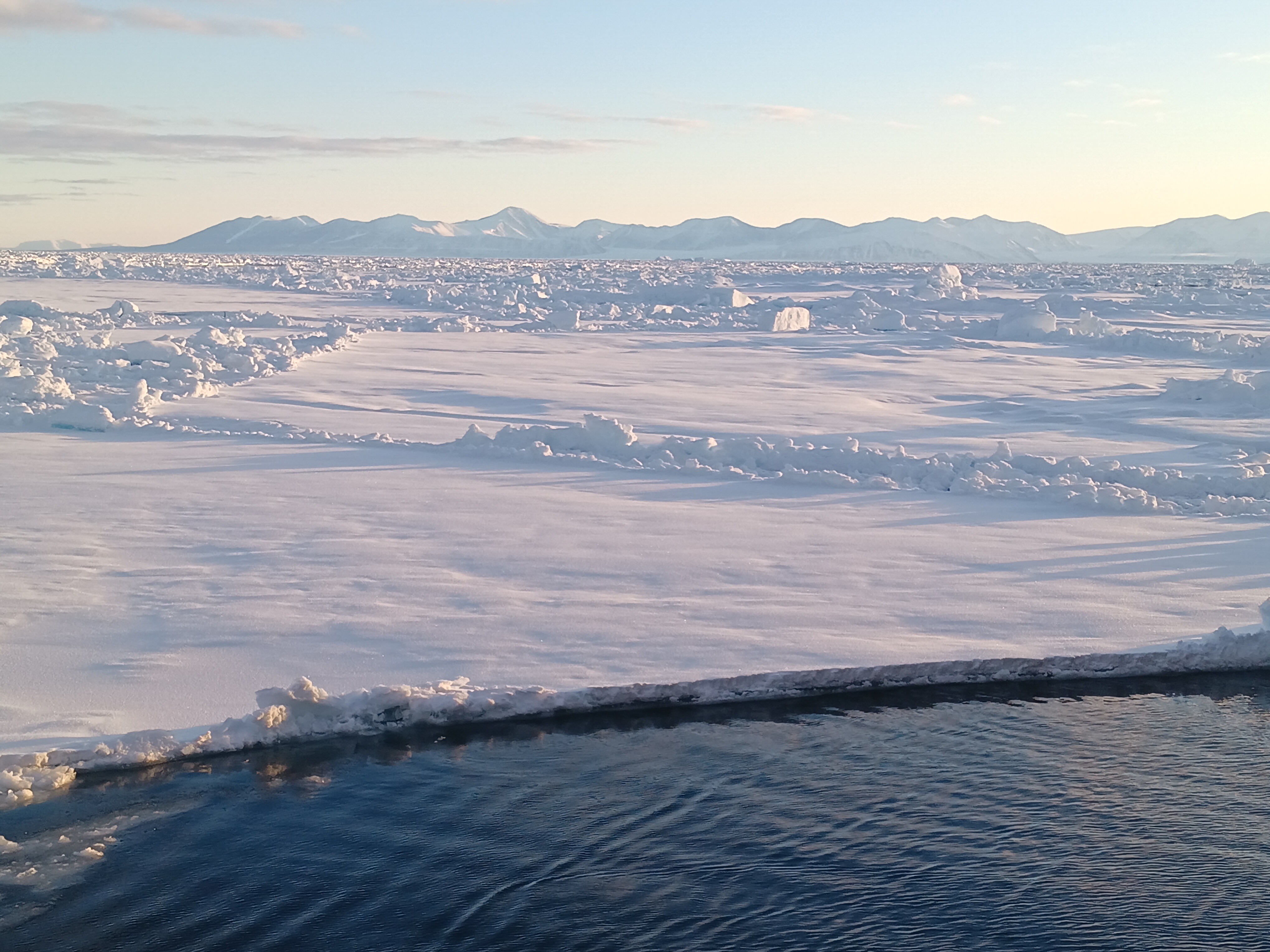
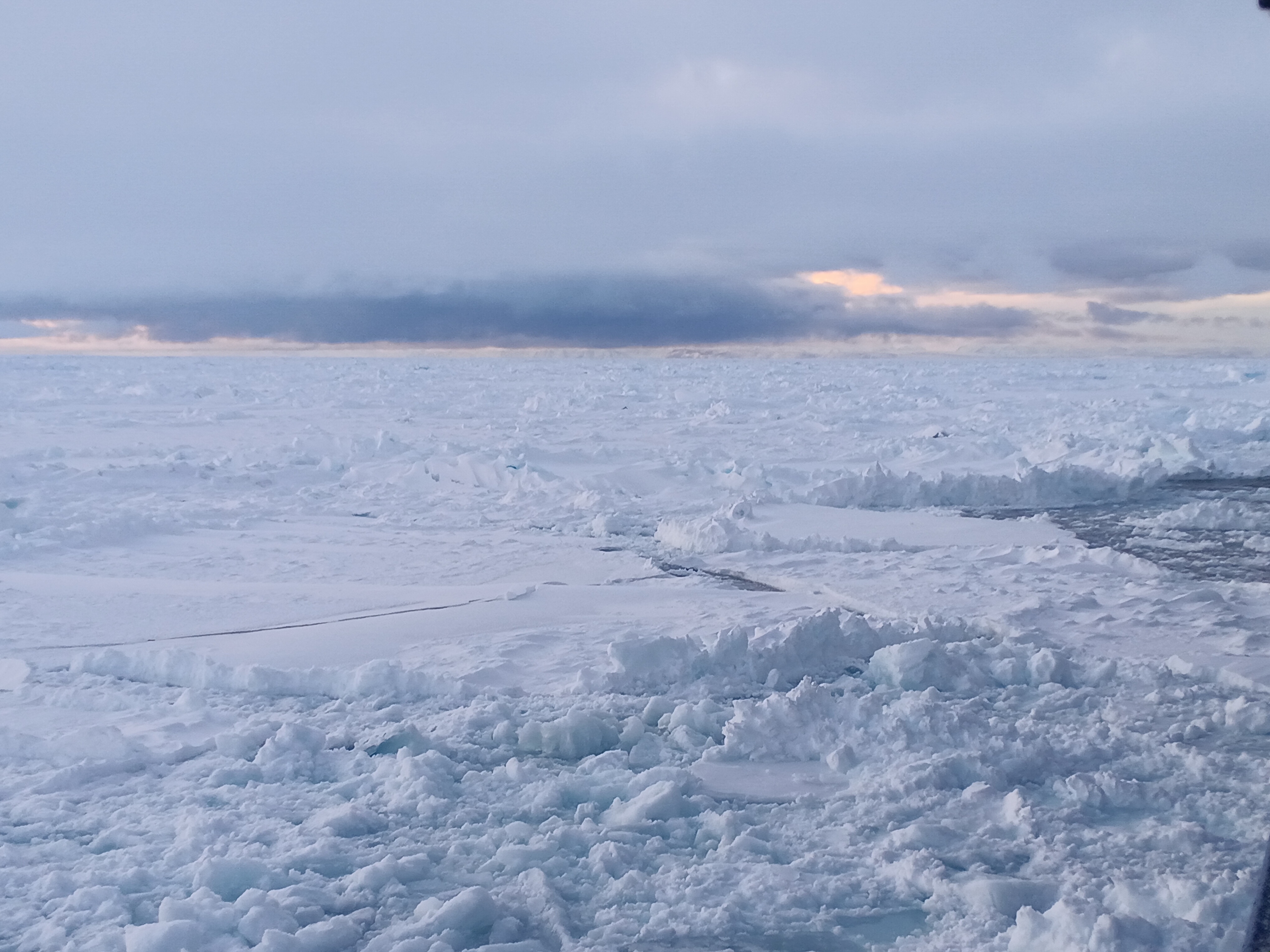
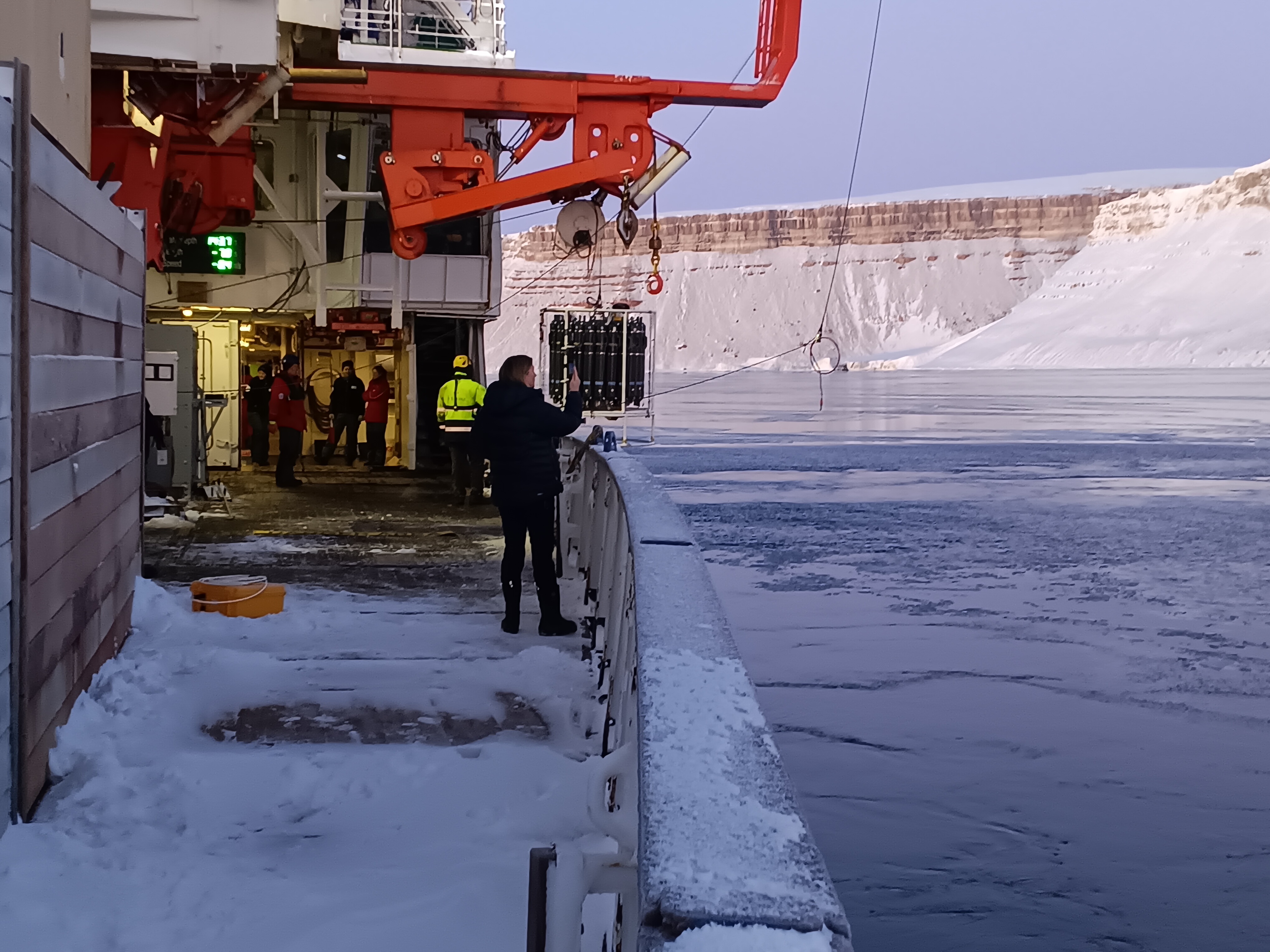
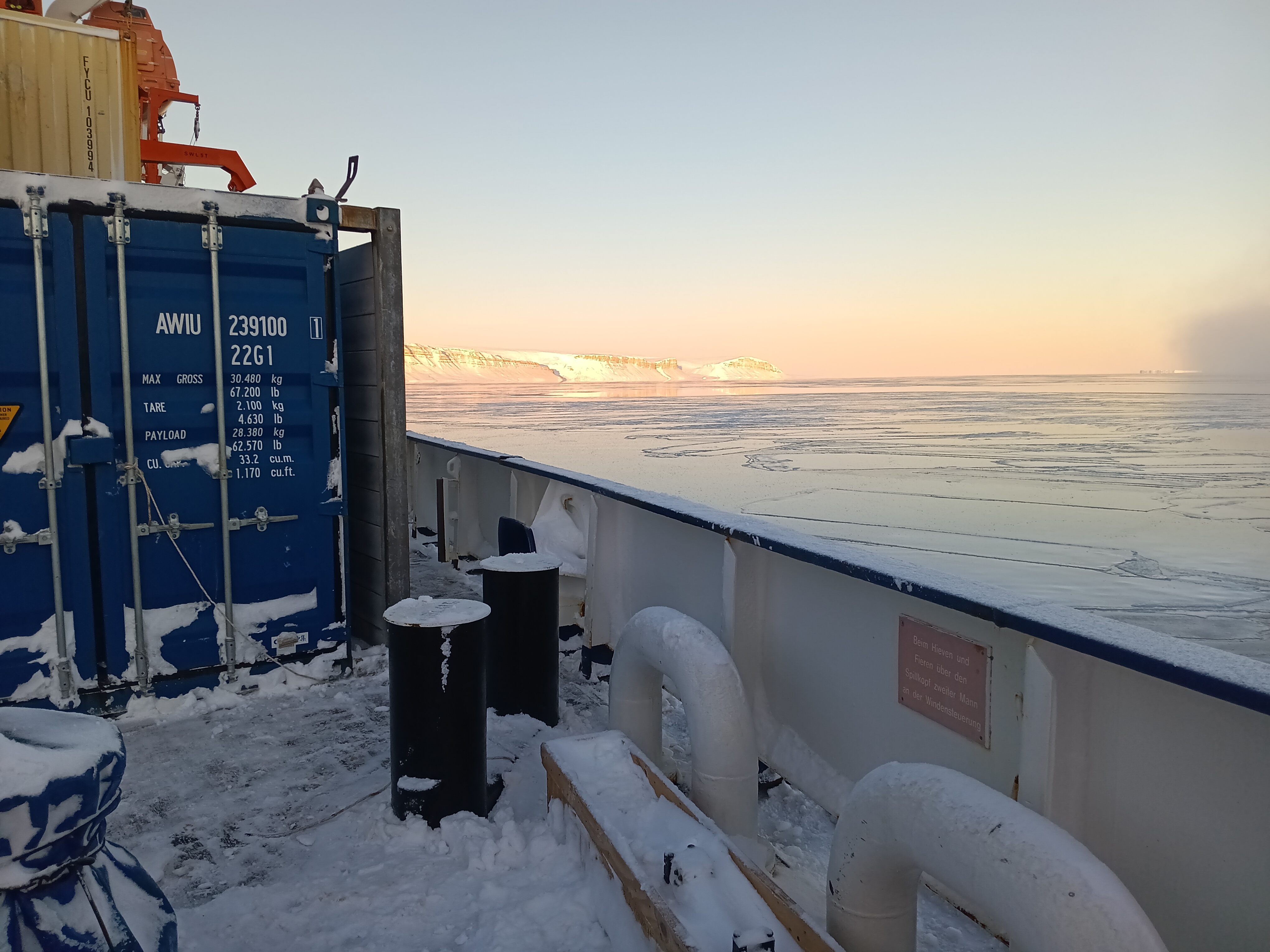
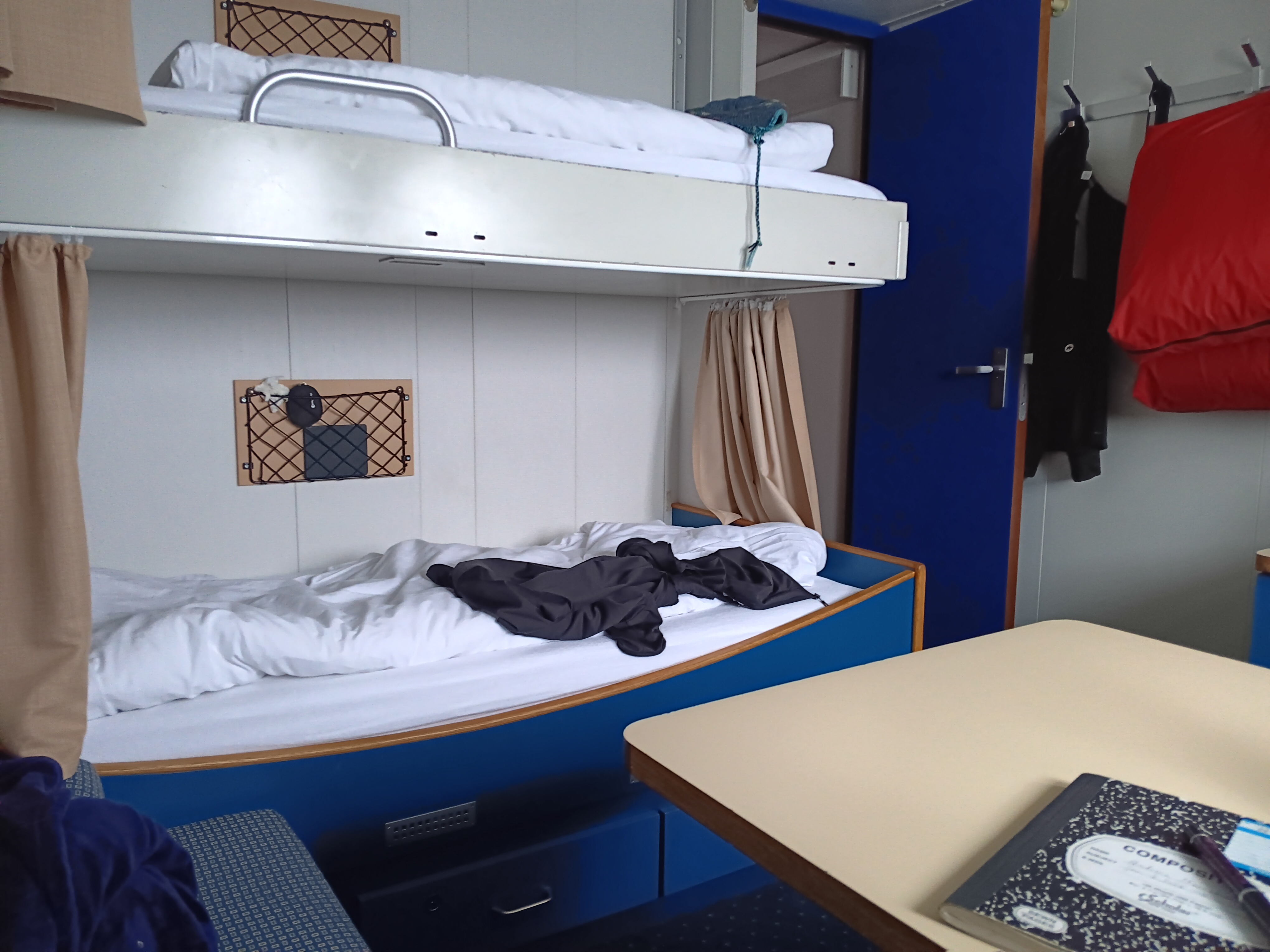
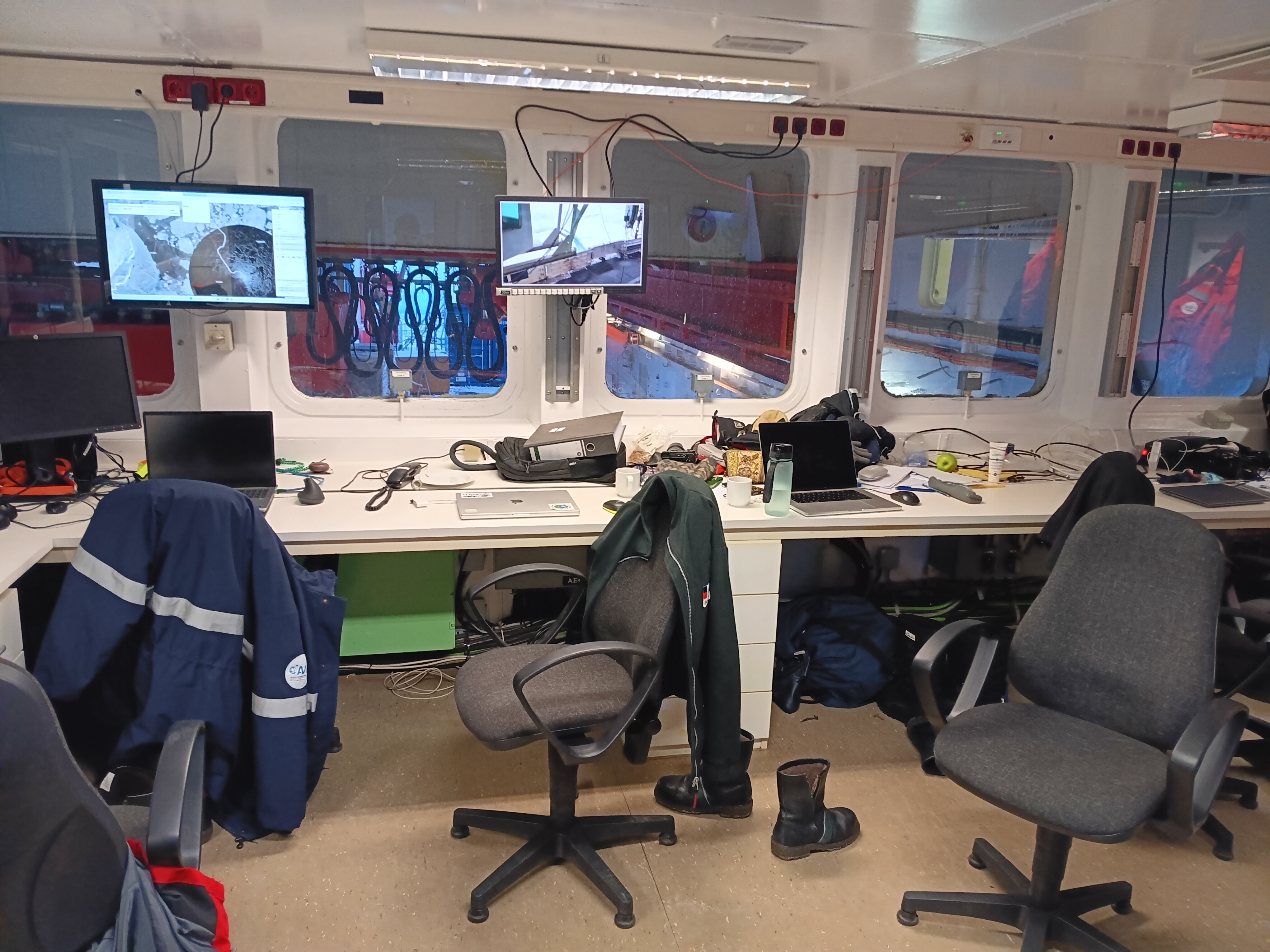
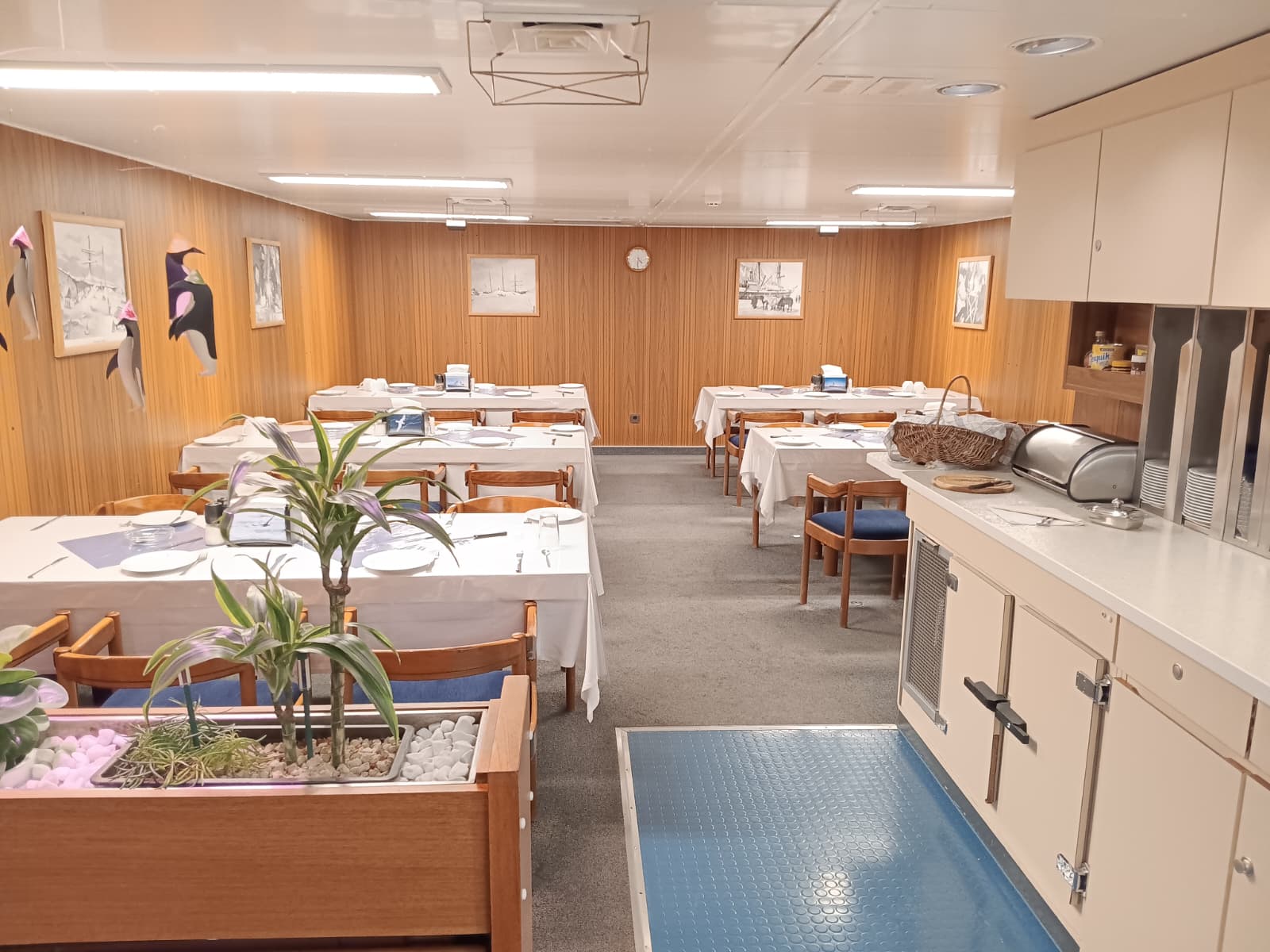
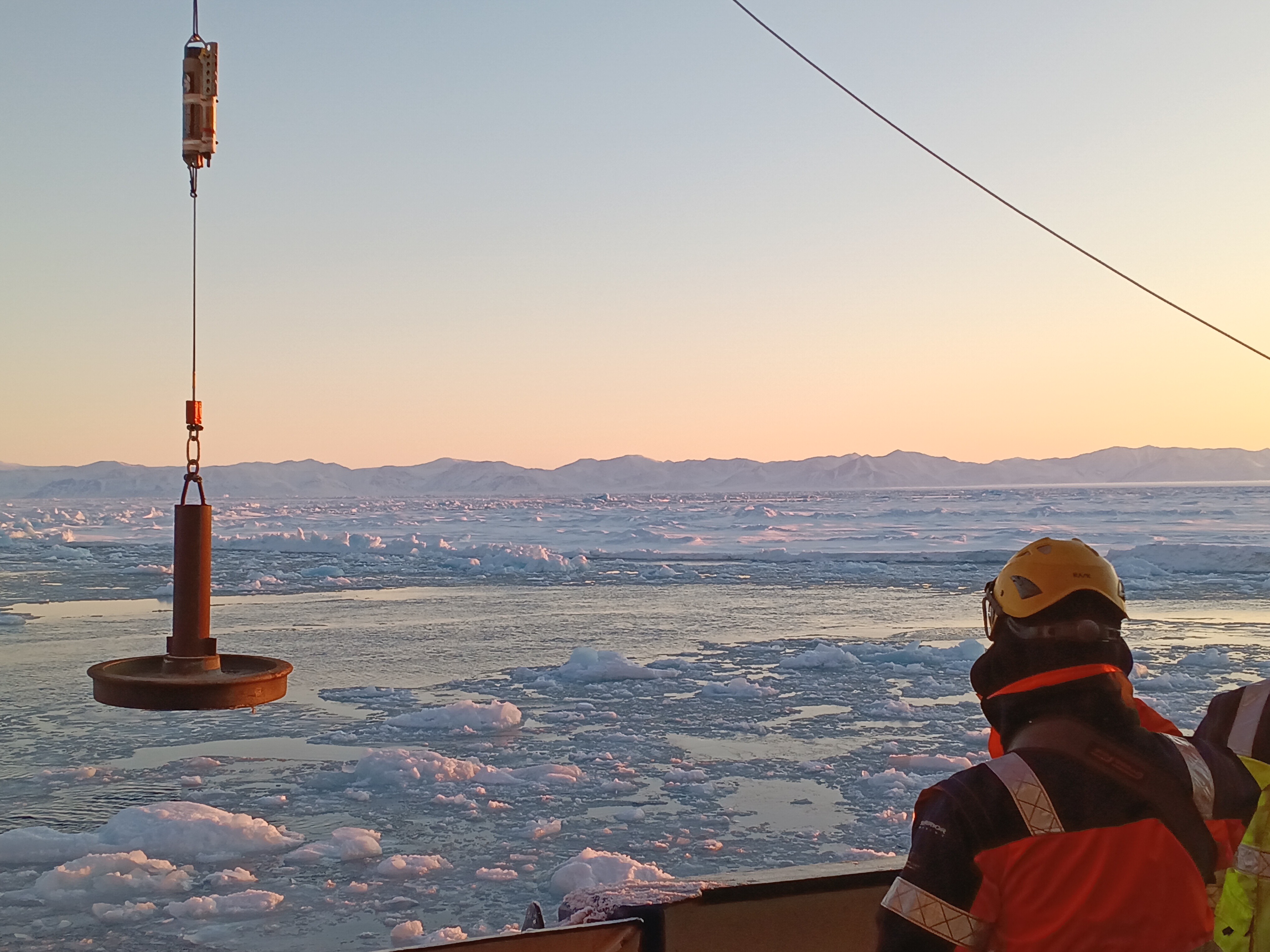
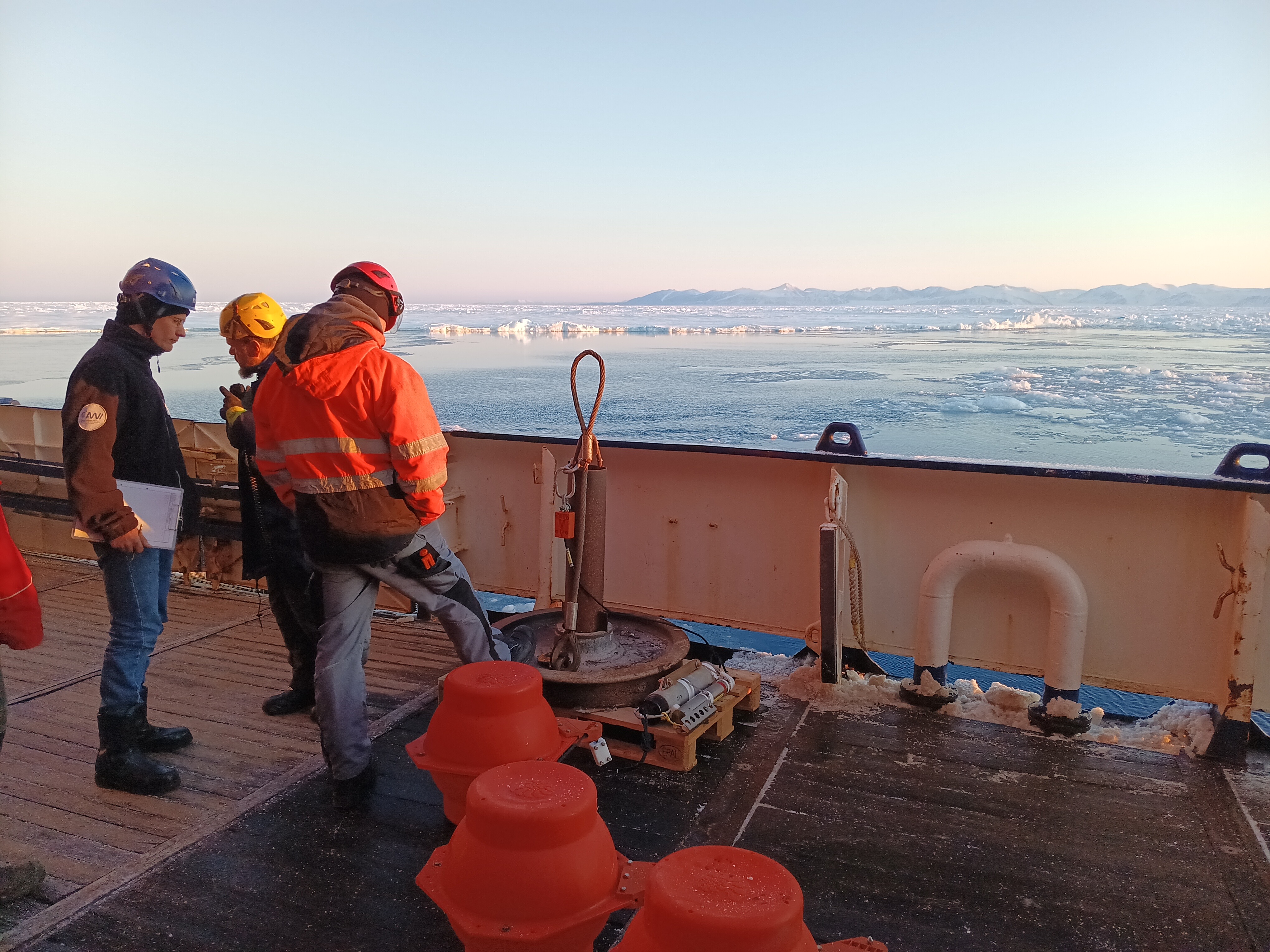
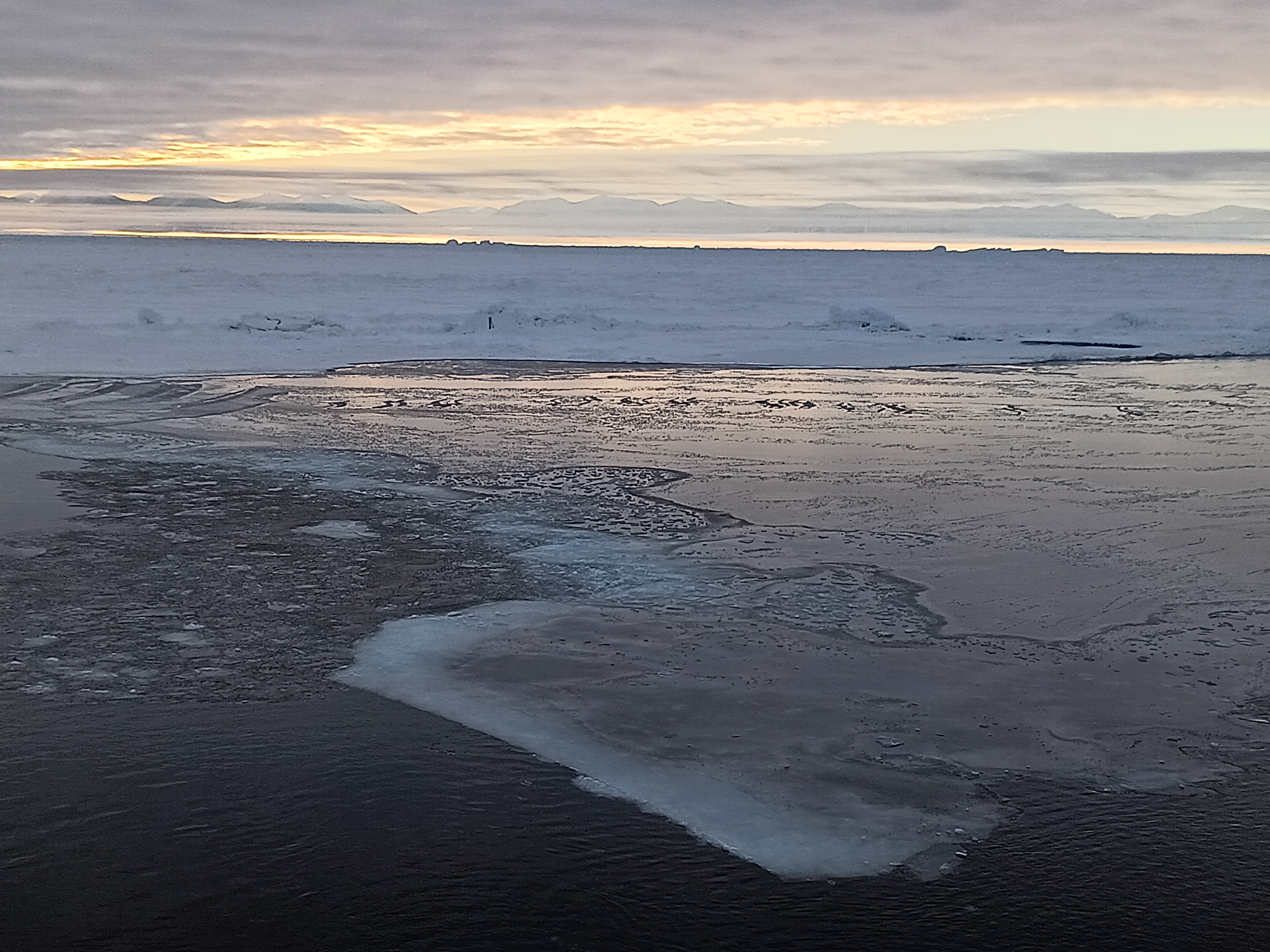
Now how does Greenland look from the ship? Well, there is always ice and it is always cold. The coldest days we had near the coast when the skies were clear. The coldest day we had -20 C, that is -4 F for my American friends, but most of the time we had clouds and storms with temperatures warmer at -12 C (10 F) with clouds and little visibility. It snowed alot and shoveling the ship’s deck was an almost daily chore. A relaxing “cruise” it was not. We worked sensors systems in the windy cold outside during all hours of the day and night. Pictures like the above were almost always taken during my 8 hours “off” that for me was from 08:00 to 16:00, because my shift was from 16:00 to 24:00. After a phone call to my wife after midnight and a peppermint tea to warm up, I slept from 01:00 to breakfast at 07:30. As almost all scientists aboard I shared my cabin with others, so there is not too much privacy. The photos below show my bunk bed (I slept atop), shared work spaces, and the rarely empty dining room. We often ate in shifts, too, because not all 50 people would fit the dining room in one sitting. So we often had 2 sittings. A comfortable living room was next door for desert, tea, coffee, games, and conversations.

Now what about science, you may ask. Here we made a major discovery, I felt. A mathematician used her craft to predict a coastal current to the north of Greenland that, I admit, made no sense to me as it contradicted 30+ years of training and intuition in which direction such currents would flow, that is, the coast should be on the right hand side looking in the direction of the flow. The curious thing was that to the north of Greenland it should go in the opposite direction, that is, with the coast on the left. In Claudia’s numerical computer model run for months on super computers, this current-in-the-wrong-direction was a both prominent and persistent feature. I always discarded it as an unrealistic feature of some computer code run amok. And yet, when we actually reach the coast of northern Greenland and I measure ocean currents from a ship sensor that runs 24/7 to tell me current speed and direction, here this weired or “wrong” current was. It screamed at me from the screen the moment I plotted the data and shared it with Claudia who was aboard with the comment: “Your model is right and my intuition was wrong. Your current is at the same location, the same speed, and in the same direction as your model said it would.” Furthermore, a distinct and separate way to estimate ocean currents from ocean temperature and salinity observations showed the exact same thing. That’s now two good complementary confirmation of the current that nobody has ever seen or measured … until now that we aboard Polarstern did so on Sept.-23, 2025:

The map on the left shows our study area to the north of North Greenland. On it in red are sticks whose length indicate the speed or strength of the ocean current (at 56 meters below the surface) while its orientation gives the direction of the current. The light blue is shallow and dark blue is deep water as before. The current is sluggish offshore with a weak component to the south. In contrast, closest to the coast of North Greenland we find long sticks that point to towards the left (west by north-west). This is Claudia’s Coastal Current.

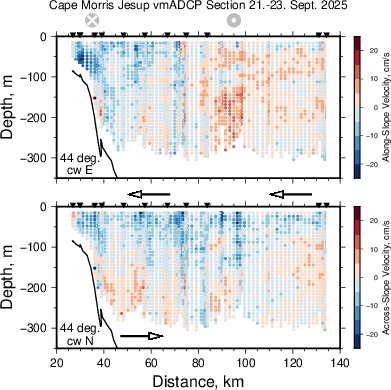
The two plots on the left provide more detail, as it shows how the current varies with depth and distance from the coast along a line from the coast towards offshore. The bottom of the shallow ocean is the black line from 100-m to 350-m meter at a distance of 20-40 km from the coast. The top-left panel shows the current (in colors) across the section where blue colors indicate currents flow into the page while red colors indicate currents that flow out of the page towards us viewing it with the coast on the left. The bottom-left panel shows the velocity component along the section with a flow that is mostly onshore near the surface.

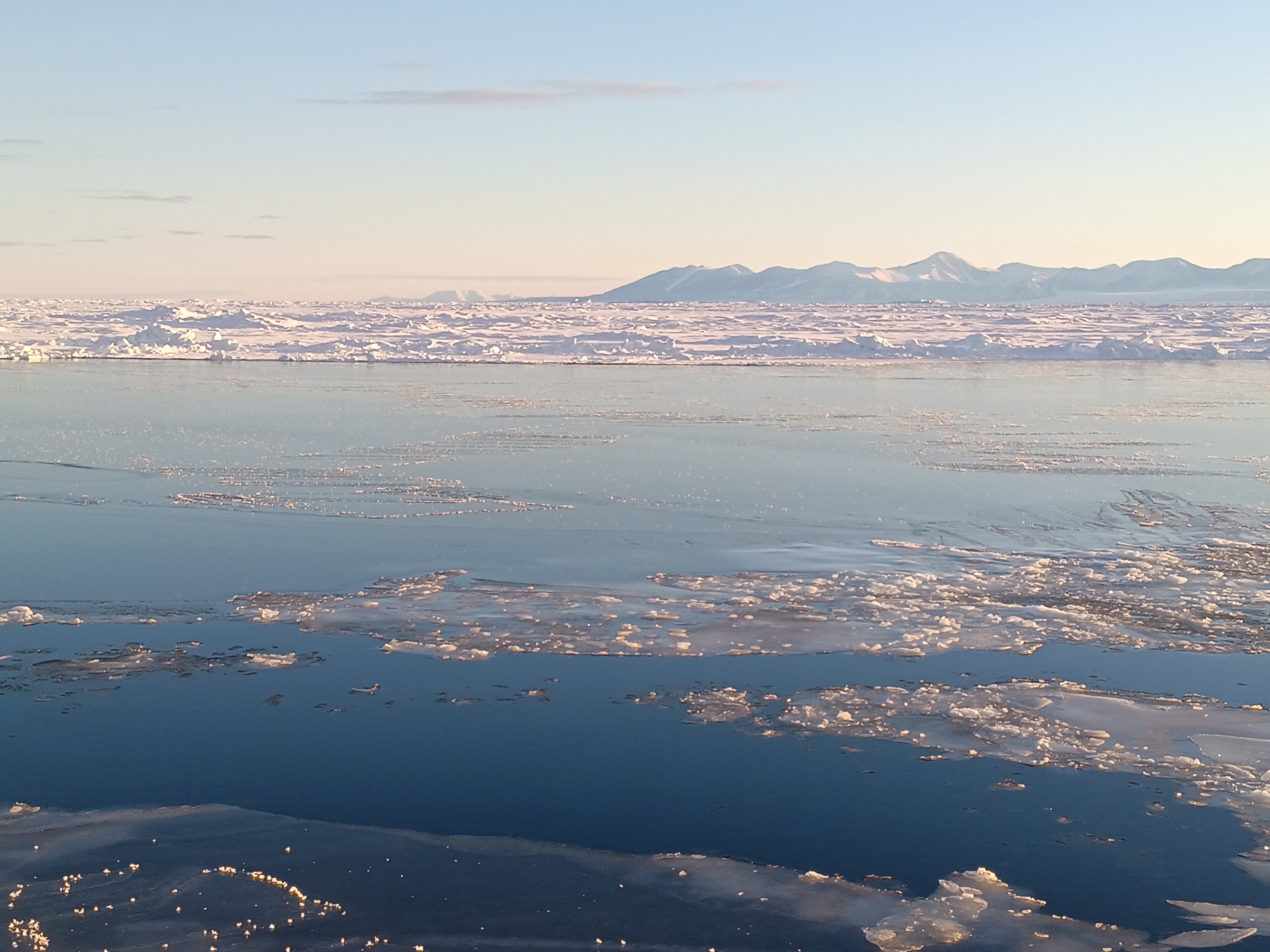
There is so much more to this story as well as additional stories, notice the red dots in the top-left panel between 150-m and 300-m depth that indicate a strong flow to the south and east, but I save this for later. I also do not wish to tell you about the two ocean sensors we quickly deployed at this location to stay there until we, perhaps, recover them with new data next year or the year there after. I do wish to close this essay, however, with the view of Greenland that we had where we discovered Claudia’s coastal current. Science is fun, exciting, and always surprises.

Faith, Freedom, and War: German Summer School in Ukraine
The Ukrainian Catholic University in Lviv invited me to teach at their Summer Language School. Until last week I worked with ~50 Ukrainian students from about 10 in the morning to 5 in the evening monday through saturday. We met daily in classrooms, on the lawn outside, and in pubs over food and beer. The main purpose of the Summer School for the 17-21 year old students was to learn German as their second, third, or fourth foreign language. Their Ukrainian teachers knew every rule of German grammar, spoke perfect German, and half of them had PhDs in German literature, linguistics, education, and/or language theory.

Students and teachers alike love their country, their faith, and their freedom deeply. All hate the war that Russia wages on them personally: Every day Russia tries to kill them by drones and missiles, tries to erase their history, tries to pillage their resources, and tries to exterminate their language, culture, and freedom. Russia’s war is present in Ukraine at every location for every person at all times. Nevertheless, I went to open-air concerts, bars, restaurants, and churches filled with joyous young and old people with and without small children. This very public life serves as a defiant and powerful act of resistance to Russia’s war as does vibrant street art and music.
The people of Ukraine need our weapons to protect their freedom to be human and to be free from the violence, terror, and oppression imposed by Russia on them. Never have I seen a people believing in God as strongly as the Ukrainian students and teachers whom I met last 3 weeks. Furthermore, Lviv centers many overlapping faiths with churches of the Greek Catholic, Roman Catholic, Armenian Catholic, Ukrainian Orthodox, Russian Orthodox, and even a small Jewish community. Furthermore, I met both atheist and agnostic students studying at the Ukrainian Catholic University. This rich and diverse tapestry of believes exists in overlapping circles of ancient history, song, prayers, and common purpose. All are united and opposed to Russia’s terror of random death by drone or missile. People are tired, yes, tired and exhaused by 3.5 years of war, but people are united for the noble purpose to be free, to be at peace with their neighbors, and to be part of a liberal and democratic Europe. Russia responded to these desires with war, because Russia perceives a free, creative, and productive Ukraine as a threat to its own sclerotic, decadent, and corrupt society.

Unlike Russia, Ukraine values individual life and liberty, but Russia has 4 soldiers for every one Ukraine has. How can I best help my Ukrainian friends in their just defence to protect their freedom and to be part of a peaceful Europe? They need air defence radars and missile systems, they need artillery shells and cannons, they need tanks, helicopters, and fighter jets, they need drones and electronic jamming gear. I struggle with this question, write and call my U.S. senators and Congresswoman in Delaware to support Ukraine, and talk to friends and family about my travels to Ukraine, but it all seems puny and I am frustrated and impatient. In those moments I recall the wise words passed on to me 2 weeks ago by an older man of Irish-Catholic faith:

Act like the world depends on you,
but pray it depends on God.

Ignatius of Antioch (~100 AD)
Ignatius of Antioch

Walking Lviv 2024: Legacy of Viking, Russian, and German Occupations

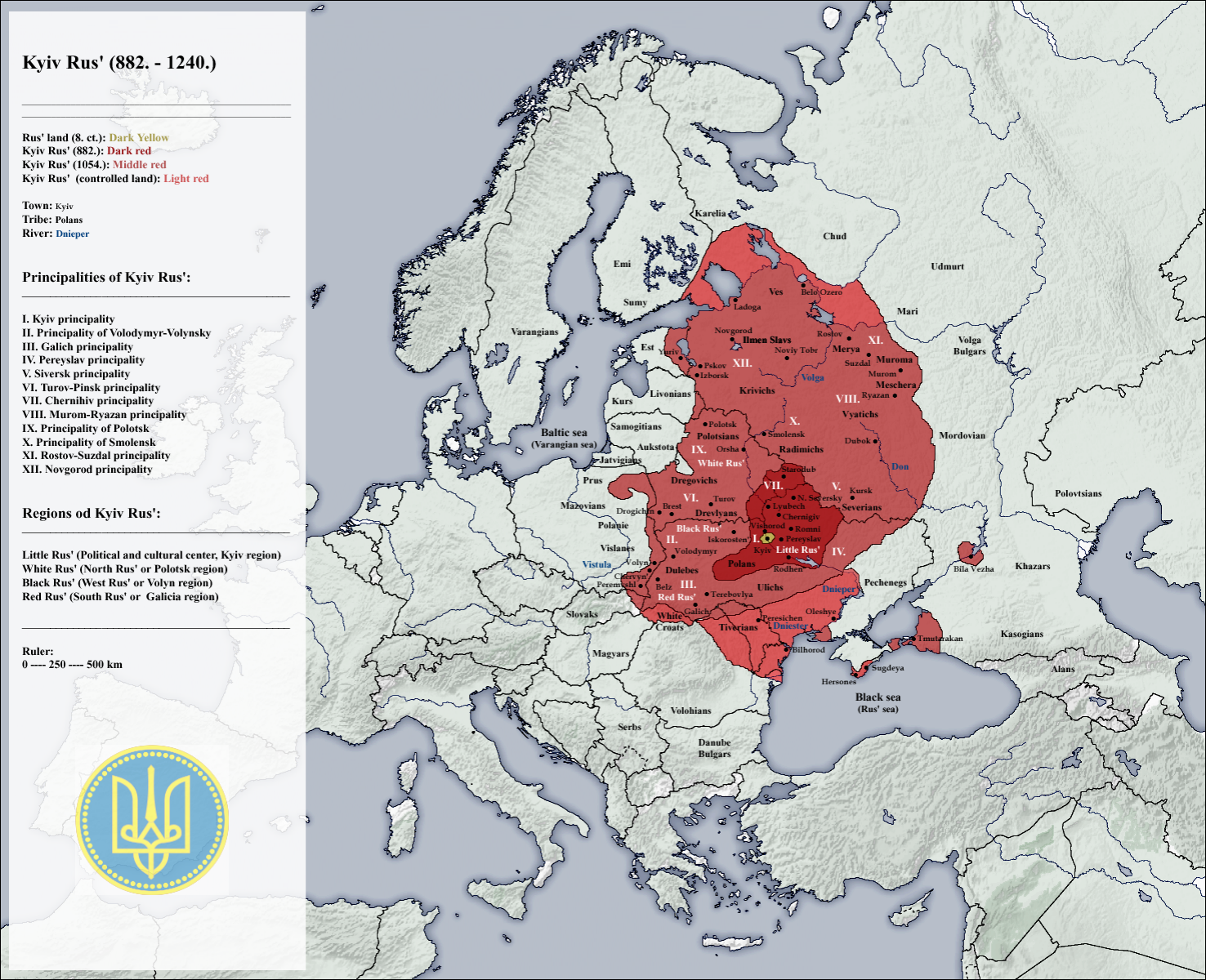
The Russian dictator Vladimir Putin claims Ukraine based on a false reading of “Kyivan Rus” (see map below) about 1100 years ago. With equal ignorance I here claim it for Sweden or Denmark or Lithuania or Poland, because the Kyivan Rus were a mishmash of Slavic, Viking, and nomadic tribes who settled and ruled the forests and steppes between the Baltic and Black Seas between 800 to 1100 AD. Furthermore, while “Rus” is the root for “Russia” (or “Russland” in German), “Rus” derives from the Old Norse “rods” which means “men who row.”

Putting another spin on old histories, I proclaim that Russia is, historically, a fringe principality that belongs to Ukraine. So, lets call Putin’s claim to Ukraine what it is: A colonial, imperialistic land grab along the same lines of an Adolf Hitler and a Joseph Stalin who divided Eastern Europe in 1939 with no regard to the people they both oppressed and slaughtered. Visiting Lviv in the summer of 2024, I find the bloody histories of these “Bloodlands” (Snyder, 2010) everywhere:

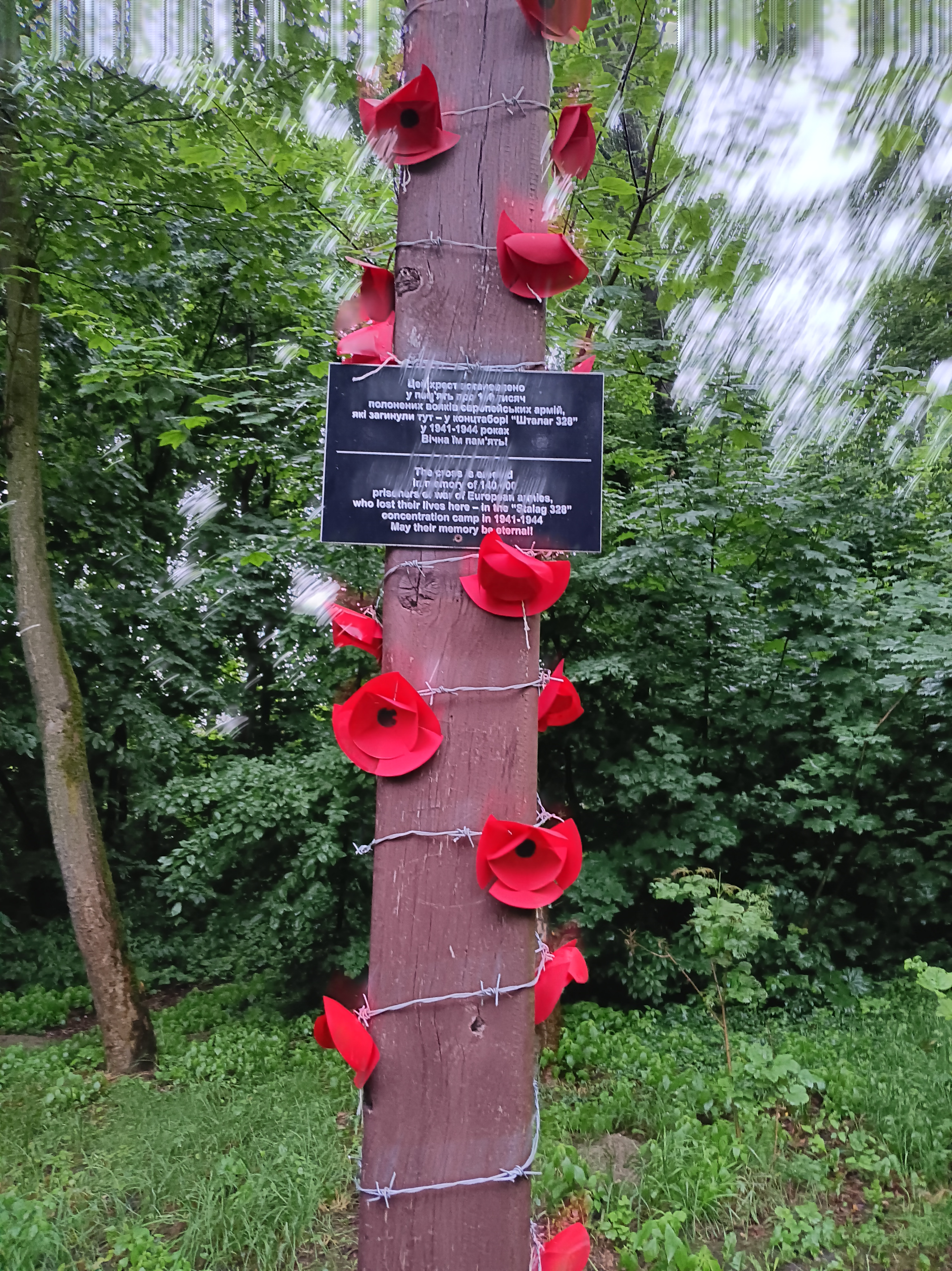
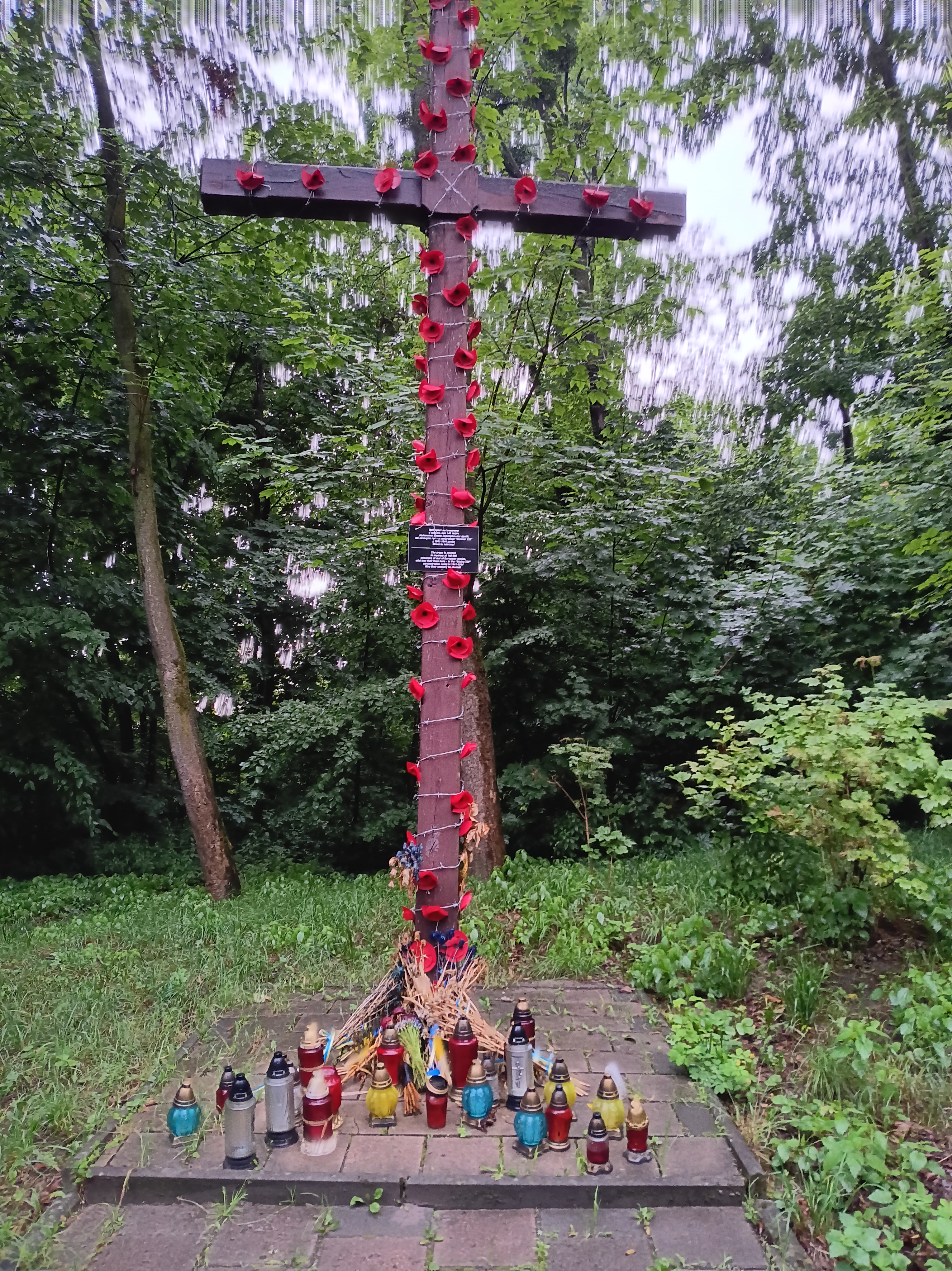
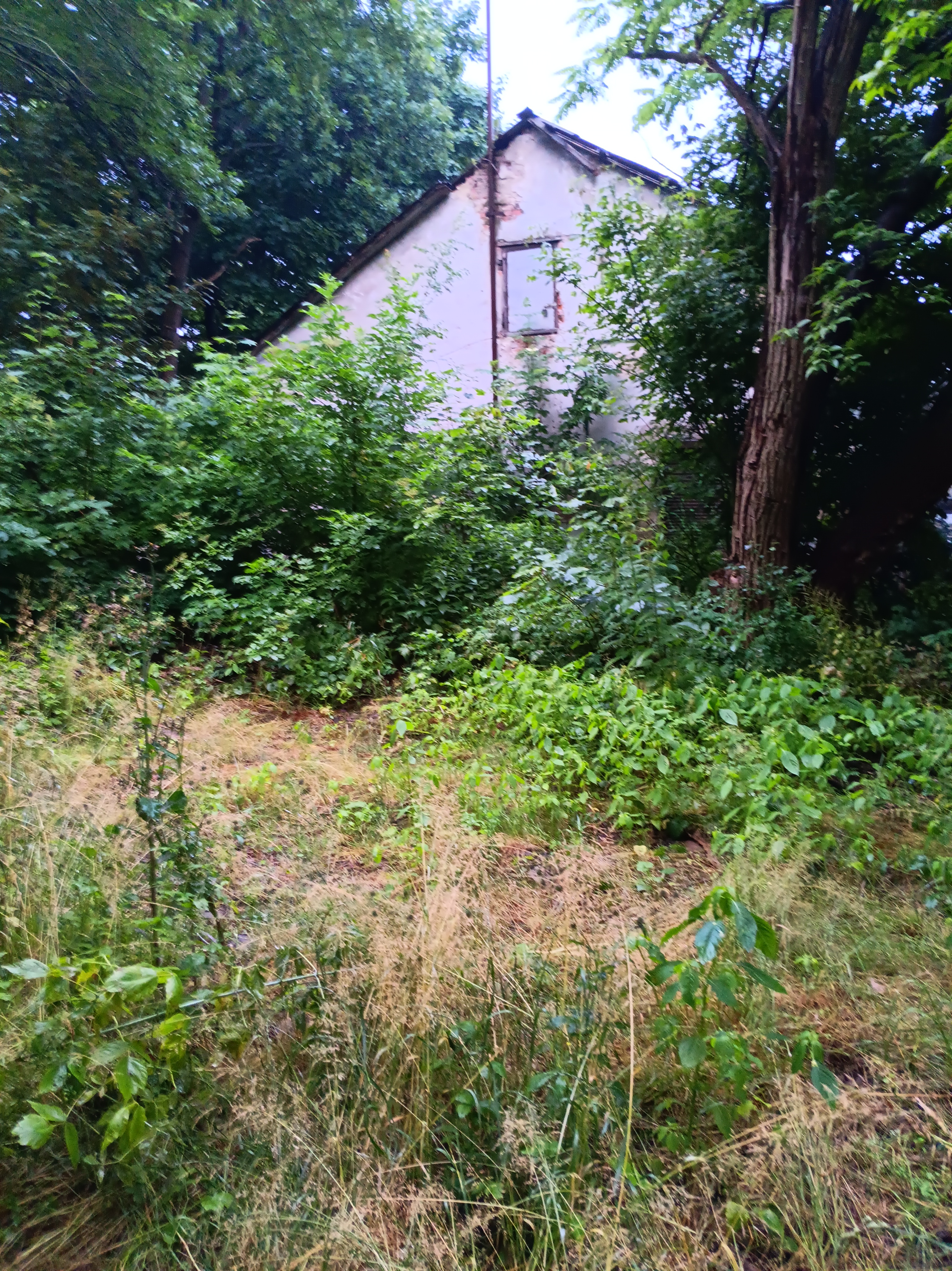
On my evening stroll on my first day in Lviv I stumble across an overgrown and unkept green space at the end of a small and winding residential street up a hill. Along my accidental path I find a 10 feet high wooden cross near semi-collapsed and overgrown one-story buildings that resemble barracks. Red poppies and barbed wire enclose the cross while burnt candles litter its base. An inscription in both Ukrainian and English tells me, that I am standing within Stalag-328 where 140,000 prisonors of war (POW) were murdered 1941-44. Nazi-Germany maintained this POW camp where the death rate among its Soviet, Belgian, French, and Italian soldiers exceeded 50%.

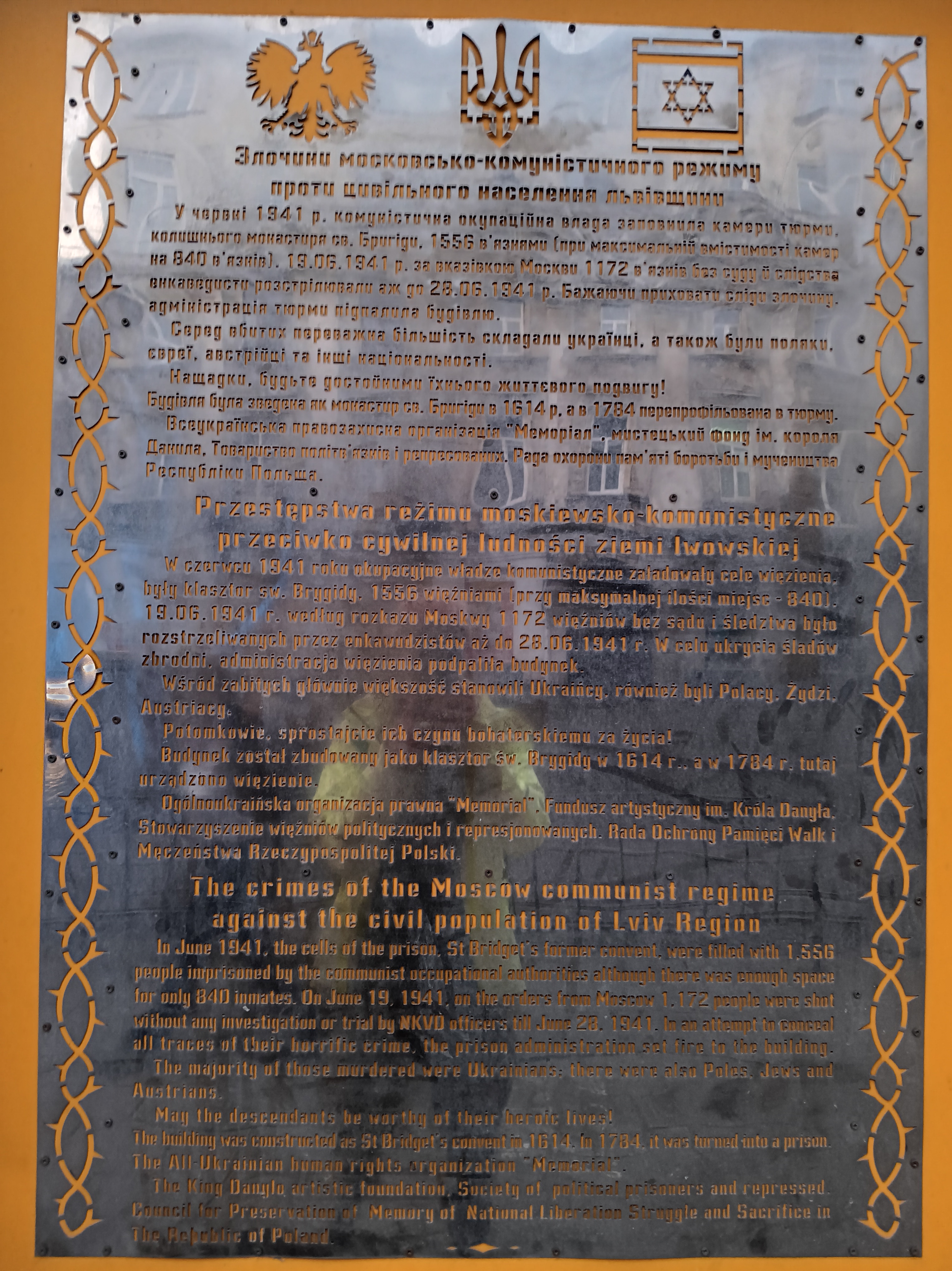
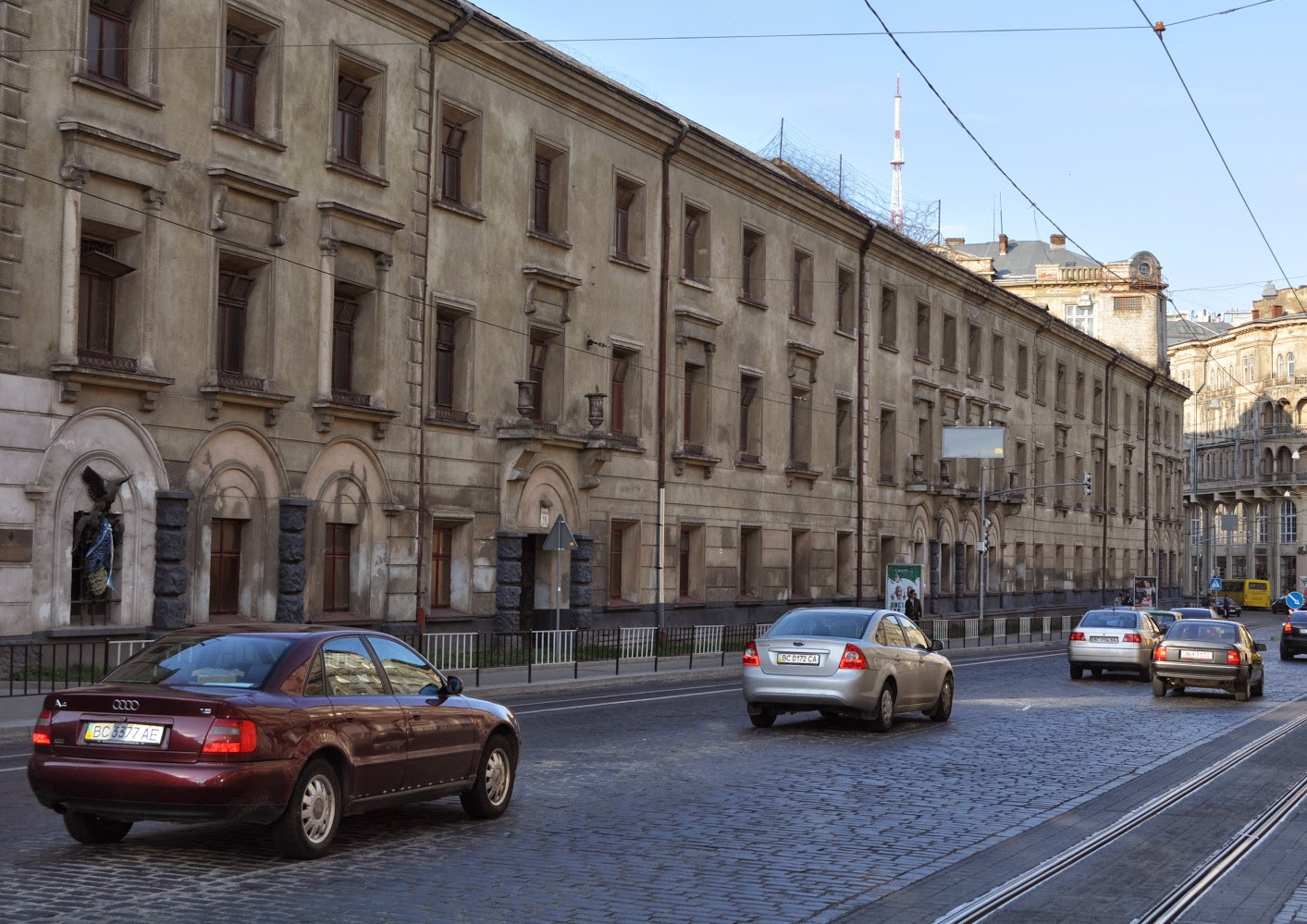
Half an hour later I find a huge 3-story building along a busy road that covers an entire city block. Later I find out, that this is the St. Bridget’s Convent for Women built in the 17th century, but it serves as a prison for the last 250 years which perhaps explains its decrepit look on Horodotska Street. On one of its walls I find a plaque in Ukrainian, Polish, and English stating that the Stalin’s Secret Police, the NKVD, shot 1,172 citizens of Lviv in this building on 19th of June 1941. This massacre at the Brygidki prison was part of a mass killing throughout Soviet occupied Poland and Ukraine.

For context, the Hitler-Stalin treaty of 1939 divided Poland such that Lviv was occupied by Stalin’s troops from 1939-41. About 1.25 Mil. “Enemies of the People” of Polish and Ukrainian descent where deported in 2 years. This occupation ended when Nazi-Germany invaded the Soviet Union and captured Lviv on 30th of June 1941. Throughout Lviv, Poland, and Ukraine the NKVD committed massacres of local populations. In Lviv alone about 7,000 Ukrainian, Polish, and Jewish citizen were shot or blow up in their prison cells days before Hitler’s troops entered the city to start another massive killing cycle.

Immediately after German troops occupied Lviv progroms of the Jewish population started. Encouraged and supported by German authorities members of the Organization of Ukrainian Nationalists (OUN) belonging to militias of Stepan Bandera participated in the progroms June 30 to July 2 and July 25 to July-30 (Himka, 2011). More than 6,000 Jews were murdered this first month of German occupation of Lviv. Inciting the local population to round-up, humiliate, and kill Jewish men, women, and children, German propaganda justified the progroms with the NKVD massacres by falsely blaming the Jewish population for it. While OUN leadership never directly endorsed participation in the progroms, they also did nothing to stop their members who participated enthusiastically. Their hatred of Poles and Jews, however, was part of an ideological program modeled on the German and Italian totalitarian regimes headed by Adolf Hitler and Benito Mussolini.


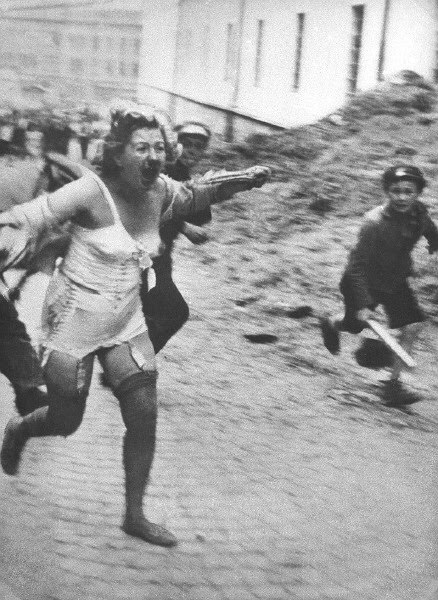
“Jewish woman chased by Ukrainian crowd during the pogrom. Yad Vashem Photo Collection, 80DO2″.

The photo above was taken the first day of the Lviv Progrom July-1, 1941 by an unknown photographer who stands on Vesela Street a block north-east of the Opera House. I walked those streets admiring street art and murals not knowing what had happened on these streets 83 years before: A grown woman has her dress ripped off, has her face bloodied, and is chased with wodden sticks by a mob of teenagers. She has only shoes and undergarments left to protect her, as she runs up a hill in terror while a large crowd of spectators in the background care not. Himka (2011) reproduces this photo and places it into a larger context.

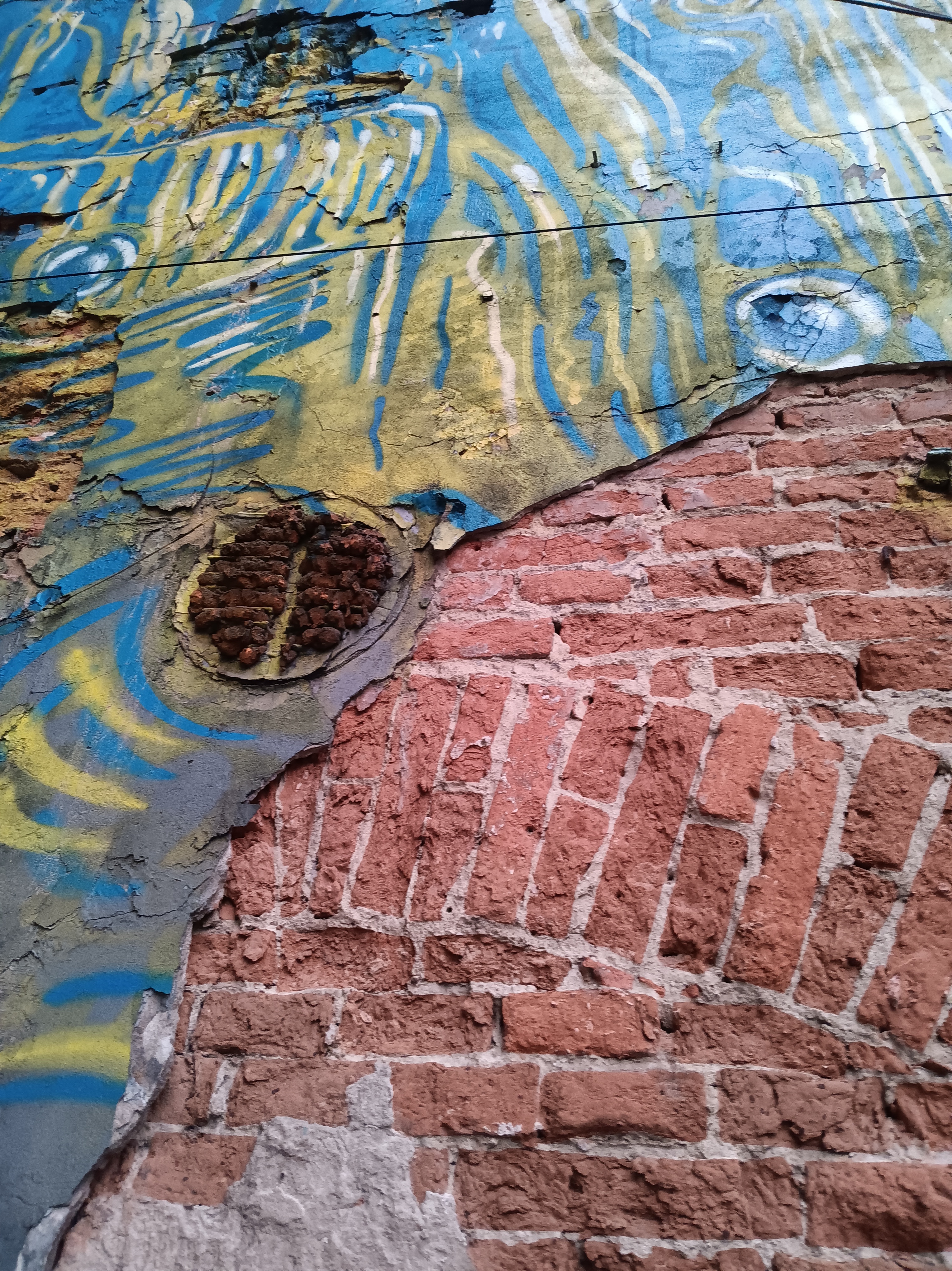
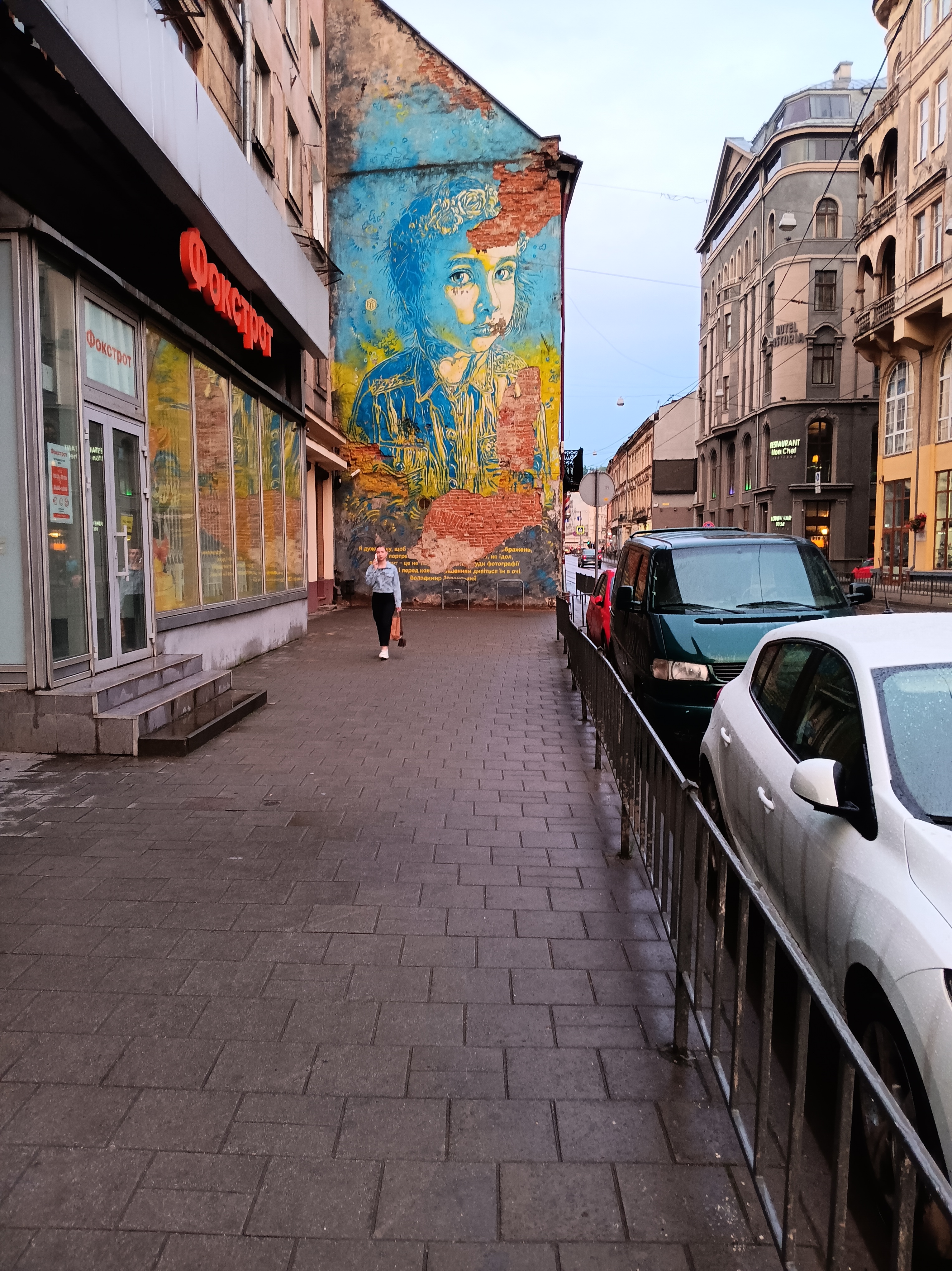
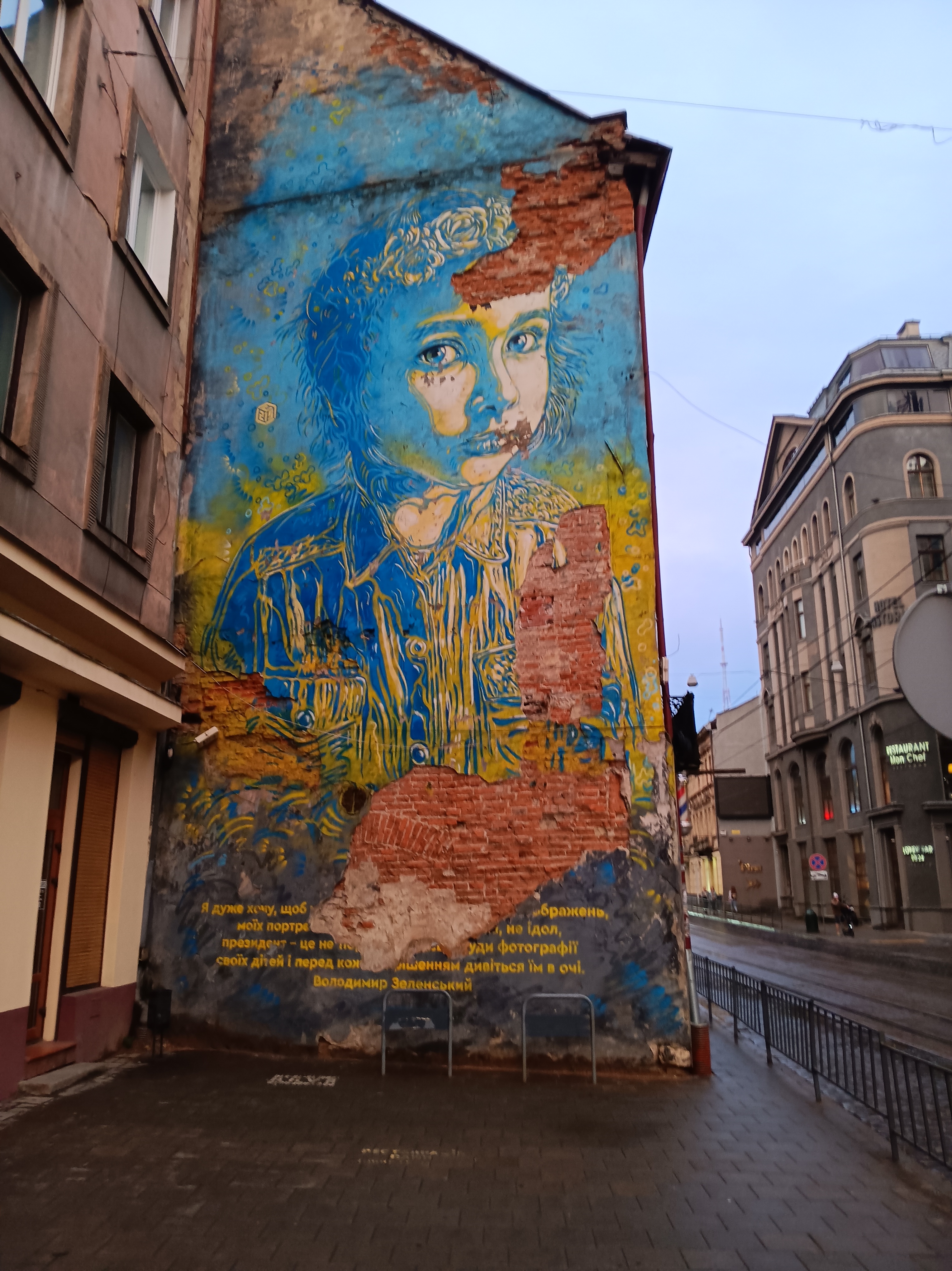
On my way home from Brygidki Prison I pass a beautiful mural that brings me back into the present. The blue and yellow of the mural reminds me of the colors of the Ukrainian flag. The braided flowers on the head perhaps symbolize this person as a women from Ukrainian. In my present sad mind, I see the the same human in both the symbol of a Ukrainian woman in this mural and the actual Ukrainian women in the 1941 photo. The paint peeling reveals red brick and an arch, but I also see an accidental thumbs-up sign in red. The mural is about two blocks west of the Opera House and thus near the center where the Lviv progroms took place.

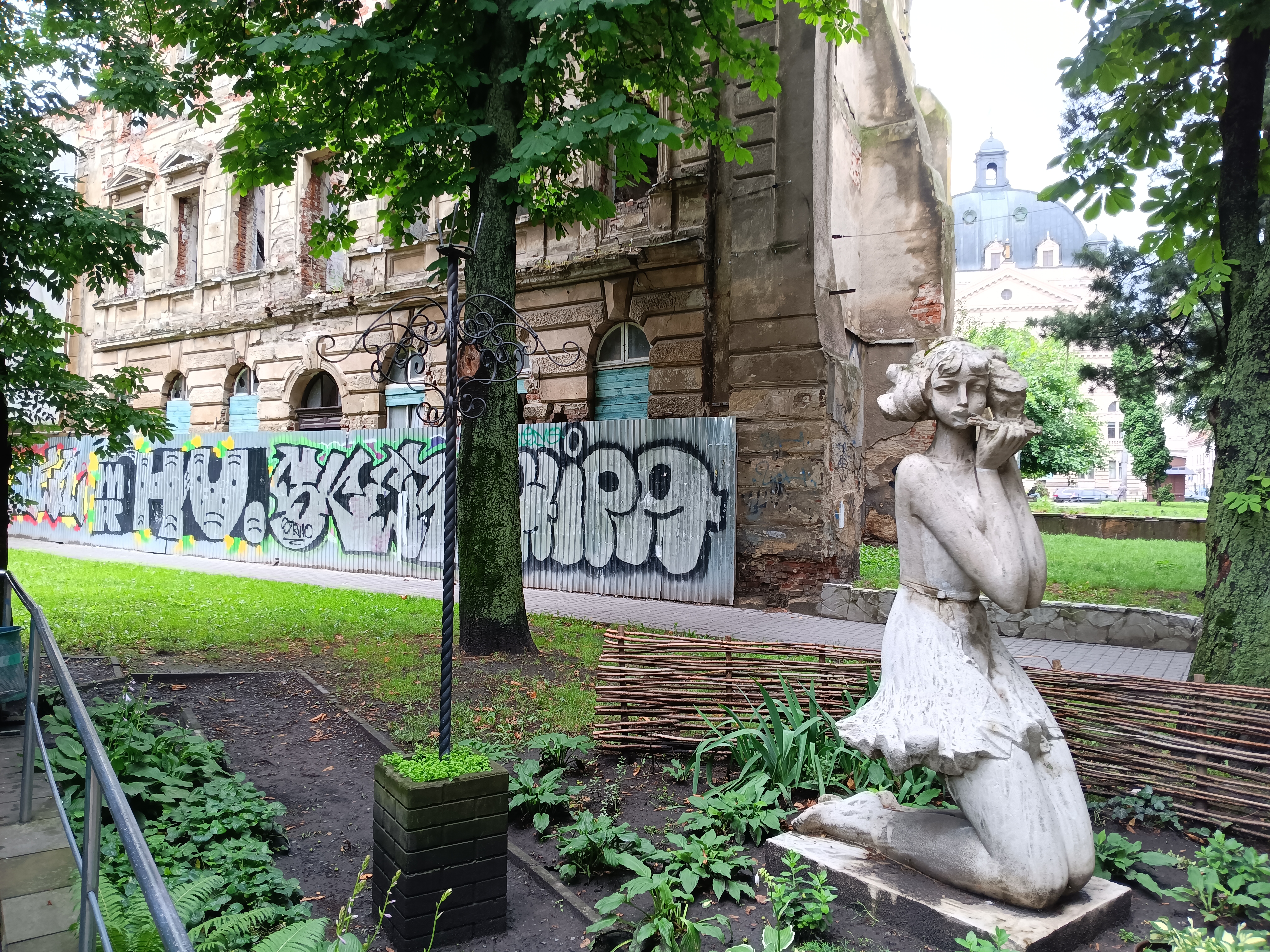
The bottom photo shows the Opera House from the north. There probably is a story in the small peaceful statue and the building directly behind it, but I do not (yet) know it.

Later that day my first Air Raid Alarm woke me up at night. In this war Vladimir Putin wants to re-establish the old Soviet Empire with the boundaries that Hitler and Stalin had agreed upon in 1939. The past is in the present and both are insane.

P.S.: Edited Oct.-20, 2024 by rewriting the last paragraph and removing some ill-fitting photos.

References:

Himka, J.-P., 2011: The Lviv Pogrom of 1941: The Germans, Ukrainian Nationalists, and the Carnival Crowd. Canadian Slavonic Papers, Vol. 53, No. 2/4, 209-243.

Plokhy, S., 2021: The Gates of Europe, a History of Ukraine, Basic Books, New York, NY.

Snyder, T., 2010: Bloodlands, Europe between Hitler and Stalin, Basic Books, New York, NY.

Lviv, Ukraine, 2024: A Traveler’s Perspective on History, Culture, and Conflict

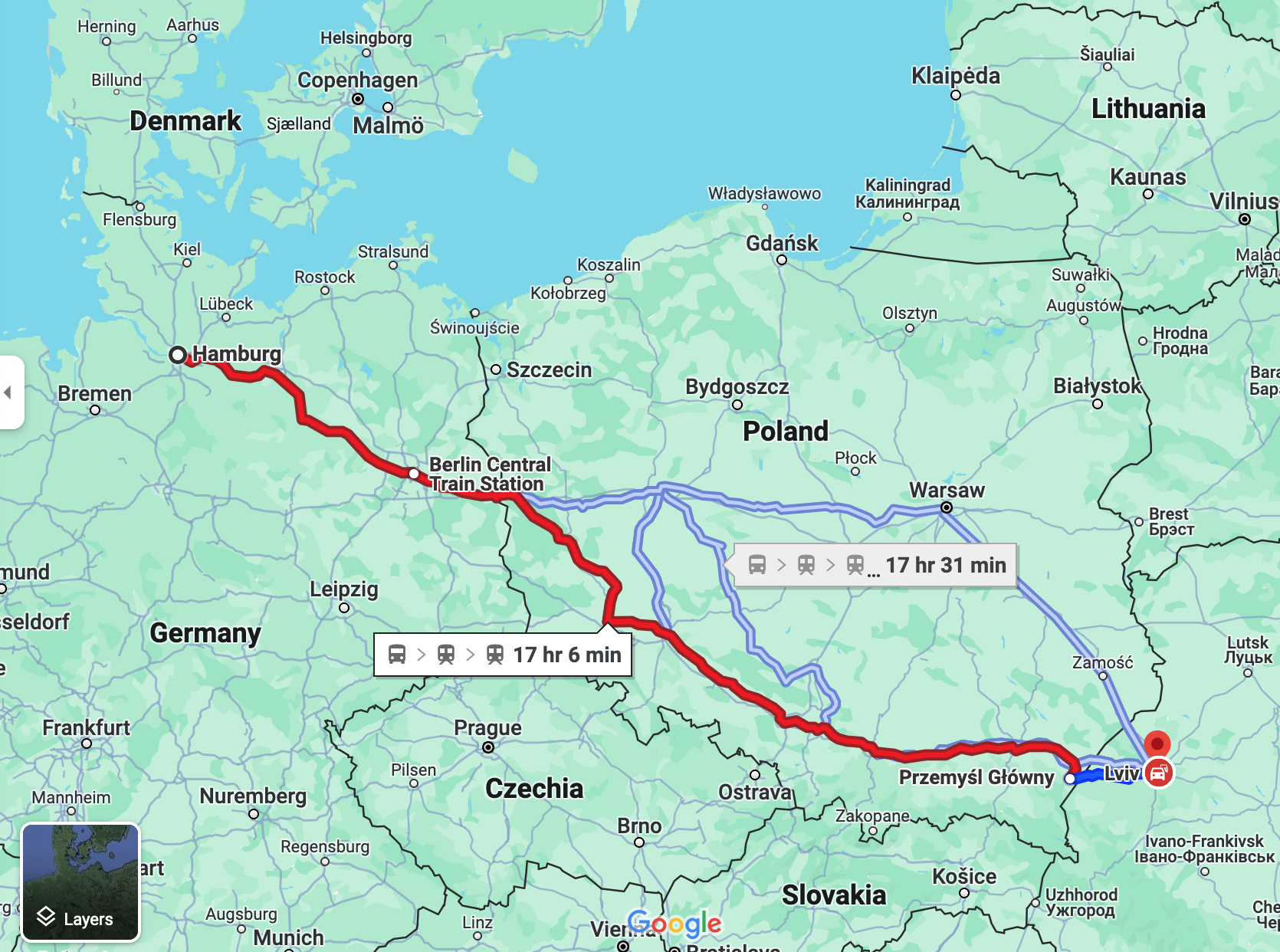
Lviv lies about 40 miles east of the Polish border in Ukraine. It is closer to peaceful Hamburg in Germany (1200 km) than it is to destroyed Mariupol in Ukraine (1250 km). Leaving Hamburg by train, I arrived 20 hours later in Lviv where I spent the next 7 days. As a scientist I planned to collect my own data to calibrate media reportings. I wanted to test second-hand opinions to perhaps revise them based on first-hand observations to better anticipate the future and my actions within it. How can I best support Ukraine in its current war with Russia?

The U.S. Department of State advises “Ukraine – Level 4: Do not travel” in dark red letters, because it is a country at war. I ignored this advice, but nevertheless registered details of my travel plans with the Smart Traveler Enrollment Program. I also followed my government’s advice on how to prepare for travel to high-risk areas such as making a notarized will and to communicate daily with my wife. I do the same when backpacking for 30 days in Yosemite, Adam Ansel, and John Muir Wilderness areas in California. Looking back, I believe that visiting Lviv is less dangerous than visiting Fordyce, Arkansas (population 3,400). Death by random shooting in this town is about 1 person killed for every 1000 residents as of yesterday. In Lviv death by random Russian missile is about 1 person killed for every 100,000 residents. The last Russian missile hit Lviv (population 700,000) a year ago and killed 7 people. Air defences, too, have improved the last 12 month thanks to Norwegian, U.S., and German systems.

My voyage to eastern and across central Europe brought me into spaces that were violently contested during the last 1000 years. Recall that the current border between Poland and Ukraine was drawn in 1939 when Adolf Hitler of Germany and Joseph Stalin of the Soviet Union divided Poland (as well as Finland, Estonia, Latvia, and Lithuania) a mere 10 days before World War Two. The Yale historian Timothy Snyder calls these lands “Bloodlands” where the totalitarian regimes of Germany and the Soviet Union killed between 10 and 20 Million women, children, and men from 1933 to 1945. My father was born 1934 and my family celebrated his 90th birthday the weekend before I left for Lviv.

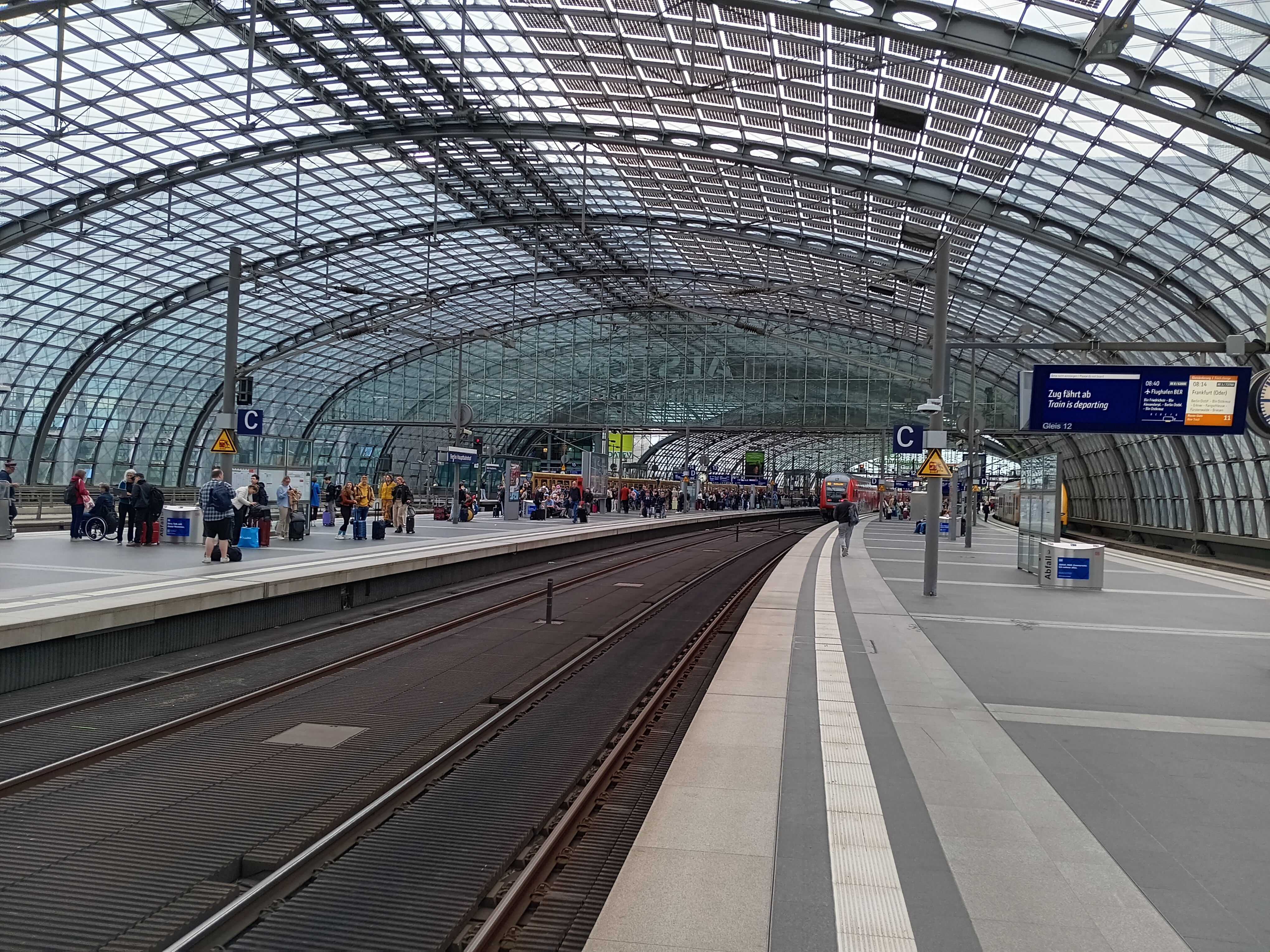
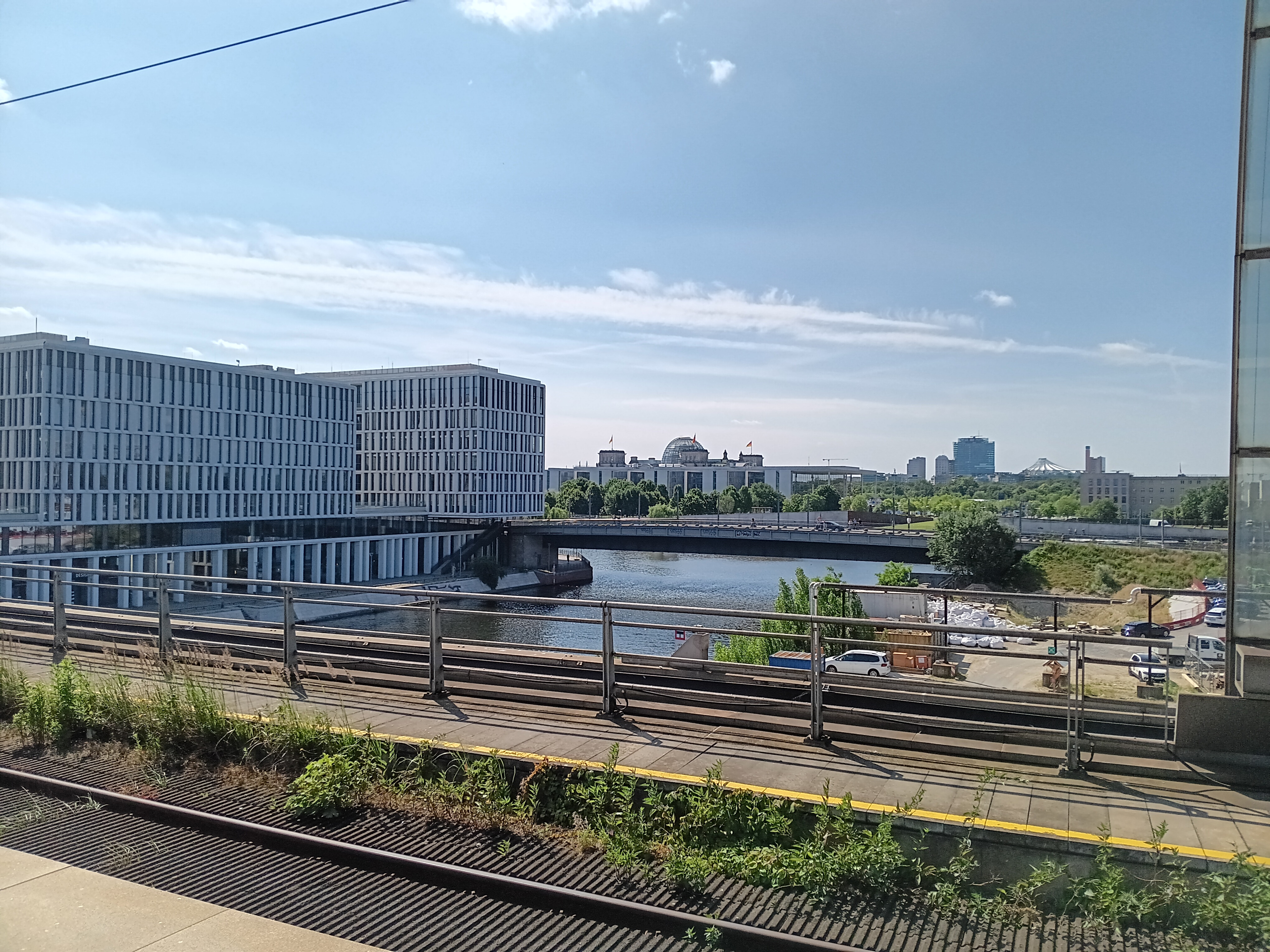
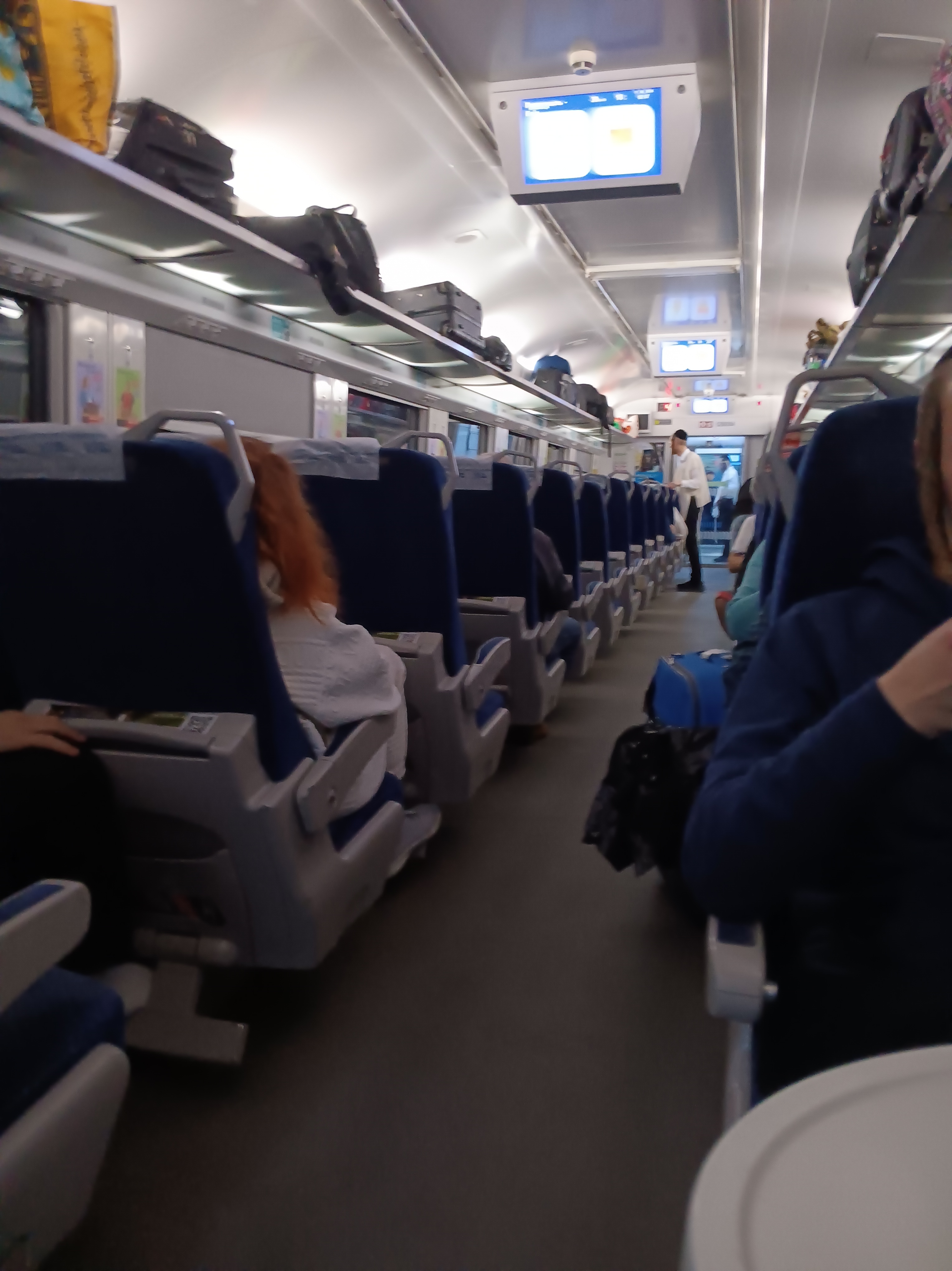
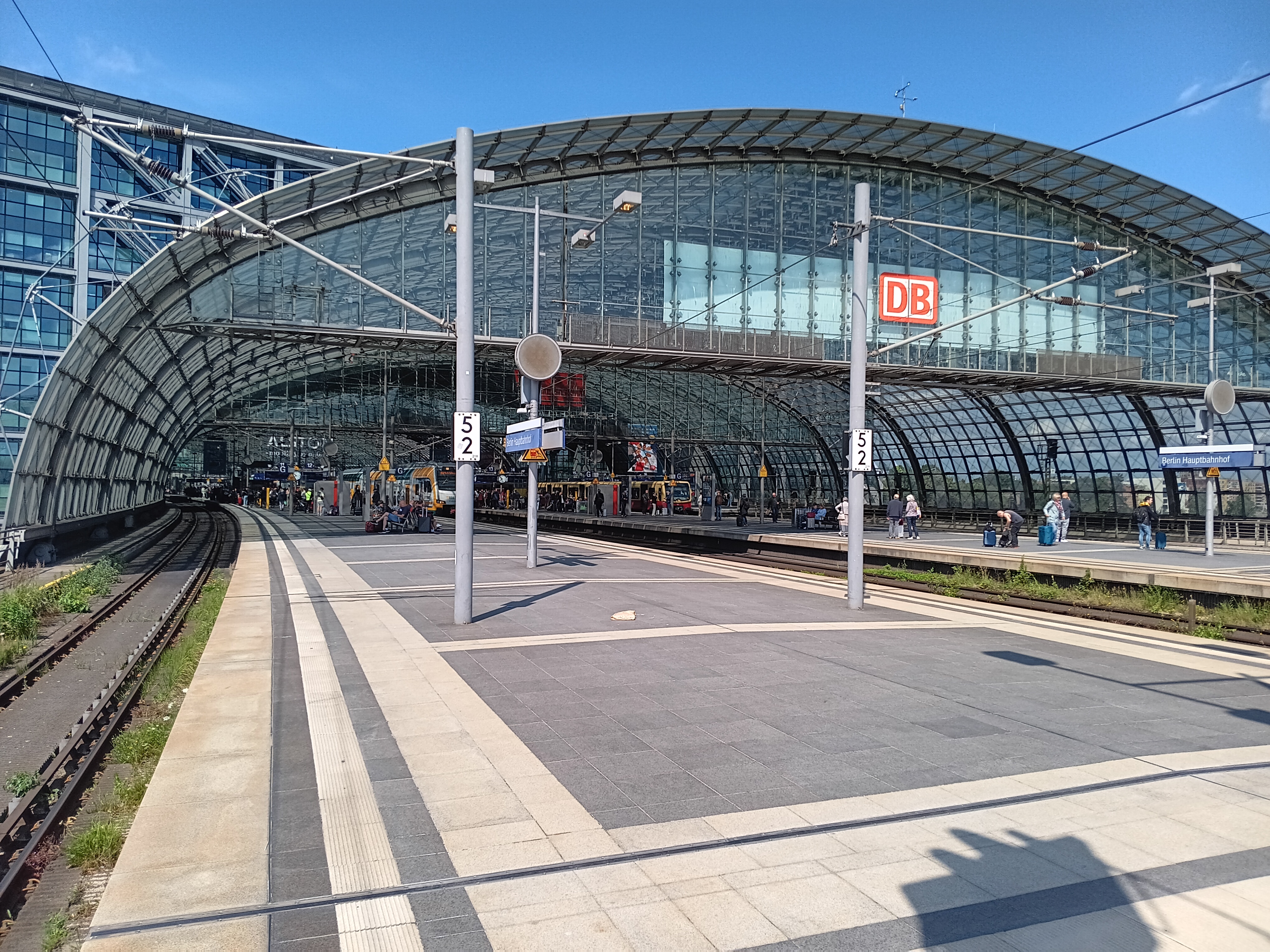
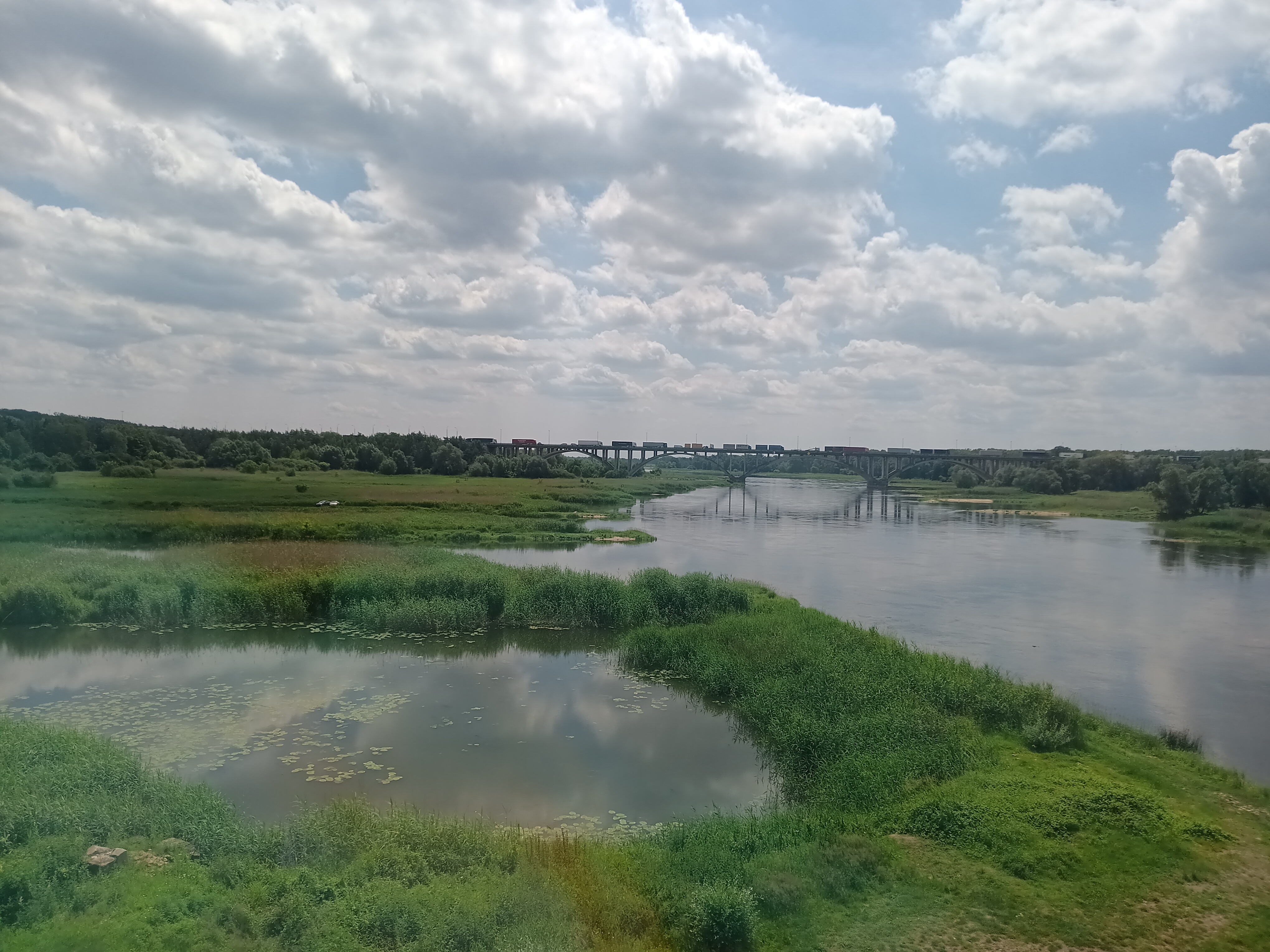
My voyage started at my parents home in Neustadt on the western edge of the Baltic Sea at 6 am. A first train got me to the old Hanseatic town of Luebeck, a second train to Hamburg, and a third train to Berlin. Here I bought the missing train ticket #5 from Przemysl in Poland to Lviv in Ukraine before boarding train #4 from Berlin to Przemysl. My reserved seat for the next 10 hours placed me opposite to a young Ukrainian artist traveling home to Kyiv. Along the way she introduced me to Lviv where she had lived in a prior life. Her pointers of Lviv places to visit, eat, and walk provided me with major initial reference points. As she had crossed the border into Ukraine many times before, we went for a evening stroll in Przemysl and found a busy beer-garden where we had a beer and gin tonic. Despite this “delay,” we still had to wait for 3 hours to be allowed on the next train that was 2 hours late. A large group of perhaps 20 Orthodox Jewish men with U.S. passports were waiting as well. I asked one of them what language they were speaking and he replied “Jiddish.” Bente Kahan’s music from her album “Farewell Cracow” was on my mind even more now than it was prior to this voyage. Once this last train left Poland just before midnight, the mood became somber.

Ukrainian border guards checked passports on the train while different heavily armed military personel counted the number of passengers at least 3 times independently of each other. It was pitch dark outside without any lights visible anywhere. The train, too, had lights dimmed. After a very short 45 minutes the train to Kyiv made its first stop in Lviv and I got off.

It was about 3:30 am local time and I had no idea how to get the 2 miles from the train station to my bed. During the general curfew from midnight to 5 am all public transportation stops. Nobody at Lviv’s station spoke English and I could not read the cyrillic signs. So I stumbled along dead tired hoping, first, that my GPS would lead the way and, second, police enforcing the curfew may be sympathetic towards a tired and lost American tourist.

Sun light came out when I arrived in my small appartment at 4 am. The Wifi worked flawlessly and I called my wife via WhatsApp. It was only 9 pm in Delaware and we talked for an hour on what had happened this long day. Then I let my Ukrainian AirBnB host, Olya, know that I had arrived:

Olya: Everything went well. A person found me at the train station. He did not speak English, but I had pen and paper prepared as well as lat/lon of your place on my GPS that I use for hiking in the woods. He followed my direction and got me within 200 m. The rest was easy including the hour-long WhatsApp phone call with my wife from inside your appartment using your Wifi. It “only” took me 22 hours total door-to-door, so I will now head for some sleep … which is hard, because it is light outside, curfew is over, and I already saw so many cool stuff in the dark that I want to head outside to explore more, but my wife told me to sleep a few hours and wise man is one who listens to his wife … or so i am told by wiser men than myself. ~Andreas

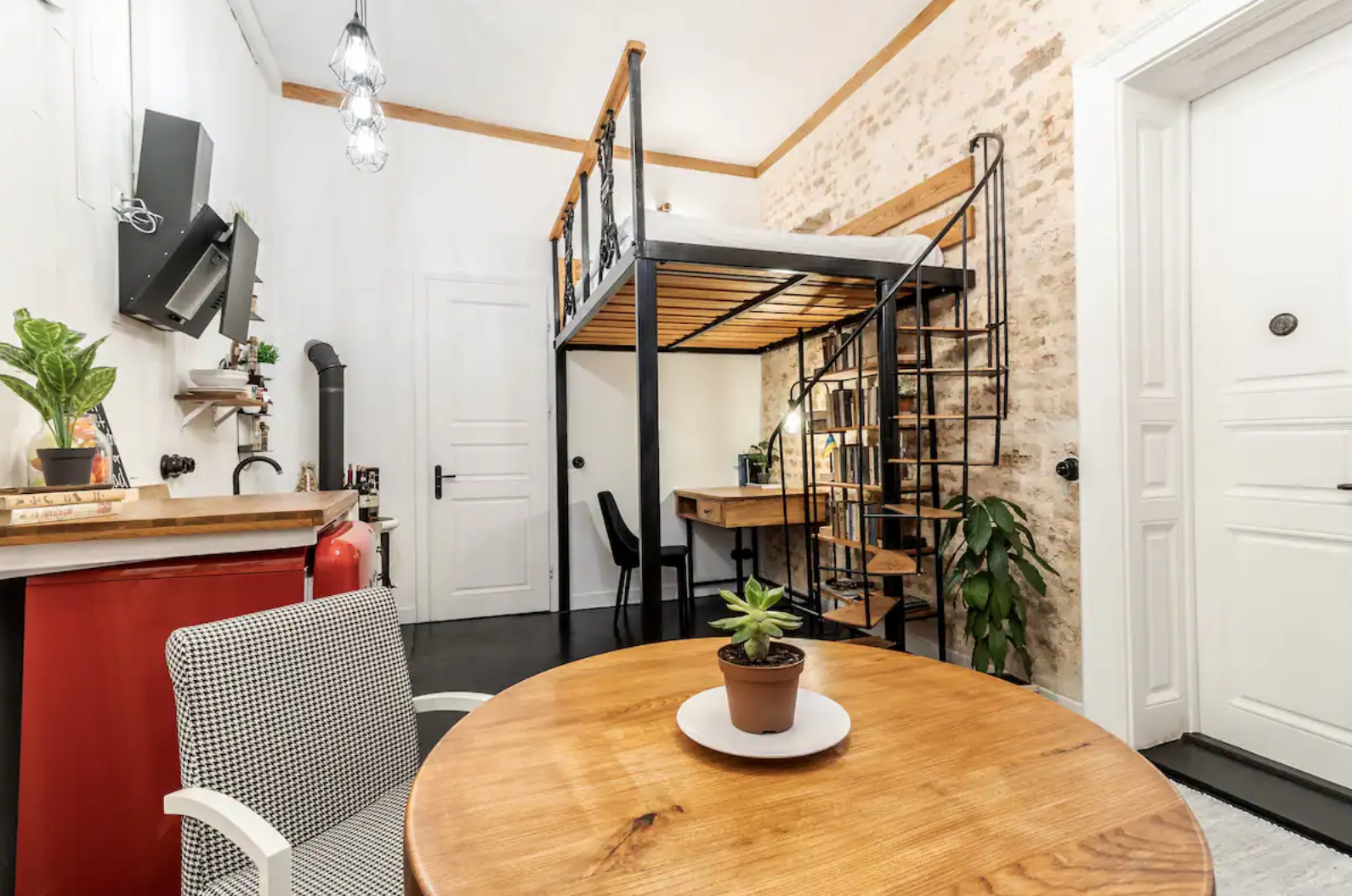
I was writing the above lines with this view of the bed, desk, fridge (red), and the door to the bathroom, shower, washing machine and dryer. The entrance is the door on the right. This was my home away from home for the next 7 days where I rested after long walks to explore Lviv, its culture, history, public life, and people. The internet speeds in Lviv were faster than those in either Germany or at home in Delaware.

As a teaser for my next post I show the first three photos that I took the next morning after 4 hours of sleep within 5 minutes walking from my bed in Lviv.

Waves

Almost 300 years ago a brave scientist boldly stated that everything can be described as waves. It took mathematicians another 200 years to prove that Joseph Fourier, the bold scientist, had it right. I am comforted by this fact while the Covid-19 pandemic appears to grow without bounds. And yet, bounds do exist, because Fourier states that what goes up must come down. This includes the global Covid-19 pandemic of 2020/21 as well as the Influenza pandemic of 1918/19. The latter had three distinct peaks in the United Kingdom that varied both in amplitude and duration:

Adapted from Taubenberger, J.K. and D.M. Morens: 1918 Influenza: The mother of all pandemics, Emerging Infectious Diseases, 12 (1), 2006.

This pandemic of 100 years ago came in three distinct pulses in the spring of 1918, in the fall of 1918, and in the winter of 1919. The graph shows that during the first wave about 0.5% of all infected people died while the second and third wave were more deadly with 2.5% and 1.3% fatality rates. These rates are somewhat similar to those we see today with Covid-19, but there is much we do not yet know.

We do not yet know, for example, how long it will take for the Covid-19 waves to pass through populations. We do not know the amplitude of the waves either, because it all depends on how well we distance ourselves from each other both now and into the future to minimize transmission of the virus. There is no control, yet, because no vaccine exist, but smart distancing will impact how many people will get infected (the amplitude) over time (the period).

These two factors (amplitude and duration) will determine how many of our friends, partners, parents, brothers, and sisters we will lose to the virus. As the German Chancellor Angela Merkel said yesterday: “Im Moment ist nur Abstand Ausdruck von Fuersorge,” which translates as “At the moment only distance is an expression of care.”

German Chancellor Angela Merkel on Mar.-18, 2020 on German TV.

Waves change as they propagate from one medium to another. As ocean wave forms move from deep to shallow water they change both amplitude and speed until they eventually break. I view today’s Covid-19 waves in a similar way.

Covid-19 waves will propagate through all societies on our planet, but they will propagate differently in different regions, countries, and societies. Amplitudes, periods, and propagation speeds will differ. Some of this is already visible by global statistics that are collected and shared in real time:

From https://informationisbeautiful.net/visualizations/covid-19-coronavirus-infographic-datapack/

The spread of the virus in China differs from that in South Korea which differs from that in Iran, Italy, Germany, and the United States. Different political systems, different skills of and trust in governments, and different personal behaviors all provide a different medium within which these waves propagate and, eventually, will dissipate.

This is day-8 for me and my wife to distance ourselves from our friends, family, and neighbors. We are fine. My wife turns the bedroom into a painted mural while I read and write at home and spent much time in the spring garden. It slowly sinks in, that this will not be over next week or next month. The goal is to make the amplitude as small as possible by spreading the period out as long as possible which will allow our hospitals, nurses, and doctors to provide the best care for those who need it. As a wise woman said yesterday: “At the moment only distance is an expression of care.”

Reference:

Taubenberger, J.K. and D.M. Morens: 1918 Influenza: The mother of all pandemics, Emerging Infectious Diseases, www.cdc.gov/eid, 12 (1), 2006.”