The Ukrainian Catholic University in Lviv invited me to teach at their Summer Language School. Until last week I worked with ~50 Ukrainian students from about 10 in the morning to 5 in the evening monday through saturday. We met daily in classrooms, on the lawn outside, and in pubs over food and beer. The main purpose of the Summer School for the 17-21 year old students was to learn German as their second, third, or fourth foreign language. Their Ukrainian teachers knew every rule of German grammar, spoke perfect German, and half of them had PhDs in German literature, linguistics, education, and/or language theory.
Students and teachers alike love their country, their faith, and their freedom deeply. All hate the war that Russia wages on them personally: Every day Russia tries to kill them by drones and missiles, tries to erase their history, tries to pillage their resources, and tries to exterminate their language, culture, and freedom. Russia’s war is present in Ukraine at every location for every person at all times. Nevertheless, I went to open-air concerts, bars, restaurants, and churches filled with joyous young and old people with and without small children. This very public life serves as a defiant and powerful act of resistance to Russia’s war as does vibrant street art and music.
The people of Ukraine need our weapons to protect their freedom to be human and to be free from the violence, terror, and oppression imposed by Russia on them. Never have I seen a people believing in God as strongly as the Ukrainian students and teachers whom I met last 3 weeks. Furthermore, Lviv centers many overlapping faiths with churches of the Greek Catholic, Roman Catholic, Armenian Catholic, Ukrainian Orthodox, Russian Orthodox, and even a small Jewish community. Furthermore, I met both atheist and agnostic students studying at the Ukrainian Catholic University. This rich and diverse tapestry of believes exists in overlapping circles of ancient history, song, prayers, and common purpose. All are united and opposed to Russia’s terror of random death by drone or missile. People are tired, yes, tired and exhaused by 3.5 years of war, but people are united for the noble purpose to be free, to be at peace with their neighbors, and to be part of a liberal and democratic Europe. Russia responded to these desires with war, because Russia perceives a free, creative, and productive Ukraine as a threat to its own sclerotic, decadent, and corrupt society.
Unlike Russia, Ukraine values individual life and liberty, but Russia has 4 soldiers for every one Ukraine has. How can I best help my Ukrainian friends in their just defence to protect their freedom and to be part of a peaceful Europe? They need air defence radars and missile systems, they need artillery shells and cannons, they need tanks, helicopters, and fighter jets, they need drones and electronic jamming gear. I struggle with this question, write and call my U.S. senators and Congresswoman in Delaware to support Ukraine, and talk to friends and family about my travels to Ukraine, but it all seems puny and I am frustrated and impatient. In those moments I recall the wise words passed on to me 2 weeks ago by an older man of Irish-Catholic faith:
Act like the world depends on you, but pray it depends on God.
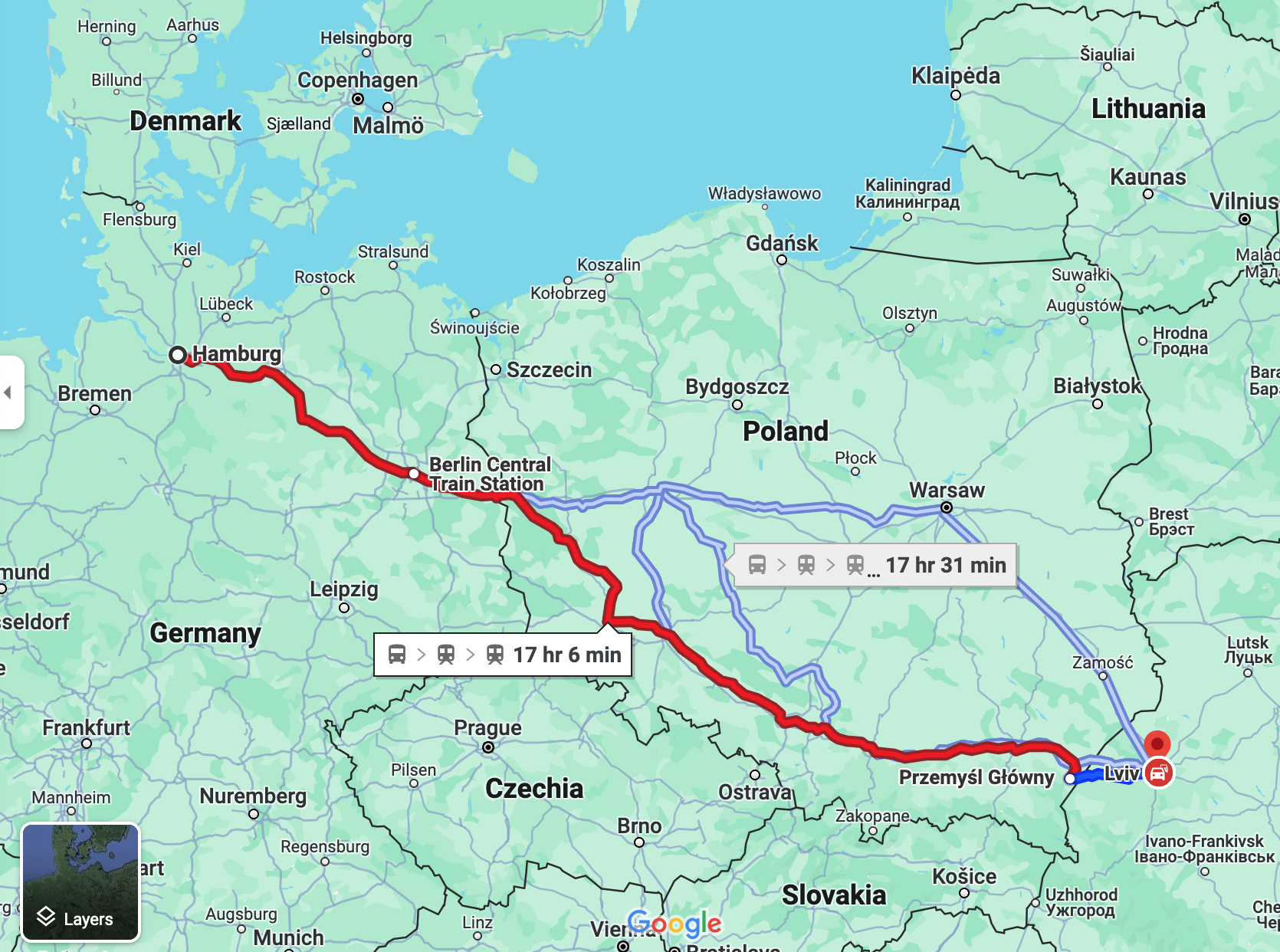
Lviv lies about 40 miles east of the Polish border in Ukraine. It is closer to peaceful Hamburg in Germany (1200 km) than it is to destroyed Mariupol in Ukraine (1250 km). Leaving Hamburg by train, I arrived 20 hours later in Lviv where I spent the next 7 days. As a scientist I planned to collect my own data to calibrate media reportings. I wanted to test second-hand opinions to perhaps revise them based on first-hand observations to better anticipate the future and my actions within it. How can I best support Ukraine in its current war with Russia?
The U.S. Department of State advises “Ukraine – Level 4: Do not travel” in dark red letters, because it is a country at war. I ignored this advice, but nevertheless registered details of my travel plans with the Smart Traveler Enrollment Program. I also followed my government’s advice on how to prepare for travel to high-risk areas such as making a notarized will and to communicate daily with my wife. I do the same when backpacking for 30 days in Yosemite, Adam Ansel, and John Muir Wilderness areas in California. Looking back, I believe that visiting Lviv is less dangerous than visiting Fordyce, Arkansas (population 3,400). Death by random shooting in this town is about 1 person killed for every 1000 residents as of yesterday. In Lviv death by random Russian missile is about 1 person killed for every 100,000 residents. The last Russian missile hit Lviv (population 700,000) a year ago and killed 7 people. Air defences, too, have improved the last 12 month thanks to Norwegian, U.S., and German systems.
My voyage to eastern and across central Europe brought me into spaces that were violently contested during the last 1000 years. Recall that the current border between Poland and Ukraine was drawn in 1939 when Adolf Hitler of Germany and Joseph Stalin of the Soviet Union divided Poland (as well as Finland, Estonia, Latvia, and Lithuania) a mere 10 days before World War Two. The Yale historian Timothy Snyder calls these lands “Bloodlands” where the totalitarian regimes of Germany and the Soviet Union killed between 10 and 20 Million women, children, and men from 1933 to 1945. My father was born 1934 and my family celebrated his 90th birthday the weekend before I left for Lviv.
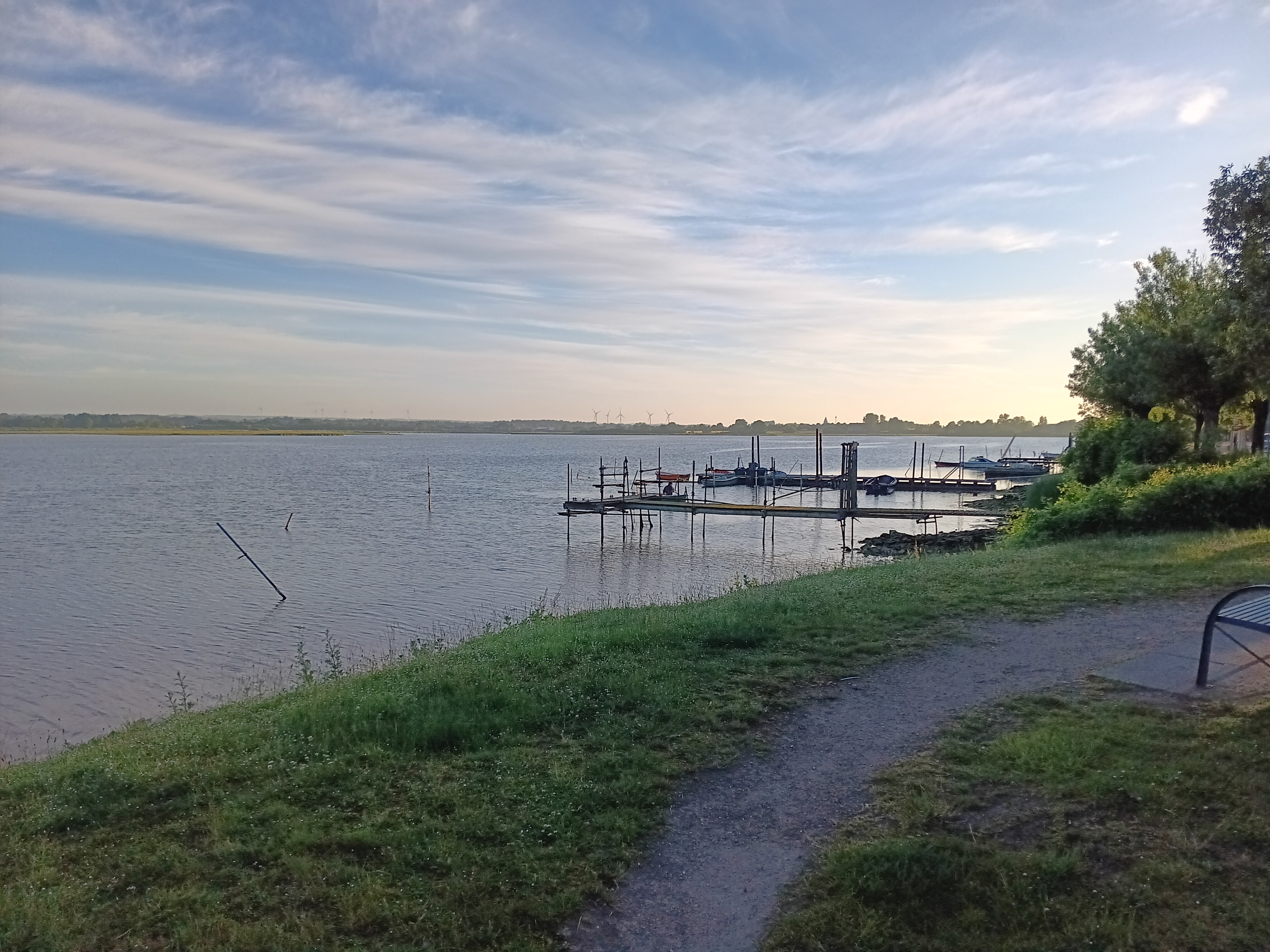
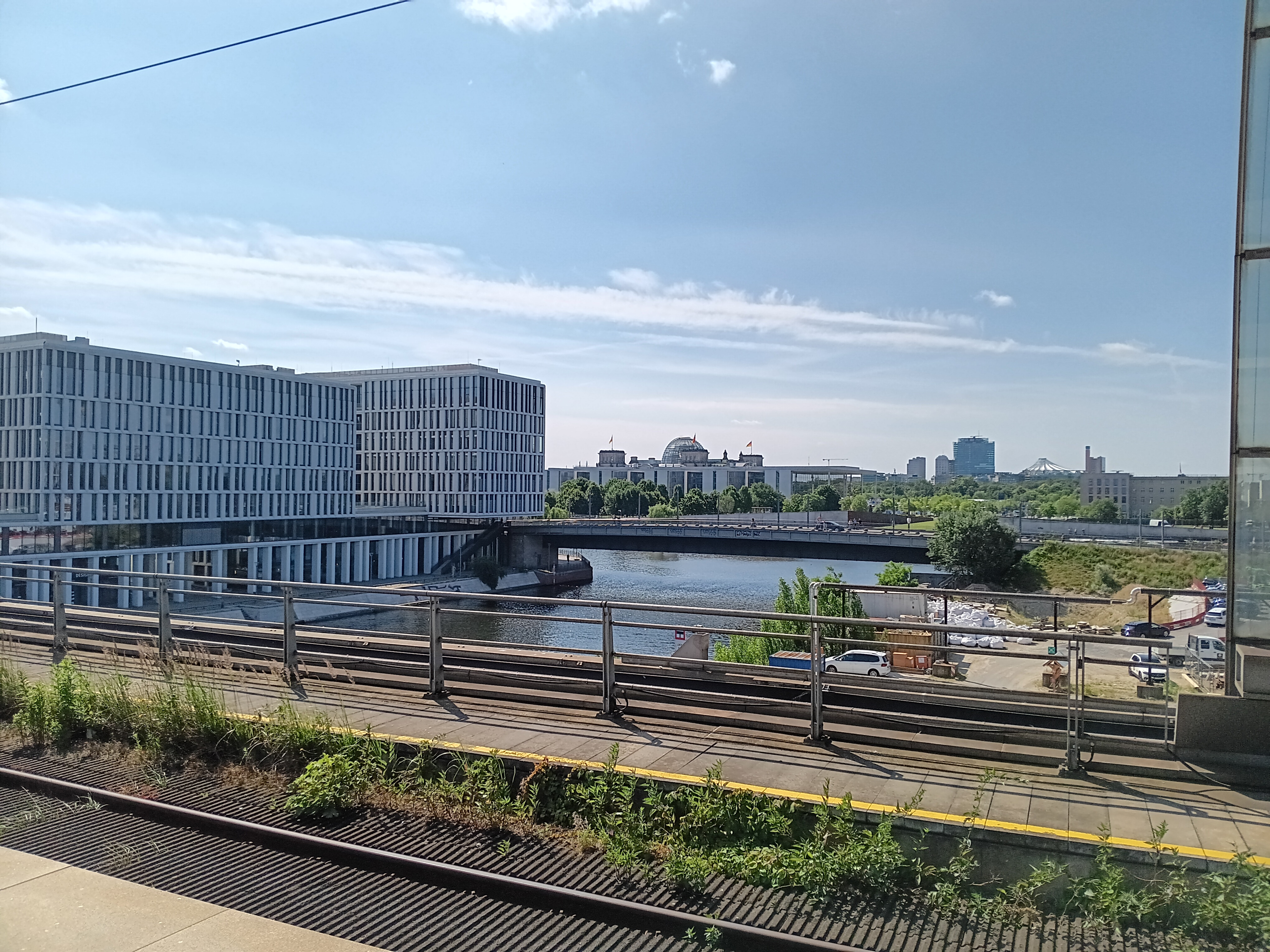
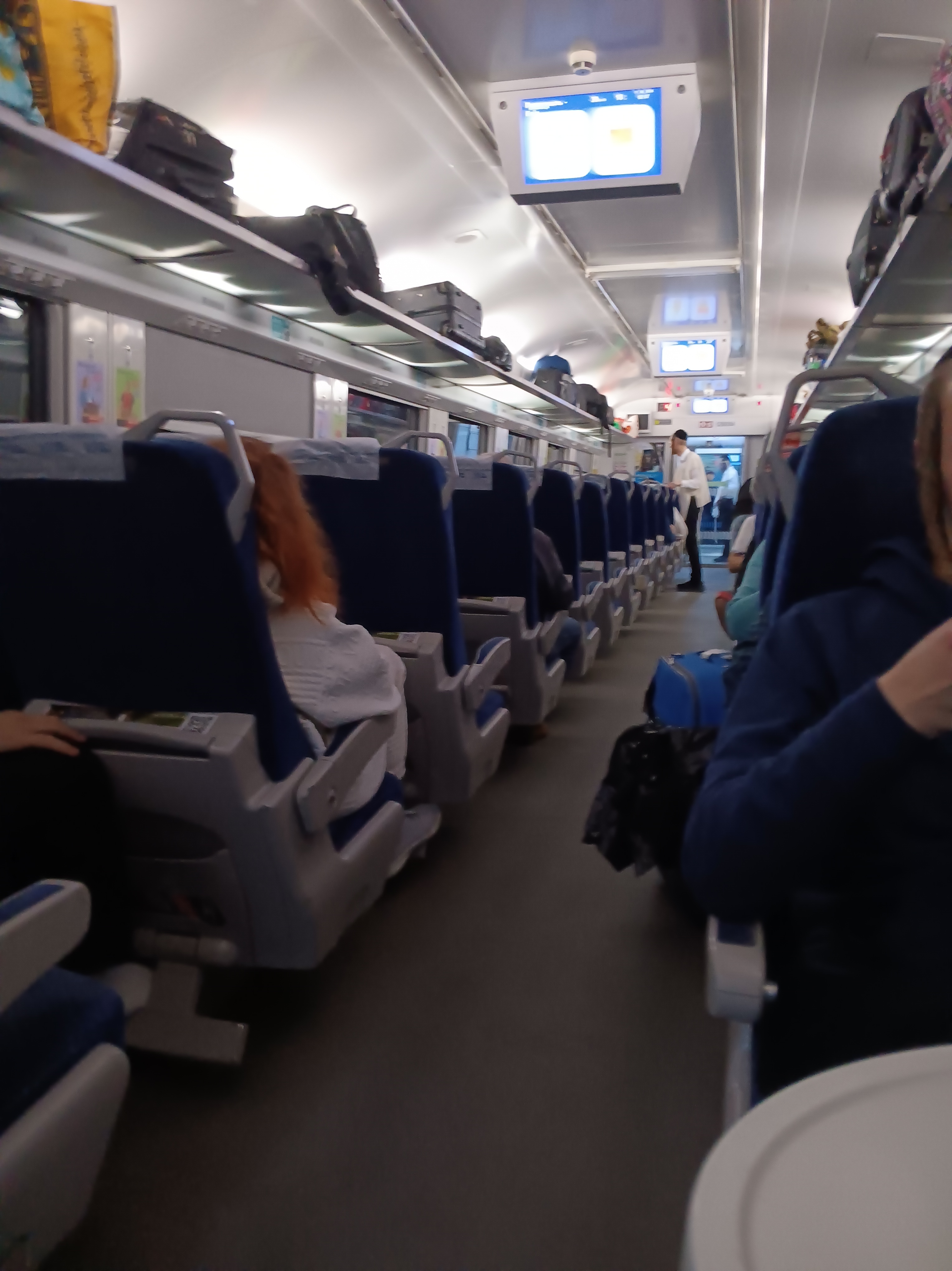
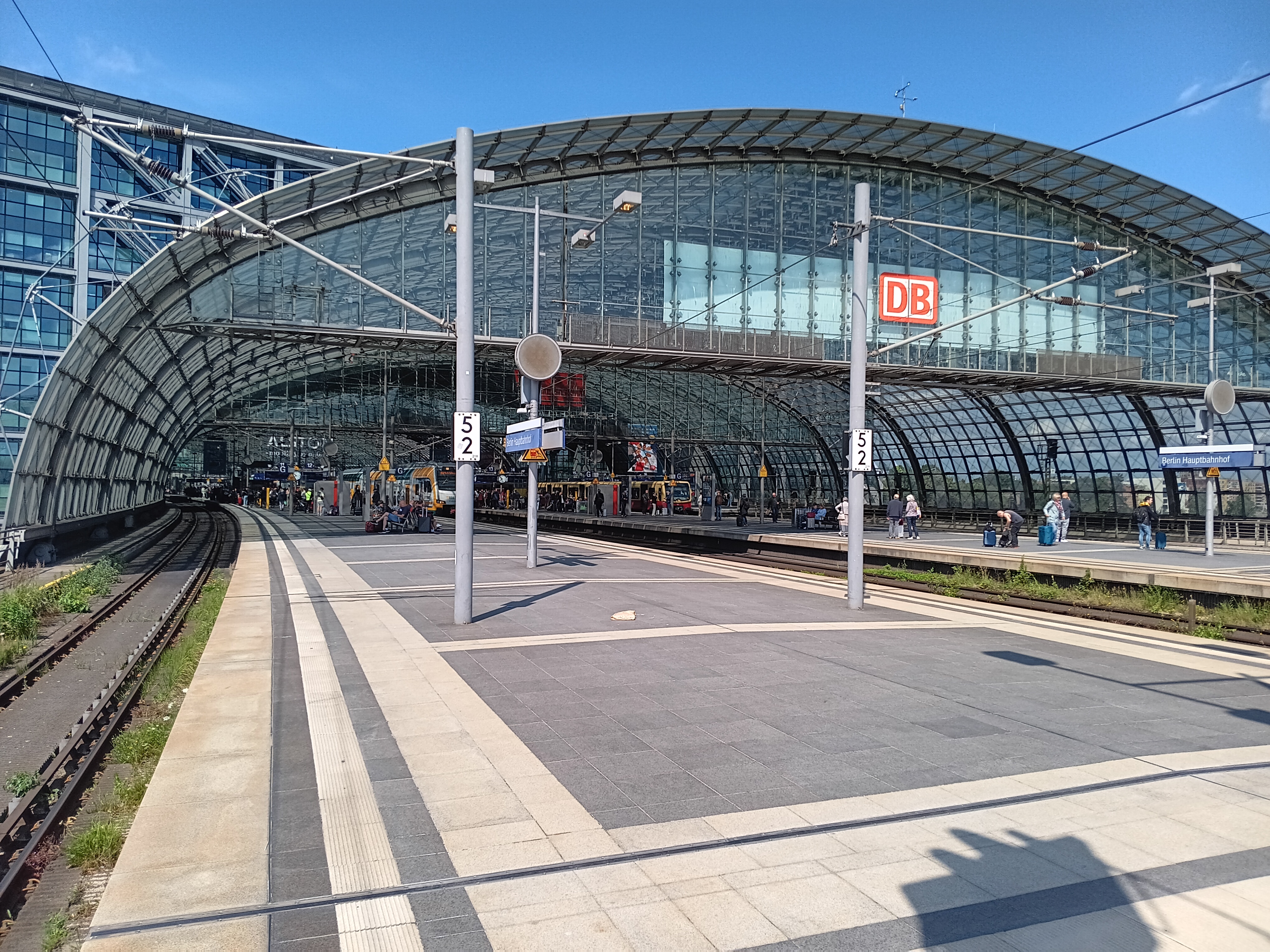
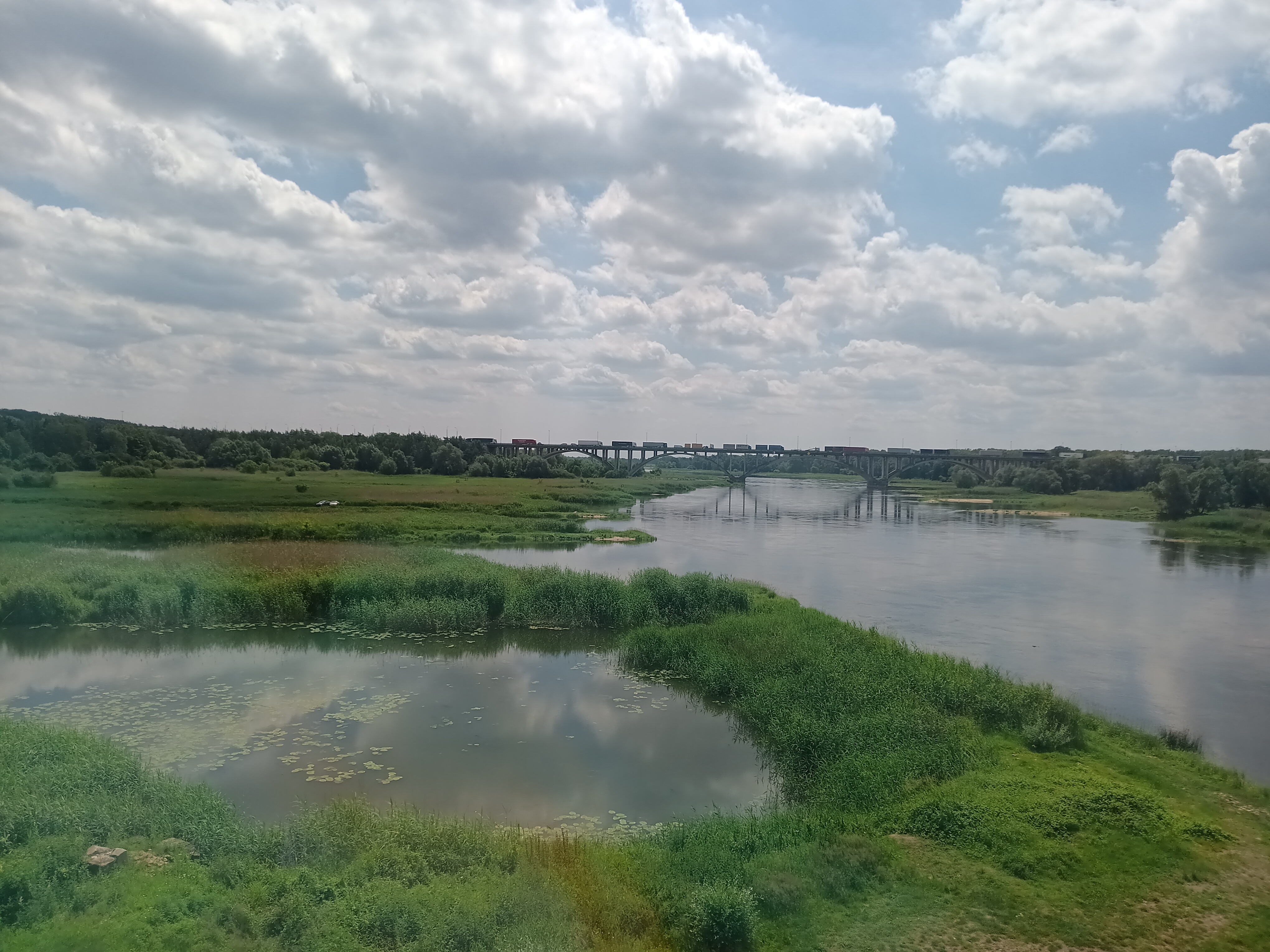
My voyage started at my parents home in Neustadt on the western edge of the Baltic Sea at 6 am. A first train got me to the old Hanseatic town of Luebeck, a second train to Hamburg, and a third train to Berlin. Here I bought the missing train ticket #5 from Przemysl in Poland to Lviv in Ukraine before boarding train #4 from Berlin to Przemysl. My reserved seat for the next 10 hours placed me opposite to a young Ukrainian artist traveling home to Kyiv. Along the way she introduced me to Lviv where she had lived in a prior life. Her pointers of Lviv places to visit, eat, and walk provided me with major initial reference points. As she had crossed the border into Ukraine many times before, we went for a evening stroll in Przemysl and found a busy beer-garden where we had a beer and gin tonic. Despite this “delay,” we still had to wait for 3 hours to be allowed on the next train that was 2 hours late. A large group of perhaps 20 Orthodox Jewish men with U.S. passports were waiting as well. I asked one of them what language they were speaking and he replied “Jiddish.” Bente Kahan’s music from her album “Farewell Cracow” was on my mind even more now than it was prior to this voyage. Once this last train left Poland just before midnight, the mood became somber.
Ukrainian border guards checked passports on the train while different heavily armed military personel counted the number of passengers at least 3 times independently of each other. It was pitch dark outside without any lights visible anywhere. The train, too, had lights dimmed. After a very short 45 minutes the train to Kyiv made its first stop in Lviv and I got off.
It was about 3:30 am local time and I had no idea how to get the 2 miles from the train station to my bed. During the general curfew from midnight to 5 am all public transportation stops. Nobody at Lviv’s station spoke English and I could not read the cyrillic signs. So I stumbled along dead tired hoping, first, that my GPS would lead the way and, second, police enforcing the curfew may be sympathetic towards a tired and lost American tourist.
Sun light came out when I arrived in my small appartment at 4 am. The Wifi worked flawlessly and I called my wife via WhatsApp. It was only 9 pm in Delaware and we talked for an hour on what had happened this long day. Then I let my Ukrainian AirBnB host, Olya, know that I had arrived:
Olya: Everything went well. A person found me at the train station. He did not speak English, but I had pen and paper prepared as well as lat/lon of your place on my GPS that I use for hiking in the woods. He followed my direction and got me within 200 m. The rest was easy including the hour-long WhatsApp phone call with my wife from inside your appartment using your Wifi. It “only” took me 22 hours total door-to-door, so I will now head for some sleep … which is hard, because it is light outside, curfew is over, and I already saw so many cool stuff in the dark that I want to head outside to explore more, but my wife told me to sleep a few hours and wise man is one who listens to his wife … or so i am told by wiser men than myself. ~Andreas
I was writing the above lines with this view of the bed, desk, fridge (red), and the door to the bathroom, shower, washing machine and dryer. The entrance is the door on the right. This was my home away from home for the next 7 days where I rested after long walks to explore Lviv, its culture, history, public life, and people. The internet speeds in Lviv were faster than those in either Germany or at home in Delaware.
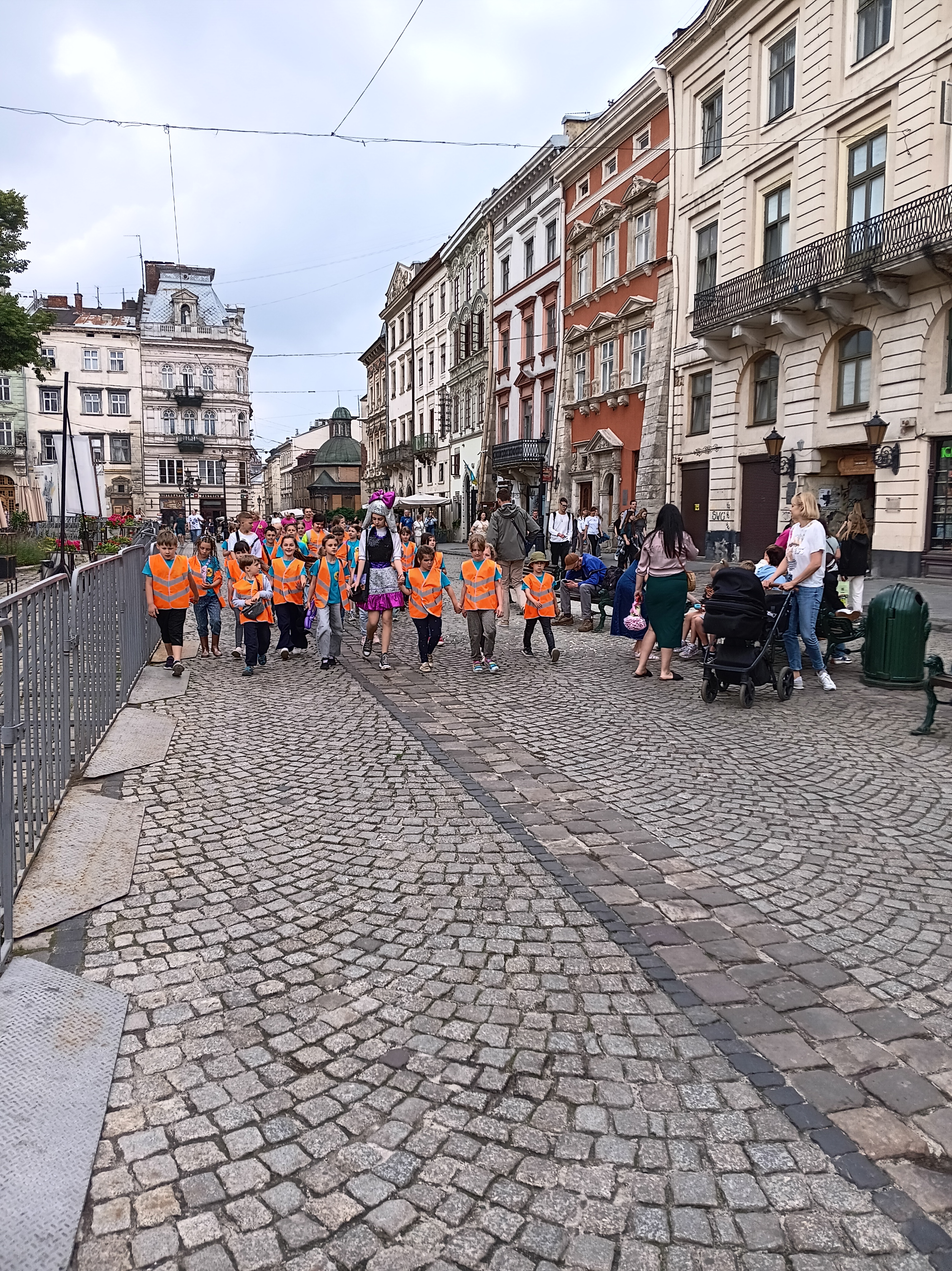
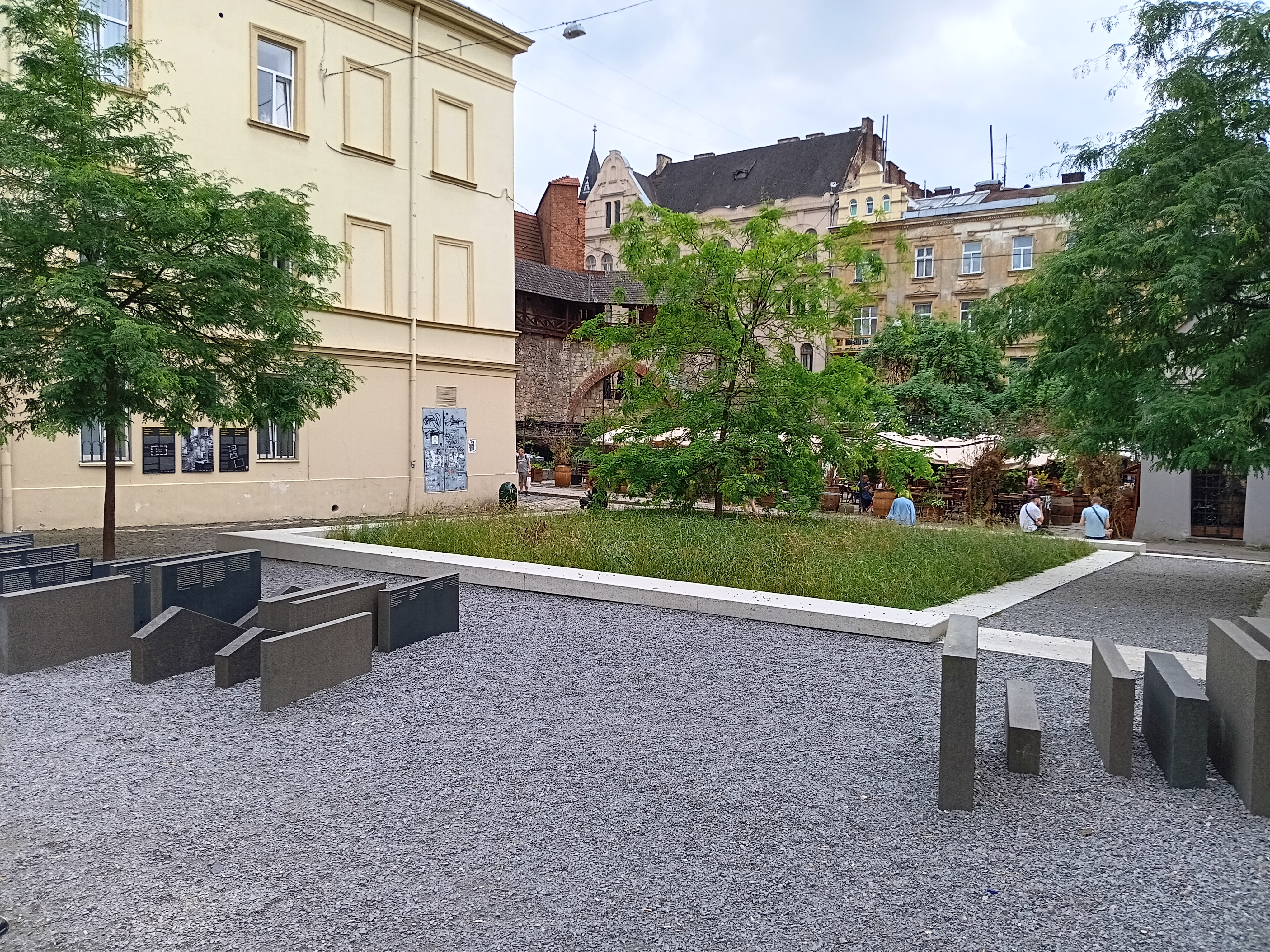
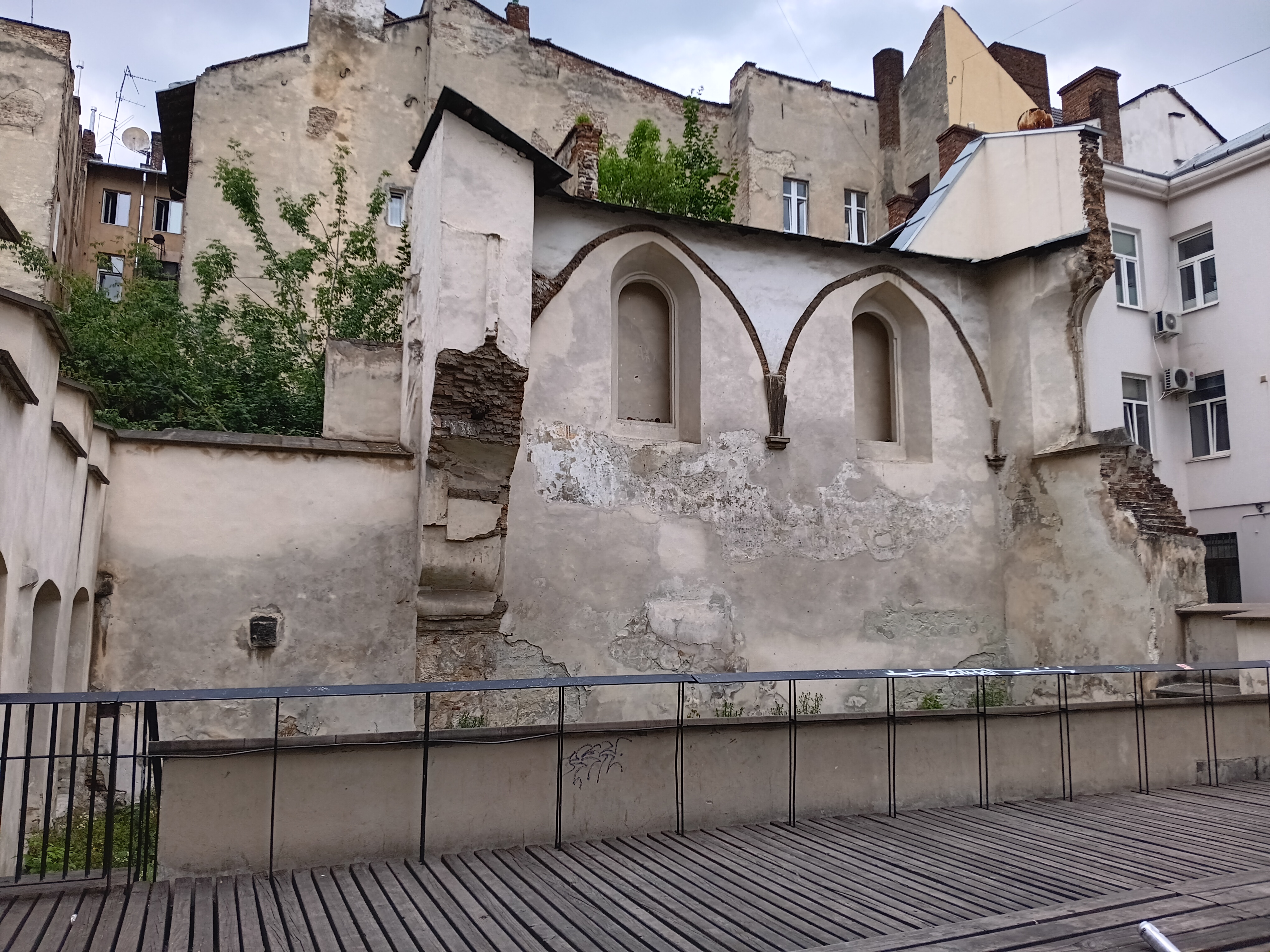
As a teaser for my next post I show the first three photos that I took the next morning after 4 hours of sleep within 5 minutes walking from my bed in Lviv.
The title “Bombing Hitler’s Dams” fascinated me when I saw it featured on my TiVo last night. The story told was that of a group led by a smart, creative, and somewhat crazy Cambridge University engineer Dr. Hugh Hunt trying to recreate all the engineering elements needed to blow up a dam with a bomb that skips along the surface of the water the same way that a flat stone skips over a calm pond. While we all know intuitively how to throw a flat stone at the right speed at the correct angle, imagine to do it from an aircraft dropping a bomb to skip a few hundred yards over the surface of a reservoir, kiss the dam, sink, then blow it up via a depth charge. After many elaborate tests starting with 3 foot baby’s pool 5 inches deep, the show concluded with the real blowing up of real dam in northern Canada by a much enlarged group of engineers, construction workers, students, pilots, contractors, etc.
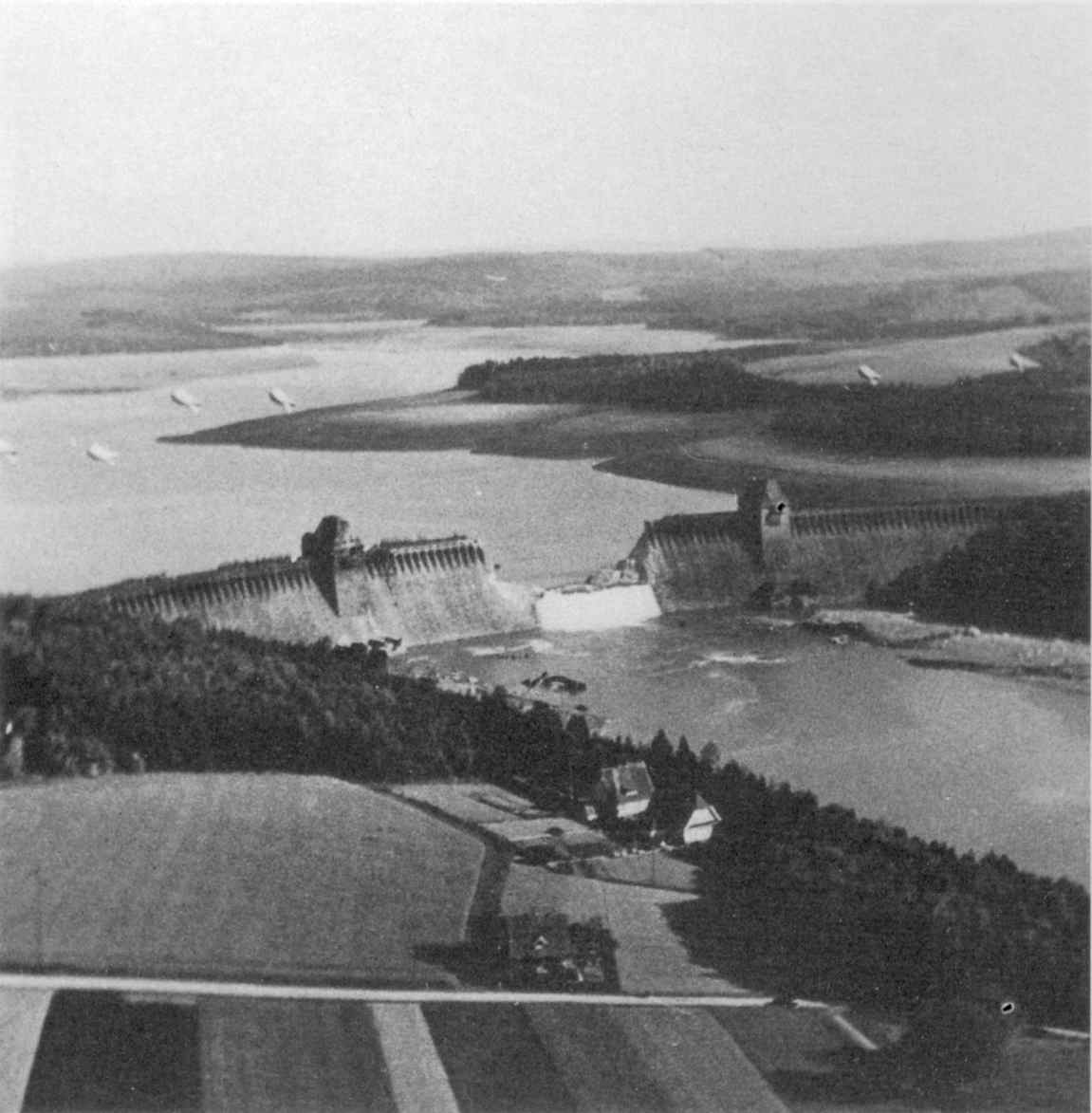
Photograph of the breached Möhne Dam taken by Flying Officer Jerry Fray of No. 542 Squadron from his Spitfire PR IX, six Barrage balloons are above the dam
If you think this is hard to do, it is. On May 16/17, 1943 a British bombing raid called “Operation Chastise” deployed cylindrical drums filled with explosives like skipping stones to hop over torpedo nets meant to protect the dams from subsurface mines. Two of three targeted dams were blown up, 53 airmen perished, German heavy industry in the Rhine-Ruhr valley was disrupted for 4 months, and over 1500 civilians drowned in the flood wave created by the breaking dams:
The story reminds my of my adviser, Dr. Richard Garvine (an aeronautical engineer by training) whom I met in 1986 while a physics student from Germany studying physical oceanography for a year in Bangor, Wales. Rather than returning to Germany, I went to the United States for graduate school where I met my sweetheart. One of my first graduate assignment was to study the “breaking dam” problem (Stoker, 1948: “The Formation of Breakers and Bores”, Communications of Pure and Applied Mathematics, 1, 1-87). The “breaking dam” problem is now a classical problem in fluid dynamics that relates to breaking waves, tsunamis, tides, as well as the discharge of fresh water from cooling plants, estuaries, and glaciers. I applied it to tides in the Conway Estuary in North-Wales for my MS thesis that the Swedish Royal Society saw fit to publish as my first contribution to science.
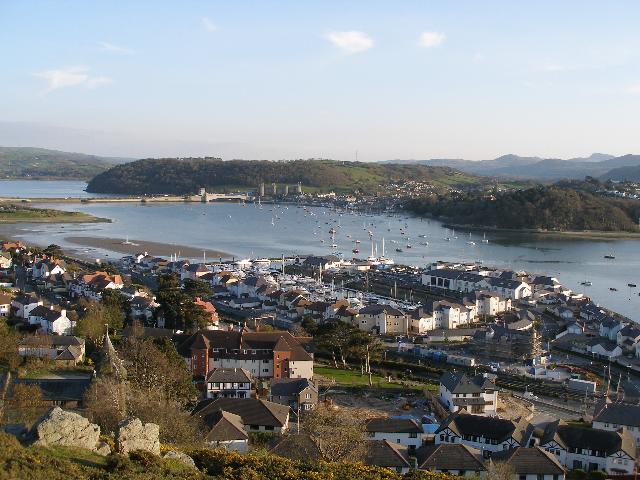
Conwy Estuary at its mouth near high tide.
I stole the above photo of the Conway Estuary, North Wales from a set of beautiful travelogues of an area where I camped for 6 weeks to guard instruments that measured currents along the 50 km tidal reach of this beautiful estuary. The tides rush in like the waves of a breaking dam, yet, they do not break (no bore forms, why?). To model the physics, I needed to study the work done by American, British, and French engineers who labored hard to defeat Nazi Germany by blowing up actual dams developing new and applying old ideas in physics and engineering along the way. Studying their work, I got my answer, too.
Addendum: A review of the aftermath and devastation of the 1943 flood wave from a German perspective is posted here with original photos from both British and German sources.





 Icy Seas