Tag Archives: climate change

Exploring Greenland’s Coastal Currents: A Journey of Discovery with Icebreaker Polarstern

Icebreaker Polarstern reached its home port of Bremerhaven in Germany just before Orkan “Joshua” hit northern Germany hard. The ship returned after 3 month at sea with 48 crew and 46 scientists working on ocean biology, chemistry, and physics. The 7-week expedition from Svalbard to Greenland and back to Germany culminated 3 years of planing and preparations led by the Alfred Wegener Institute (AWI). As one of 46 scientists I stepped onto the ship almost two months ago in Longyearbyen. We planned to explore what moves ice and fresh Arctic water into the Atlantic Ocean with sensors to probe the coastal circulation.  Analyzing these data, I will now live in Bremerhaven for a few months.
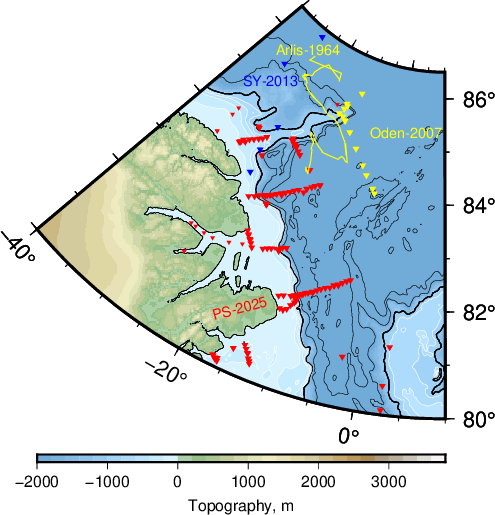
The map above shows where we went to the north of Greenland. I am coloring the coastal ocean shallower than 1000 m in light blue and the deeper ocean in dark blue. Our 2025 Polarstern data are the red symbols while yellow and blue symbols show data locations from 1964 ice island, 2007 icebreaker,  and 2013 helicopter surveys. This area contains the last and thickest sea ice of the Arctic Ocean and prior ocean observations originate from floating ice islands that both the Soviet Union and the U.S.A. used during the Cold War 1947-91 such as the Arlis-1964 track (yellow line). Helicopter surveys collected a few data in 2013 (blue symbols) while the Swedish icebreaker Oden collected data along two lines farther offshore (yellow symbols).
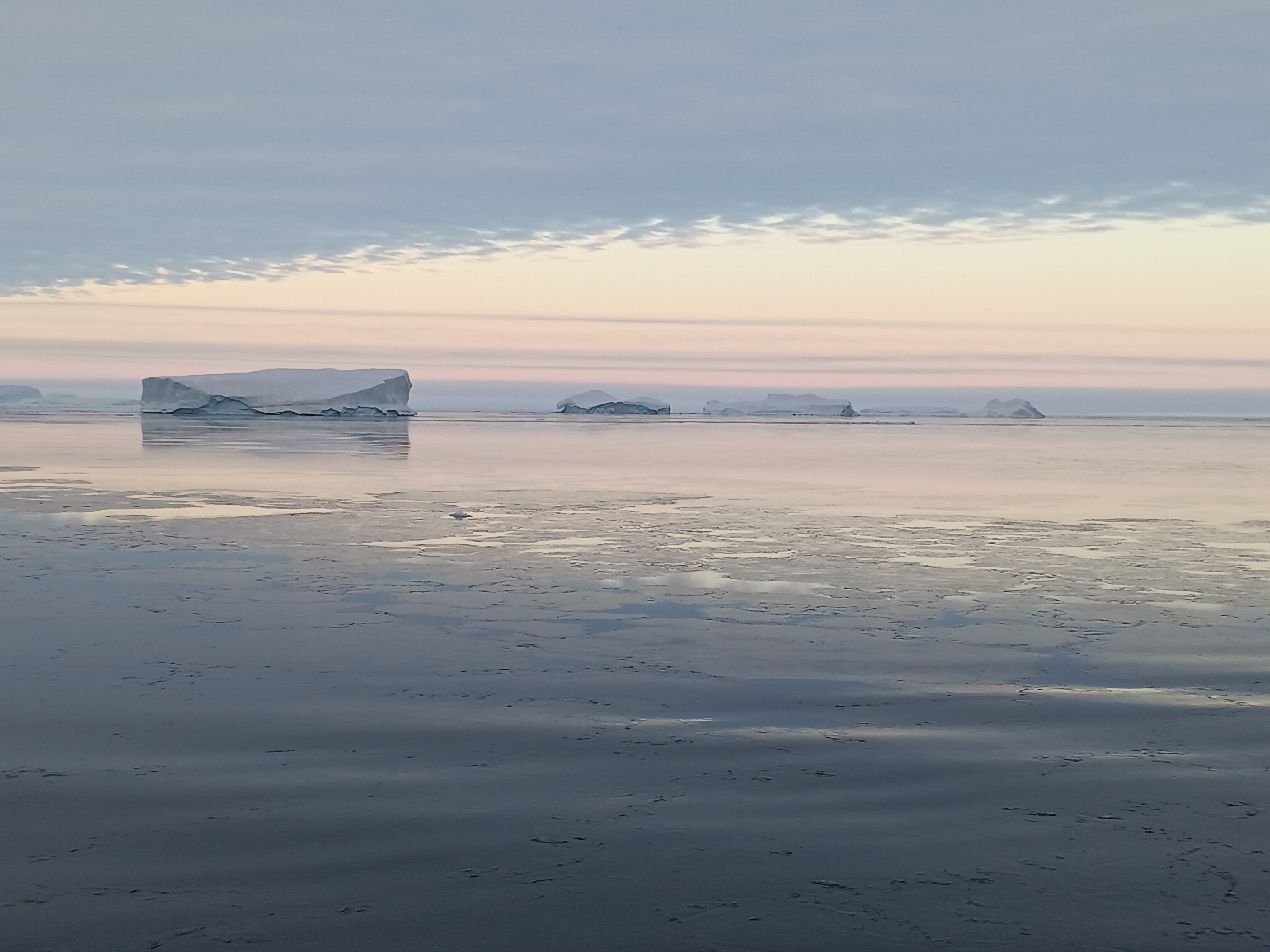
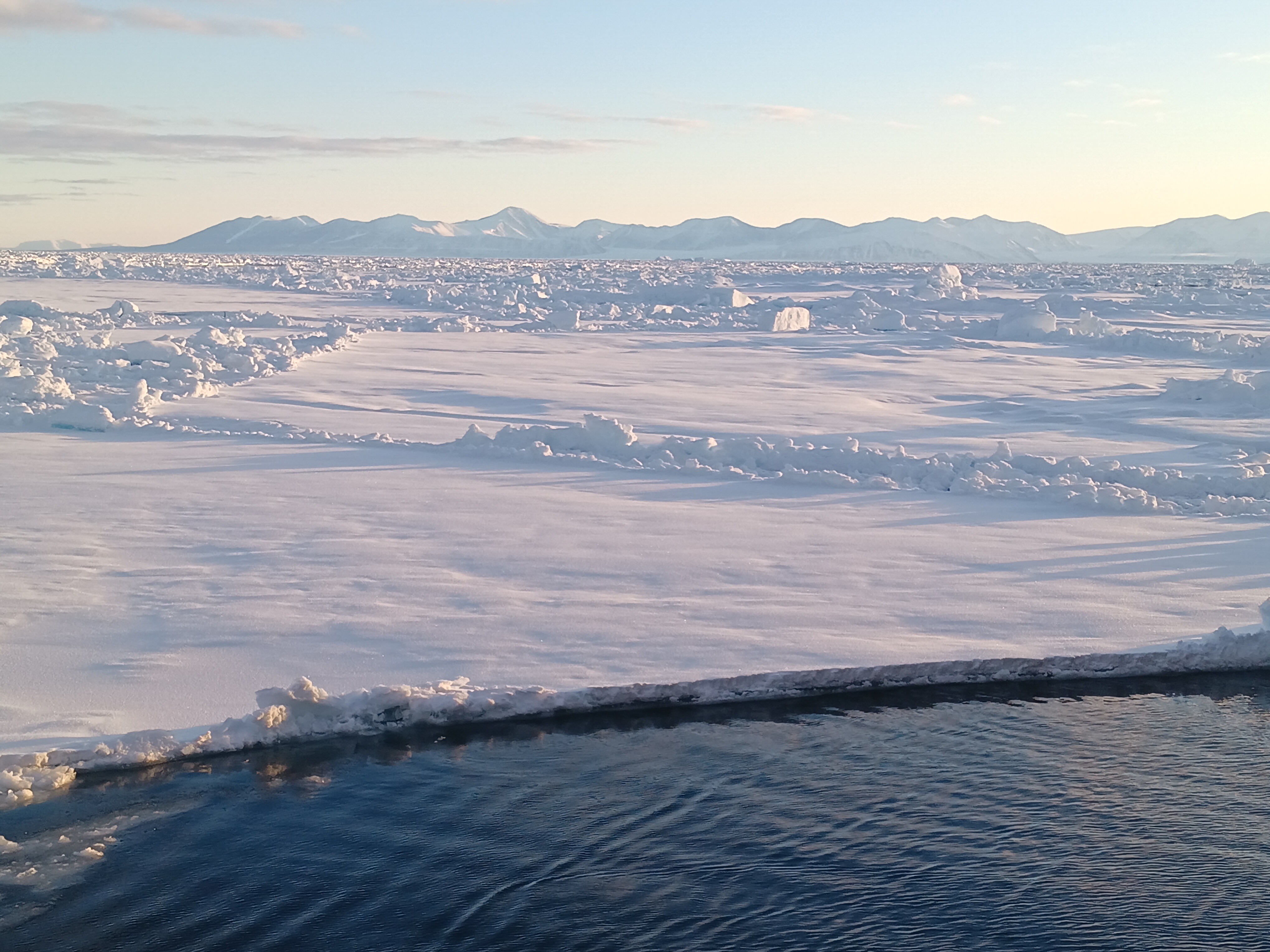
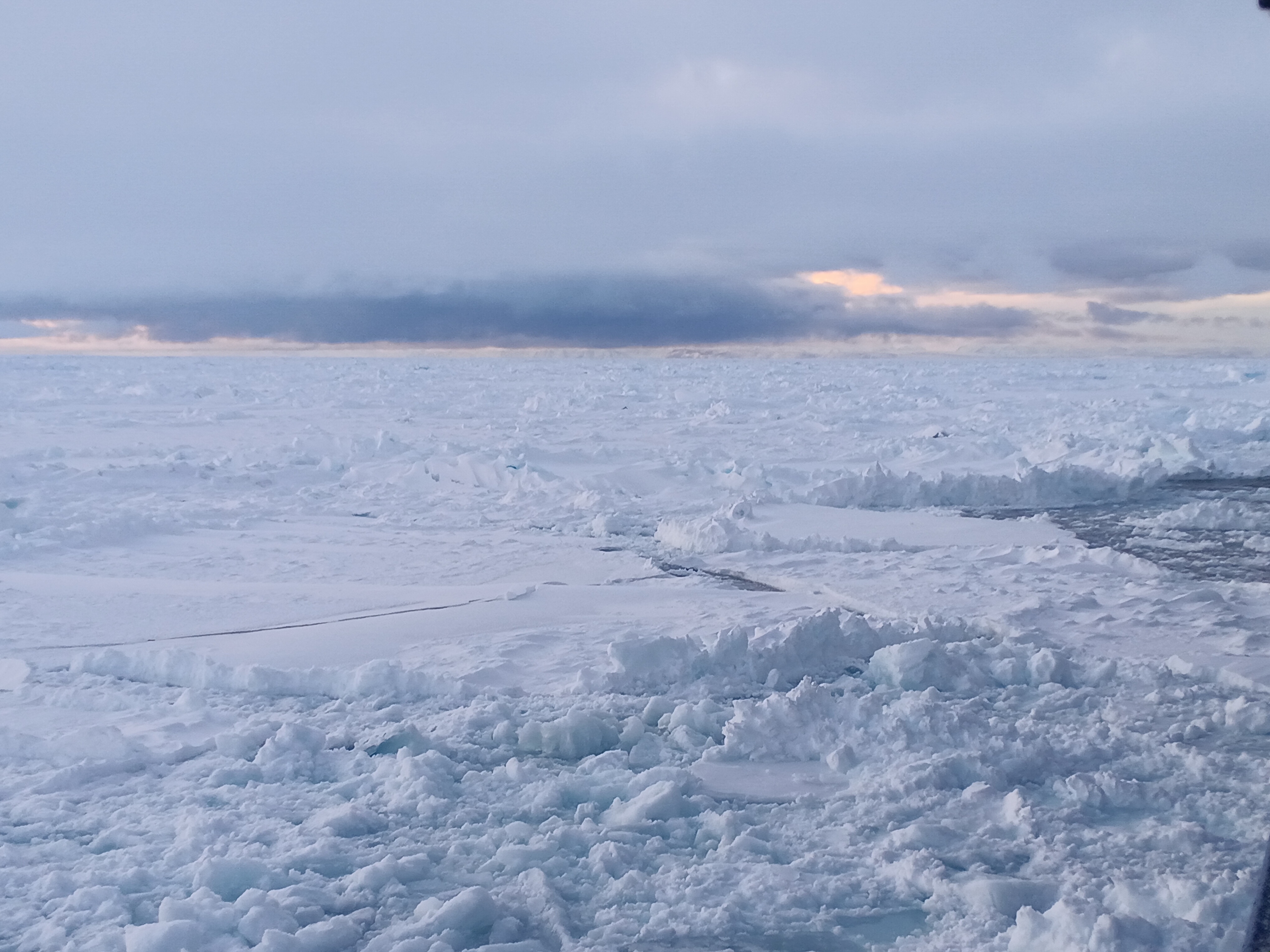
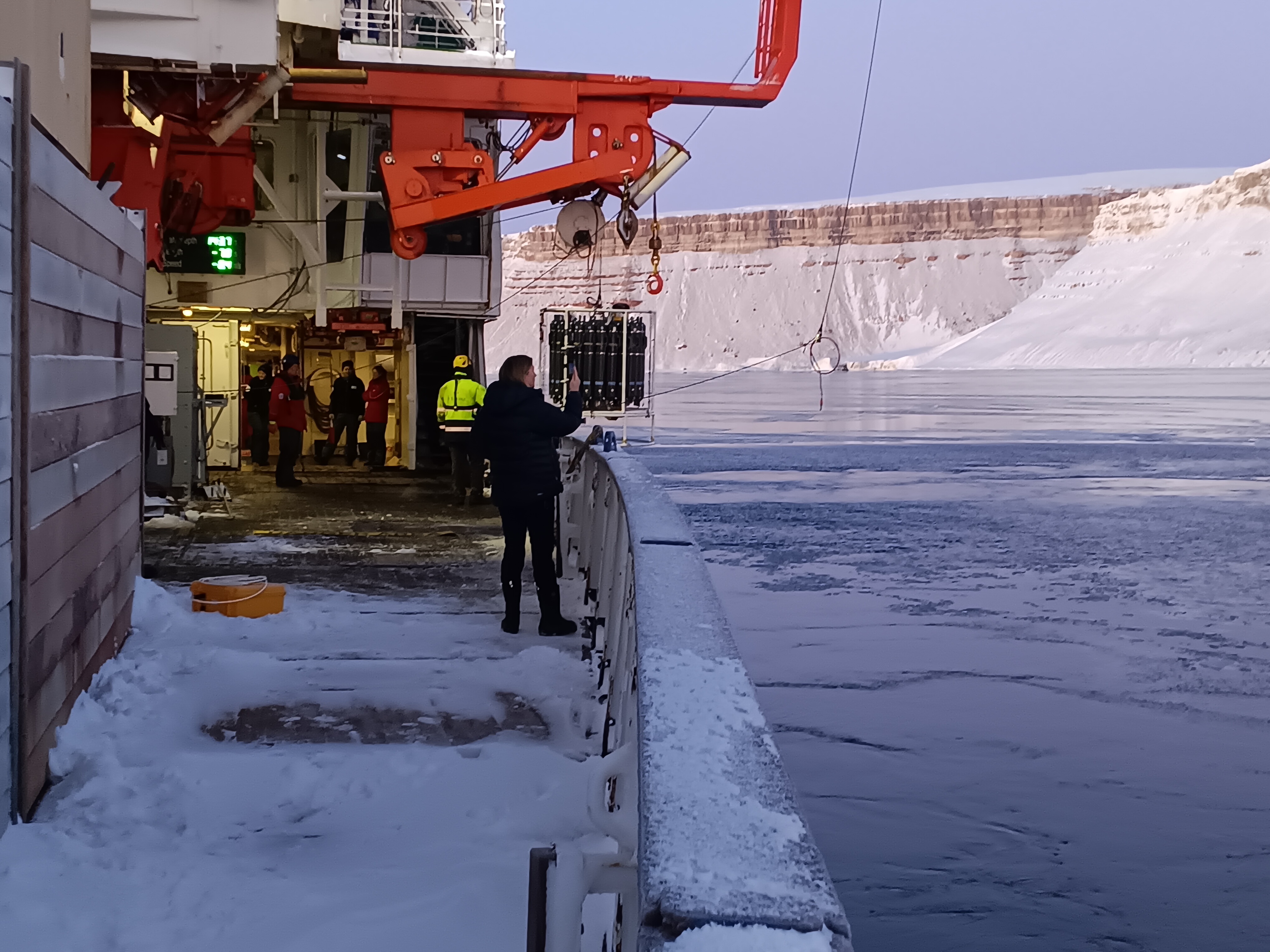
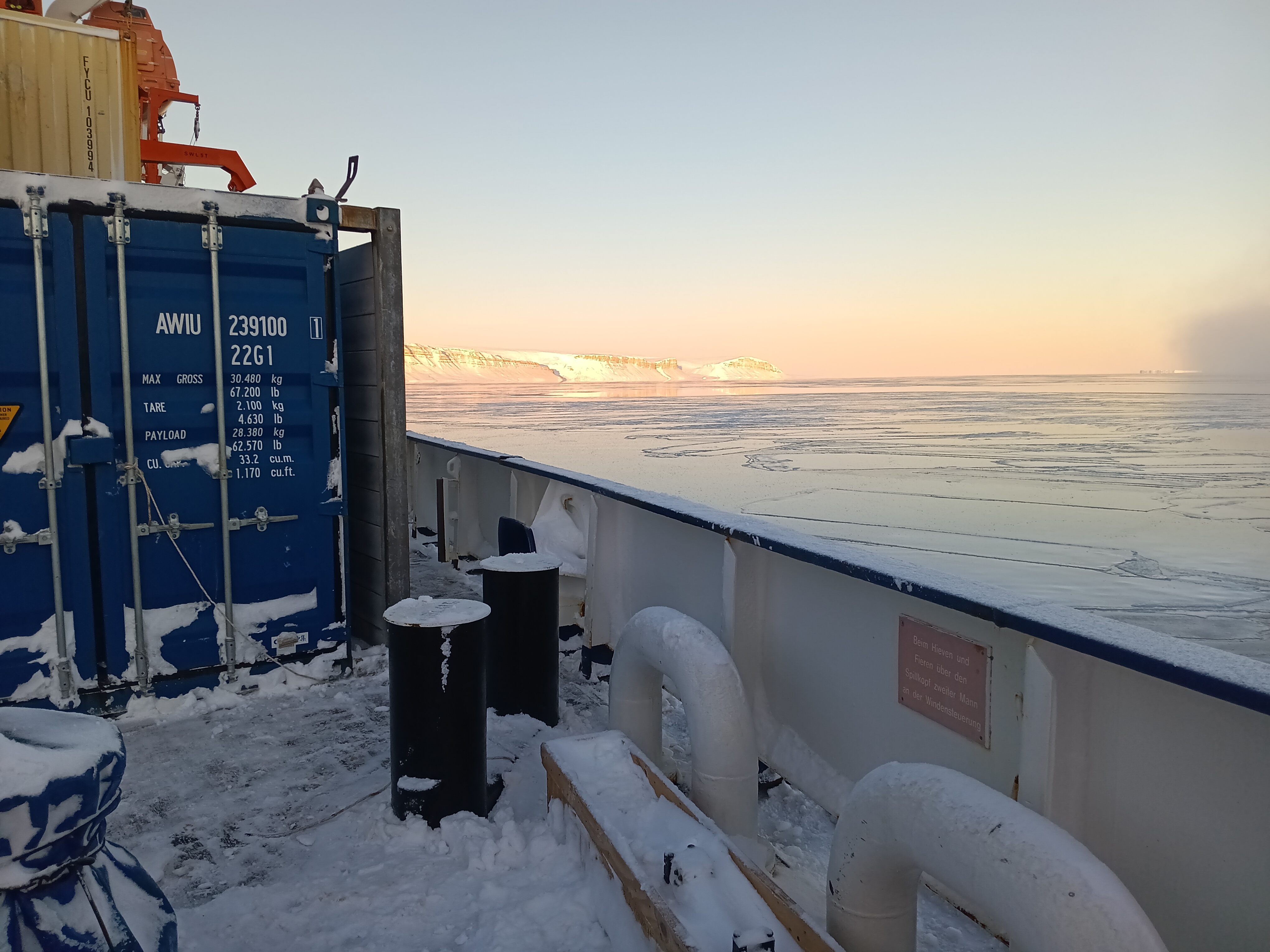
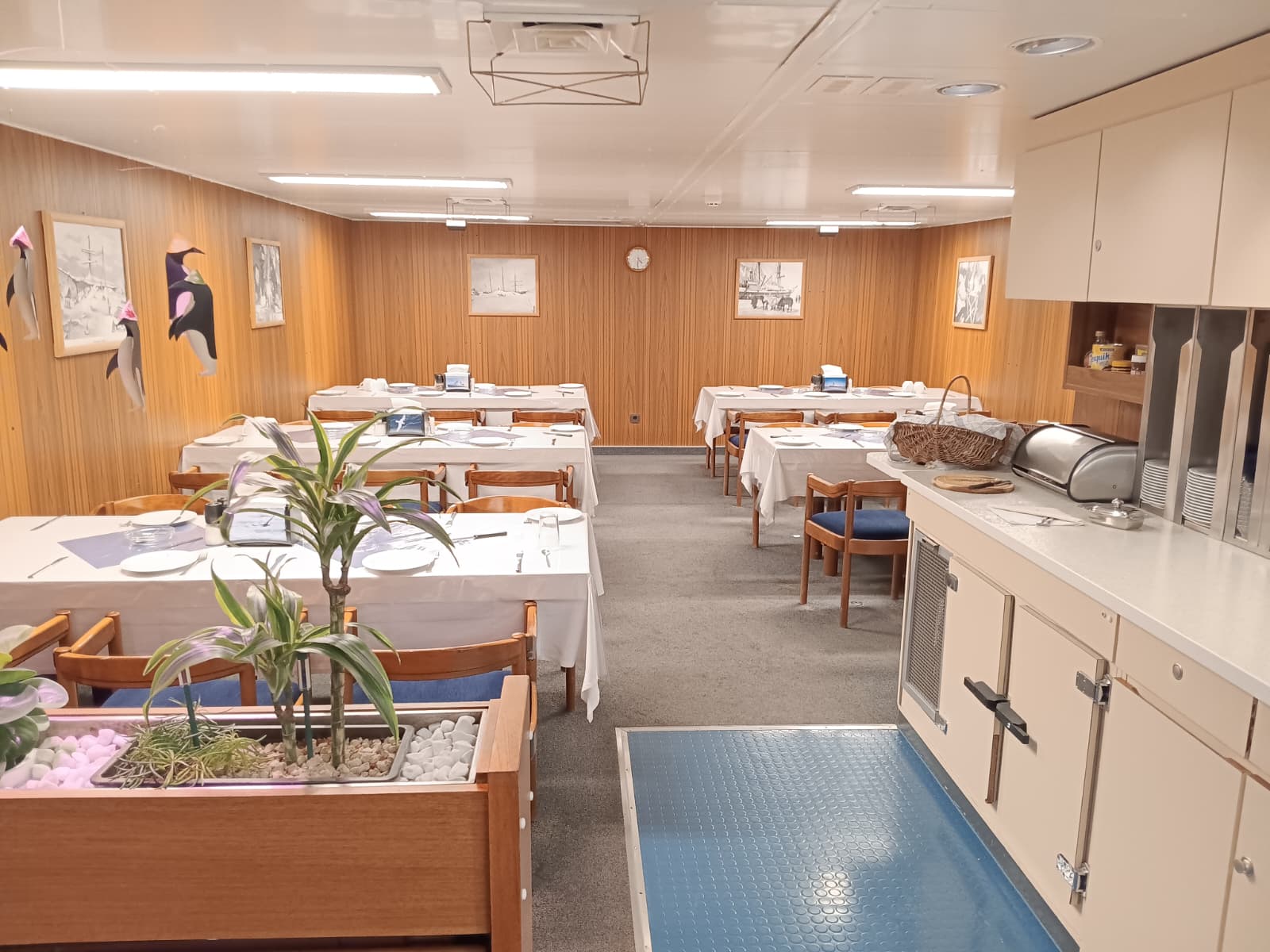
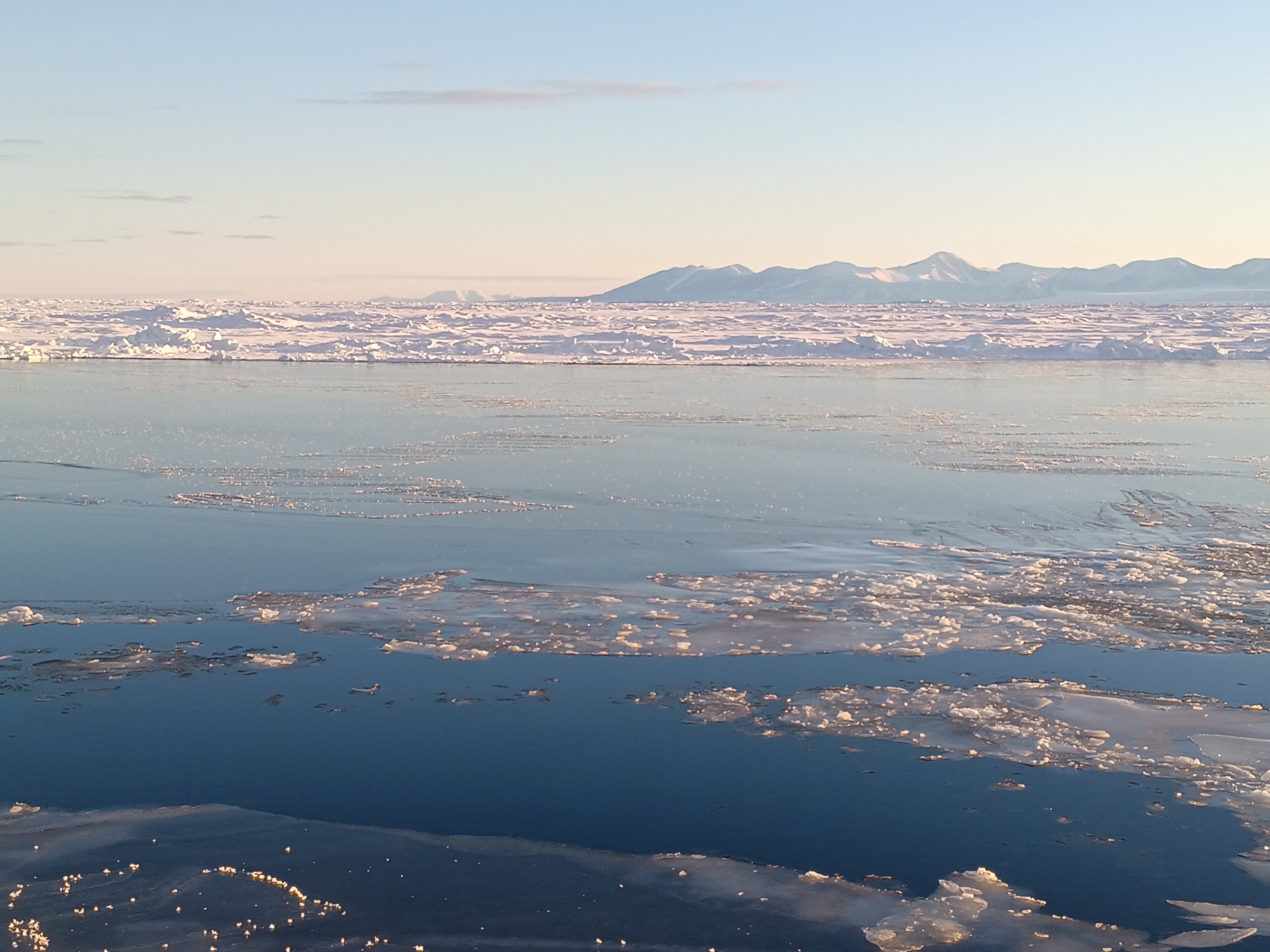
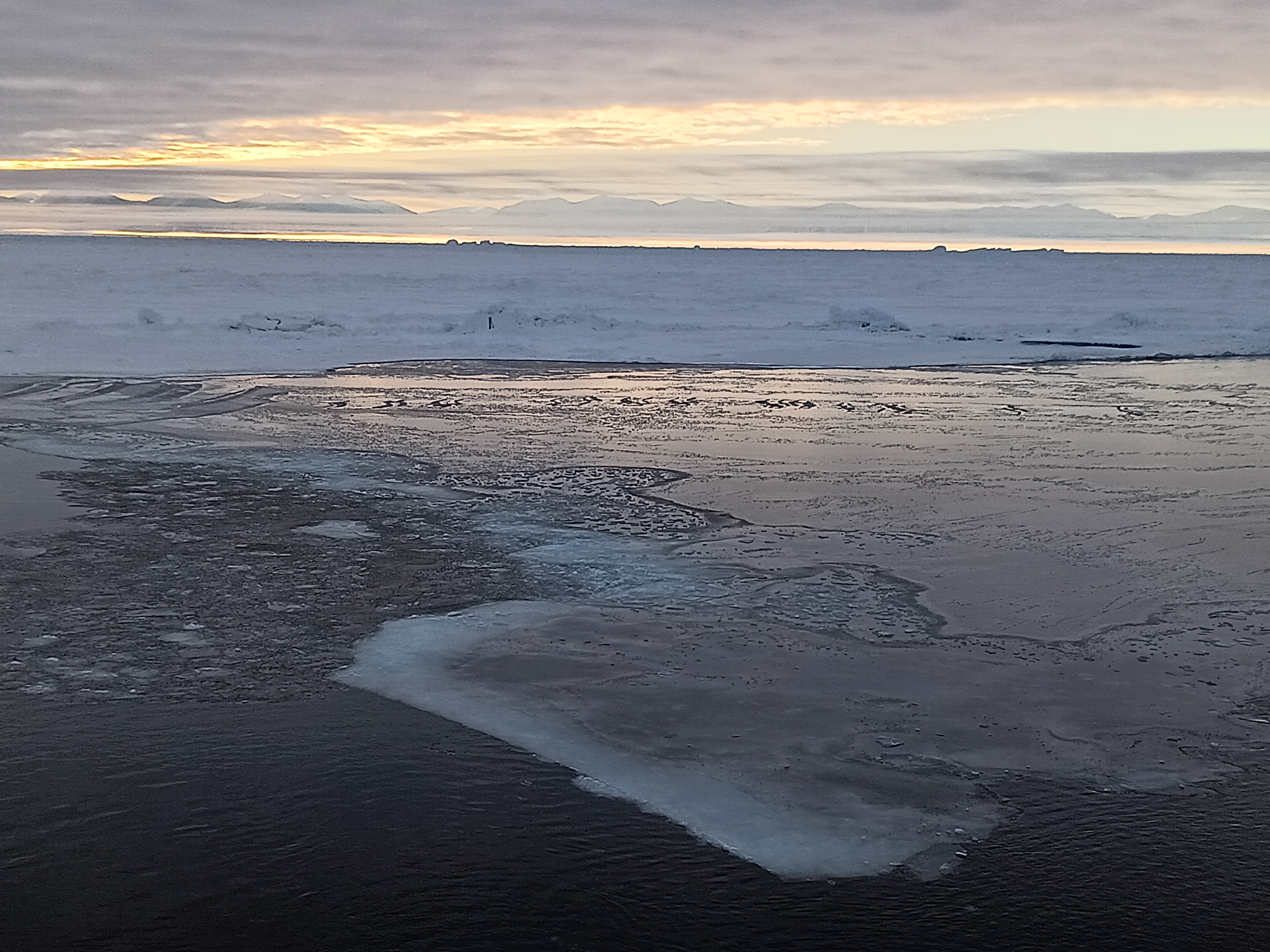
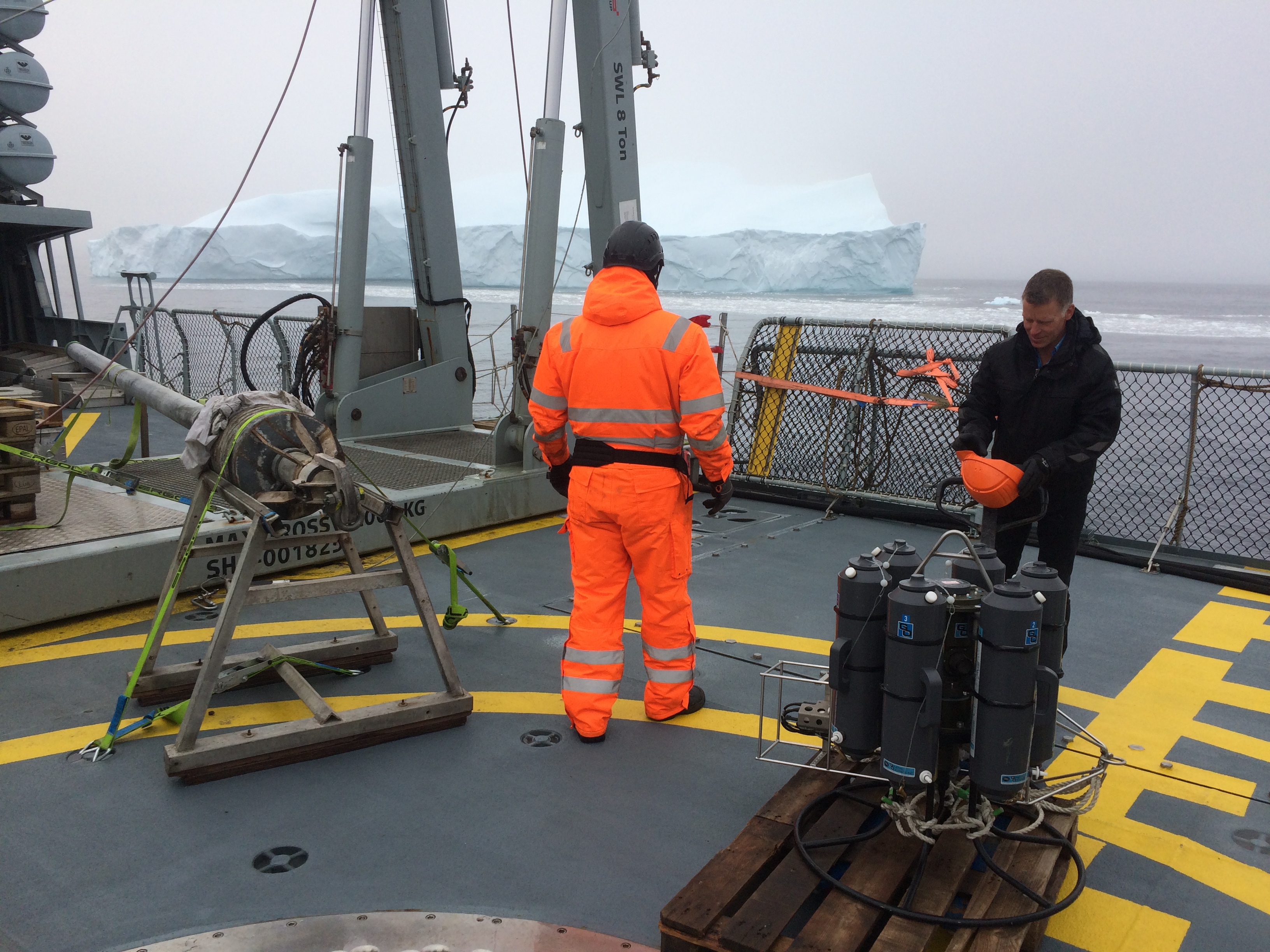
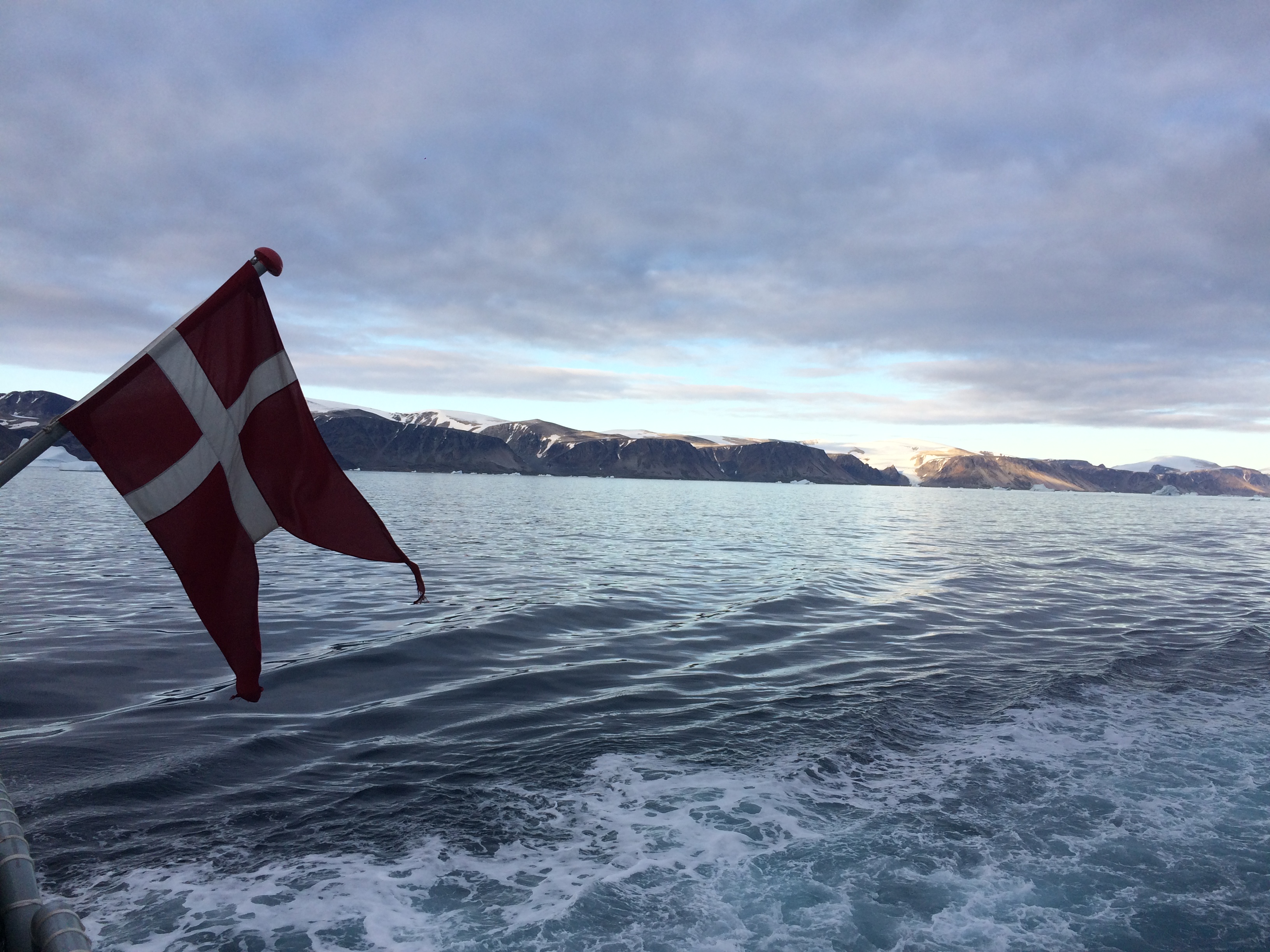
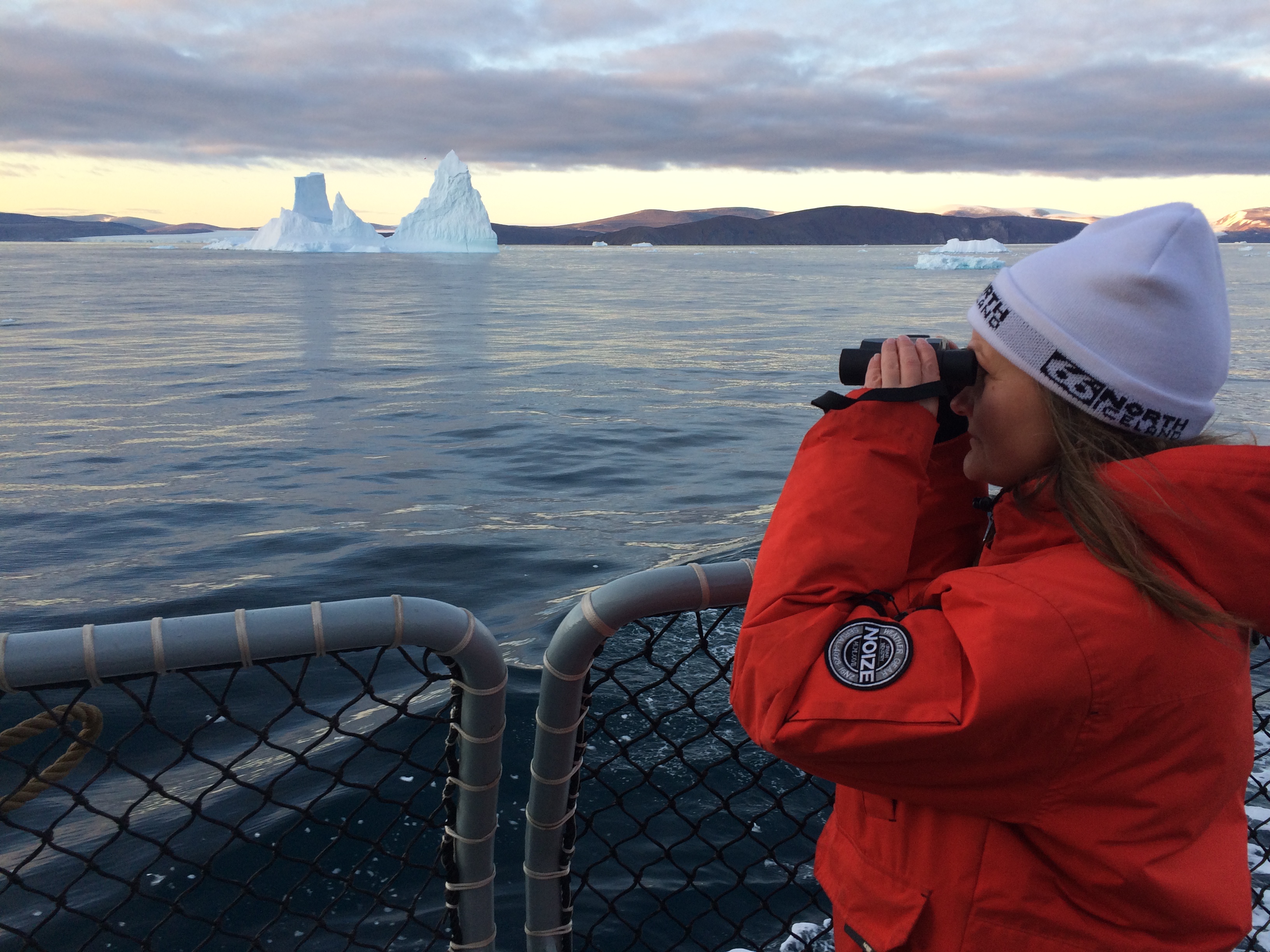
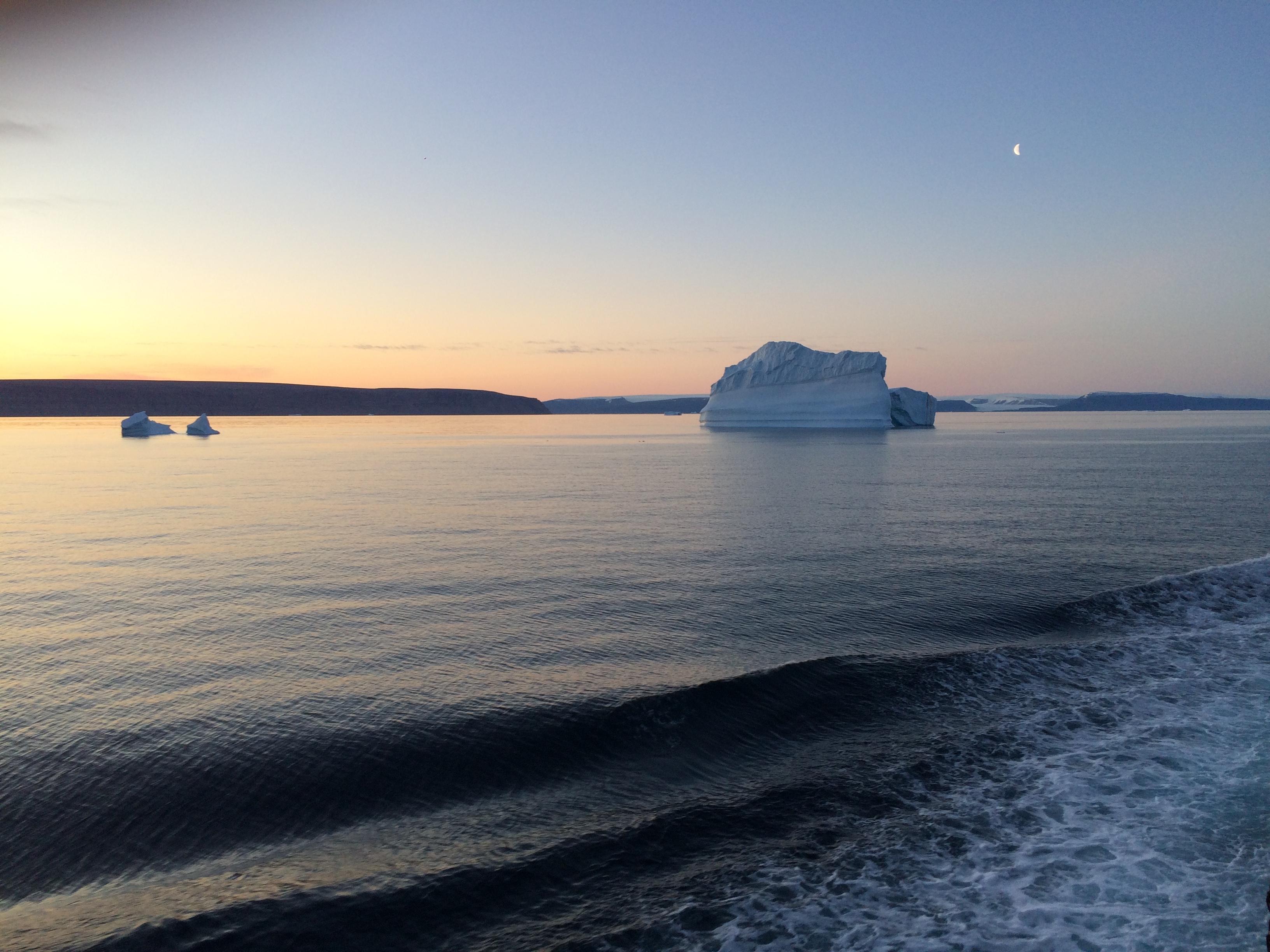
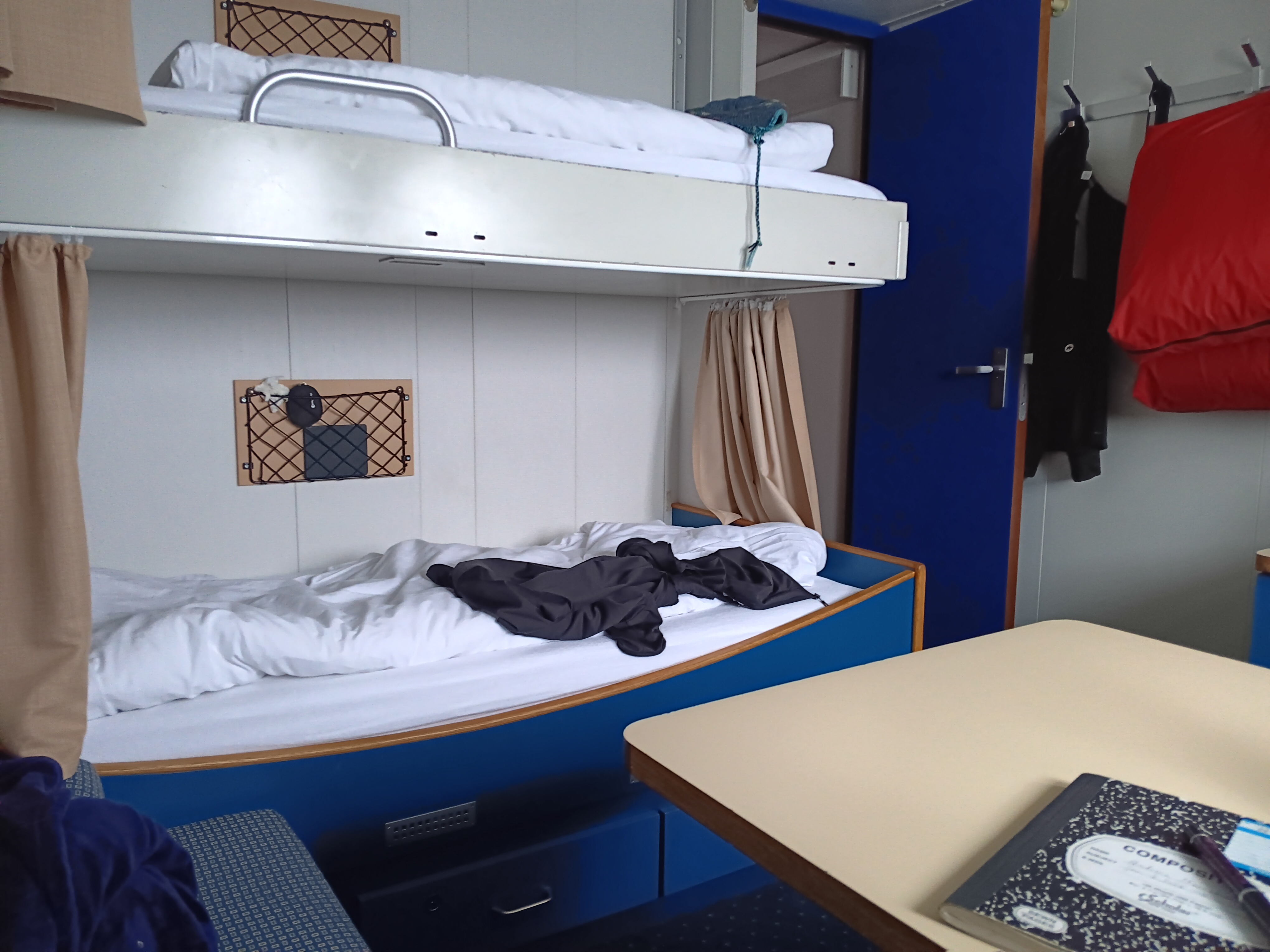
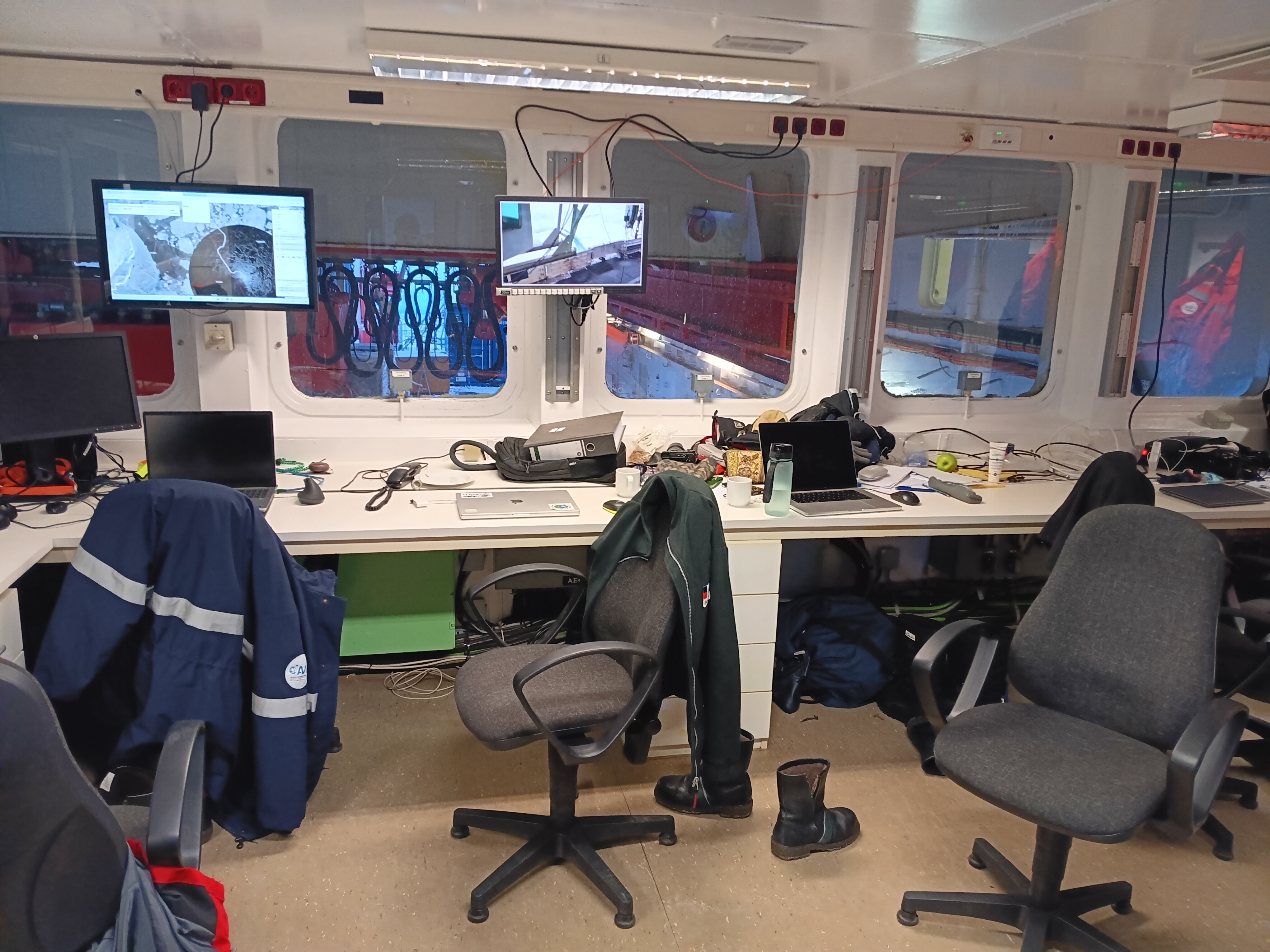
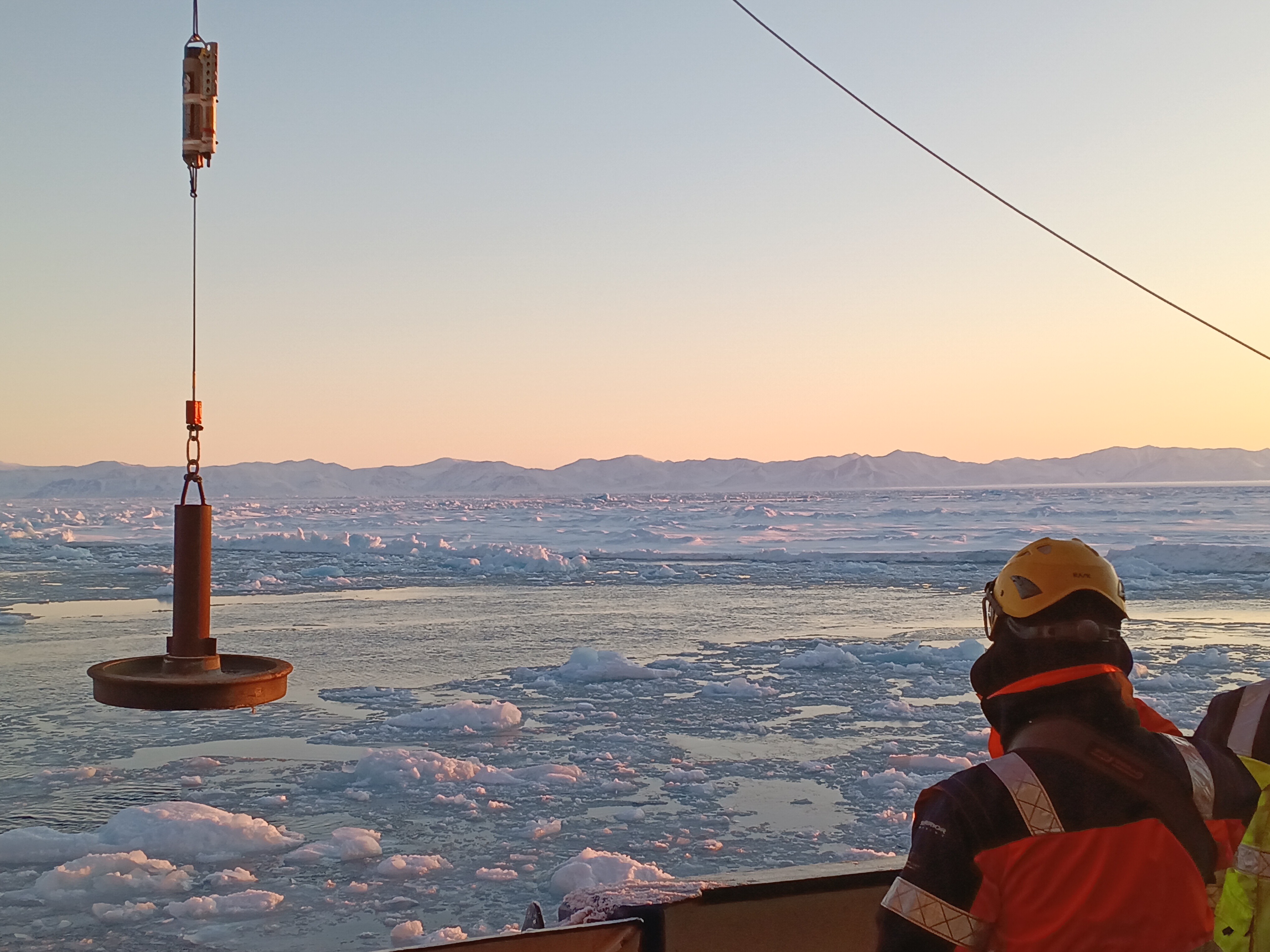
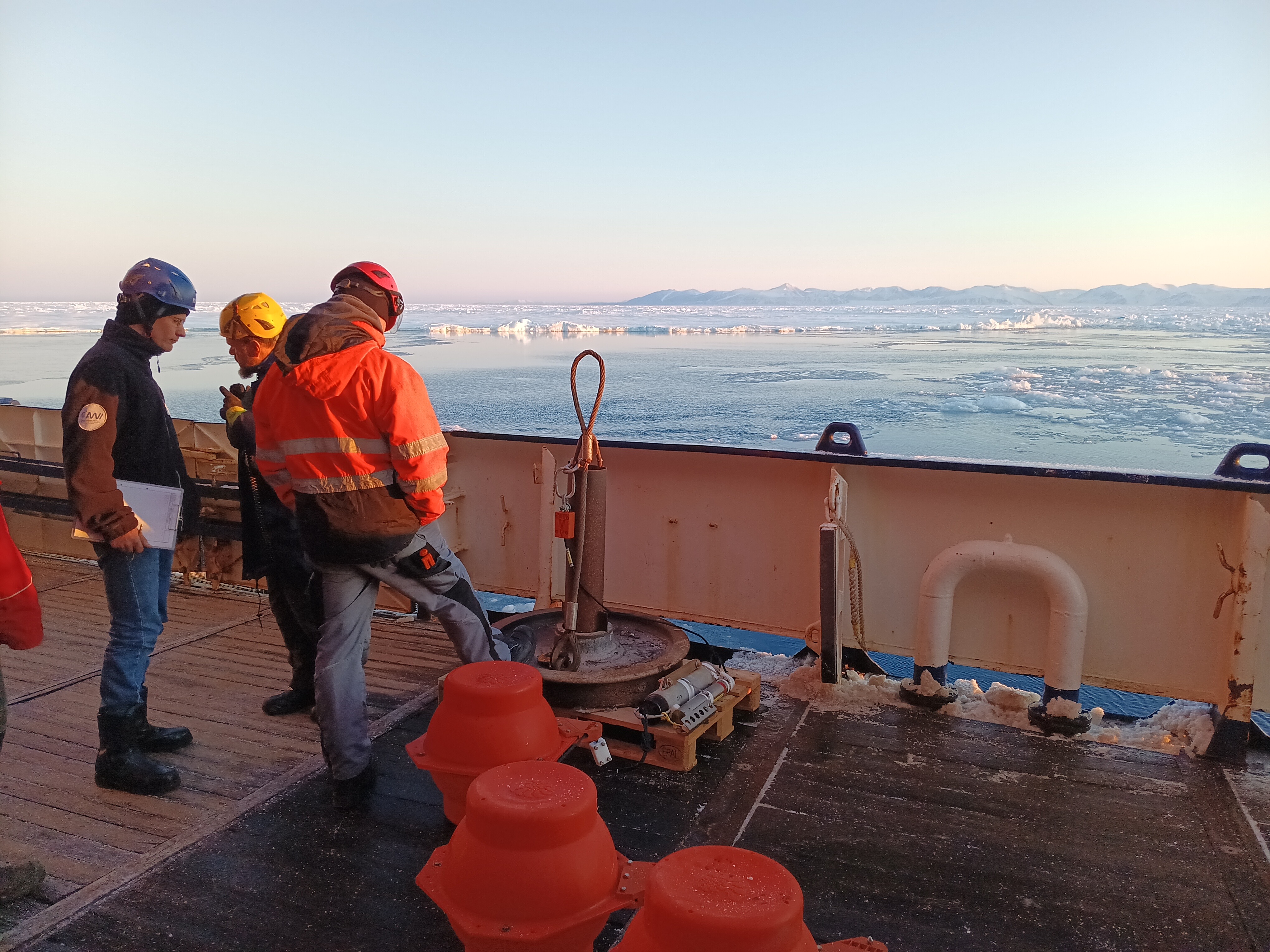
Now how does Greenland look from the ship? Well, there is always ice and it is always cold. The coldest days we had near the coast when the skies were clear. The coldest day we had -20 C, that is -4 F for my American friends, but most of the time we had clouds and storms with temperatures warmer at -12 C (10 F) with clouds and little visibility. It snowed alot and shoveling the ship’s deck was an almost daily chore. A relaxing “cruise” it was not. We worked sensors systems in the windy cold outside during all hours of the day and night. Pictures like the above were almost always taken during my 8 hours “off” that for me was from 08:00 to 16:00, because my shift was from 16:00 to 24:00. After a phone call to my wife after midnight and a peppermint tea to warm up, I slept from 01:00 to breakfast at 07:30. As almost all scientists aboard I shared my cabin with others, so there is not too much privacy. The photos below show my bunk bed (I slept atop), shared work spaces, and the rarely empty dining room. We often ate in shifts, too, because not all 50 people would fit the dining room in one sitting. So we often had 2 sittings. A comfortable living room was next door for desert, tea, coffee, games, and conversations.
Now what about science, you may ask. Here we made a major discovery, I felt. A mathematician used her craft to predict a coastal current to the north of Greenland that, I admit, made no sense to me as it contradicted 30+ years of training and intuition in which direction such currents would flow, that is, the coast should be on the right hand side looking in the direction of the flow. The curious thing was that to the north of Greenland it should go in the opposite direction, that is, with the coast on the left. In Claudia’s numerical computer model run for months on super computers, this current-in-the-wrong-direction was a both prominent and persistent feature. I always discarded it as an unrealistic feature of some computer code run amok. And yet, when we actually reach the coast of northern Greenland and I measure ocean currents from a ship sensor that runs 24/7 to tell me current speed and direction, here this weired or “wrong” current was. It screamed at me from the screen the moment I plotted the data and shared it with Claudia who was aboard with the comment: “Your model is right and my intuition was wrong. Your current is at the same location, the same speed, and in the same direction as your model said it would.” Furthermore, a distinct and separate way to estimate ocean currents from ocean temperature and salinity observations showed the exact same thing. That’s now two good complementary confirmation of the current that nobody has ever seen or measured … until now that we aboard Polarstern did so on Sept.-23, 2025:
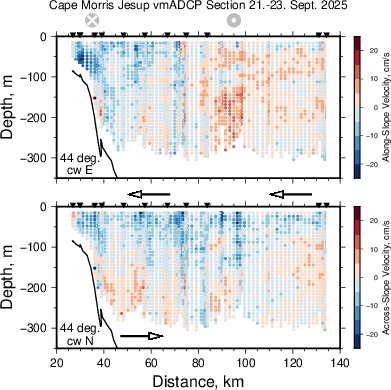
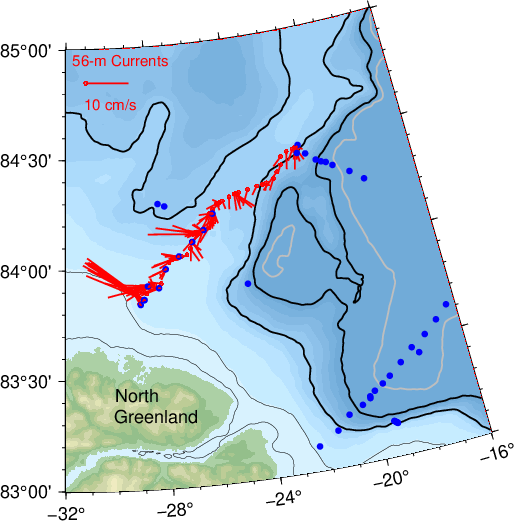
The map on the left shows our study area to the north of North Greenland. On it in red are sticks whose length indicate the speed or strength of the ocean current (at 56 meters below the surface) while its orientation gives the direction of the current. The light blue is shallow and dark blue is deep water as before. The current is sluggish offshore with a weak component to the south. In contrast, closest to the coast of North Greenland we find long sticks that point to towards the left (west by north-west). This is Claudia’s Coastal Current.

The two plots on the left provide more detail, as it shows how the current varies with depth and distance from the coast along a line from the coast towards offshore. The bottom of the shallow ocean is the black line from 100-m to 350-m meter at a distance of 20-40 km from the coast. The top-left panel shows the current (in colors) across the section where blue colors indicate currents flow into the page while red colors indicate currents that flow out of the page towards us viewing it with the coast on the left. The bottom-left panel shows the velocity component along the section with a flow that is mostly onshore near the surface.

There is so much more to this story as well as additional stories, notice the red dots in the top-left panel between 150-m and 300-m depth that indicate a strong flow to the south and east, but I save this for later. I also do not wish to tell you about the two ocean sensors we quickly deployed at this location to stay there until we, perhaps, recover them with new data next year or the year there after. I do wish to close this essay, however, with the view of Greenland that we had where we discovered Claudia’s coastal current. Science is fun, exciting, and always surprises.
Greenland Ocean Expeditions, Science, and Fun

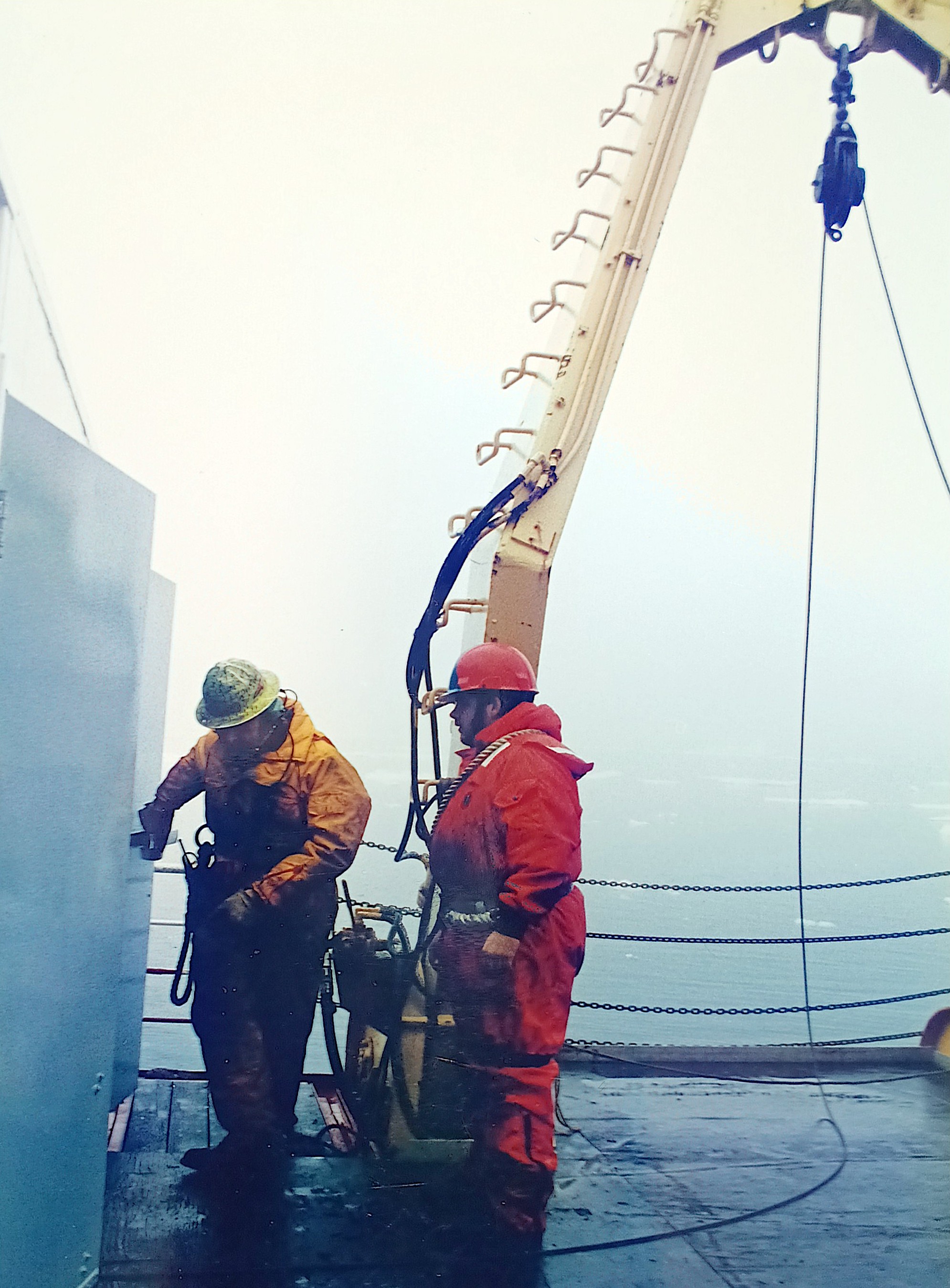
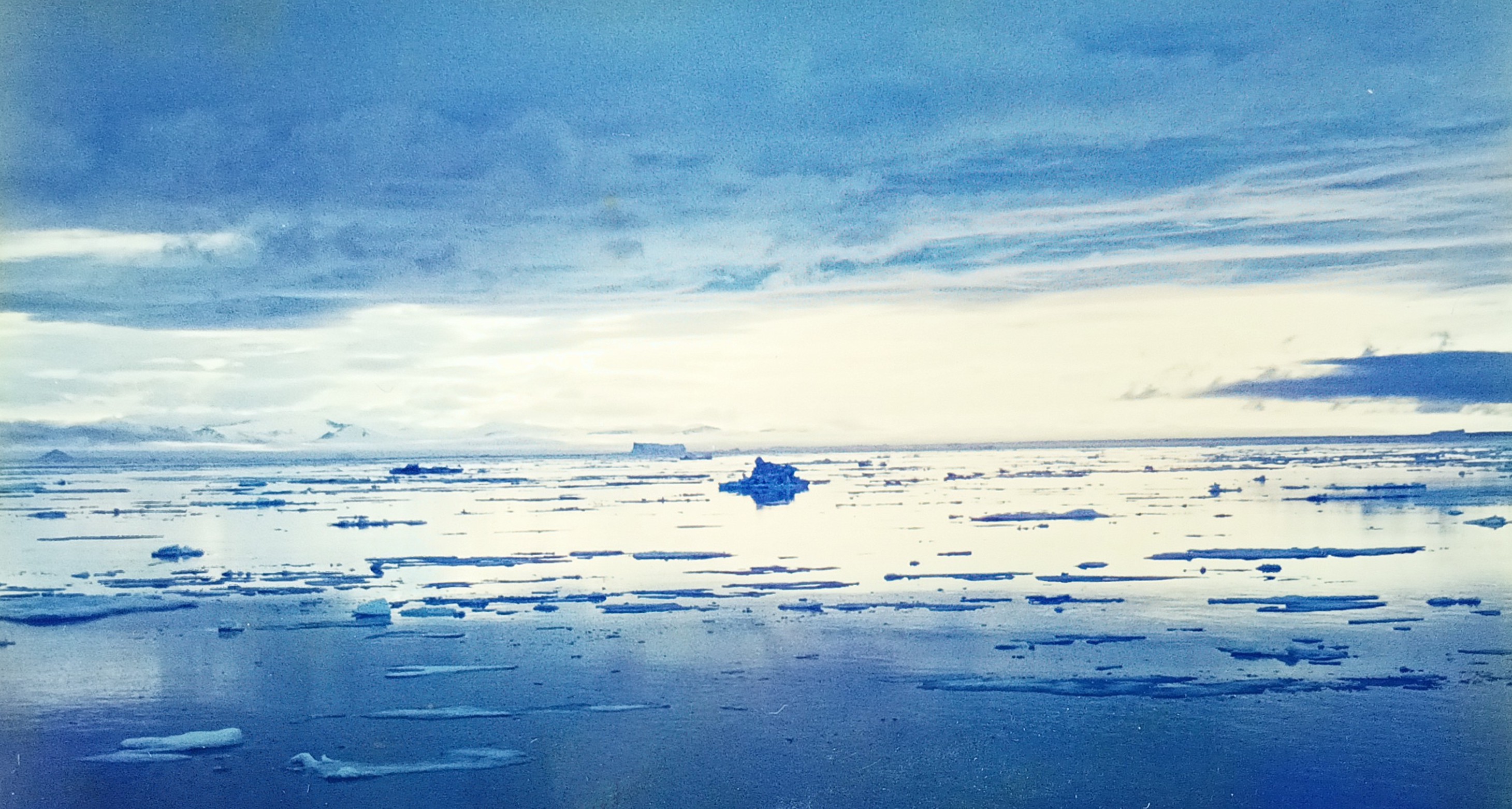
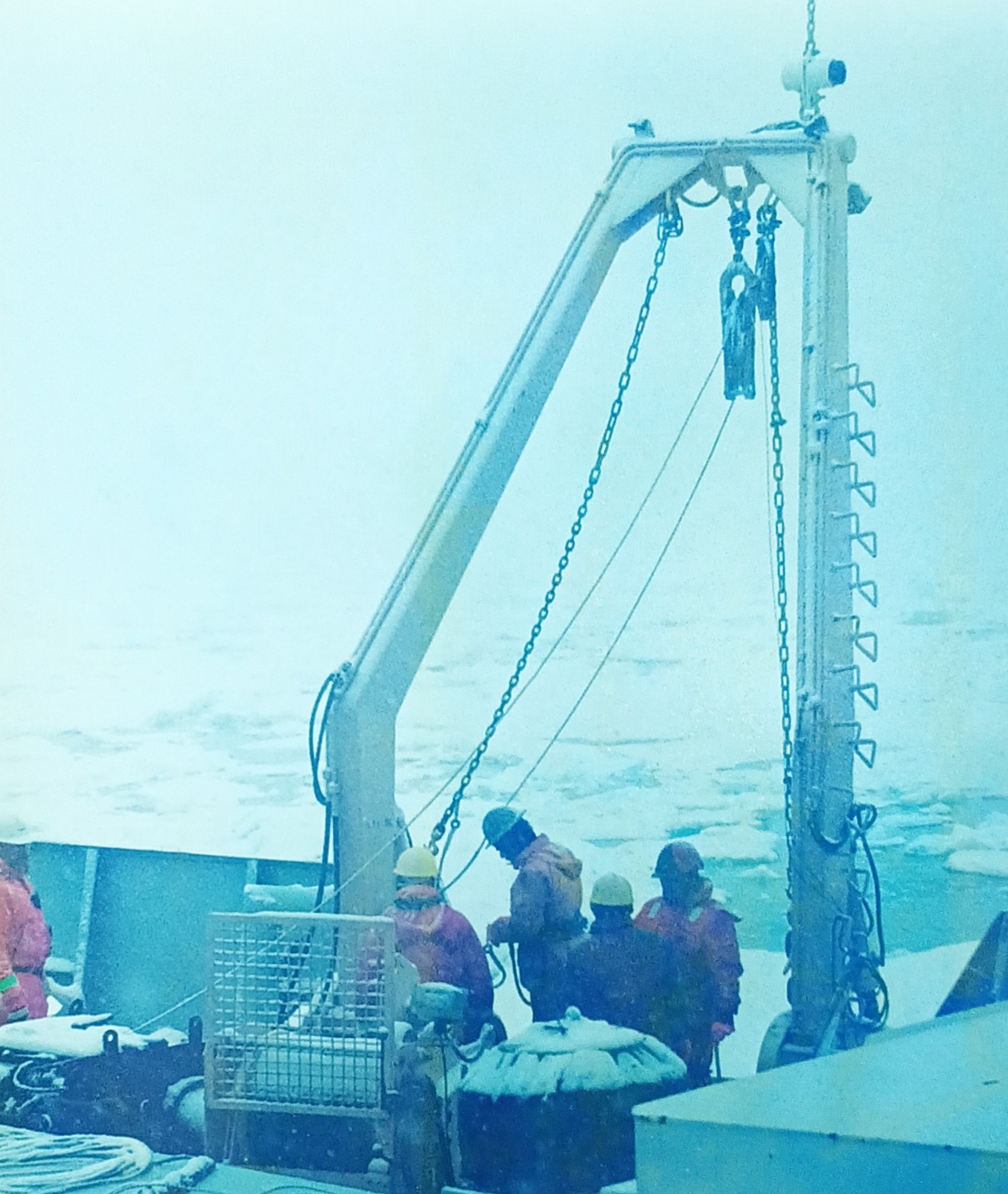
Science and Greenland both combine discovery, adventure, and diverse people. I do this work free of academic constraints, responsibilities, and pay, because I retired from my university three months ago drawing on savings that accumulated since 1992 with my first job in San Diego, California. It was there and then, that my interest in polar physics started, but my first glimpse of Greenland had to wait until 1997 when a Canadian icebreaker got me to the edge of the ice in northern Baffin Bay between Canada and Greenland. It was a cold and foggy summer day as these pre-digital photos show:

Almost 25 years later I visited the area again with Her Danish Majesty Ship HDMS Lauge Koch, a Danish Navy vessel, which surveyed the coastal waters between Disko Bay in the south and Thule Air Base (now Pituffik Space Base) in the north. Two Danish goverment agencies led this expedition: the Geological Survey of Denmark and Greenland (Dr. Sofia Ribeirio, GEUS) and the Danish Metorological Institute (Dr. Steffen Olsen, DMI). Our small team of 11 scientists and 12 soldiers surveyed the seafloor with fancy acoustics, drilled into the bottom with piston corers, fished for plankton with towed nets, and collected water properties with both electronics and bottle samples. As this was during the Covid-19 pandemic, all scientists had to be both vaccinated and tested prior to boarding the flight from Copenhagen to Greenland. We also quarantined for 3 days in Aasiaat, Greenland prior to boarding the ship.

Now in retirement, I thoroughly enjoy the time to just just revisit the places and people via photos that finally get organized. More importantly, I finally feel free to explore the data fully that we collected both on 14 separate expeditions to Greenland between 1997 and 2021. For example, only in retirement did I discover that Baffin Bay was visited in 2021 by both a Canadian and an American in addition to our Danish ship. Data from these separate Baffin Bay experiments are all online and can be downloaded by anyone. I did so and processed them for my own purposes. Furthermore, NASA scientists of the Ocean Melts Greenland program flew airplanes all over Greenland to drop ocean sensors to profile and map the coastal ocean with fjords and glaciers hard to reach by ships. All these are highly complementary data that describe how icy glaciers, deep fjords, coastal oceans, and deep basins connect with each other and the forces that winds, sea ice, and abundant icebergs impose on them.

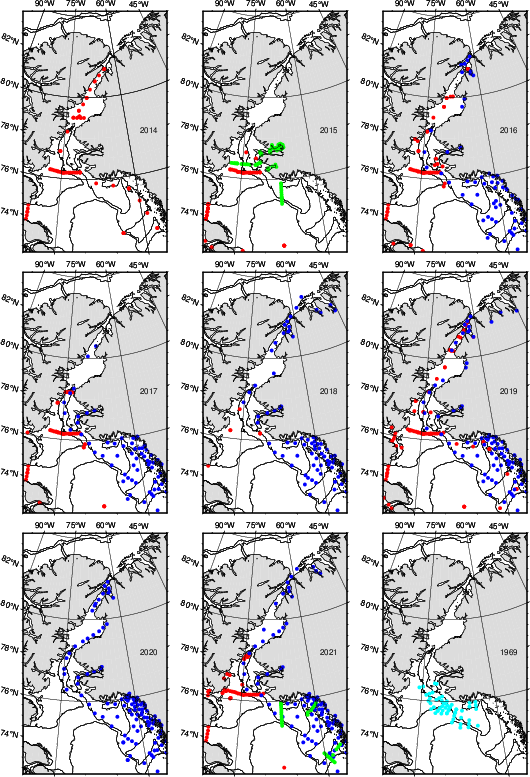
It requires a bit of skill and computer code, however, to process data from different ships, countries, and sensors into a common format to place onto a common map for different years, but here is one such attempt to organize:

There is one map for each of 9 years, i.e., station locations are shown in a top (2014, 2015, 2016), center (2017, 2018, 2019), and bottom row (2020, 2021, 1968). Land is gray with Canada on the left (west) and Greenland on the right (east) while the solid contour lines represent the 500-m and 1000-m water depth. Each colored symbol represents one station where the ship stopped to deploy a sensor package to measure temperature, depth, and salinity of the ocean water from the surface to the bottom of the ocean adjacent to the ship. The different colors represent data from Canada in red, Denmark in green, and USA in blue. The light blue color represents historical data from a study that investigated the waters after a nuclear armed B-52 bomber crashed into the ocean near Thule/Pituffik on 17 Jan. 1968 with one nuclear war head still missing. A Wikipedia story called 1968 Thule Air Base B-52 Crash provides details, references, and Cold War context, but lets return to the data and ocean physics:

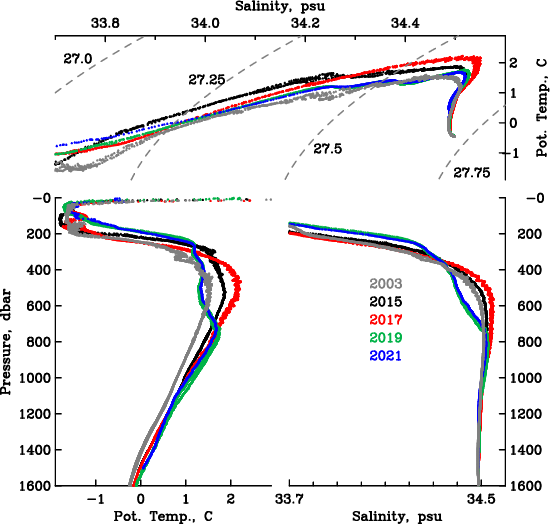
Notice a single red dot near the bottom center of some maps such as 2015, 2017, or 2021. For this single dot I show the actual temperature and salinity data and how it varies with depth (labeled pressure, at 100-m depth the pressure is about 100 dbar) and from year to year:

The two bottom panels show how temperature (left) and salinity (right) change with depth (or pressure). Notice that the coldest water near freezing temperature of -1.8 degrees Celsius (29 Fahrenheit) occurs between 30-m and 200-m depth (30 to 200 dbar in pressure). Below this depth the ocean water actually becomes warmer to a depth of about 500-600 m to then become cooler again. The effects of pressure on temperature are removed, this is why I call this potential temperature and label it “Pot. Temp.” The warmest waters at 600-m depth are also the most salty (about 34.5 grams of salt per 1000 grams of water). This saltiness makes this water heavier and denser than the colder waters above. This is a common feature that one finds almost anywhere in polar regions. The top panel shows the same data without reference to depth (or pressure), but contours of density show how this property changes with temperature and salinity. It takes a little mental gymnastic to “see” how density always increases as pressure increases, but the main thing here is that both salinity and temperature can change the density of seawater.

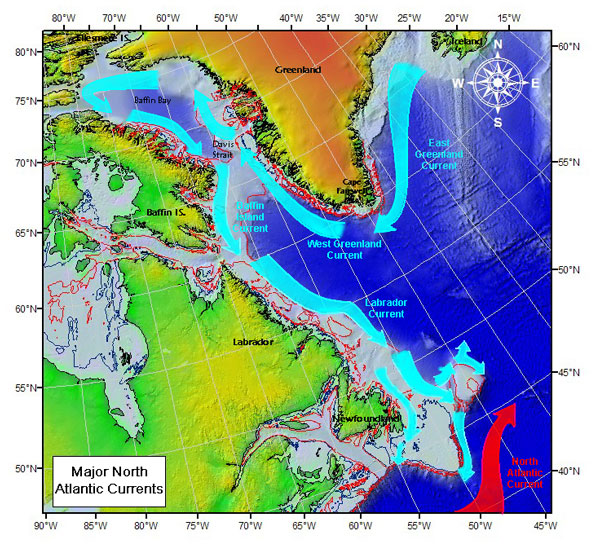
Sketch of ocean current systems off Greenland and eastern Canada. Colors represent topography of ocean, land, and Greenland ice sheet.

U.S. Coast Guard, International Ice Patrol

The origin of the warmer (and saltier) waters is the Atlantic Ocean to the south. Currents move heat along the coast of Greenland to the north. Icebergs in Baffin Bay extend into this Atlantic Layer and thus move first north along the coast of Greenland before turning west in the north and then south along the coast of Canada. This deep ocean heat does reach coastal tidewater glaciers which are melted by this warm ocean water. So the year-to-year changes of temperature and salinity determine in part how much the coastal glaciers of Greenland melt. The temperature and salinity maxima change from year to year being warmest in 2015 and 2017 and coldest in 2019 and 2021. No “global warming” here, but notice what happens closer to the bottom at 1500-m, say. These waters are separated from the Atlantic and Arctic Oceans to the south and north by water depths that do not exceed 600-m in the south and 400-m in the north. These almost stagnant waters increase their temperatures steadily from 2003 to 2015 to 2017 to 2019 to 2021. This is the global warming signal.

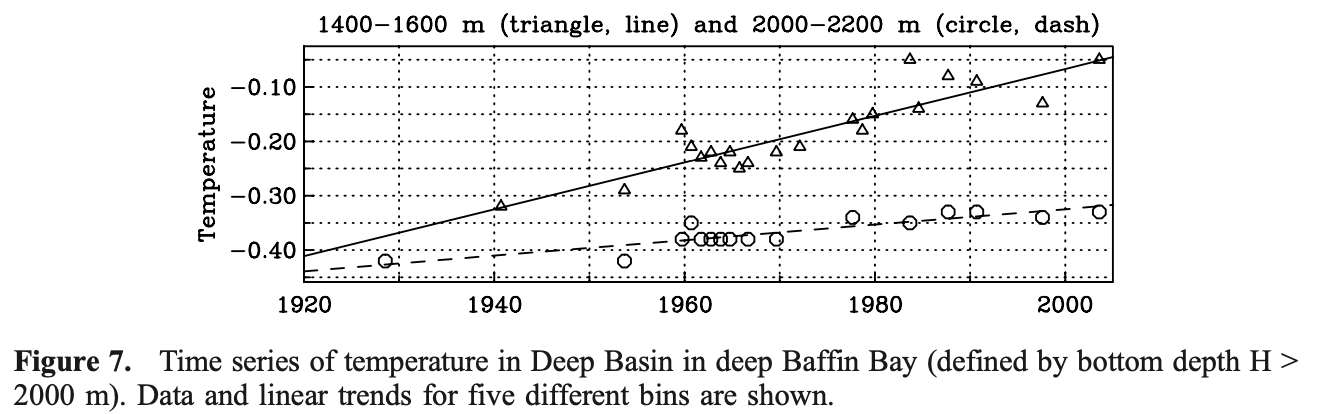
My former student Melissa Zweng published a more thorough and formal study in 2006 using all then available data from Baffin Bay between 1916 and 2003. Her Figure-7 shows the results for those parts of Baffin Bay that are deeper than 2000-m for two different depth ranges. Notice that the year to year variations (up and down) is small, but a steady increase in temperature is apparent from perhaps -0.3 Celsius in 1940 to -0.05 in 2003 for the 1400-1600 m depth range. We also did a very formal error analysis on the straight line we fitted to the data and find that deep temperatures increase by +0.03 C/decade. We are 95% sure, that the error or uncertainty on this warming is +/- 0.015 C/decade. So there is a 1 in 20 chance, that our deep warming trend is below +0.005 C/decade and an equal 1 in 20 chance, that our warming trend exceed +0.045 C/decade. In 19 out of 20 cases the (unknown) true warming value is between 0.005 and 0.045 C/decade.

So, more than 20 years have passed since Melissa’s work. The data I here showed between 2003 and 2021 thus gives us a chance to test our statistical predictions that we made 20 years ago. So, deep temperatures should be between 0.01 and 0.09 degrees Celsius warmer than they were in 2003. I have not done this test yet, but science is fun even if the data are old.

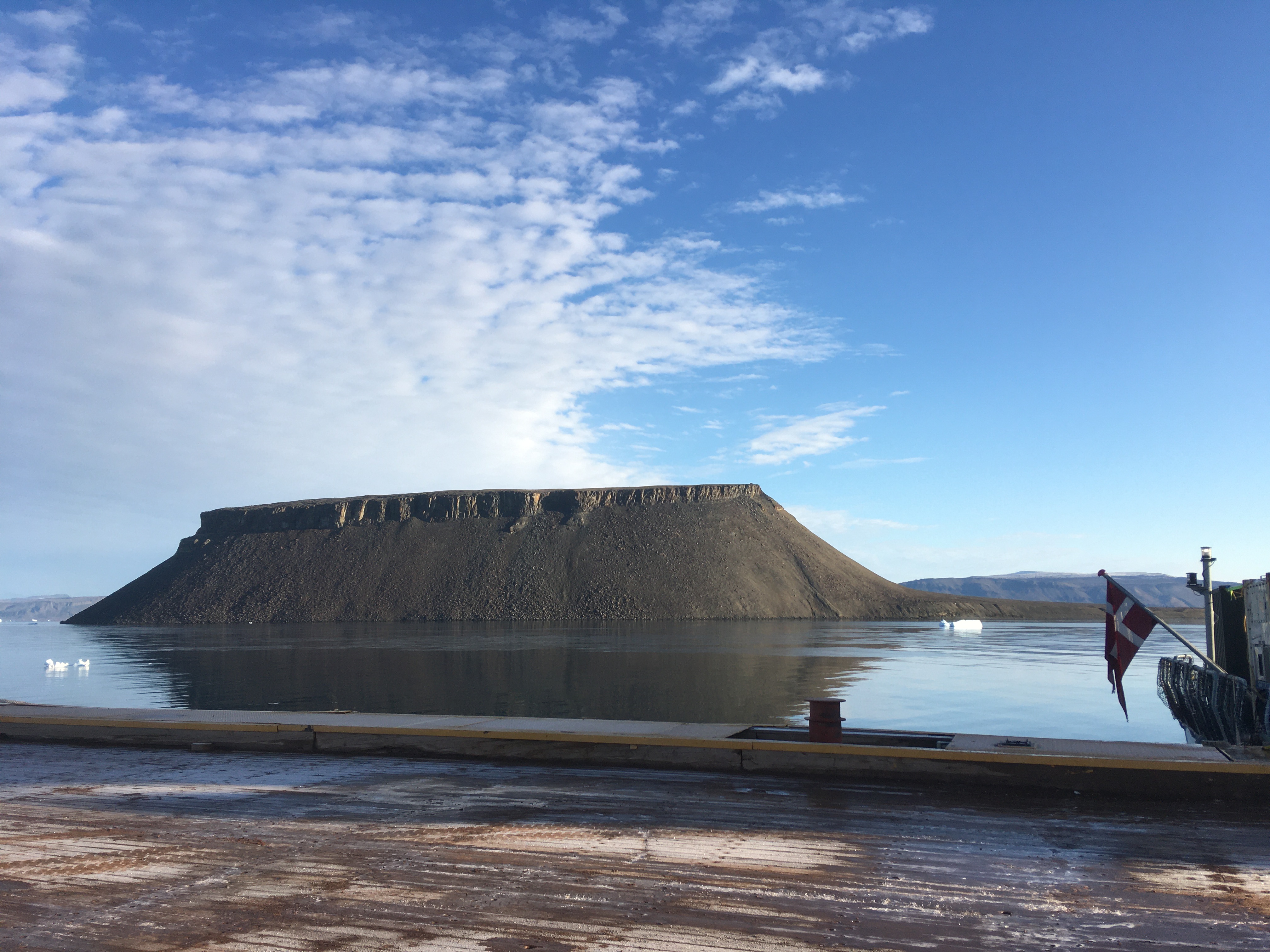
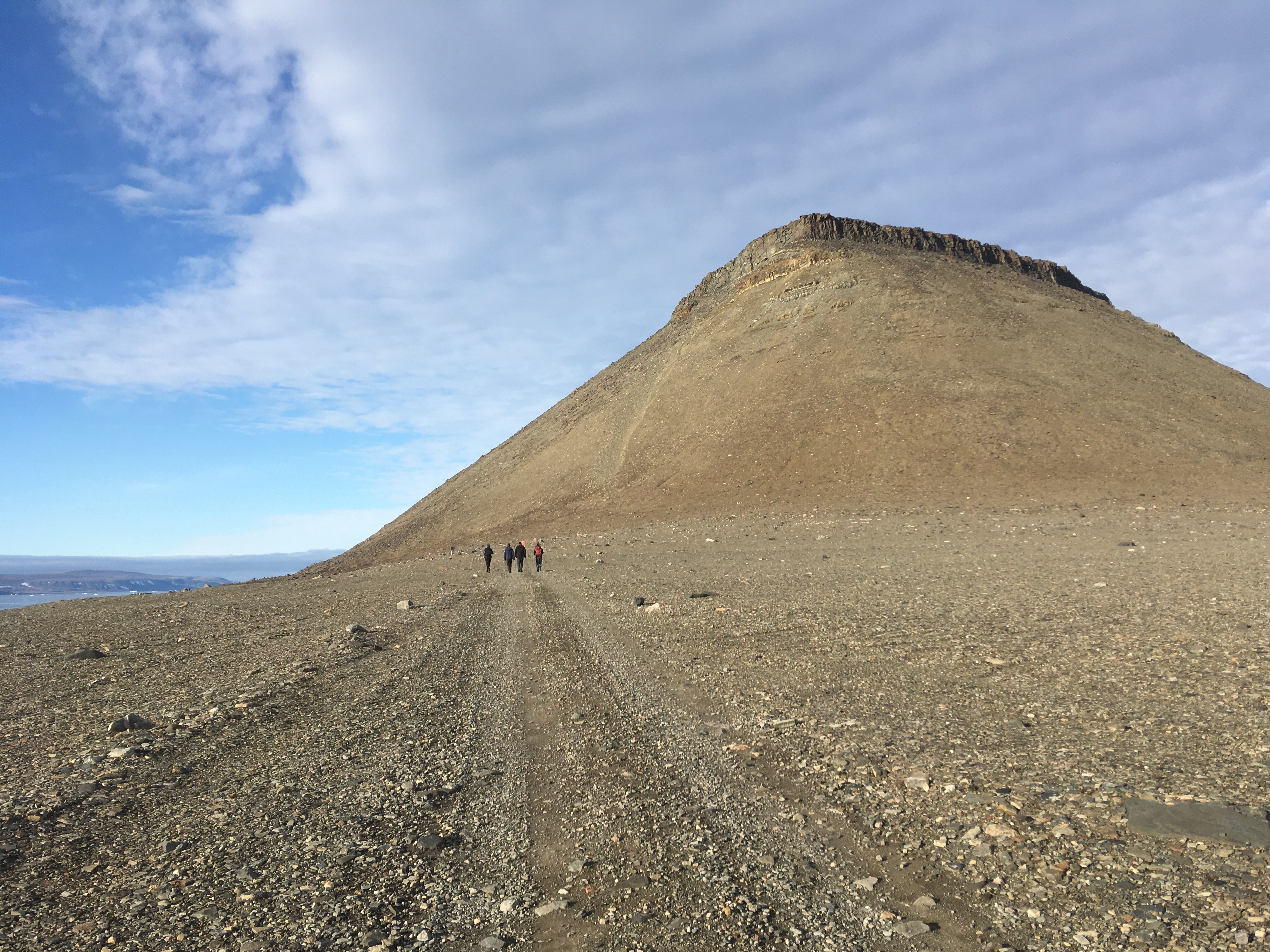
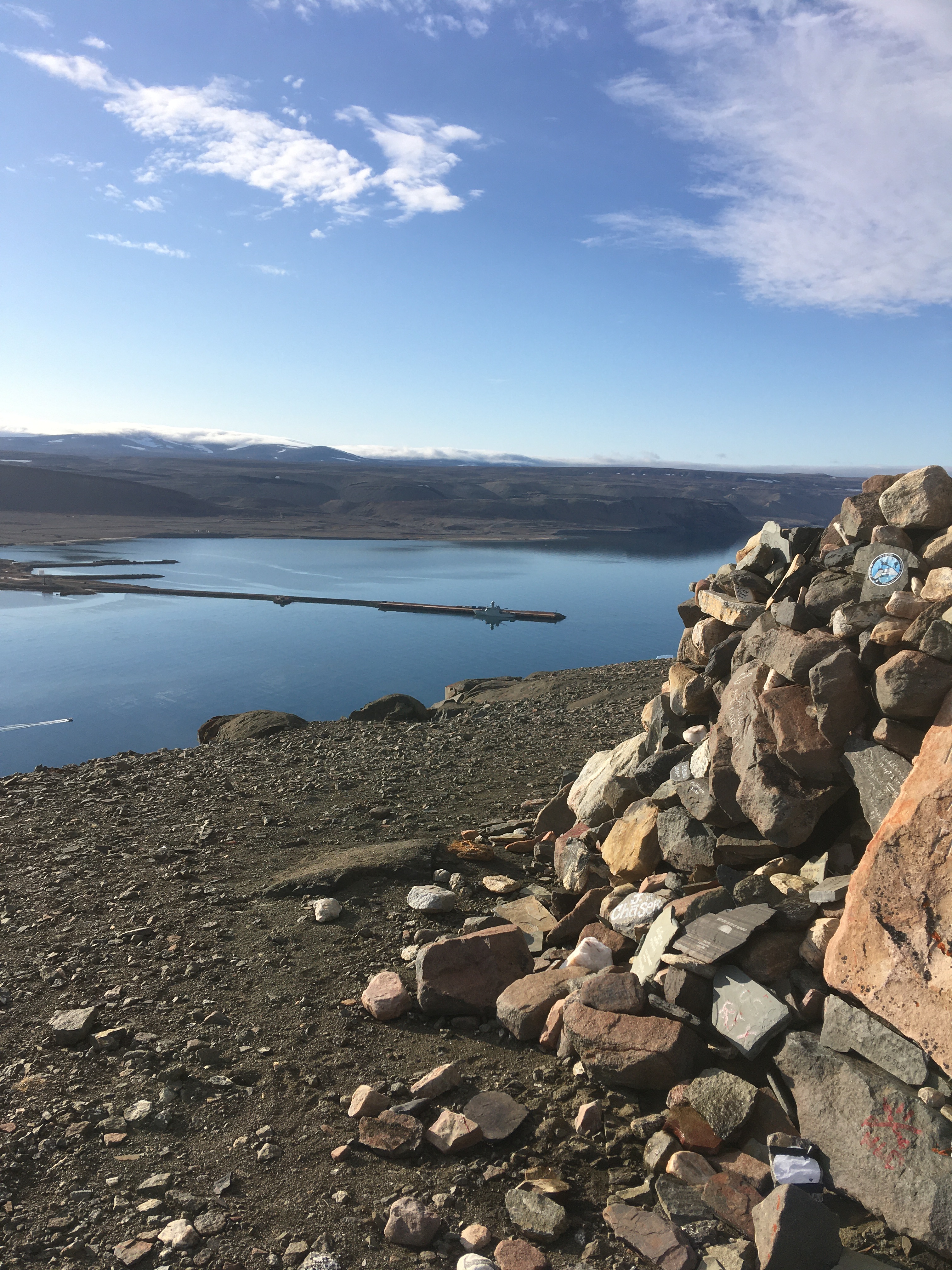
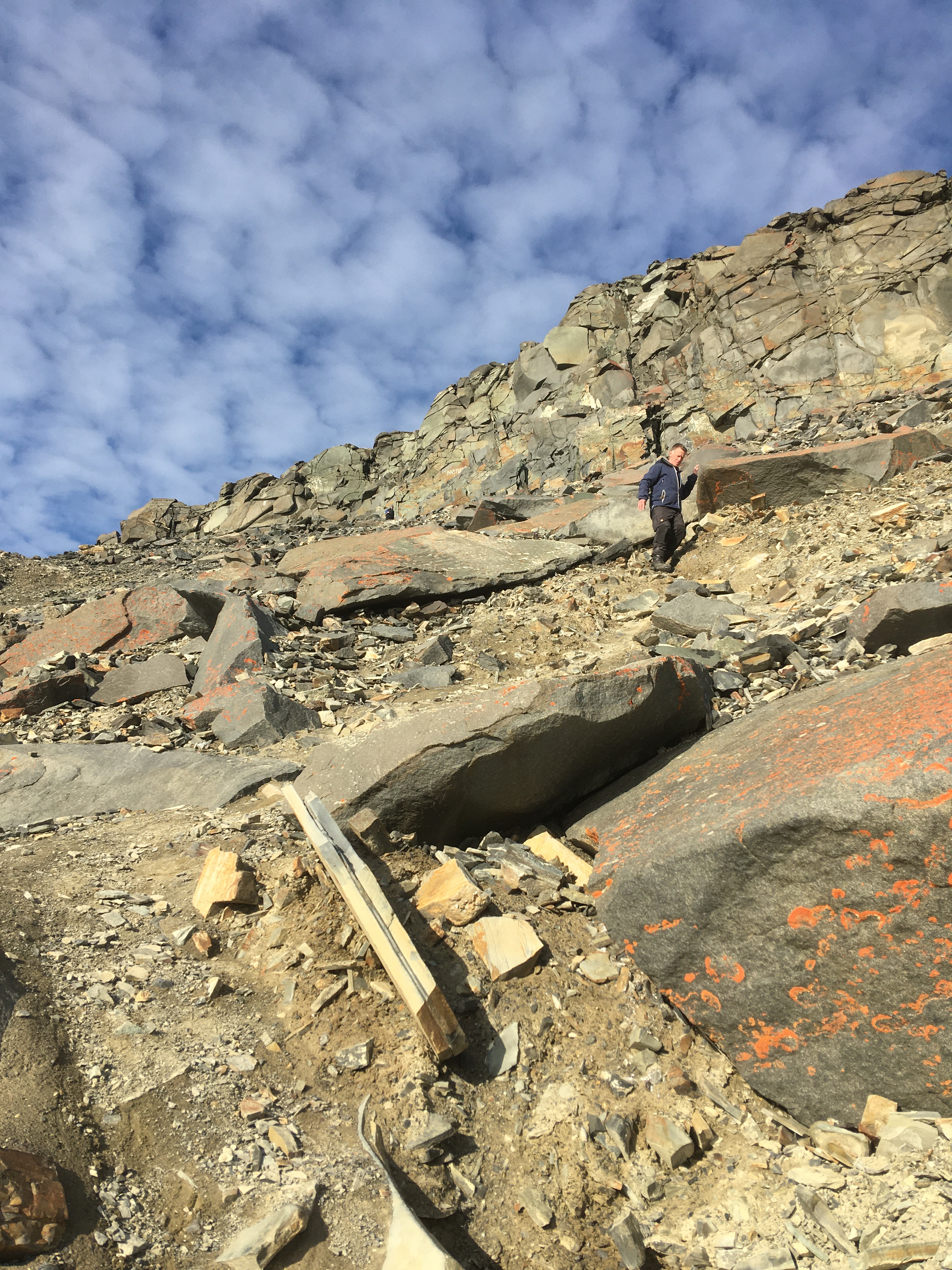
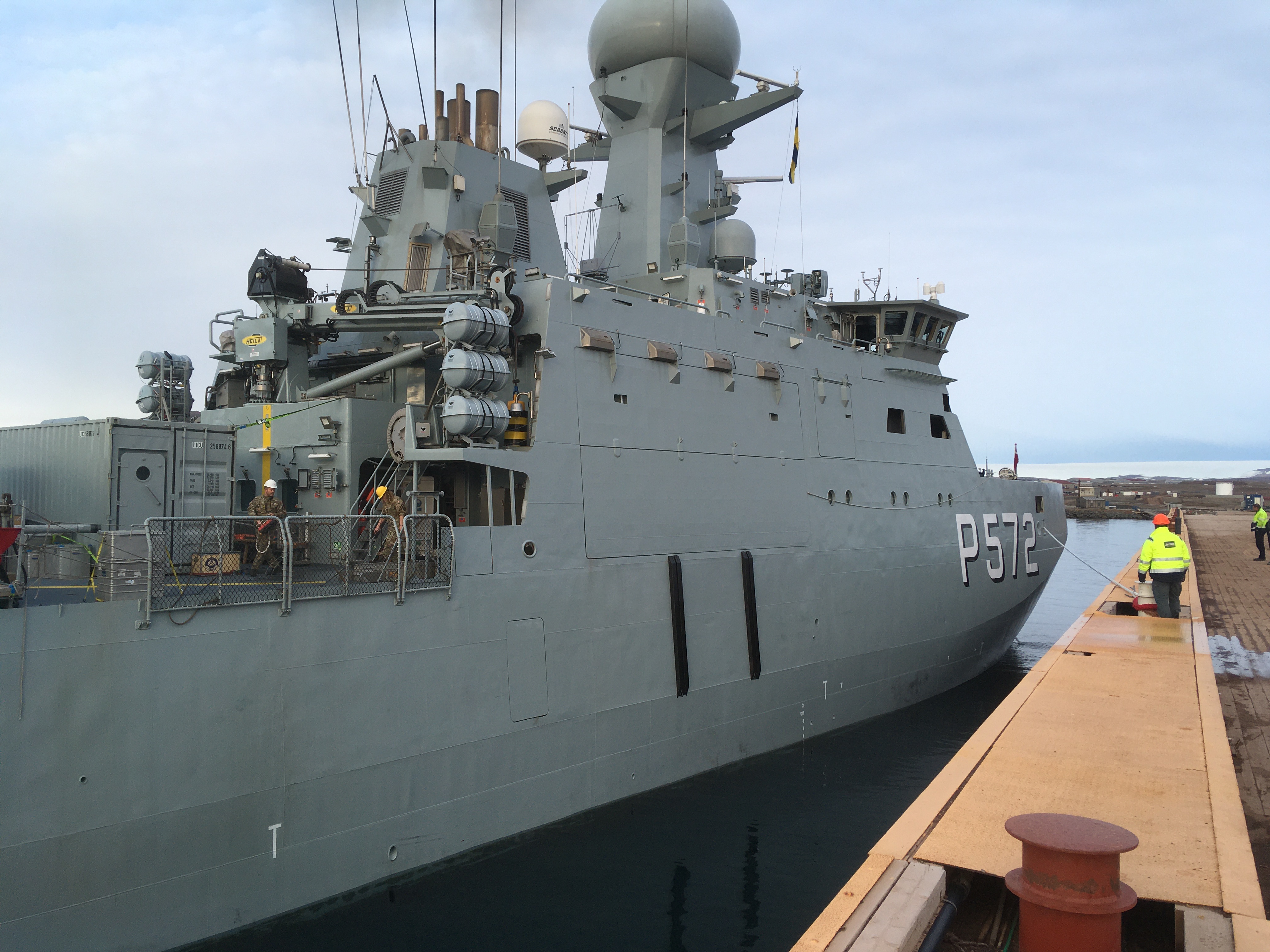
After getting off the ship at Thule Air Base (now called Pituffik Space Base) in 2021, us scientists climbed Dundas Mountain to stretch our legs, take in the varied landscape, and view our ship and home for a week from a distance. Notice how small HDMS Lauge Koch at the pier appears. All photos below were taken by geophysicist Dr. Katrine Juul Andresen of Aarhus University, Denmark:

References:

Münchow, A., Falkner, K.K. and Melling, H.: Baffin Island and West Greenland Current Systems in northern Baffin Bay. Progr. Oceanogr., 132, 305-317, 2015.

Ribeiro, S., Olsen, S. M., Münchow, A., Andresen, K. J., Pearce, C., Harðardóttir, S., Zimmermann, H. H., & Stuart-Lee, A.: ICAROS 2021 Cruise Report. Ice-ocean interactions and marine ecosystem dynamics in Northwest Greenland. GEUS, Danmarks og Grønlands Geologiske Undersøgelse Rapport, 70, 2021.

Zweng, M.M. and Münchow, A.: Warming and Freshening of Baffin Bay, 1916-2003. J. GEOPHYS. RES., 111, C07016, doi:10.1029/2005JC003093, 2006.

How oceans interact with Greenland’s last floating glaciers

Testifying before the US Congress back in 2010, I refused to endorse the view that a first large calving at Petermann Gletscher in North Greenland was caused by global warming. When a second Manhattan-sized iceberg broke off in 2012, I was not so sure anymore and looked closely at all available data. There was not much, but what little I found suggested that ocean temperatures were steadily increasing. Could it be that warm waters 1000 feet below the surface could melt the glacier at all times of the year? Did this melting from below thin the glacier? Did these changes increase the speed at which it moves ice from land into the ocean? These were the questions that motivated a number of projects that began in earnest in 2015 aboard the Swedish icebreaker I/B Oden. Professional videos of this expeditions are at https://icyseas.org/2019/07/04/petermann-glacier-videos-science/

Scientists and technicians from the British Antarctic Survey drilled three holes through the floating section of Petermann Gletscher to access the ocean and ocean sediments below it. The ocean temperature and salinity profile confirmed both the warming trend observed in the fjord and ocean adjacent to the glacier, but more importantly, we placed ocean sensors below the glacier ice to measure temperature and salinity every hour for as long as the sensors, cables, and satellite data transmission would work. This has never been done around Greenland, so our data would be the first to report in real time on ocean properties below 100 to 300 m thick glacier ice at all times. What we saw when the data started to come in after 2 weeks, a month, and half a year stunned us, because (a) the ocean waters under the glacier changed by a very large amount every two weeks. Nobody has ever seen such regular and large changes in tempertures (and salinity) under a glacier bathed in total darkness at air temperatures of -40 degrees Celsius and Fahrenheit, but then our station went offline after 6 months and did not report any data to us via satellite.

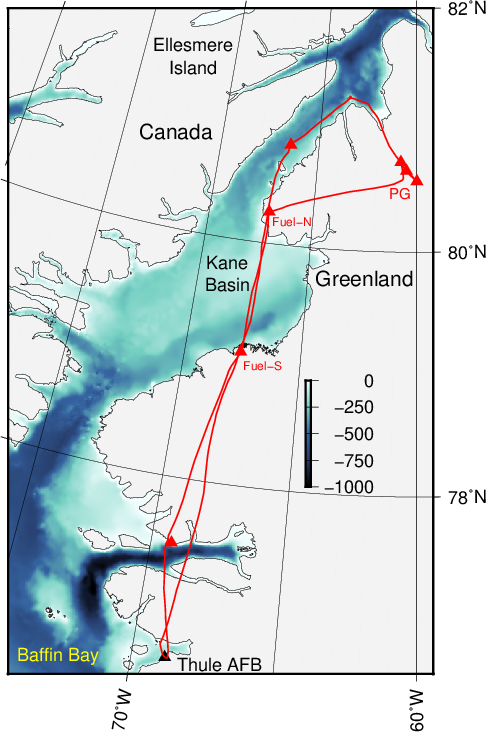
Helicopter flight path on 27/28 August 2016 to reach Petermann Gletscher (PG) via southern (Fuel-S) and northern (Fuel-N) fuel stops in northern Inglefield and southern Washington Land, respectively. Background color is ocean bottom depth in meters.

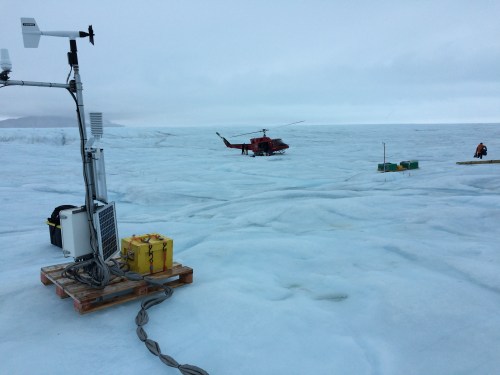
Refurbished Petermann Glacier Ocean Weather station on 28. August 2016 with Greenland Air helicopter and British Antarctic radar station in the background.

The first work on the grant was to visit our station by helicopter in 2016 using two fuel caches that we placed the year prior from the Swedish icebreaker. At this point Petermann Gletscher and our projects attracted the attention of journalists of the Washington Post who had read some of the blog articles at this site. The two journalists accompanied us for a week and produced a beautiful visual report of our work that is posted at

https://www.washingtonpost.com/sf/business/2016/12/30/with-enough-evidence-even-skepticism-will-thaw/

A detailed news report on our science and new findings appeared on page-1 of the Washington Post on January 1, 2017 [Broader Impacts]. I briefly summarize the results and findings of our subsequent data analyses of all data from August of 2015 through October of 2017 [Intellectual Merit]:

1a. Ocean temperatures increase at all five depths below the 100-m thick floating ice shelf of the glacier. These warmer waters are also saltier which demonstrates their Atlantic origin.

1b. Surface sensors indicate short, but intense pulses of meltwater passing our ocean array at spring-neap tidal cycles.

2a. Melt rate data reveal that these pulses occur during reduced tidal amplitudes and follow peaks in glacier melting that exceeded 30 feet per year.

2b. Statistical analyses indicate that the melt waters originate from a location near where the glacier sits on bed rock and that the melt water then moves seaward towards the ocean.

3a. Ocean melting below the glacier varies from summer (strong) to winter (weak) rising from a winter mean of 6 feet per year to a maximum of 240 feet per year during the summer.

3b. The large summer melting is caused by the increased discharge of subglacial runoff into the ocean near the grounding line.

3c. The larger discharge strengthens ocean currents under the floating glacier that drive ocean heat toward the glacier’s ice base.

The work formed one basis for the dissertation of PhD student Peter Washam who published the items #2 and #3 in the Journal of Physical Oceanography and Journal of Glaciology, respectively. He helped to drill holes and install sensors for the project that we first described at #1 in Oceanography. These three peer-reviewed journal articles are all published by not-for-profit professional organizations and societies dedicated to higher learning and public outreach. Furthermore we placed three separate data sets (1 | 2 | 3) at the Arctic Data Center that is funded by the National Science Foundation. More will come as we continue to work on the hard-won data from below Petermann Gletscher.

Look down the 0.3 meter wide drill hole. Yellow kevlar rope supports cable and ocean sensors.

Post Scriptum:
A modified version of the above was submitted the US National Science Foundation as part of the final reporting on grant 1604076 (“Glacier-Ocean interactions at a Greenland ice shelf at tidal to interannual time scales”) that funded this work with $360,400 at the University of Delaware from August 2016 through July 2019.

Scoresby Sund – Greenland’s Longest Fjord

Fog, fog, and more fog is all we saw as we approached Scoresby Sund aboard the German research ship Maria S. Merian from Denmark Strait to the south-east. The fog lifted as soon as we passed Kap Brewster and began work on ocean currents and waters at the entrance of this massive fjord system. My artist friend and wife Dragonfly Leathrum posted a wonderful travel essay with many photos that did not include these:

We were here to explore how the coastal ocean off Greenland may relate to Daugaard-Jensen Gletscher at the head of the fjord some 360 km away (195 nautical miles or about a day of constant steaming at 8 knots). This tidewater glacier discharges as much icy mass out to sea as does Petermann Gletscher or 79N Glacier to the north or half as much as Helheim, Kangerdlugssuaq, and Jacobshavn Glaciers to the south. Unlike all those other glaciers, Daugaard-Jensen and its fjord are still largely unexplored.

Location Map of Scoresby Sund. Kap Brewster is at bottom right while Daugaard-Jensen Gletscher 360 km away is near the top left.

Location Map of Scoresby Sund. Kap Brewster is at bottom right while Daugaard-Jensen Gletscher 360 km away is near the top left.

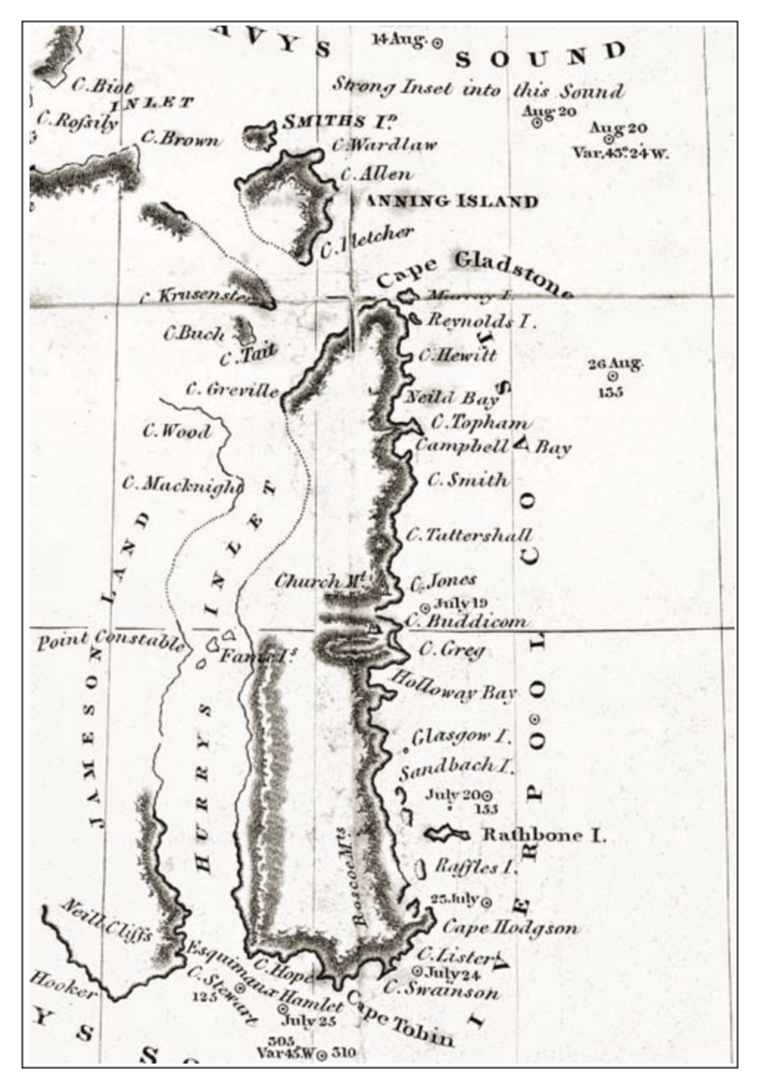
Part of the chart of the East Greenland coast drawn up by William Scoresby Jr. in 1822, showing the numerous features that he names in Liverpool land (Liverpool Coast) and adjacent areas. From: Scoresby (1823)

Part of the chart of the East Greenland coast drawn up by William Scoresby Jr. in 1822, showing the numerous features that he names in Liverpool land (Liverpool Coast) and adjacent areas. From: Scoresby (1823)

While the entrance between Kap Tobin and Kap Brewster was known to whalers in the early 19th century, it was William Scoresby Sr. after whom the fjord is named. His scientist son William Scoresby Jr. mapped coastal Greenland between 69.5 and 71.5 North latitude during his last voyage in 1822. Nobody entered the fjord until 1891 when Lt. Carl Ryder of the Danish Navy sailed deep into the fjord to explore the area for a year with 10 companions. They built a hut next to a natural port that they named Hekla Harbor. Amazingly, they also measured ocean temperature profiles almost every month from the surface to 400 m depth. I found these data at the National Ocean Data Center of the United States Government.

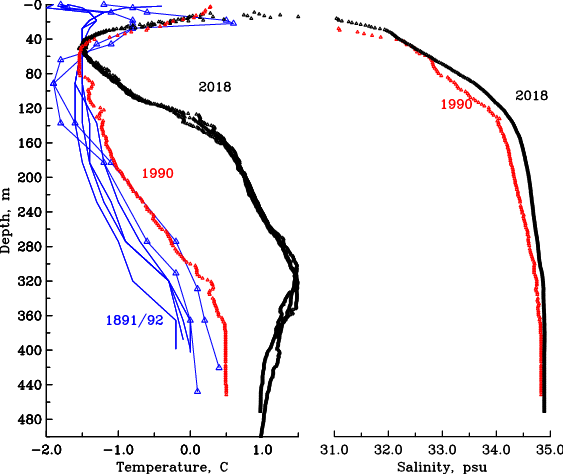
Ocean temperature (left panel) and salinity (right panel) as it varies with depth in different years. Blue represents measurements from 1891/92, red from 1990, and black from 2018.

Ocean temperature (left panel) and salinity (right panel) as it varies with depth in different years. Blue represents measurements from 1891/92, red from 1990, and black from 2018.

Searching for data from Scoresby Sund, I found 17 profiles of water temperature with data from at least 10 depths. Funny that 12 of these profiles were collected in 1891 and 1892 while the other 5 profile contain salinity measurements made in 1933, 1984, 1985, 1988, and 2002. The 1988 cast was taken by an Icelandic vessel and also contained continous data from a modern electronic sensor rather than waters collected by bottles. I “found” another 4 modern sensor profiles collected in 1990 at the Alfred-Wegener Institute in Germany.

That’s pretty much “it” … until we entered the fjord in 2018 when we collected another 27 casts thus more than doubling the ocean profiles. More exciting, though, is the very large shift in ocean temperatures from 1990 to 2018. The 1990 temperatures are very similar to the 1891/92 temperatures, but all old temperatures (also from 1933 and 1985, not shown) are all about 1 degree Celsius (2 degrees Fahrenheit) cooler than those we measured in 2018. Why is this so? Does such warming originate from outside the fjord? If so, how does the warmer Atlantic water at depth in deep water crosses the 80 km wide shallow continental shelf to enter Scoresby Sund? Are any of these ideas supported by actual data? What data are there?

Ocean data location off eastern Greenland collected from 1890 to 2010 that reside in NODC archives. Red are water bottle data while yellow are modern electronic sensor measurements. The white box bottom left is the entrance to Scoresby Sund. Light blue areas are water less than 500 m deep while dark blue shades are deeper than 1000 m.

Ocean data location off eastern Greenland collected from 1890 to 2010 that reside in NODC archives. Red are water bottle data while yellow are modern electronic sensor measurements. The white box bottom left is the entrance to Scoresby Sund. Light blue areas are water less than 500 m deep while dark blue shades are deeper than 1000 m.

Discoveries in science can be pretty basic, if one is at the right location at the right time with the right idea. Also, there is more data to the south that I did not yet look at to investigate the question of what causes the warming of bottom waters in Scoresby Sund.

EDIT Dec.-31, 2019: Replace “warmer” with “cooler” when comparing 1891 and 1990 (cooler) to 2018 (warmer) water temperatures.

Two Years Ocean Observing Below Petermann Glacier Greenland

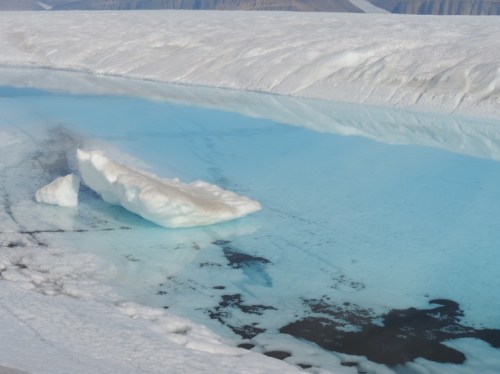
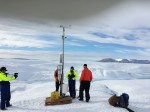
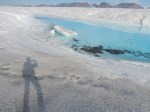
A year ago today I last set foot on Petermann’s floating ice shelf. The 28th of August 2016 was a drizzly, cloudy day with water running over the surface of the glacier in small streams emptying into larger streams to form small rivers that merged into larger channels carved into the ice. Two years ago Keith Nichols and I set-up a weather station atop the glacier. Many friends helped. We connected copper wires, ocean sensors, and a surface station to collect data from sensors 100-m below the ice in 800-m deep water. The small 2015 project of opportunity keeps giving us hourly ocean data. I am still stunned by our luck and technology.

My Petermann story started in 2010 when a first Manhattan-sized ice cube broke off the glacier. Two days after a University of Delaware press release, the US Congress asked me to appear before one of its inquiring committees. I humbly acknowledged how little I knew then, but everyone else knew even less. In 2012 another Manhattan-sized glacier piece broke off. While satellite a image shows what happens, only hard ocean data and modeling explains why it happens. Two research proposals were rejected, sadly, to probe ocean physics with carefully designed experiments, but in 2016 Alan Mix invited me to an expedition to Petermann aboard the Swedish icebreaker Oden. I gladly accepted, but I wanted to contribute something. That “something” became the Petermann Glacier Ocean Weather Observatory.

Alan needed holes drilled through the 100-m to 400-m thick glacier. Actually, he needed mud from 800 meters below the glacier. Keith Nichols of the British Antarctic Survey drilled those holes for Alan and collected the mud. My plan was to recycle the hole, that is, we dropped kevlar line, copper wire, and ocean sensors into the ocean and connected all to a weather station. David Huntley and I designed the system that included an Iridium satellite phone. Iridium phone calls ceased in February 2016, but a “service call,” that is, a helicopter site visit fixed the station. Chris Mooney and Whitney Shefte told the story for the Washington Post on 30 December 2016.

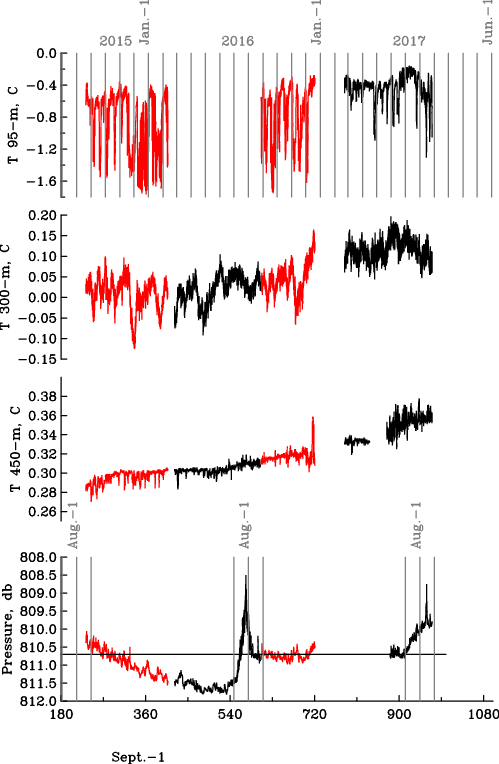
Ocean temperature at 95-m, 300-m, and 450-m below the sea surface as well as pressure at the bottom sensor near 810-m depth (~810 dbar pressure) updated through 27 August 2017.

The graph shows the entire 2-year long data record. Each gray vertical bar indicates a month between July 2015 and December 2017. The top record shows ocean temperatures just below the floating glacier ice. It was a surprise to see the data change from -0.3 Celsius to -1.6 degrees Celsius. The latter is close to the freezing point of salt water. Hence I interpret low-temperature events as meltwater pulse that swoosh past our sensor.

At 300-m we find a smaller range of temperatures near +0.1 degrees Celsius. Note the steady increase of temperature. Fluctuations are similar, but their absolute values increase with time. The linear warming trend becomes clear at 450-m depth, because the fluctuations diminish, but the warming does not. Temperatures at all depths increased over the entire two years of hourly observations.

The pressure record of the bottom-most sensor on the kevlar line perplexes me: During the first year the sensor slides into deeper water, because the kevlar stretches as all lines do when weighted down. In July 2016 the sensor sharply rises by almost 3 meters from 810.5 to 808.5 dbar to just as rapidly drop again to the 810.5 dbar value. The same feature occurs in the summer of 2017 also. It relates to the summer melt season, but how? I do not know.

The 2-year record is not perfect as the many gaps indicate. These result from electronic and mechanical failures that, I feel, are caused by long and harsh winters when temperatures dropped below -40 degrees Celsius or Fahrenheit. These cold temperatures challenge the best batteries during the 4-5 months of total darkness. On 20. December 2016 our batteries ran out and shut down the station. The sun revived our data gathering when the solar panels recharged batteries in March 2017.

The glacier also melts about 1-2 meters at the surface each summer. This surface melt tilted and almost crashed the station that we repaired last year today. In 2015 we had 2-m of pipe to fix into the glacier ice. In 2016 we replaced this with a 4-m pole that should survive two year’s of surface melt, I hope.

There are many, many people who all contributed in ways both small and large. It takes a village to raise a station on Greenland: