
I just returned from Lviv after 3 weeks. This European city of 700,000 in Galicia contains an amazing tapestry of people, culture, and history. Churches are filled to the brim by believers of the Greek Catholic, Roman Catholic, Armenian Catholic, and Ukrainian Orthodox faith churches. Synagogues survived as ruins while its people vanished. People of all ages pray for peace, tranquility, and life.
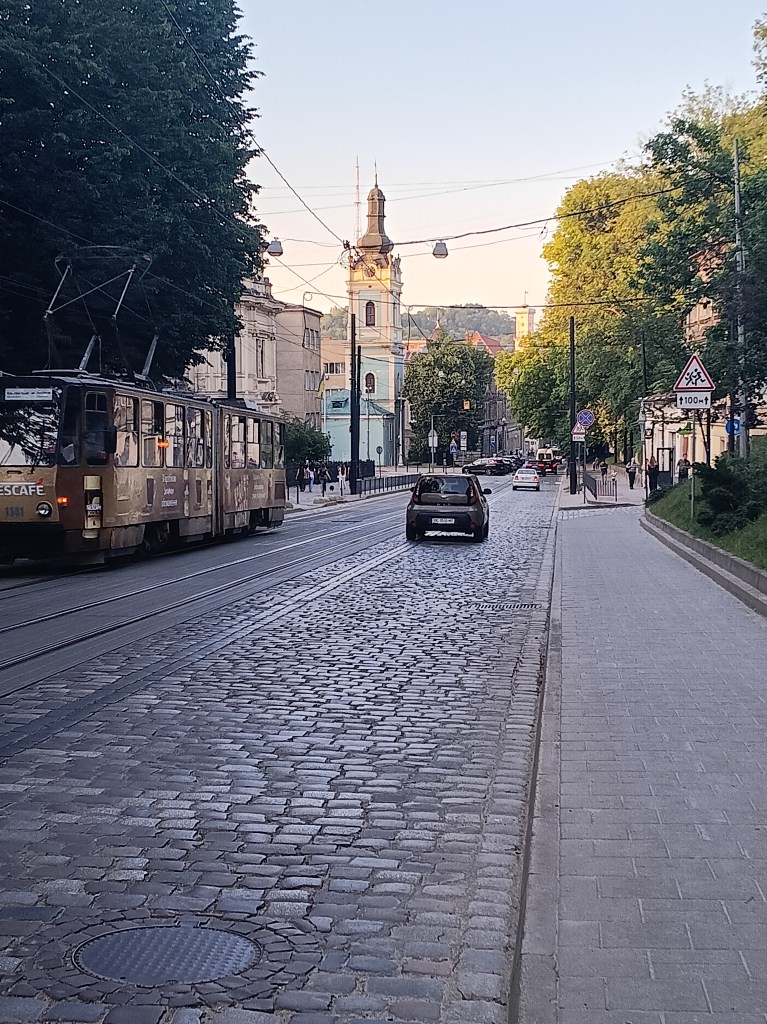
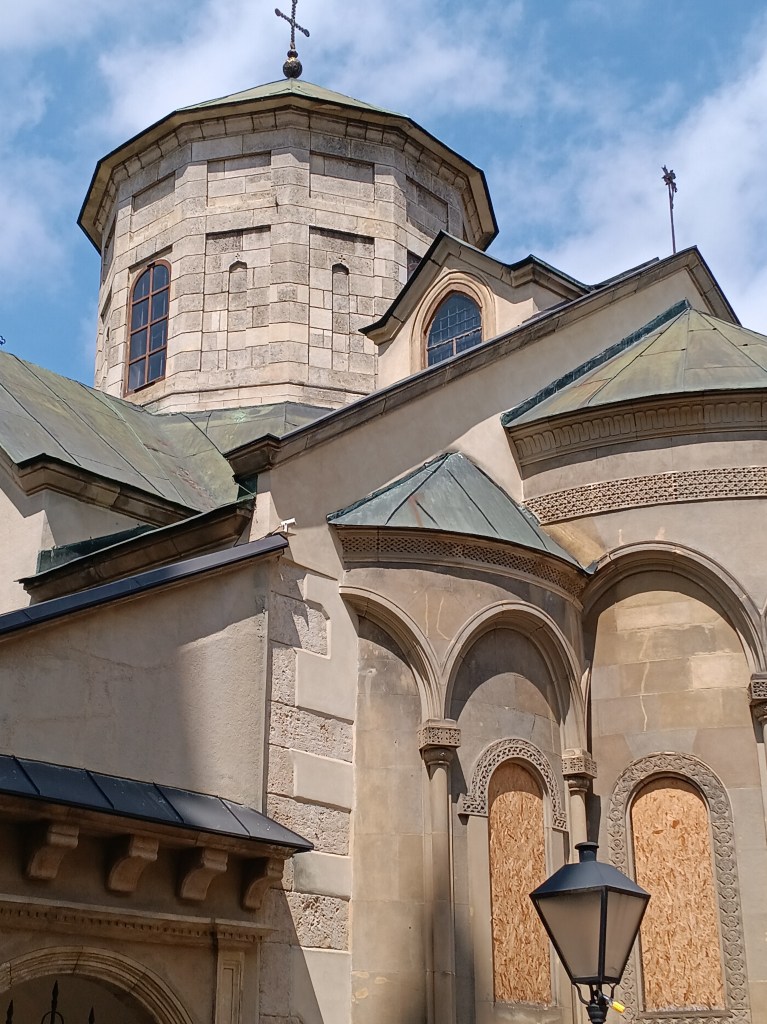
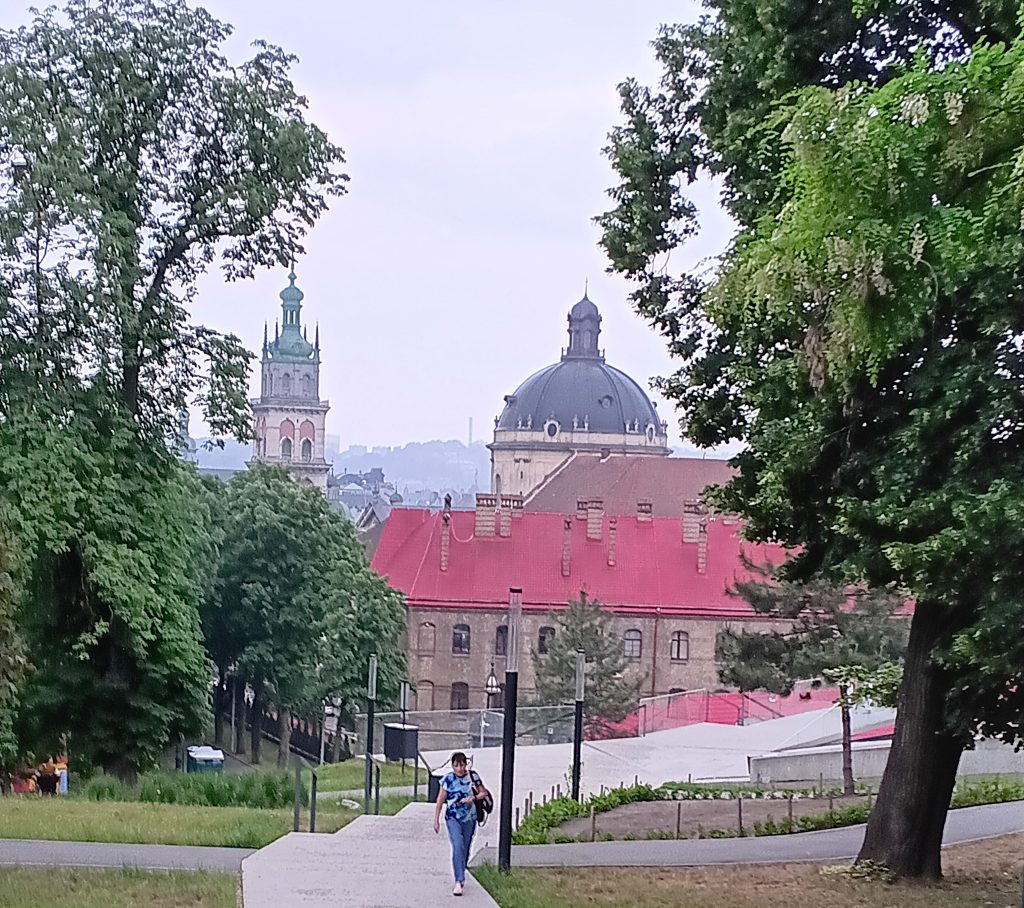
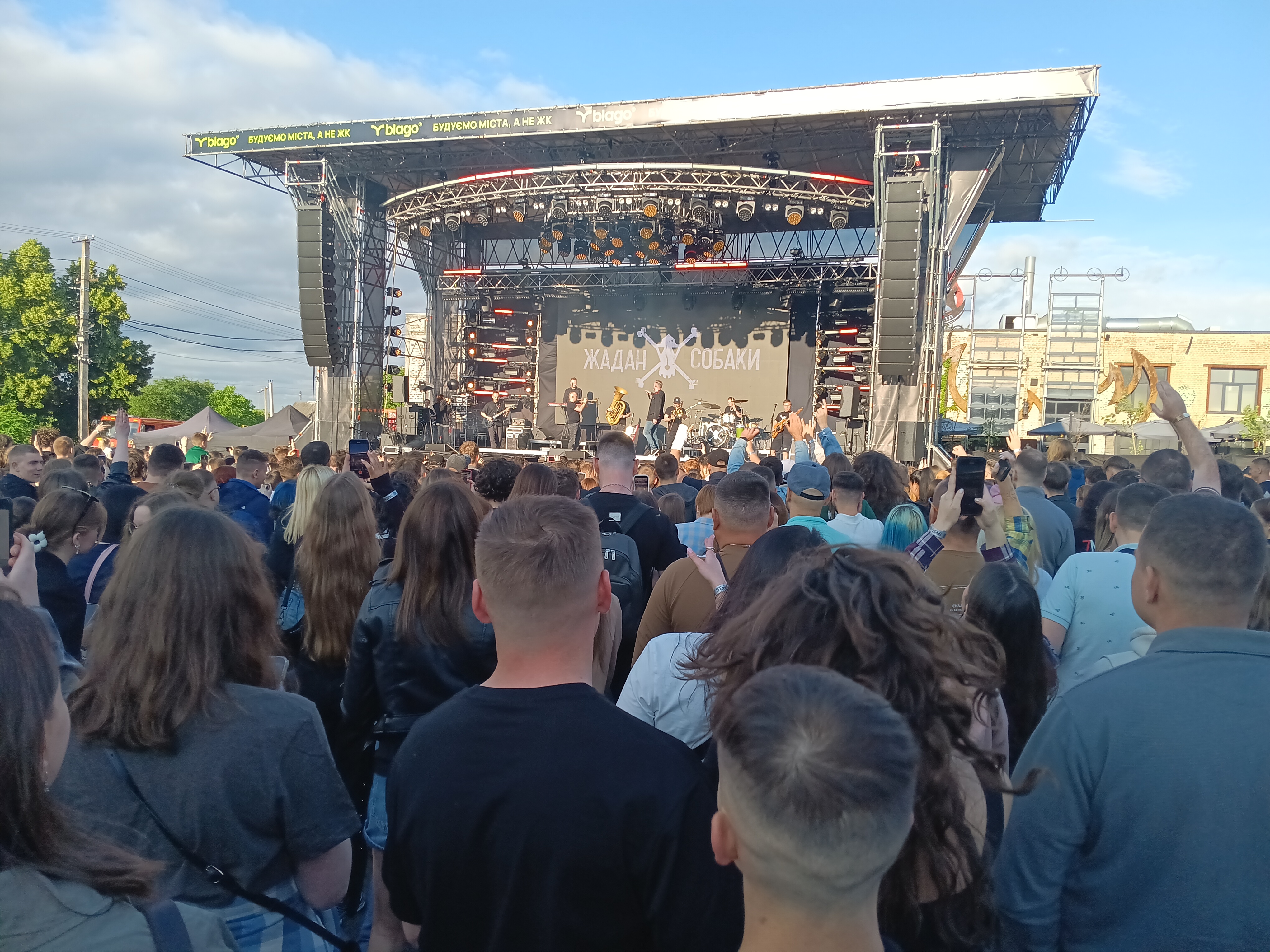
Russia invaded Ukraine first in 2014 and fully in 2022. The current war is easy to miss in Lviv, because at the surface life appears normal with vibrant street life. Cafes, restaurants, parties, street vendors, bars, theatres, museums, concert halls, and universities are all open and full of joyous people. Traffic, too, appears normal with trams, buses, cars, electric scooters, and pedestrians all competing for space on the cobblestoned streets. Roses bloom, strawberries and dill grow in gardens, and school children march with teacher through the Old Town from museum to school and back via busy water fountains along boulevards. Thousands come together for Open-Air rock concerts such as Zhadan i Sobaky (Ukrainian: Жадан і собаки). It is one of my favorite music groups these days who performed in Lviv 2 weeks ago when I saw them at the Rebernya. Awesome horn section …
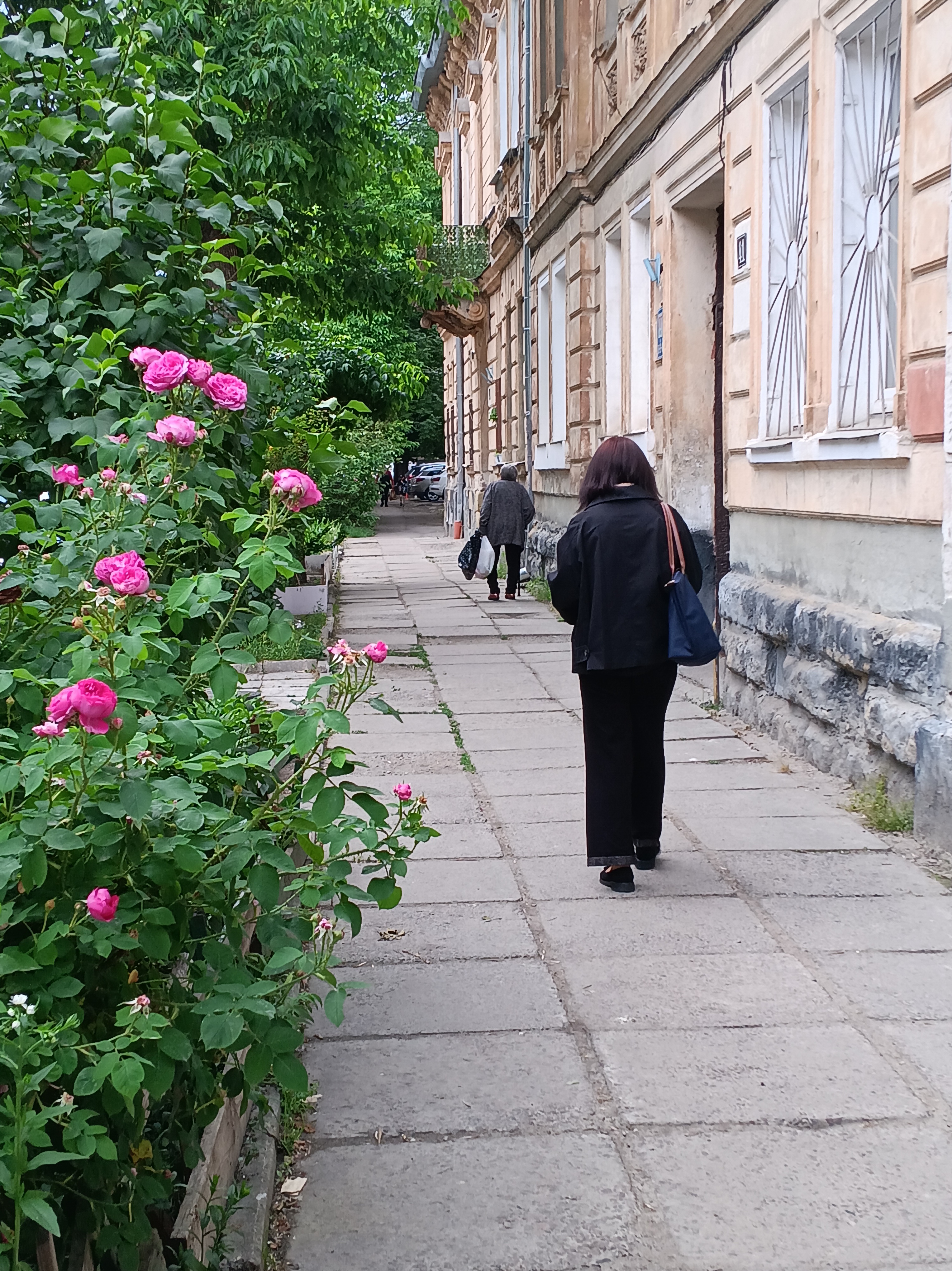
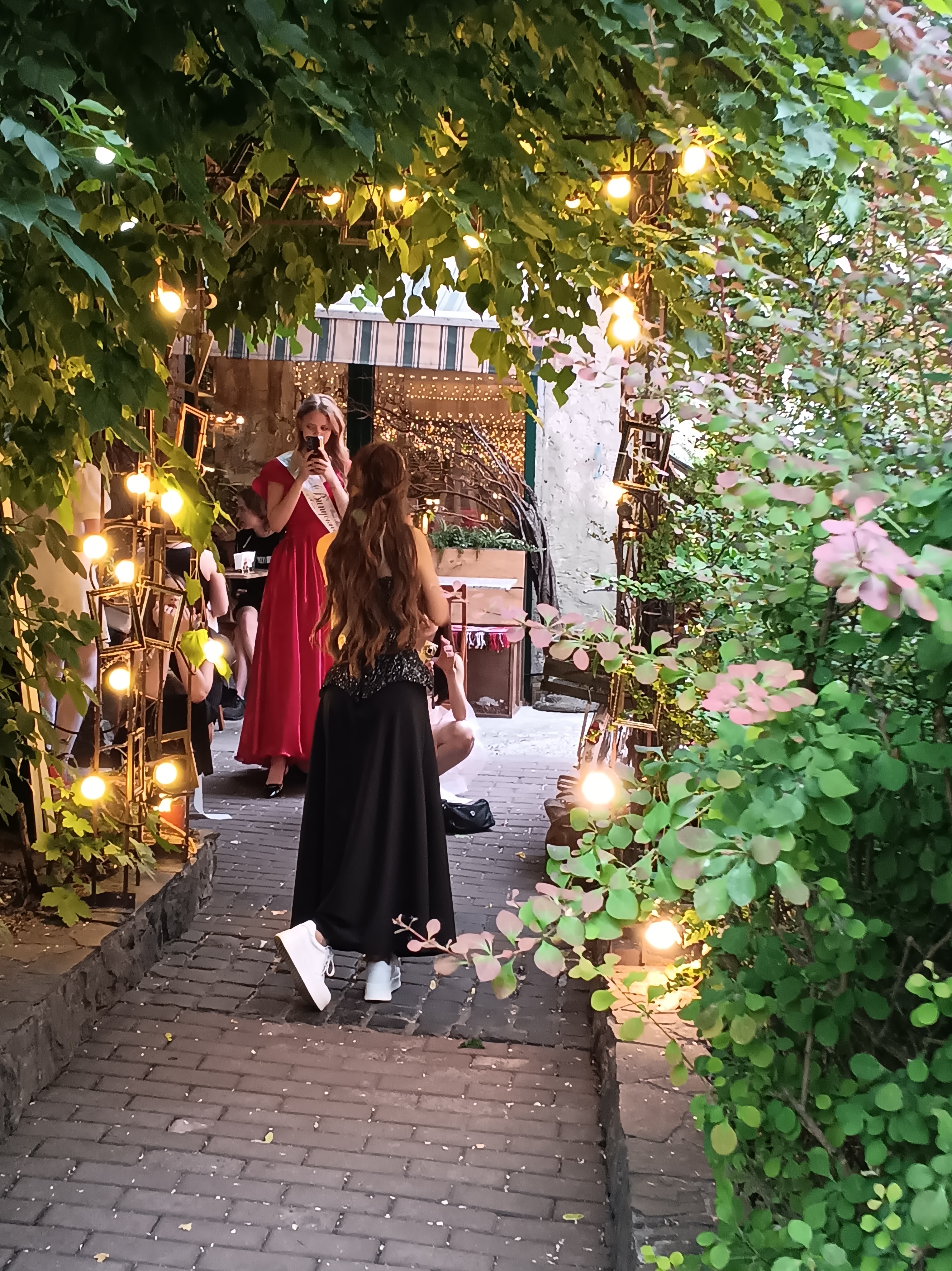
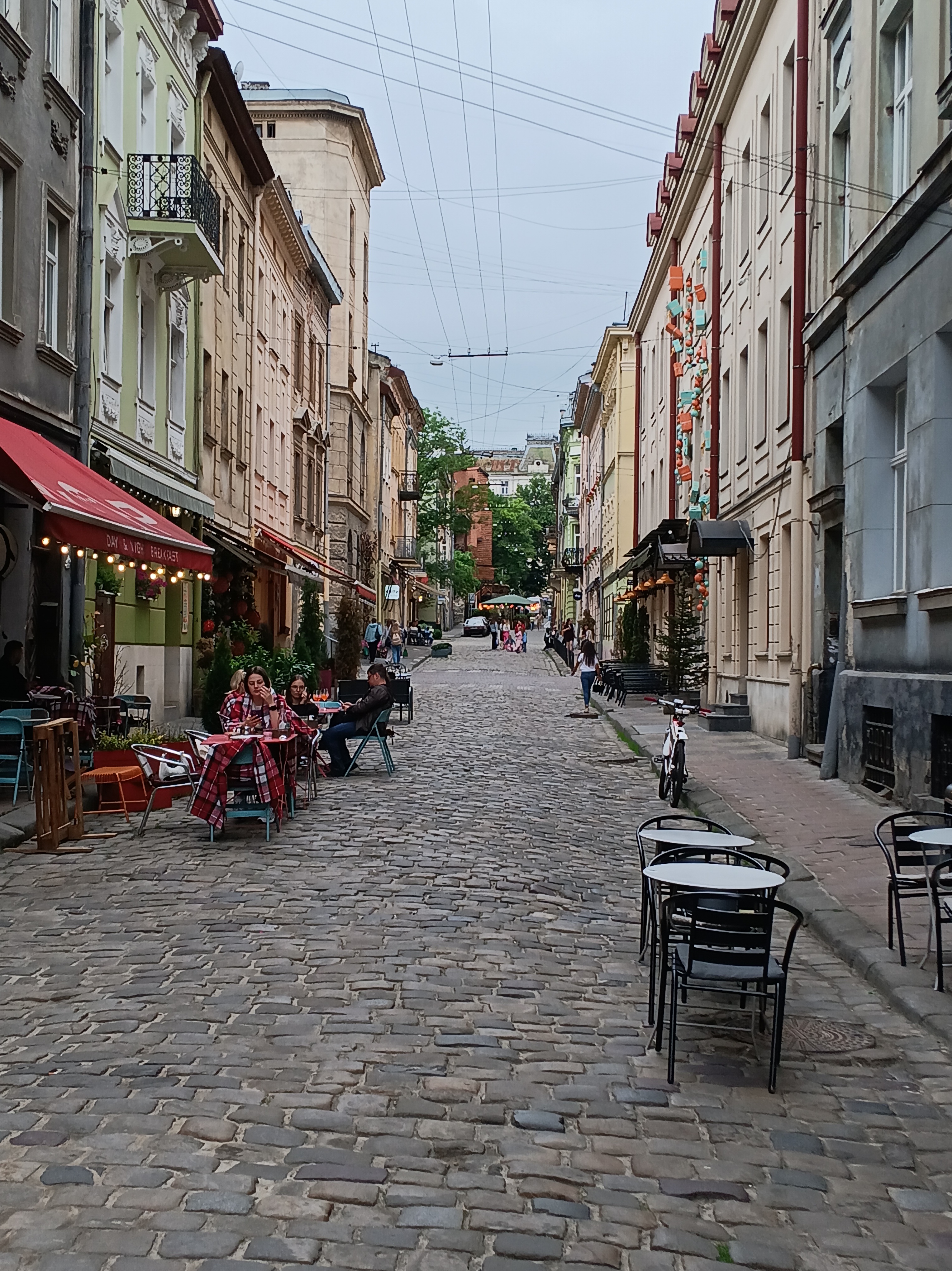
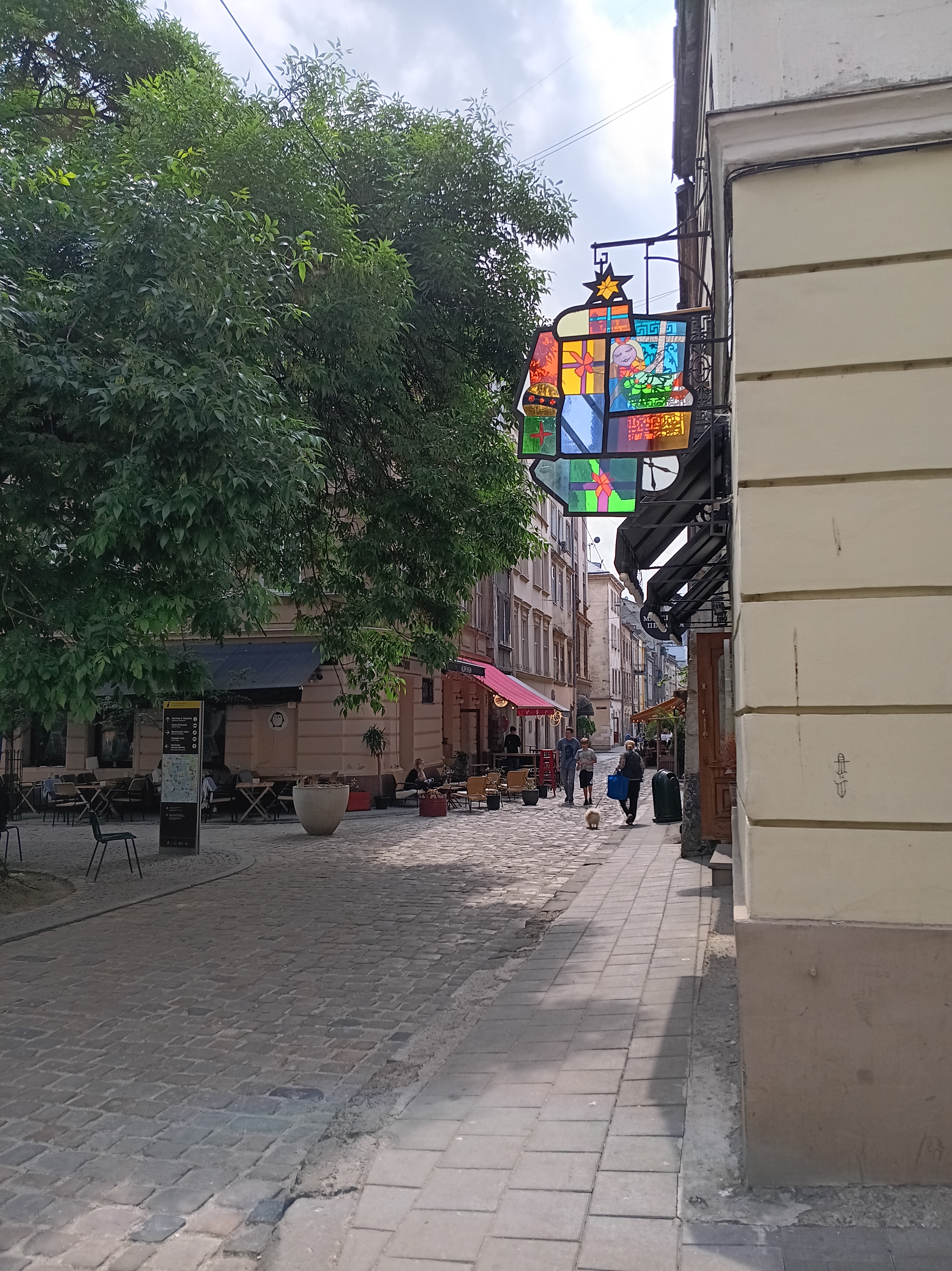
A closer look and knowledge of current events, however, reveals the war every hour of every day. Random mutilation or death by Russian drone, missile, or fire is unlikely in Lviv, but it happens and one never knows when. Air raids occur many days or more accurately nights. Public alarms systems warn of arial explosives heading towards Lviv. Ignoring the alarms, people effectively play Russian Roulette. The nightly terror affects millions while killing, drip, drip, drip, 3-5 people every nights somewhere in Ukraine. Sometimes a ballistic missile annihilates an appartment complex and 20 people die while 50 survive. Russians also like double-tap attackes to kill the rescue workers in a second attack of the same place. It is a war crime, but what’s new? It is what Russia does to project “strength.” The goal is to make life painful and unlivable. Hence public resistance is expressed by attending concerts, bars, restaurants, museums, or playing chess on benches along boulevards, or skateboarding in urban parks and playgrounds, or hiking weekends in the mountains. Live and enjoy life to the fullest as you never know when it all may end.
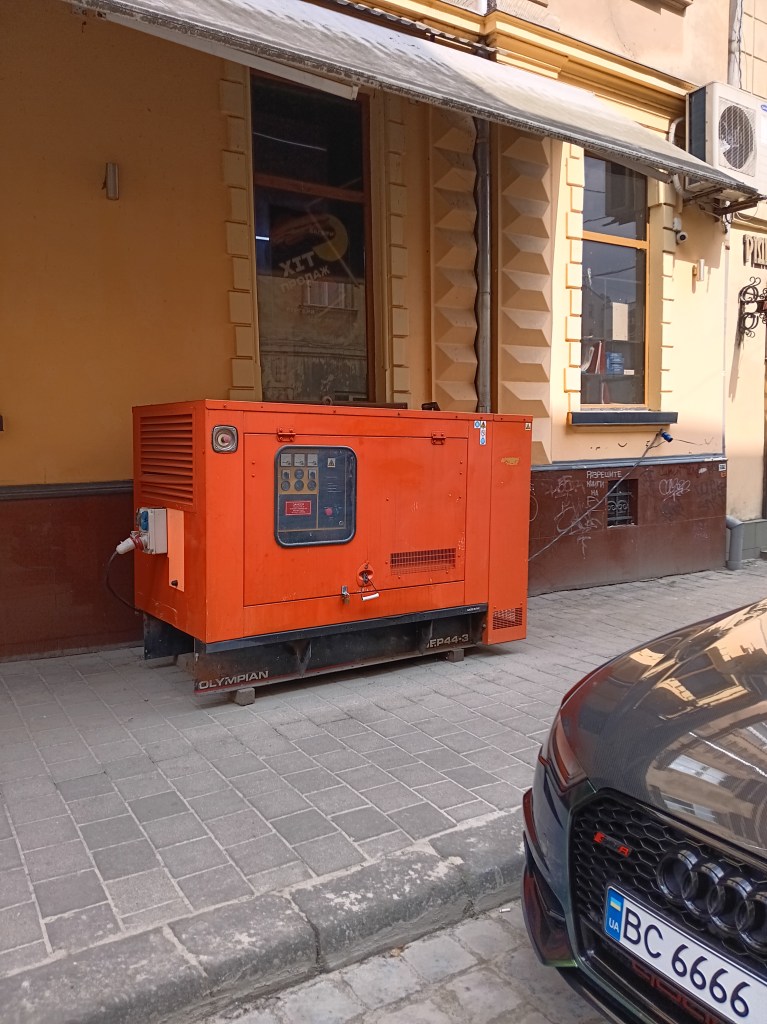
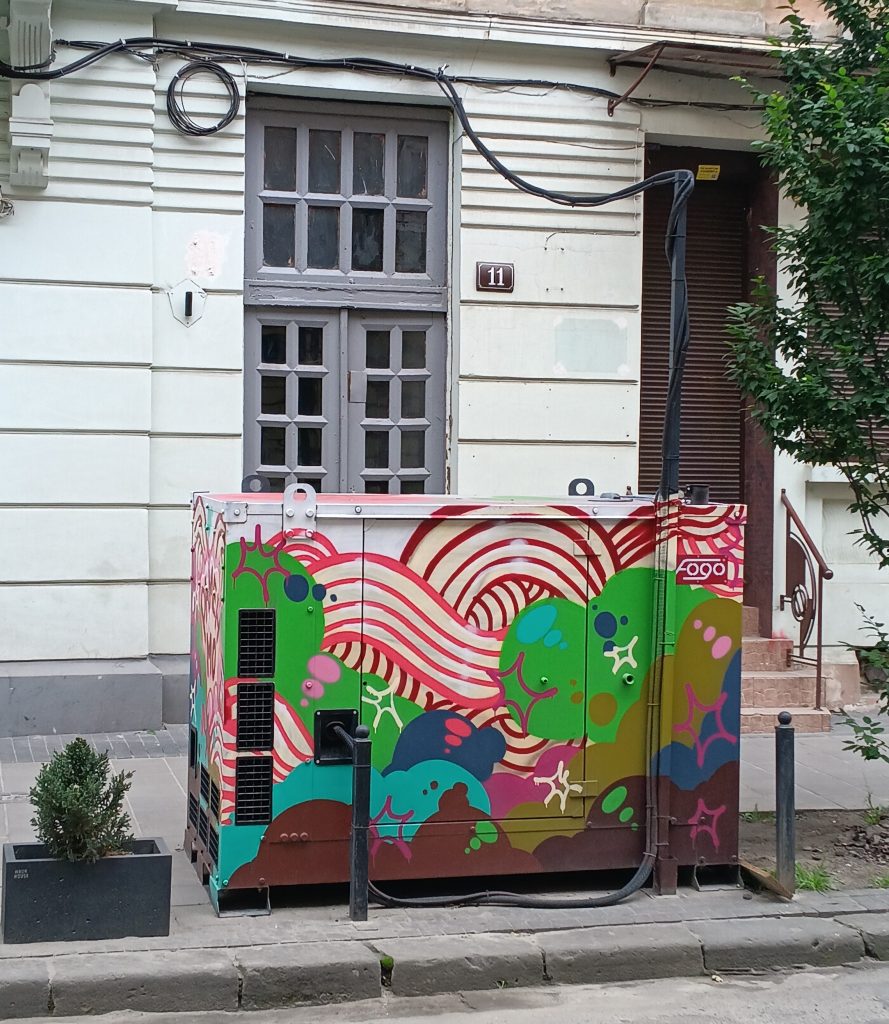
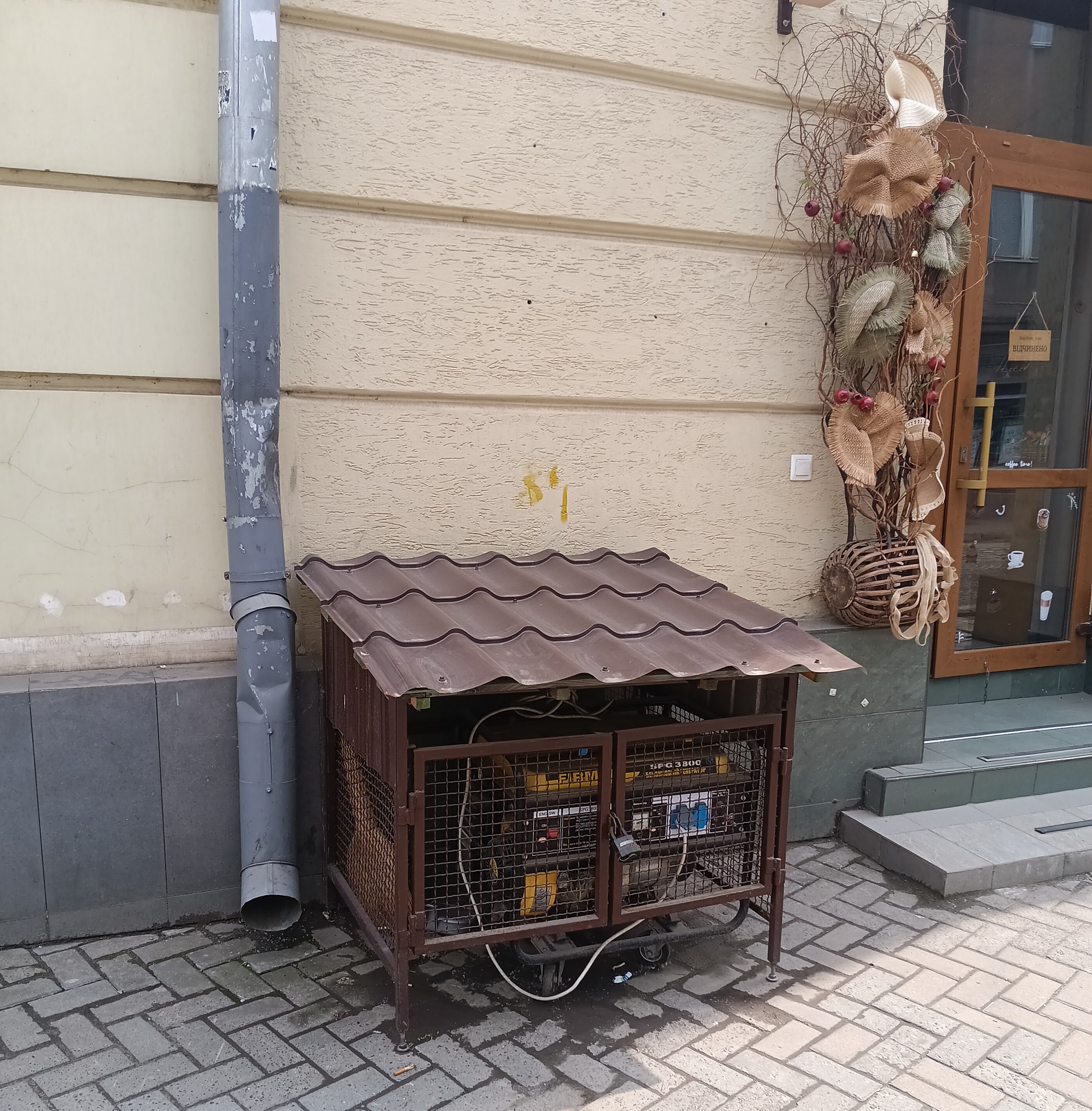
Another subtle reminder of war are the gas-powered generators in the street that are everywhere in Lviv. They range in size from smallish units we buy at home improvement stores to large industrial units to power an office building, hospital, or school. Most are standing loosely on or are bolted to the sidewalk, some have a locked cage with or without an artful roof. Some become objects of art as they are painted like a mural or adorned with tasteful graffiti. After a while one does not even see them anymore. The eye adjusts to the mostly silent generators. Once electricty is out, however, their noise becomes deafening and their purpose becomes clear immediately. Backup power kicks in as rolling backouts result from another Russian attack powerplants. Friends in Lviv told me of times last winter where they could not make hot water for a tea or coffee at temperatures reached -20 Celsius (-4 Fahrenheit) both inside and outside their appartements, because of Russia’s campaign to remove heat and electricity from Lviv’s population for hours and days. Energy systems were repaired only to be bombed and destroyed again the following day or week. Another winter is coming …
Unlike 2024 or 2025, a minute of silence is observed across the entire country now. Every day at 9 am all life stops for 60 seconds. Men, women, and children all interrupt what they are doing and remind themselves and everyone of the men and women fighting and dying in this war. Everyone stands up and most people pray silently or think of loved ones. Walking along a small side street one day, I even saw cars stop on the street, turn emergency lights on, and wait 60 seconds. The food delivery motorcycle did the same. Pedestrians stopped, held they right hand over their hearts, and looked in the direction of the closest church. It is a solemn and powerful act of remembrance that despite the good life, it is not good for all as about 800,000 soldiers provide the protection for the other 36 million to live in freedom. This implies that each Ukrainian soldier defends about 45 civilians. In the USA we would need about 8 Million soldiers to provide a similar level of protection.
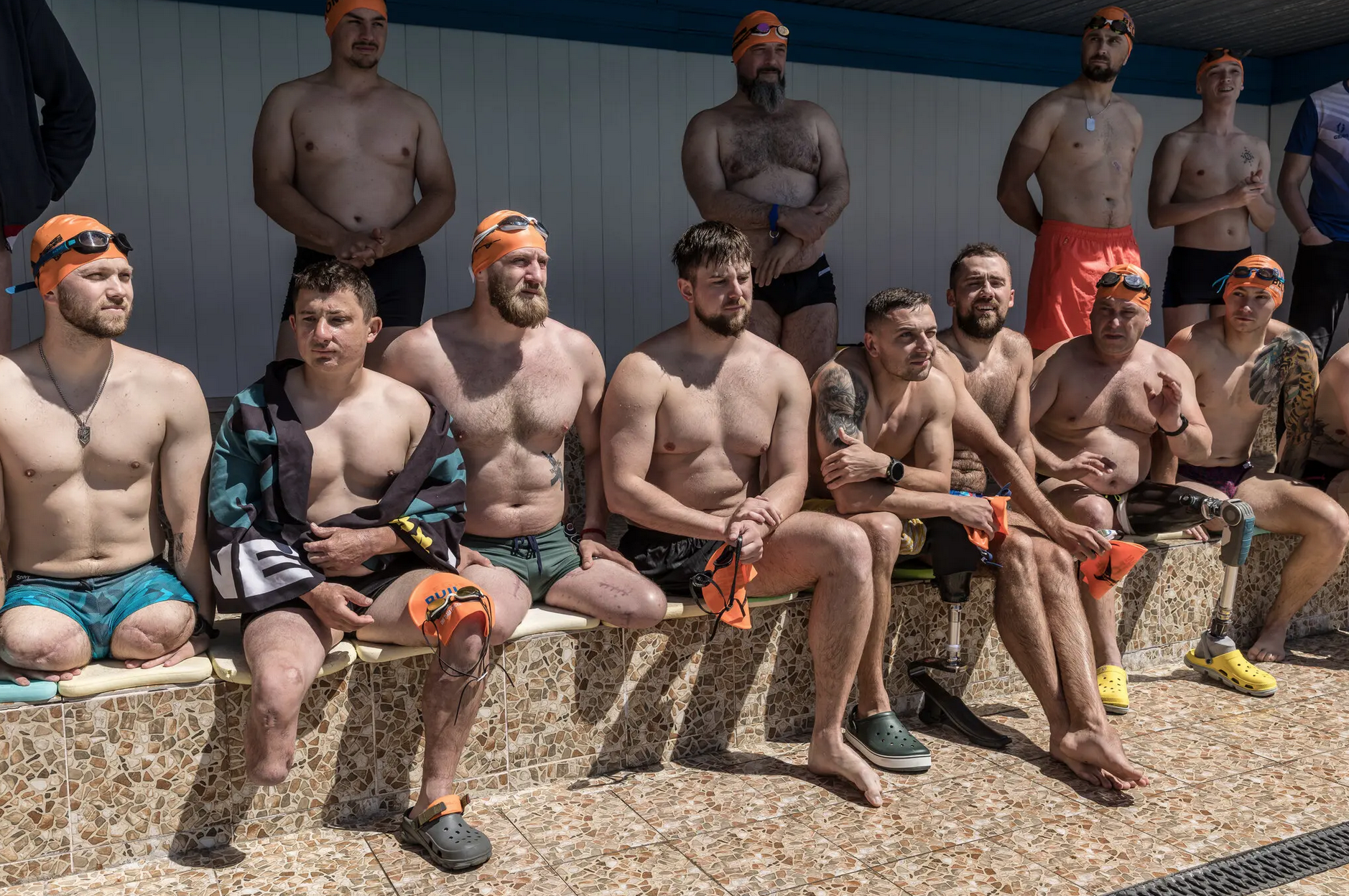
Another sad feature of the war are the many men without arms or legs or eyes who walk the streets on foot or in wheelchairs. They are about 25-45 years of age, physically fit, and like everyone else they visit restaurants, bars, churches, concerts, and sport clubs often with friends or loved ones. It all appears so normal even though it is not. The New York Times reported today of how the large number of wounded veterans learn new sports, adapt to old sports, and bond with each other by pushing their bodies and experiences. Every morning I saw them walk and run in Stryiskyi Park and play competitive bocce on weekends. A small section of the park was then closed for this competition with at least 30 sectioned fields. About 1 in 5 players had missing limbs, but that did not diminish the competitive fun with a picnic-like atmosphere.
I left Lviv sunday with a heavy heart, but then I was thinking about my wonderfully upbeat 18-year old students of the B1 group of German Language Summer School at the Ukrainian Catholic University. This video expresses their perspective on how we worked together with much fun and laughter [162 Mb video]:
I promise myself to return next year, but then for at least 4 weeks. There is some hiking to be done in the Carpathian Mountains.
![The author working at sea in 2003 or 2004. [Photo credit: Chris Linder, WHOI]](https://icyseas.org/wp-content/uploads/2015/03/21_andreas_en.jpg)


