Author Archives: Andreas Muenchow

Petermann Glacier, Ice Islands, and Changing Climate

Petermann Glacier is a tidewater glacier in the remote north-west of Greenland. The glacier is grounded at about 600-m below sea level. It has calved two large ice islands, a 4-Manhattan sized island in 2010 and a 2-Manhattan sized one in 2012. These losses cover much of the area shown in this 2009 photo:

Eastern wall of Petermann Fjord as seen from CCGS Henry Larsen’s helicopter in August 2009 with the floating ice shelf. Most of the visible ice shelf has been lost during the 2010 and 2012 calving events. [Photo Credit: David Riedel, British Columbia.]

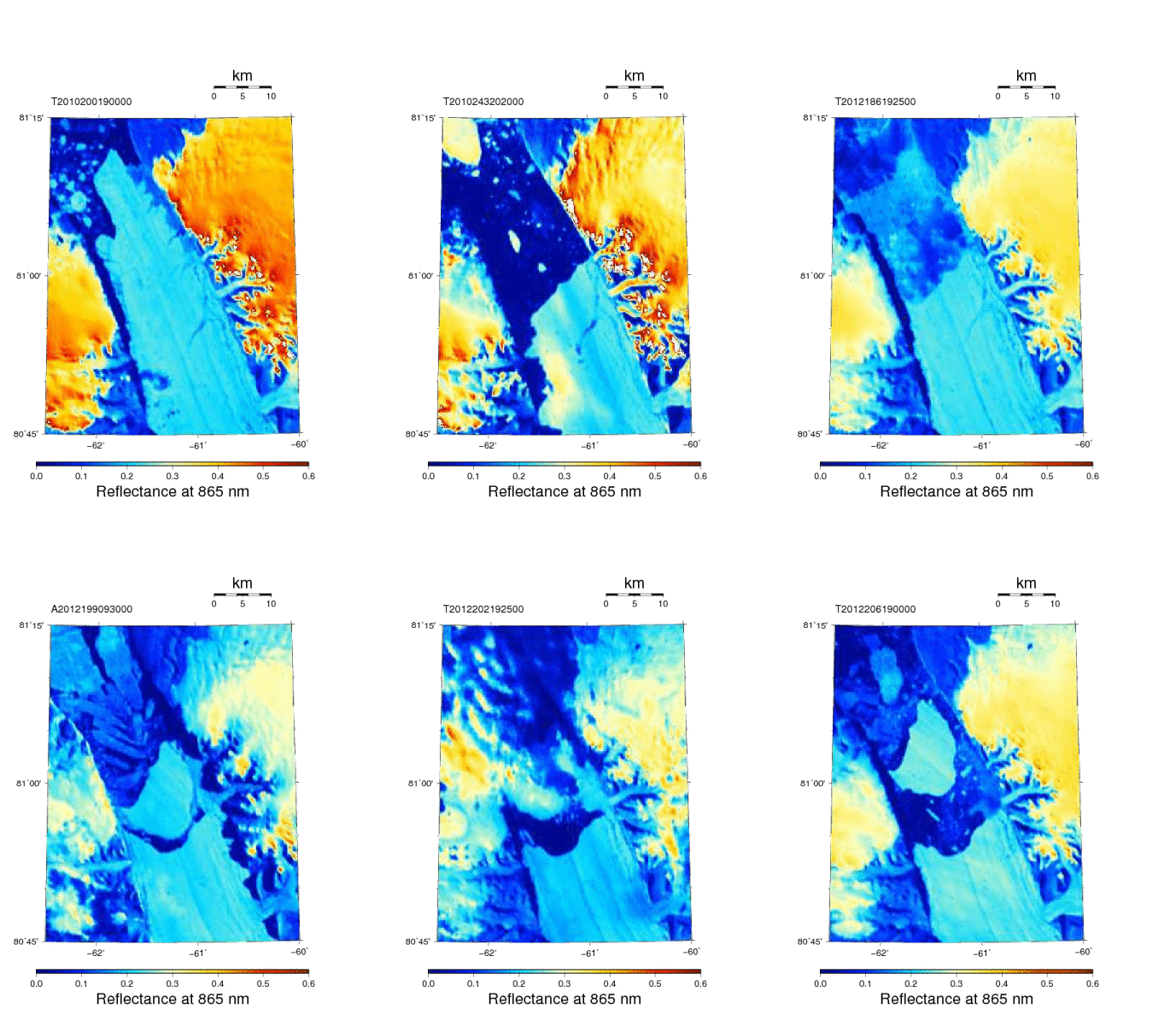
From selected imagery, I created a short movie (0.7 MB) which shows (a) the 2010 calving, (b) the advance of the new front in 2011 and early 2012, and (c) the 2012 calving. The glacier has moved at a rate of about Continue reading

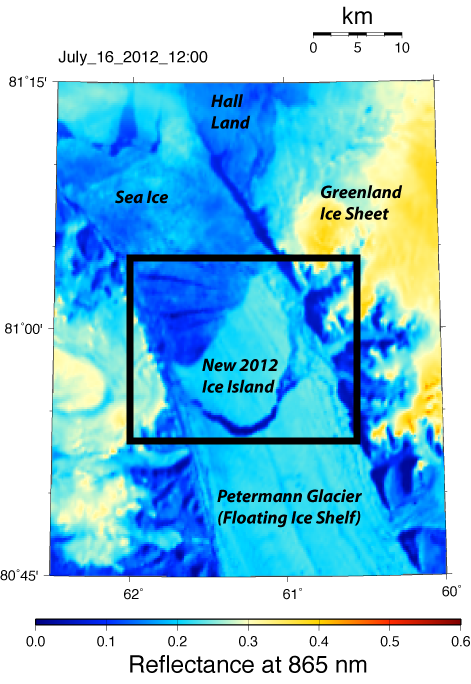
New Petermann Ice Island forming July-16, 2012

This morning Petermann Glacier lost another ice island of a size comparable to what it lost in 2010:

MODIS-Aqua image of July 16, 12:00 UTC of a new ice island forming from Petermann Glacier.

The break-off point has been visible for at least 8 years in MODIS imagery propagating at speeds of 1 km/year towards Nares Strait. The fracture also extended further across the floating ice sheet from the northern towards its southern side.

This event is still evolving, Trudy Wohleben of the Canadian Ice Service noticed it first (as in 2010) after reviewing MODIS imagery. Several people in several countries are monitoring and assessing the situation, but a first estimate of its size is 200 km^2 (3 Manhattans), I will revise this figure as soon as I got my hands on the raw data 120 +/- 5 km^2 or about 2 Manhattans.

The Canadian Coast Guard Ship Henry Larsen is scheduled to travel to Nares Strait (and Petermann Fjord) to recover moorings placed in 2009. These mooring data, if recovered, will contain ocean current, temperature, salinity, and ice thickness data at better than hourly intervals from 2009 through 2012.

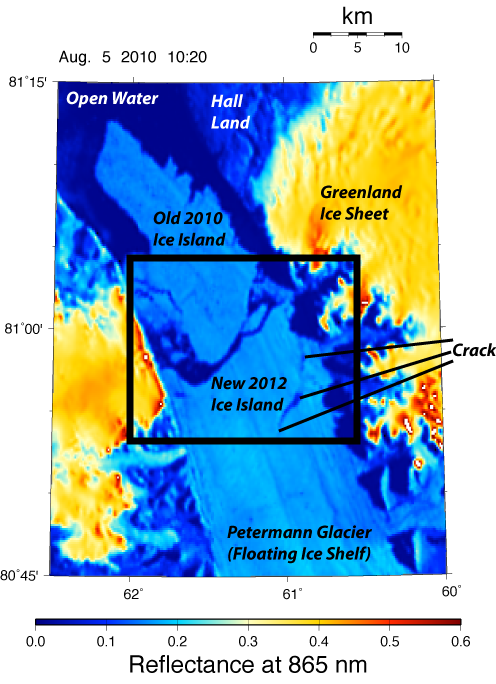
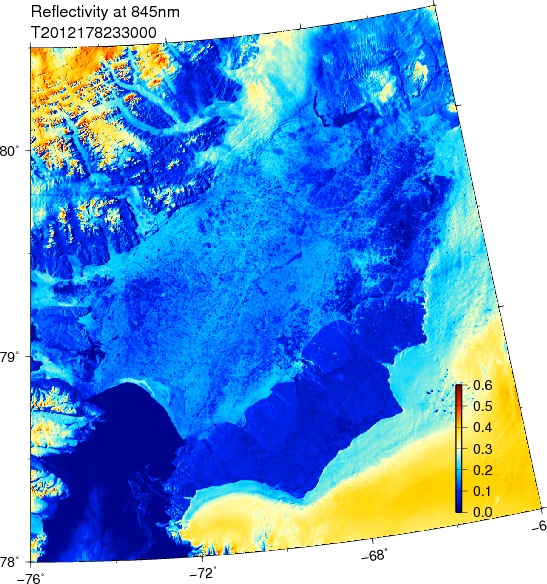
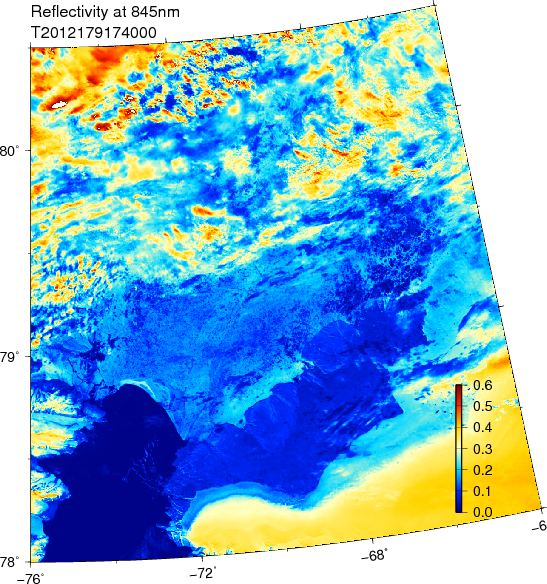
UPDATE: For comparison, I here show the 2010 imagery on the same scale using the same processing and colors. There will be more imagery this evening as MODIS-Terra passes over the area closer to nadir (better resolution or sharpness of the images). Furthermore, clouds seem to be disappearing.

The 2010 Petermann Glacier calving event also indicates the crack that broke off this morning as indicated. Note that the entire floating ice shelf moves by about 1 to 1.3 km per year, slightly less than a mile per year. The crack in 2010 is where the 2012 ice island formed.

EDIT: Changed 2012 MODIS-Terra figure which now has the correct (July 16, 2012) date that the data were taken.

Independence Fjord, Peary, and the First Thule Expedition

Independence Day 2012. Independence Fjord 1912. The mapping of northern Greenland.

I am reading 100-year-old travel reports by Danish polar explorers Knud Rasmussen and Peter Freuchen who visited Independence Fjord exactly 100 years ago to resolve a puzzles of Greenland’s geography: Is Peary Land an island or Greenland’s North? It is Greenland, but their detailed report has data I want: glaciers mapped, temperatures recorded, ice described, rocks sampled, musk ox killed. It is all part of an ongoing scientific journey of discovery and writing, but I am getting ahead of my Independence Day and Independence Fjord story:
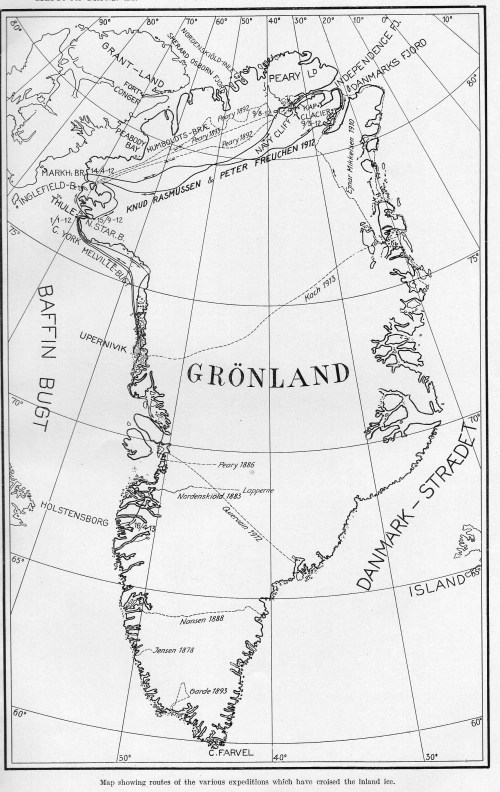
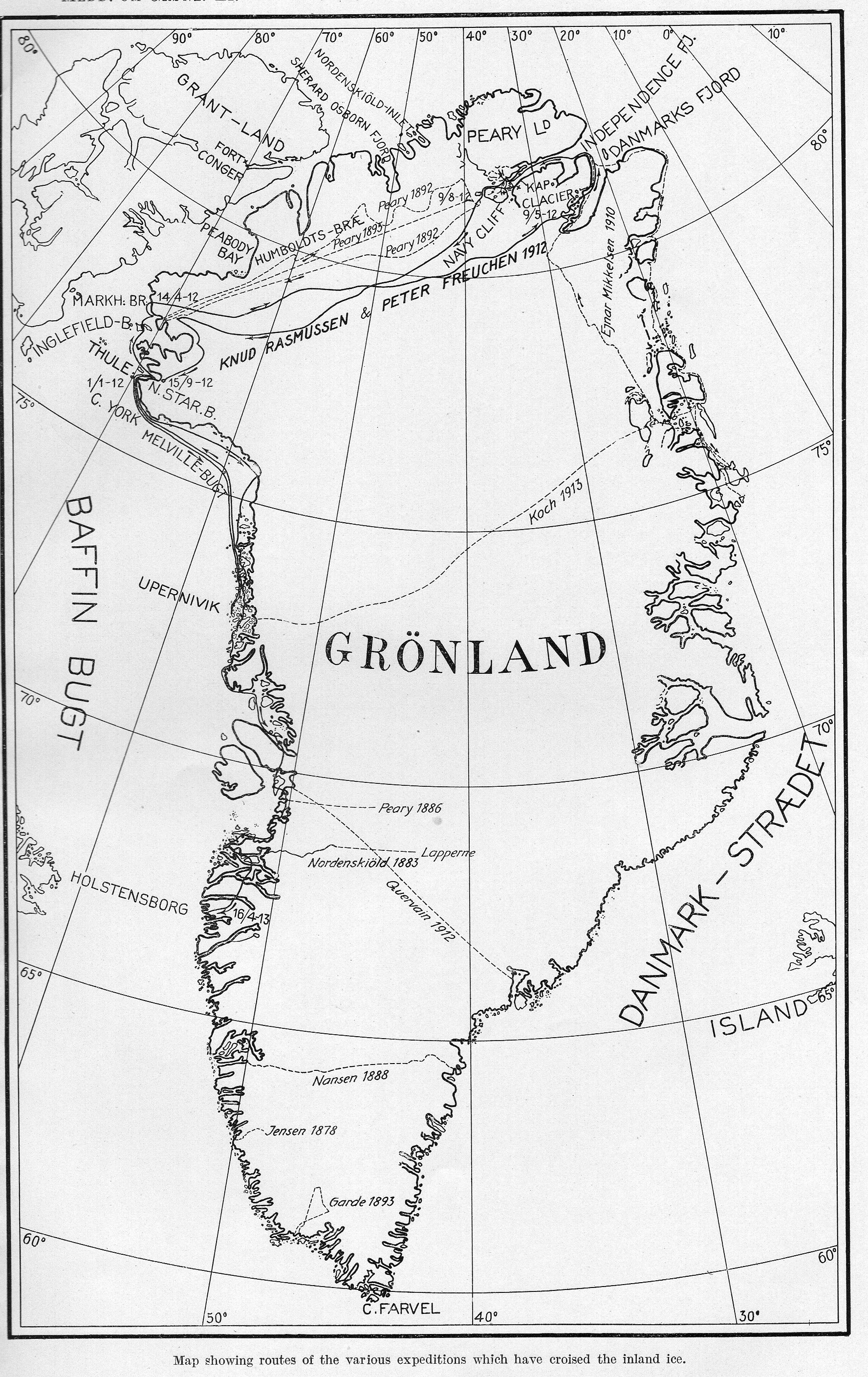
Map of Greenland as included in the Report of the First Thule Expedition 1912 by Knud Rasmussen also showing contemporary expeditions across the Greenland ice sheet.

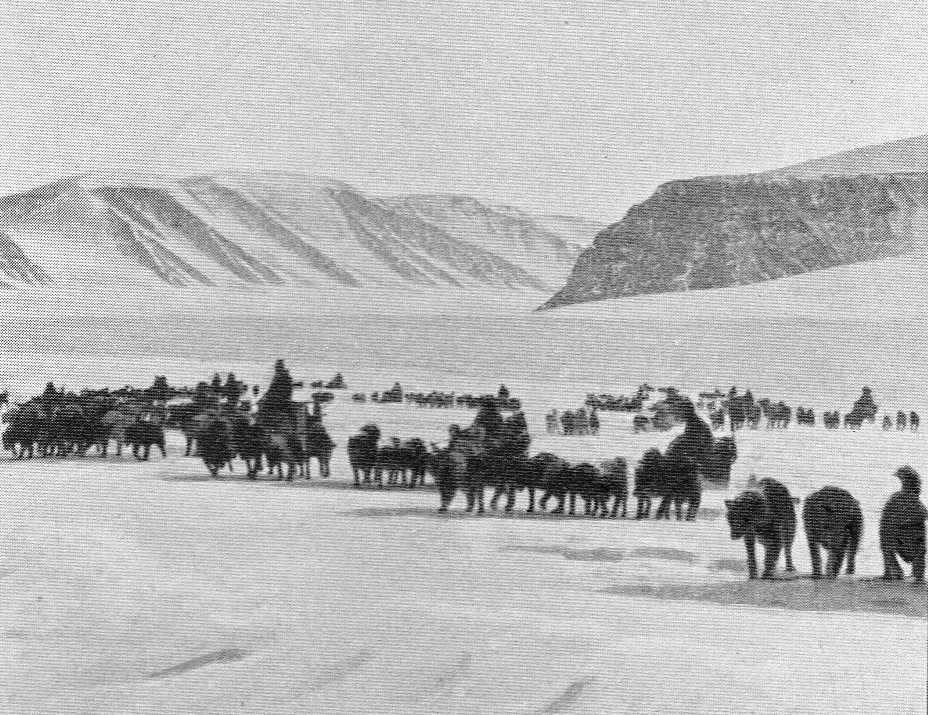
The Greenland mapping and early science was done painstakingly via sled dog teams by hardy people and adventurous spirits who had to find and hunt game to avoid death by starvation. Rasmussen, Freuchen, and their Inuit companions Uvdloriaq and Inukitsoq set out over Greenland’s inland ice from Thule on April 19, 1912 with 54 dogs to return 5 months later with only 8 dogs.

Ascent of the Inland ice in April 1912 as the First Thule Expedition starts from Clemens Markham’s Glacier to Independence Fjord. All 4 explorers returned, but only 8 of the 54 dogs did.

This was the First Thule Expedition that was supported by the Thule Trading Post at North Star Bay that Rasmussen and Freuchen had privately established in the fall of 1909. Today it is the location of Thule Air Force Base. My father-in-law served here for a year as a young Airman in the 60ies. It is also where our Nares Strait science party will board the Canadian Coast Guard Ship Henry Larsen Aug.-1, 2012. I am thinking of Peter Freuchen and his Inuit wife Naravana, Knud Rasmussen, and Independence Fjord on this Independence Day.
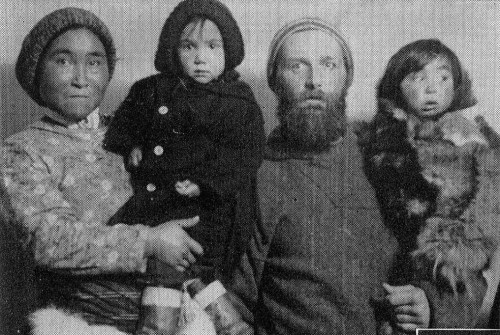
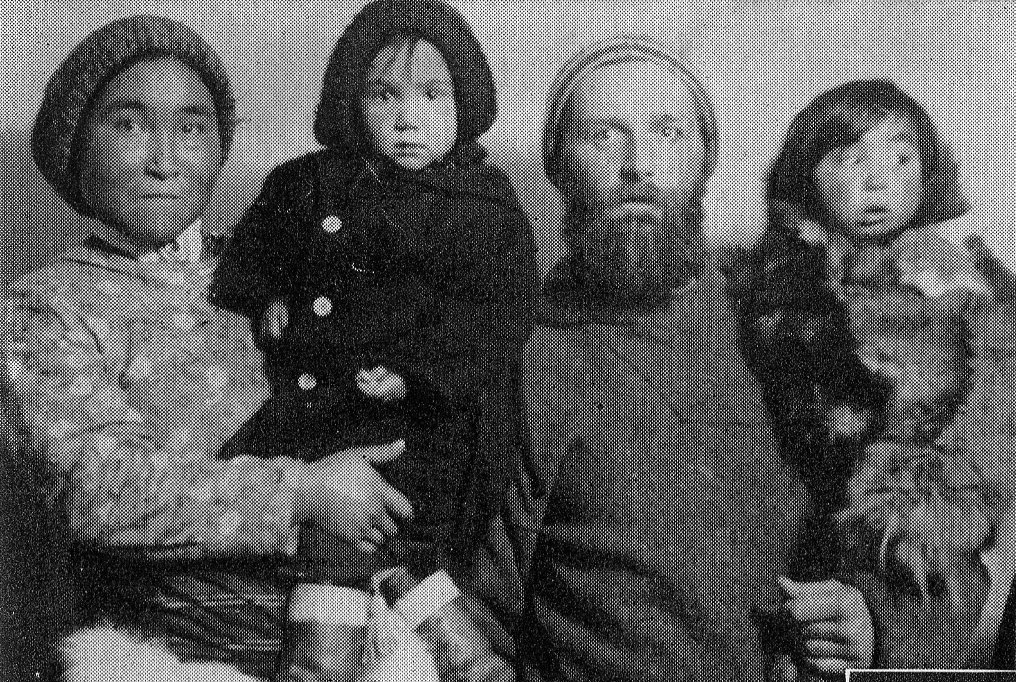
The Freuchen family on a visit to Denmark: Naravana, Pipaluk, Peter, and Mequsaq [Source: Freuchen, P., 1953: Vagrant Viking. Julian Messner Inc., NY, 312 pp.]
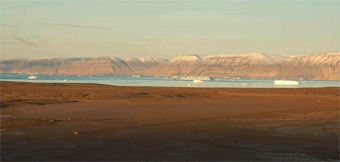
Independence Fjord in the summer of 2007 as seen from Kap Moltke looking south. [Source: web]

Independence Fjord in north-east Greenland was named by Robert E. Peary on America’s birthday 120 years ago on July 4, 1892 when he was the first white person to get there. Prehistoric people of the Independence cultures left artifacts from 3000 years ago. Hunting was good then, too. The 120 year old photograph of Peary shows him standing atop Navy Cliff next to a cairn with two Star Spangled Banners fluttering in the wind. The view eastward is along the 120 mile (200 km) long and 19 miles (30 km) wide Independence Fjord that opens into the Greenland Sea.
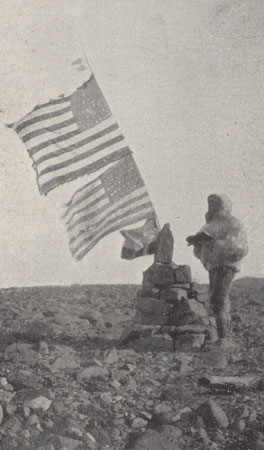
Peary at Navy Cliff, Greenland on July 4, 1892 atop Independence Fjord. [Photo Credit: Bowdoin College]
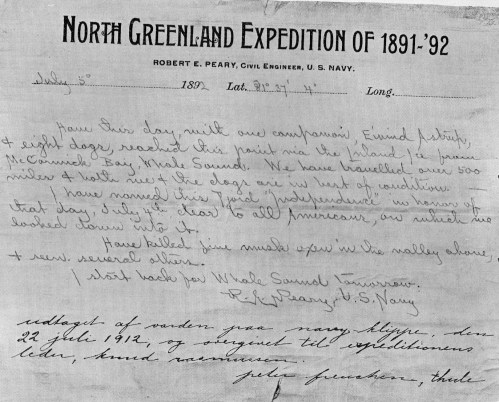
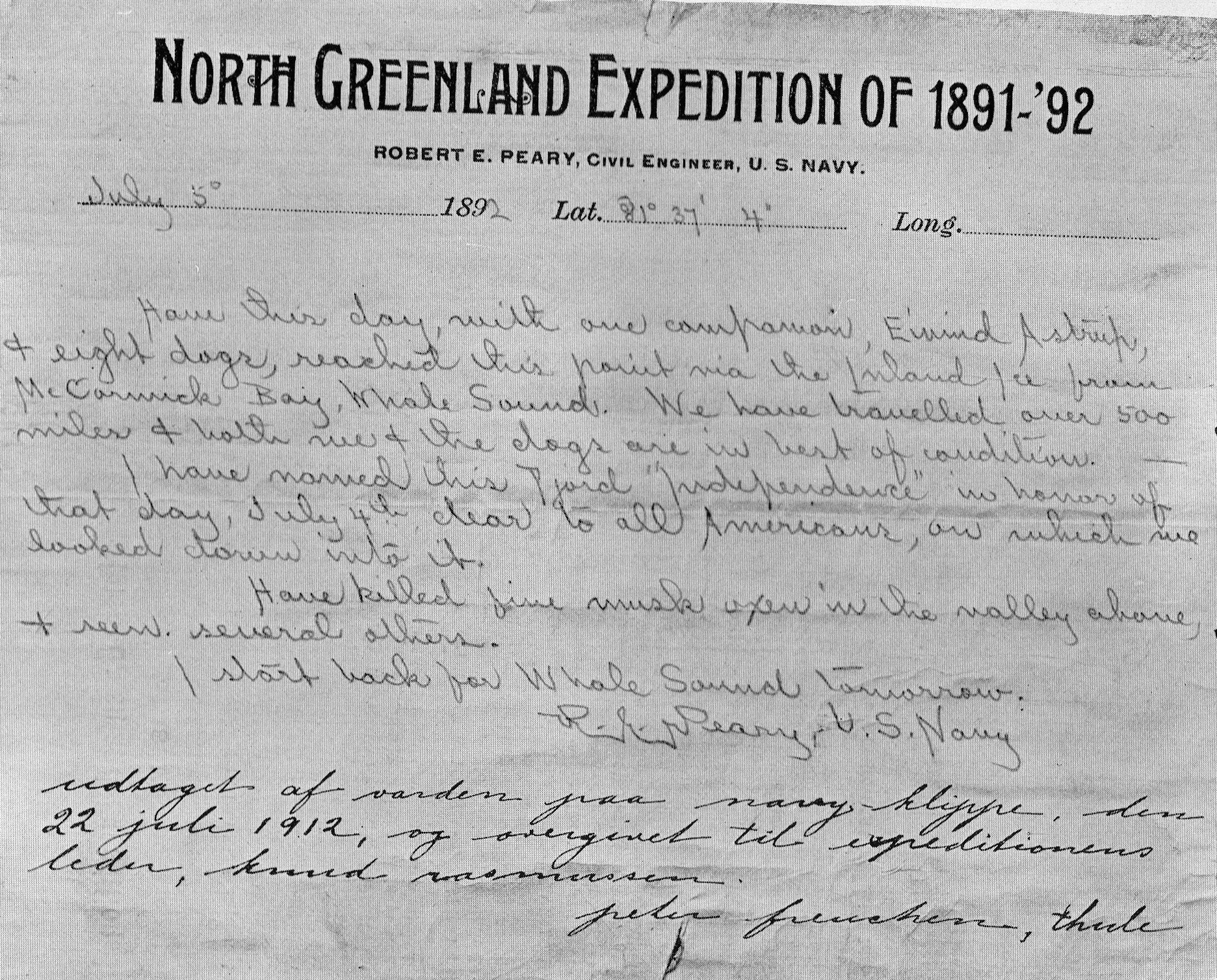
Note left by R.E. Peary on July 5, 1892 at a cairn at Navy Cliff overlooking Independence Fjord which he named here such. The darker pencil at the bottom is Peter Freuchen’s.

Peter Freuchen of the Thule expedition recovered Peary’s note 100 years ago. He then made and left a copy, added his own note, and headed home to Thule, Greenland. Besides checking on Peary the two Danes were also looking for a lost Danish expedition led by Einar Mikkelsen, who in turn was looking to recover the bodies of two Danish explorers of Independence Fjord, Ludvig Mylius-Erichsen and Niels Peter Hoegen-Hagen who had died nearby in 1907. Almost all these explorers have mountains, glaciers, land, and capes named after them or their sponsors, only Independence Fjord is different.

Independence Fjord celebrates the birthday of a young nation, the idea of a painfully evolving democracy, work still in progress. Peary may have made many claims that were not always supported by the evidence he presented, such as claiming to have reached the North Pole. He was no scientist, but a manager driving hard to secure funds, a ruthless self promoter, and autocrat assigning native women to men of his liking. But in this one instance of naming one of Greenland’s grand fjords Independence Fjord, he did good. Recall that this was the time when unelected kings, queens, generals, and dictators were ruling over expanding colonial empires. It was a few years before World War I and its follow-up World War II that caused global devastation to usher in a new set of world powers. The idea of independence is symbolized both in Independence Fjord and Independence Day. Both celebrate the same thing: freedom. There will be fireworks tonight …

P.S.: Some maps
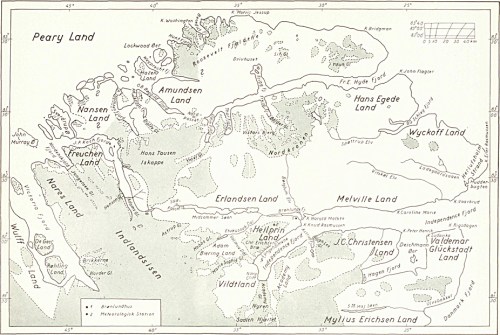
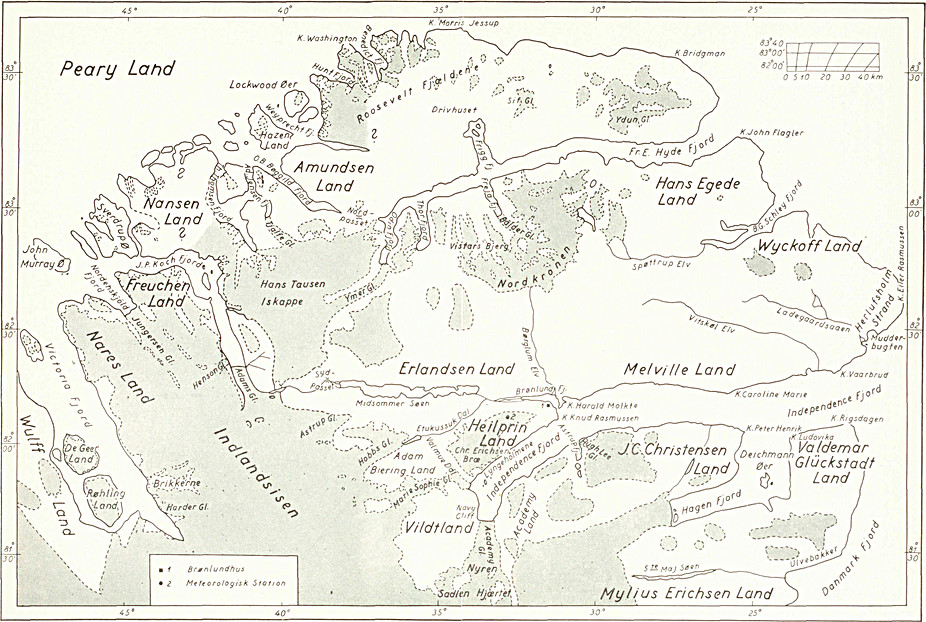
North-East Greenland [Source: web]
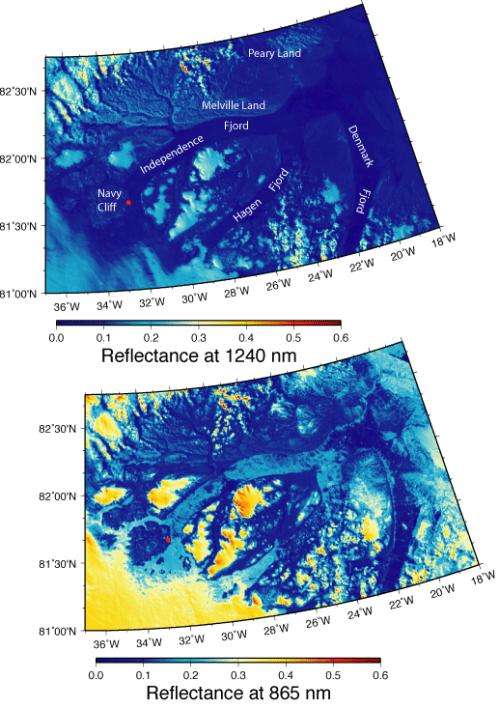
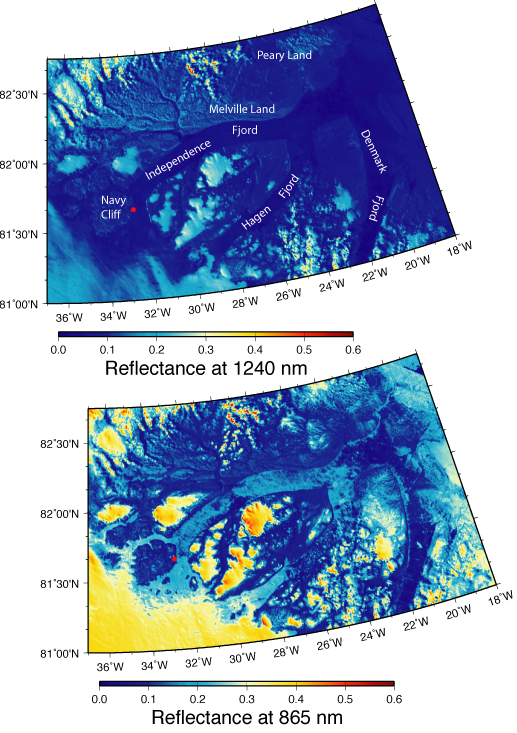
MODIS-Terra imagery of Independence Fjord for June 18, 2012. Top panel shows reflectance in the near infra-red (1240 nm) emphasizing land while the bottom panel shows reflectance in the visible red (865 nm) emphasizing ice. The red dot indicates Navy Cliff, the vantage point at the western terminus of Independence Fjord with Academy Glacier to its south-east and Sophie Marie Glacier to its north-west.

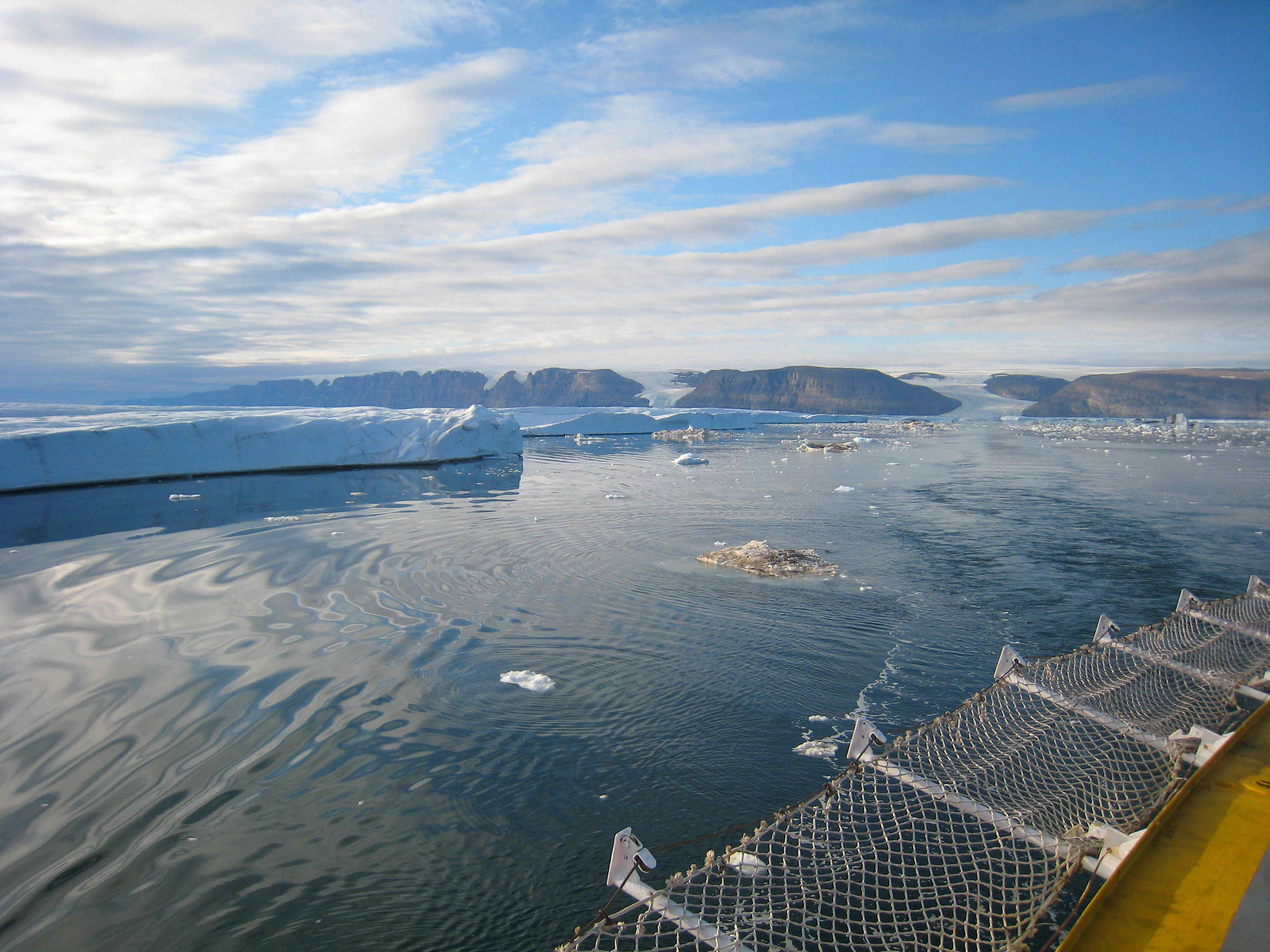
Nares Strait 2012 Ice Arch Collapsing (Updated 6/30)

UPDATE-2 6/30:

June-30, 2012 MODIS-Terra view of the collapsing Nares Strait ice arch. The separation occured at the location where the hairline fracture developed 3 days ago. The collapse is propagating upstream to the north as the buttressing support on the western anchor point near Bache Peninsula and Pim Island was removed.

UPDATE-1 6/29:

June-29, 2012 MODIS-Terra view of the collapsing Nares Strait ice arch. The separation occured at the location where the hairline fracture developed 2 days ago.

The most relevant weather information is from Hans Island near 81 N latitude.

ORIGINAL Post (6/28/2012):
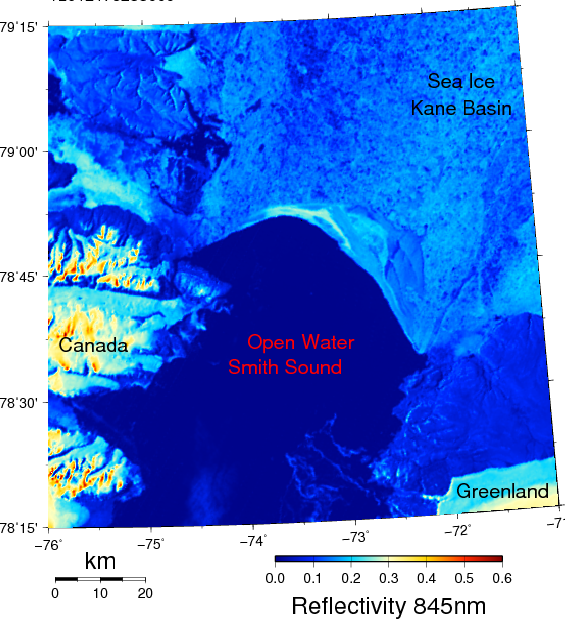
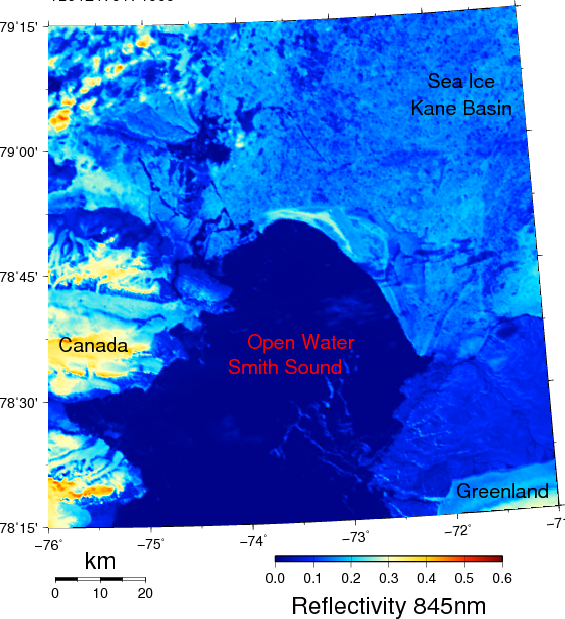
The collapse of the ice-arch in southern Nares Strait began June-27, 2012 with development of a small hairline fracture along the western side of the strait off Ellesmere Island, Canada. The fracture connects an isolated area of open water off Bache Peninsula, Canada at 79 N latitude. The front between land-fast ice in the north and the open water in the south has moved slightly southward. It has also lost a visible larger piece of ice that before anchored the bridge at its western connection to land. This motion will open the hairline fracture more, accelerating the collapse of the ice-arch. The missing support of the ice-arch on its western side will collapse the entire ice-arch and the previously land-fast ice of Nares Strait will stream rapidly to the south, I predict, before this weekend.

Updates (including an animation) will be posted daily at http://muenchow.cms.udel.edu/Nares2012/Kane/.

Ice-bridge at southern Nares Strait June-26, 2012 23:30 UTC from MODIS-Terra. There are no hairline fractures yet along the Ellesmere Island side near 79 N latitude. Greenland is on the right (east), Canada on left (west).

Ice-Bridge at southern Nares Strait on June-27, 2012 17:40 UTC from MODIS-Terra. Notice the crack and hairline fractures in the ice along the Ellesmere Island coast near 79 N latitude and 75 W longitude.

This collapse happens each year in the summer, though the timing varies from April for weak and July for strong arches. The arch in 2012 lasted longer than the one in 2011. No or only weak ice-arches formed at this site in 2007, 2008, and 2009, e.g., http://muenchow.cms.udel.edu/MODIS/.

EDIT-1: Same imagery, same gridding, but more focus and detail

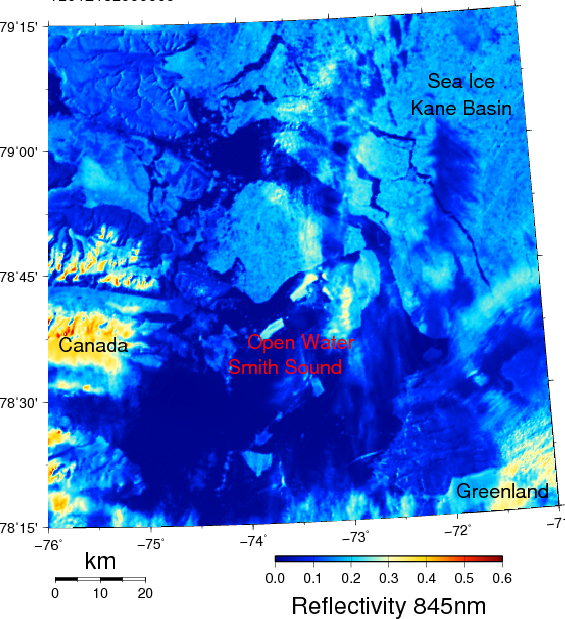
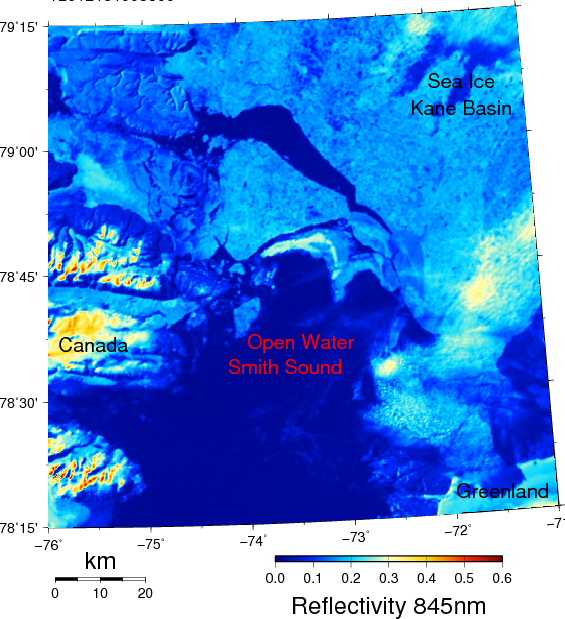
MODIS-Terra June-26, 2012 prior to collapse.

MODIS-Terra June-27, 2012 at the onset of collapse. Note the change near the Canada at 79 N latitude where open waters meets the sea ice.

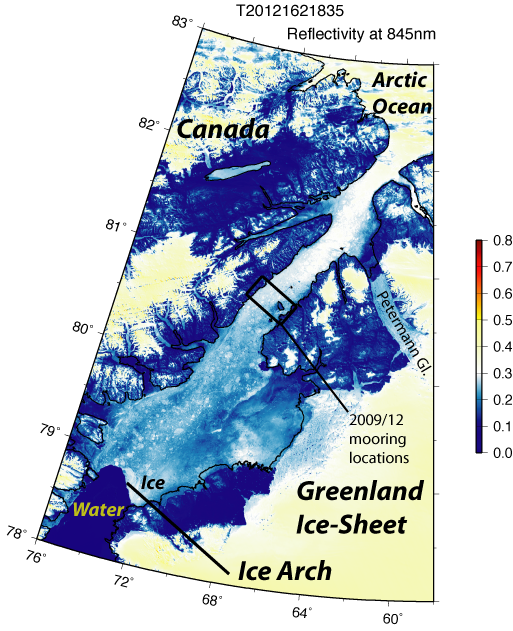
EDIT-2: The moorings we try to recover this summer are to the north of Kane Basin and to the south where Petermann Fjord enters Nares Strait. This map shows it (also notice how badly the coastline of Greenland is surveyed):

June-10, 2012 MODIS-Terra image showing location of moored array that was deployed in Aug. 2009 to be recovered in Aug. 2012.

Greenland’s Warming, Melting, and Sliding to Sea

Greenland is warming, Greenland’s warming is melting its ice, and Greenland melting ice is raising global sea level. All true, but it all has happened before during the last 100 years or so. Our technology to extract small signals buried deep in noise from both our backyard and remote Greenland is unprecedented. This skill should not fool us, that the large changes that we see in Greenland and elsewhere have not happened before. They have, but memory is a fickle thing, as “new” is exciting, while “old” is often forgotten and considered unimportant. Those who live in the past are doomed to miss the present, those who ignore the past, are doomed to repeat it. We need to learn from the past, live in the present, and prepare for the future.

Preparing for an expedition to Nares Strait between northern Greenland and Canada in about 5 weeks, I am exploring temperature data from land, satellites, and ocean sensors to get a feel for what has changed. I started with data from weather stations such as the U.S. Air Force Base Thule , Canada’s former spy station Alert, and Denmark’s Station Nord about 700-1000 miles from the North Pole. So, it is cold up there:

Annual cycle of air temperature (bottom panel) from south to north at Thule (red), Grise Fjord (green), Alert (blue), and Cap Morris Jesup. Data years (top panel) for each year day are degrees of freedom. For each place two temperature curves indicate upper and lower limits of the climatological mean temperature for that day at 95\% confidence.

Well, we knew that, but the real question is: Has anything changed? Has Global Warming reached Greenland? The plot above does not tell, but this one does:

Annual averages and trends of air temperature anomalies for the 1987-2010 period for (top to bottom) Station Nord (Greenland), Alert (Canada), Grise Fjord (Canada), and Thule (Greenland). Scales are identical. The trends are fitted to daily, not annual data. The annual averages are shown for display purposes only.

To some it screams: “Warming, melting, Greenland is surging to sea.” [It is, but it did so before.]

There is lots of fancy signal processing that goes into this (see Tamino or a class I teach) to make a firm statement:

The air around northern Greenland and Ellesmere Island has warmed by about 0.11 +/- 0.025 degrees Celsius per year since 1987. North-west Greenland and north-east Canada are warming more than five times faster than the rest of the world.

This must be huge (yes, it is), it must have an effect on the Greenland ice sheet (yes, it does), and this must raise sea level (yes, perhaps 10 cm or 3 inches in 100 years, Moon et al., 2012).

Now where is the catch?

The catch is that my records all start in 1987, because that is the period for which I have actual measurements from all those stations. My satellite record is even shorter: it starts in 2000, but with lots of work can be extended back to 1978. And my ocean record is shorter yet: it starts in 2003. There just are no other hard data available from north-west Greenland.

So, does this mean we are stuck with the gloom and doom of a short record?

No, but we have to leave the comforts of hard, modern data with which to do solid science. People have to stick out their necks a little by making larger scale interferences. Based on the 1987-2010 results shown above, I can now say that trends and year-to-year variations are all similar in Alert, Thule, Kap Morris Jesup, etc., etc., so I will use the 60 year Thule record to make statements that somewhat represent all of Nares Strait. I could also start looking for softer and older data. With soft data I mean sketchy ship logs kept by whalers, tense expedition reports of starving explorers (Lauge Koch, Knud Rasmussen, Peter Freuchen), and imperial expeditions (George Nares, Adolphus Greely).

Further south there are a few ports where government or trading authorities started records early. The current capital of Greenland, Nuuk (formerly Godthab) is such a place. The Nuuk record starts 1881. And what I find is that the current warming in Greenland has happened just as dramatic as it does now in the 1920ies and 1930ies [well, except for the 2010 spike, but that story is still ongoing]:

Data from Nuuk, southern Greenland, where the temperature record goes back to 1881 (monthly data from NASA/GISS). The dashed line indicates 1987.

The trend is statistically significant, about 0.008 +/- 0.03 degrees centigrade per year or about 10 times smaller than what it is for northern Greenland starting in 1987. So the devil of Greenland warming, melting, and sliding to sea is in the details or records that are too short. The Global Warming signal is in there, but how much, we do not know and perhaps cannot know. Furthermore, most of the globe of “Global Warming” is covered by water and the ocean warming we know little about. Recall, my ocean record off northern Greenland only starts in 2003 and ends in 2009 or 2012, if we recover computers, sensors, and data from the bottom of Nares Strait this summer.

Greenland’s data and physics of ice, ocean, and air are exciting and all show dramatic change. To me, this is a big and fun puzzle, but one has to be careful and humble to avoid making silly statements for political purposes that are not supported by data. Do I think Global Warming is happening? Absolutely, yes. Do I think it is man-made? Probably. What do I do about it? I ride my bicycle to and from work every day. And that’s what I do next … bicycle home.