The Ukrainian Catholic University in Lviv invited me to teach at their Summer Language School. Until last week I worked with ~50 Ukrainian students from about 10 in the morning to 5 in the evening monday through saturday. We met daily in classrooms, on the lawn outside, and in pubs over food and beer. The main purpose of the Summer School for the 17-21 year old students was to learn German as their second, third, or fourth foreign language. Their Ukrainian teachers knew every rule of German grammar, spoke perfect German, and half of them had PhDs in German literature, linguistics, education, and/or language theory.
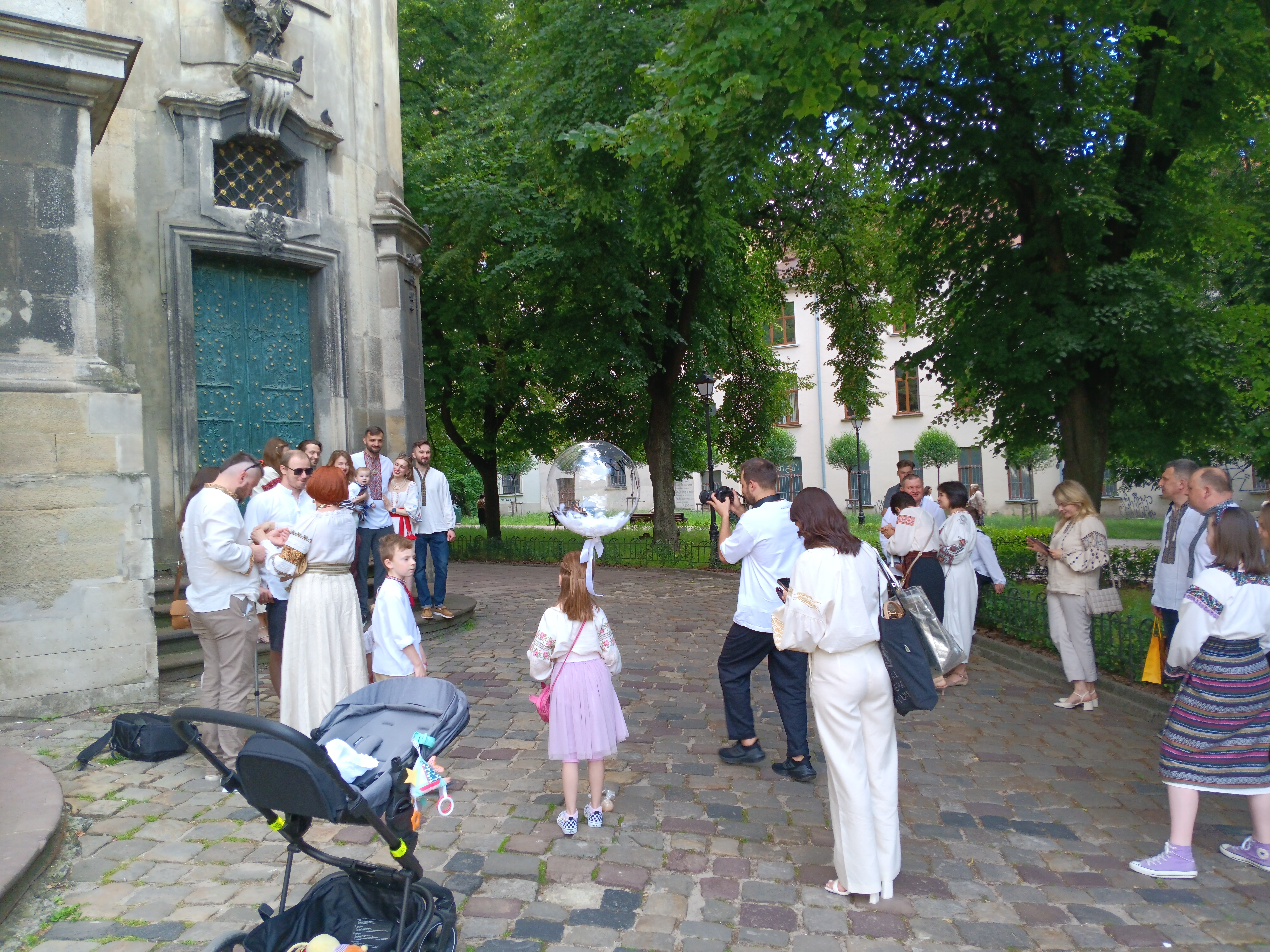
Students and teachers alike love their country, their faith, and their freedom deeply. All hate the war that Russia wages on them personally: Every day Russia tries to kill them by drones and missiles, tries to erase their history, tries to pillage their resources, and tries to exterminate their language, culture, and freedom. Russia’s war is present in Ukraine at every location for every person at all times. Nevertheless, I went to open-air concerts, bars, restaurants, and churches filled with joyous young and old people with and without small children. This very public life serves as a defiant and powerful act of resistance to Russia’s war as does vibrant street art and music.
The people of Ukraine need our weapons to protect their freedom to be human and to be free from the violence, terror, and oppression imposed by Russia on them. Never have I seen a people believing in God as strongly as the Ukrainian students and teachers whom I met last 3 weeks. Furthermore, Lviv centers many overlapping faiths with churches of the Greek Catholic, Roman Catholic, Armenian Catholic, Ukrainian Orthodox, Russian Orthodox, and even a small Jewish community. Furthermore, I met both atheist and agnostic students studying at the Ukrainian Catholic University. This rich and diverse tapestry of believes exists in overlapping circles of ancient history, song, prayers, and common purpose. All are united and opposed to Russia’s terror of random death by drone or missile. People are tired, yes, tired and exhaused by 3.5 years of war, but people are united for the noble purpose to be free, to be at peace with their neighbors, and to be part of a liberal and democratic Europe. Russia responded to these desires with war, because Russia perceives a free, creative, and productive Ukraine as a threat to its own sclerotic, decadent, and corrupt society.
Unlike Russia, Ukraine values individual life and liberty, but Russia has 4 soldiers for every one Ukraine has. How can I best help my Ukrainian friends in their just defence to protect their freedom and to be part of a peaceful Europe? They need air defence radars and missile systems, they need artillery shells and cannons, they need tanks, helicopters, and fighter jets, they need drones and electronic jamming gear. I struggle with this question, write and call my U.S. senators and Congresswoman in Delaware to support Ukraine, and talk to friends and family about my travels to Ukraine, but it all seems puny and I am frustrated and impatient. In those moments I recall the wise words passed on to me 2 weeks ago by an older man of Irish-Catholic faith:
Act like the world depends on you, but pray it depends on God.
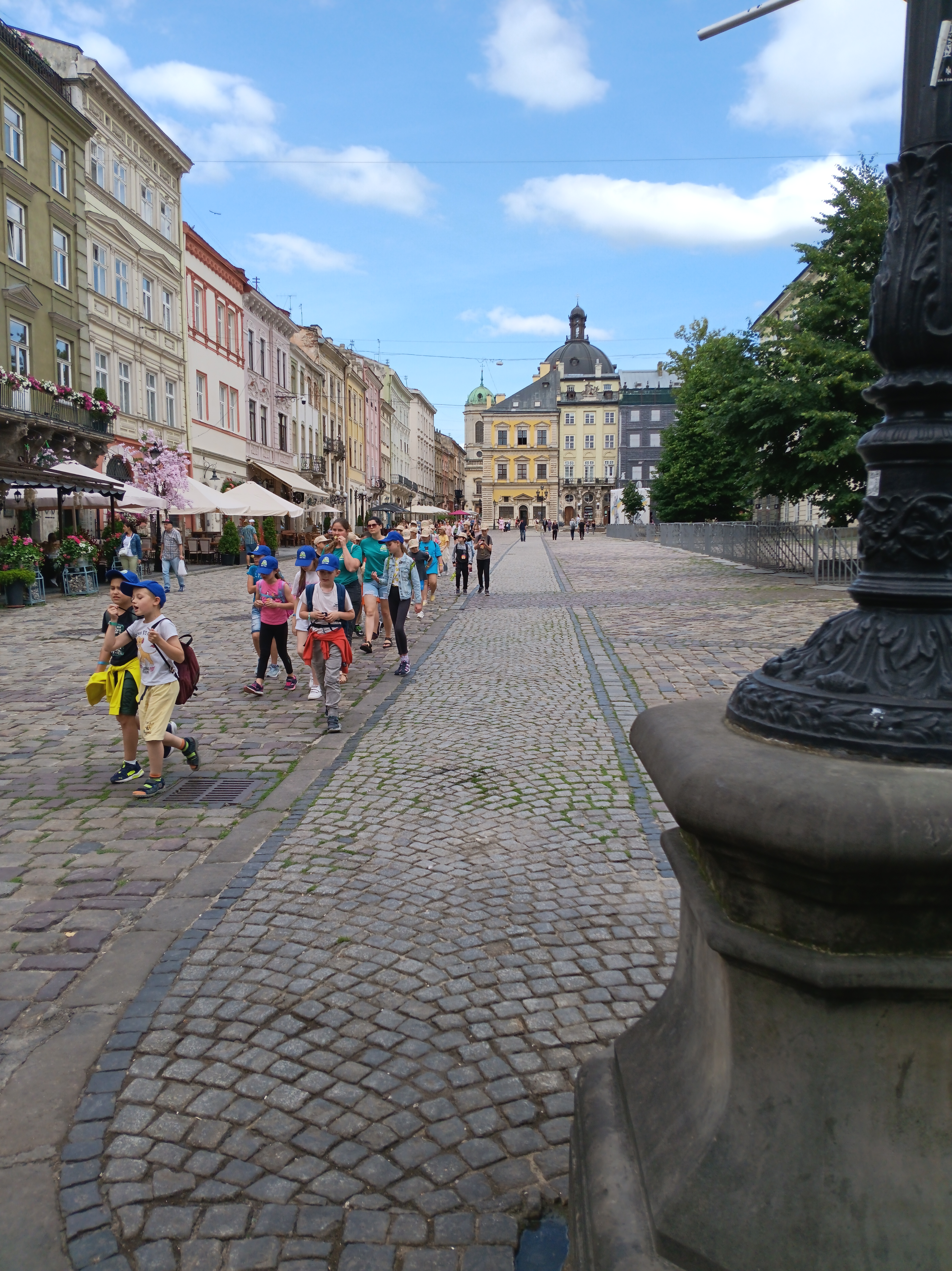
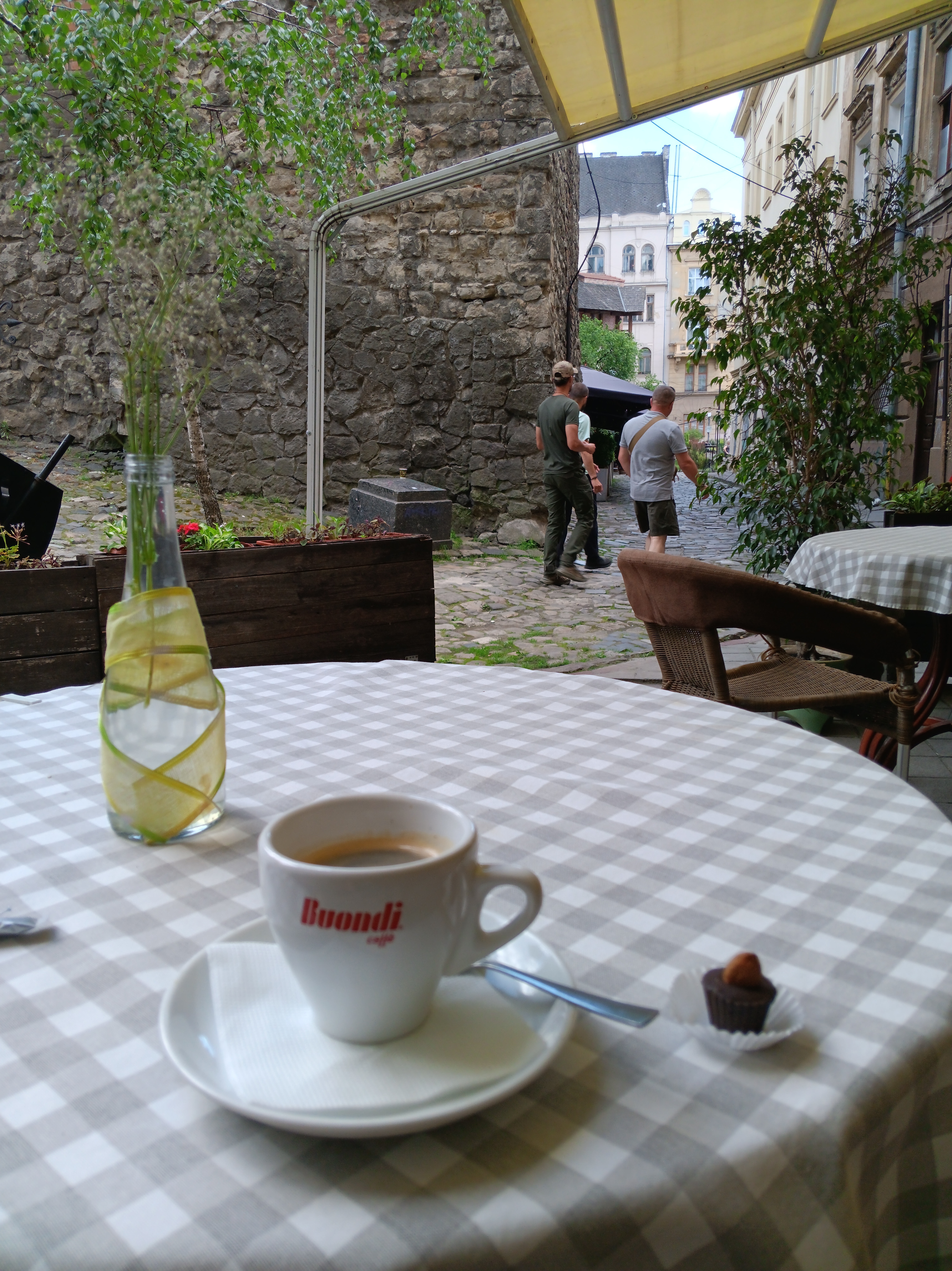
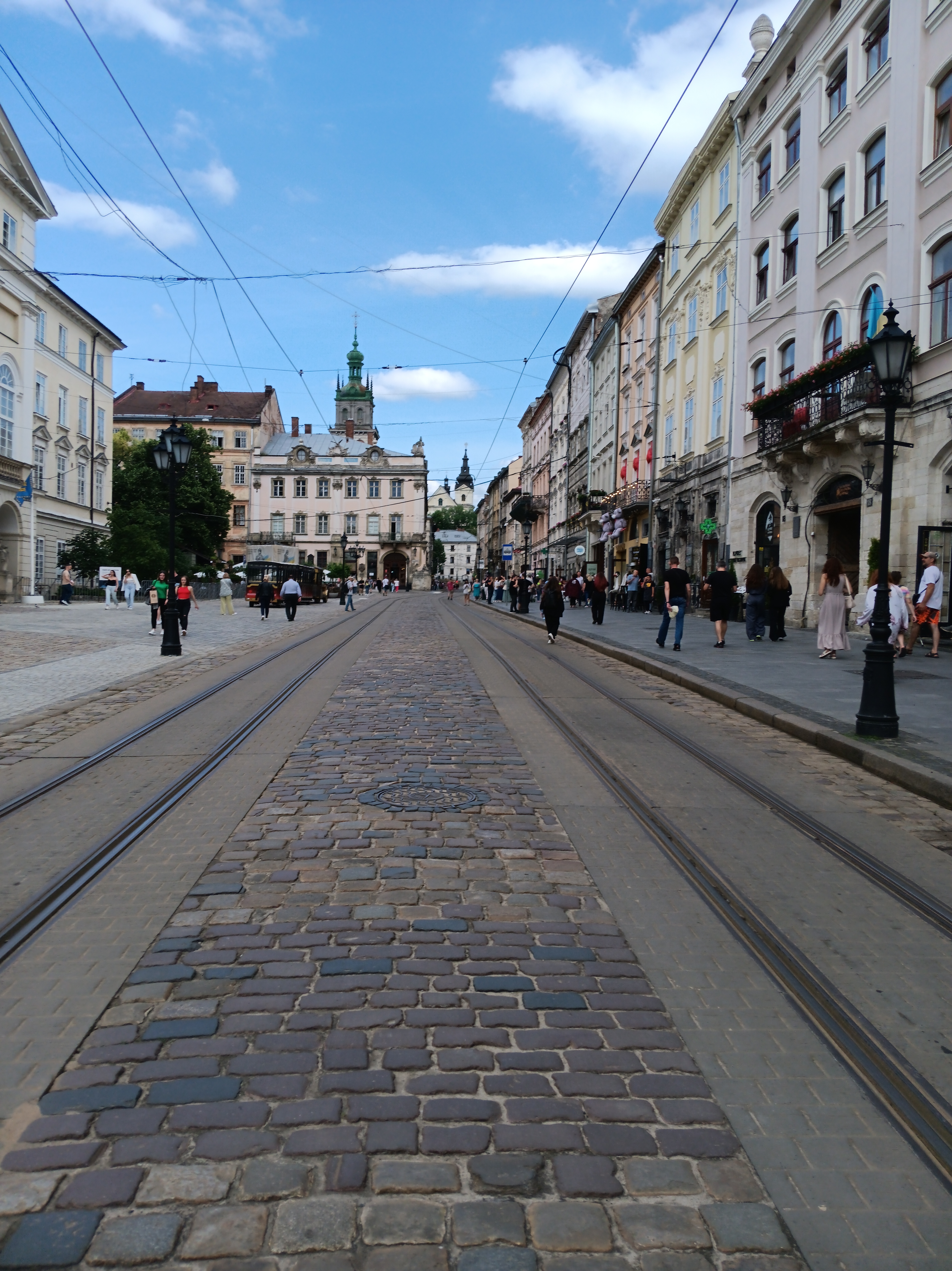
Cobble stones pave the streets of Lviv everywhere. The pedestrian Old Town merges sidewalks and streets with its center at Rynok Square. In Old Town restaurants, cafes, churches, museeums, and small shops all spill onto sidewalks in front of the 150-200 year old buildings. On the 2-3 floors up people live in appartments with 10 foot ceilings. My 1-room appartment was in one of these. Exiting the building and turning left, I reached Rynok Square within two minutes. Turning right, I entered Dominican Church within a minute. Along the short ways I pass several shops, cafes, and a small flea market. Electric trams but not cars zip across Old Town and for 20 Hryvnias ($0.50) one can hop on and go as far as the tram goes.
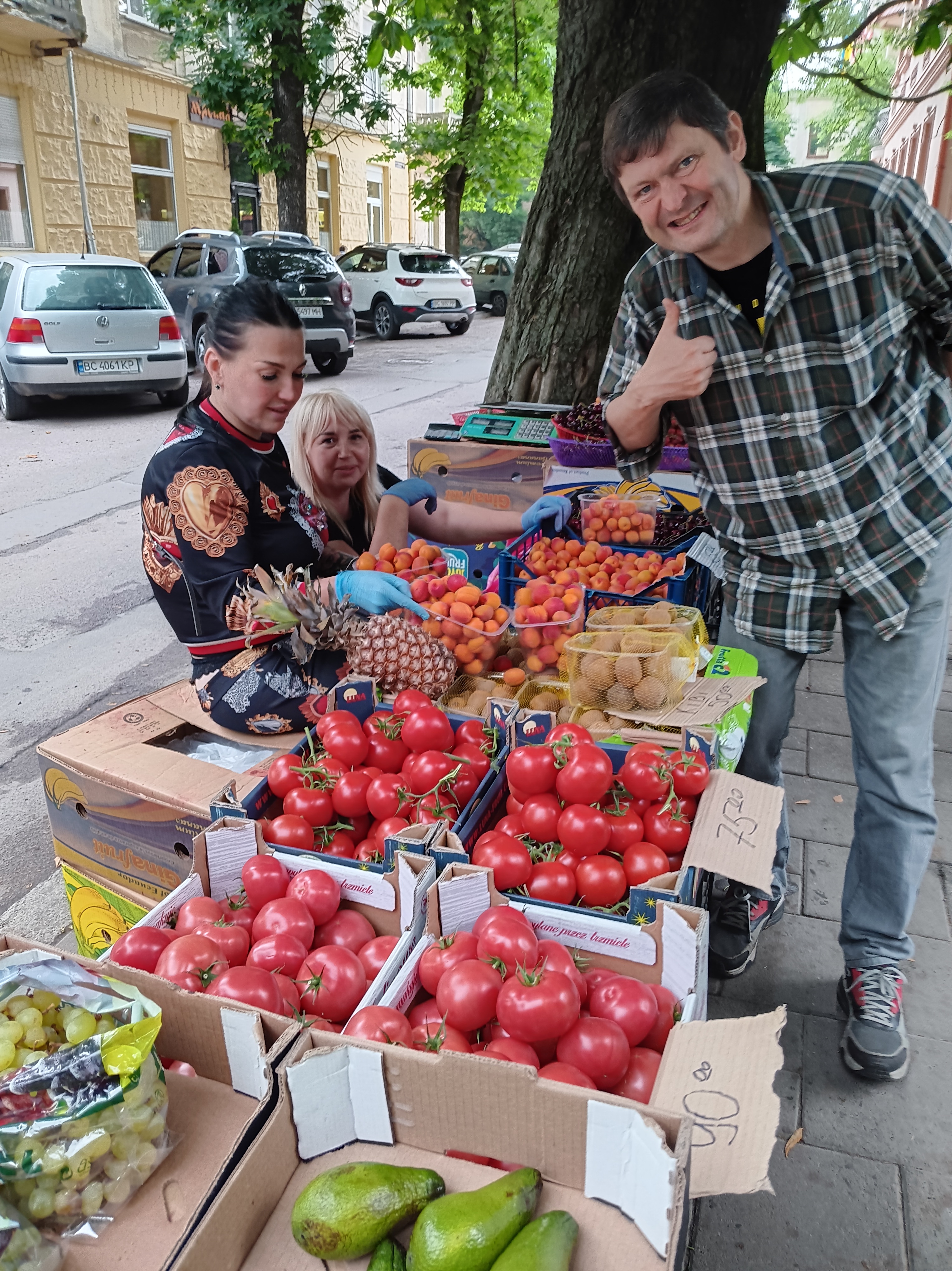
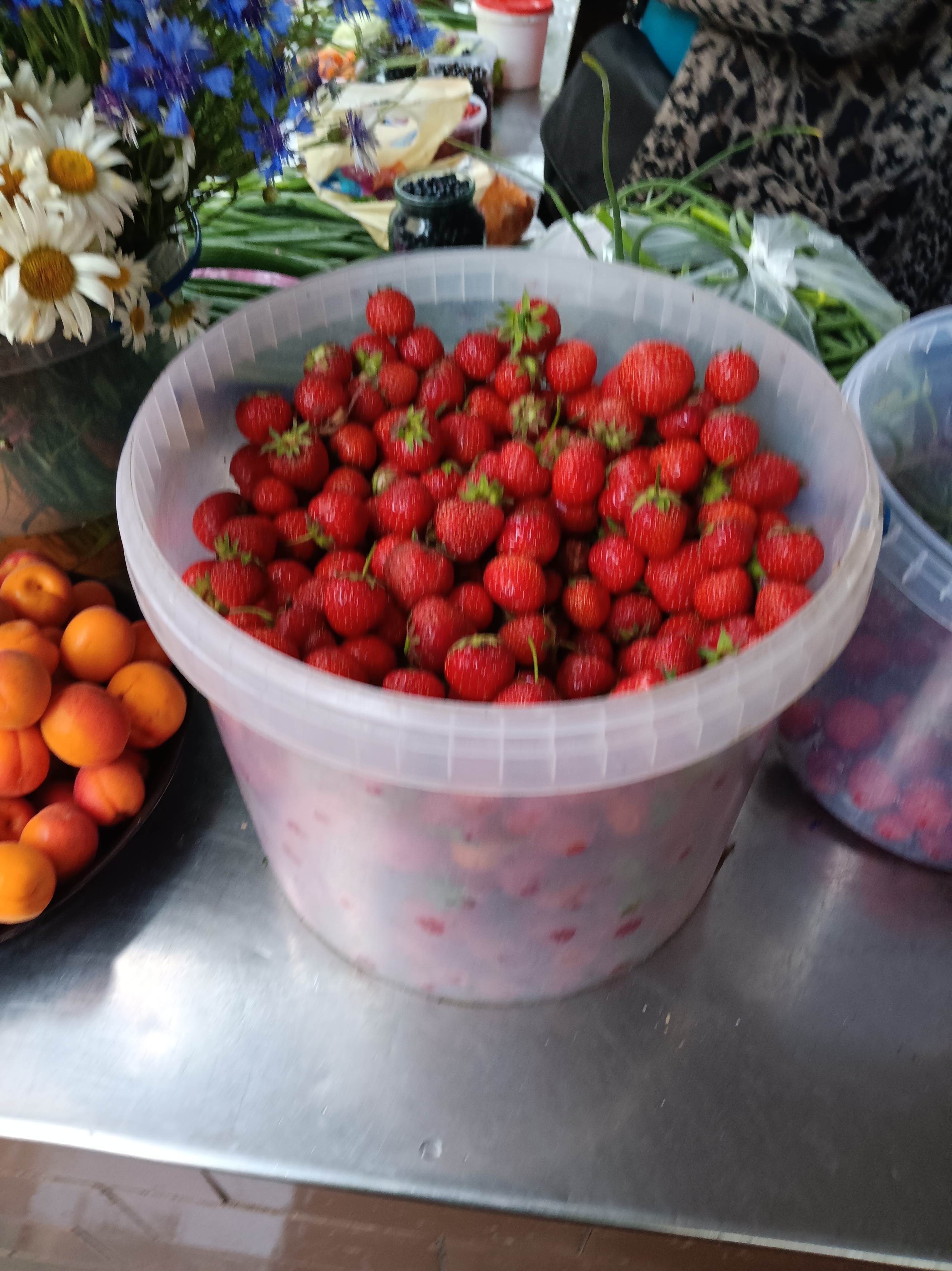
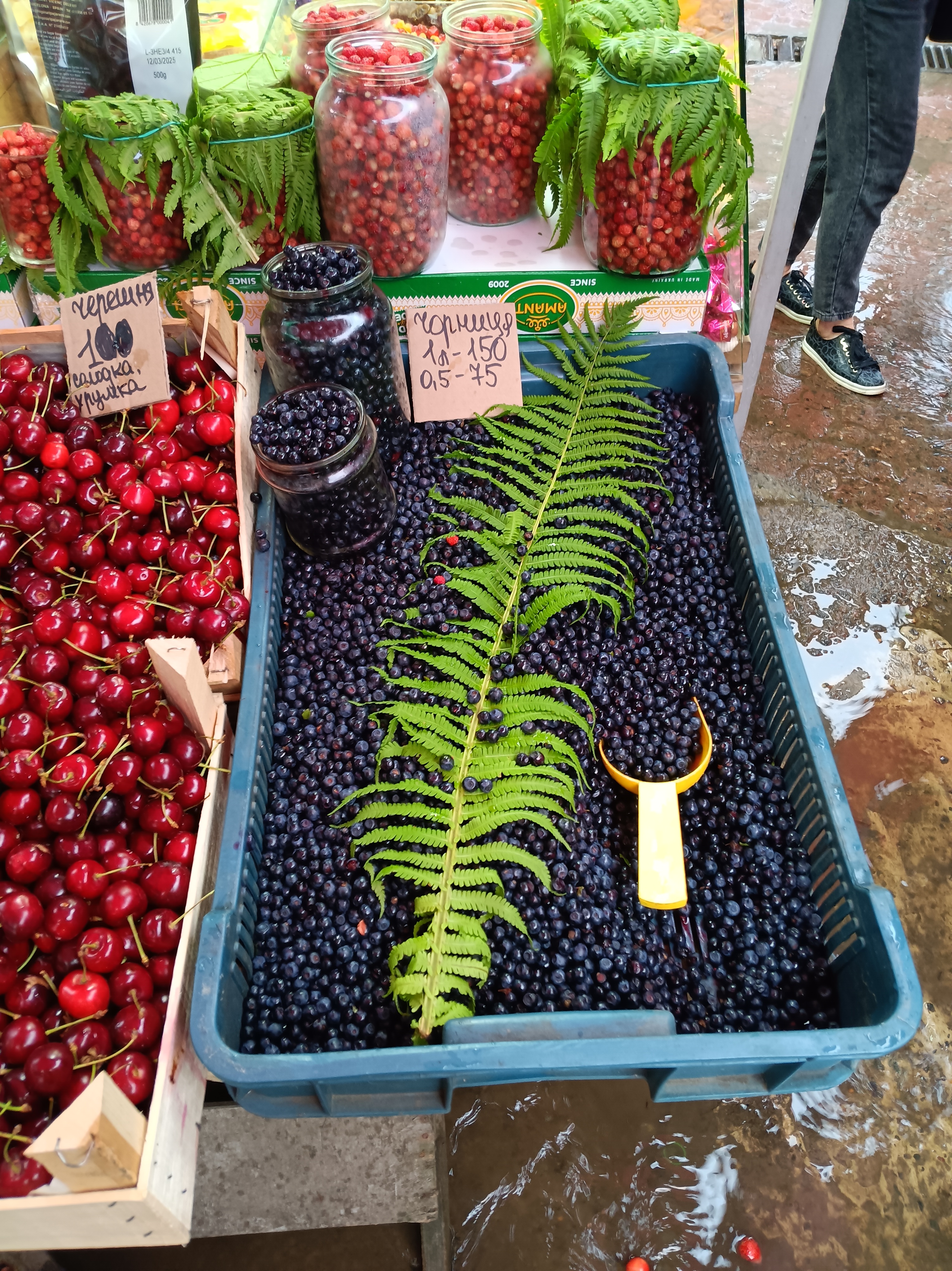
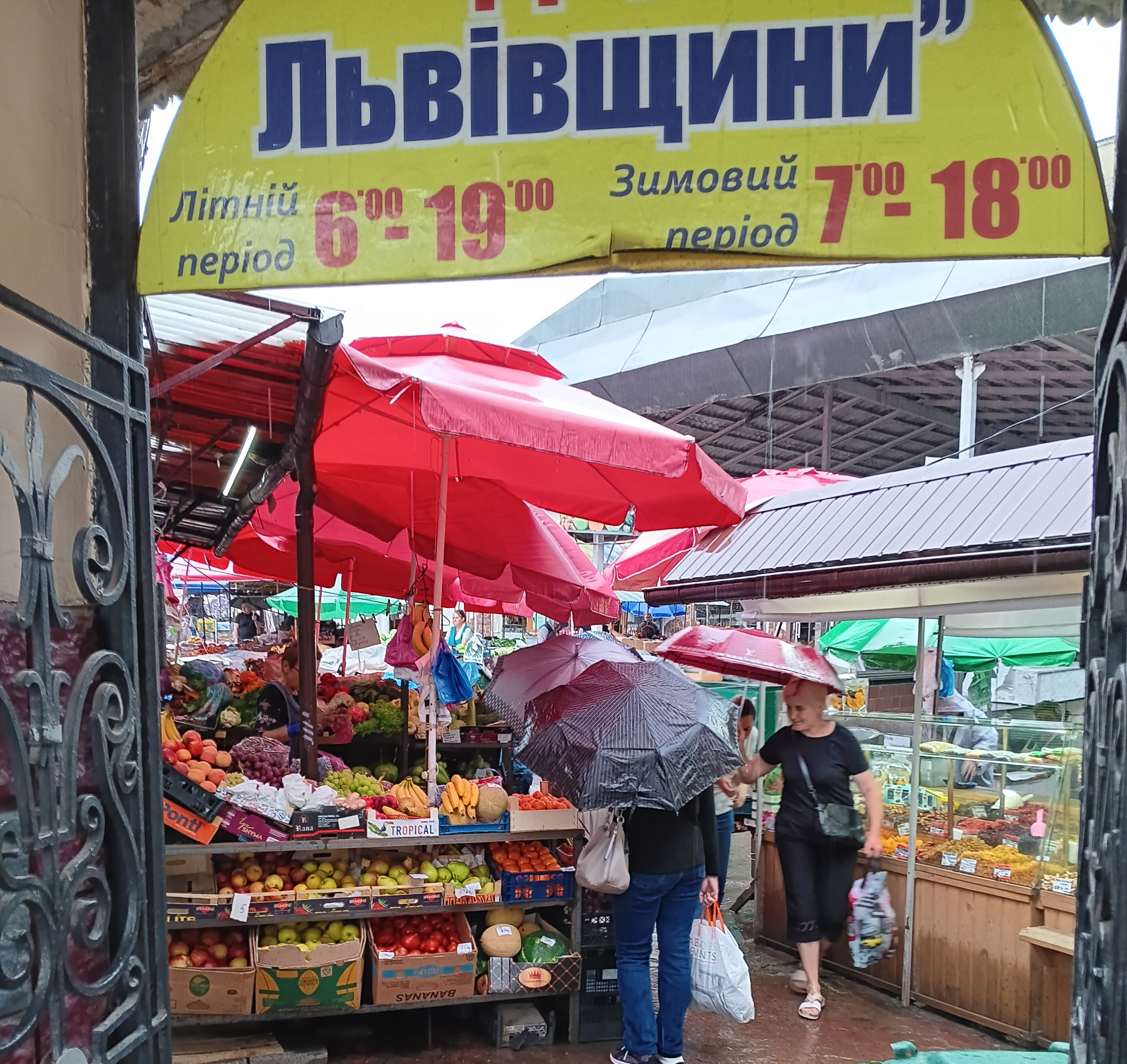
Walking past Old Town, I quickly found street vendors and a farmer’s market within a mile or so. Both local (currants, strawberries, cherries, gooseberries) and foreign fruit were sold. I bought half a pound of cherries and half a pound of “mirabellen” (small yellow plums) to eat during my first morning stroll through Lviv. Initially I spit the pits into the street, but I stopped when I noticed how clean both the streets and sidewalks were. This differs from all cities I have visited previously. Lviv expunges any and all litter in public places. So, my cherry pits went back into the bag.
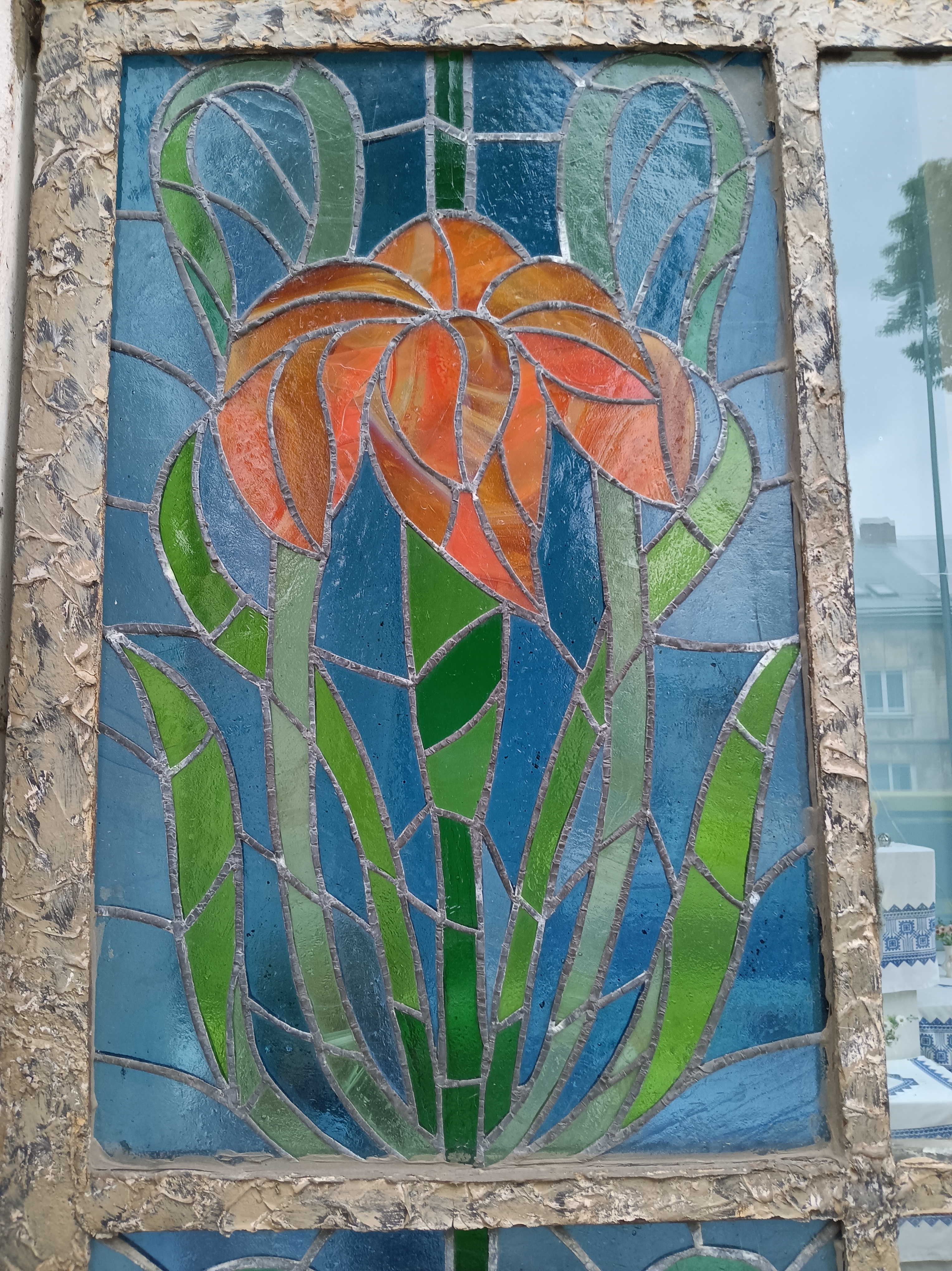
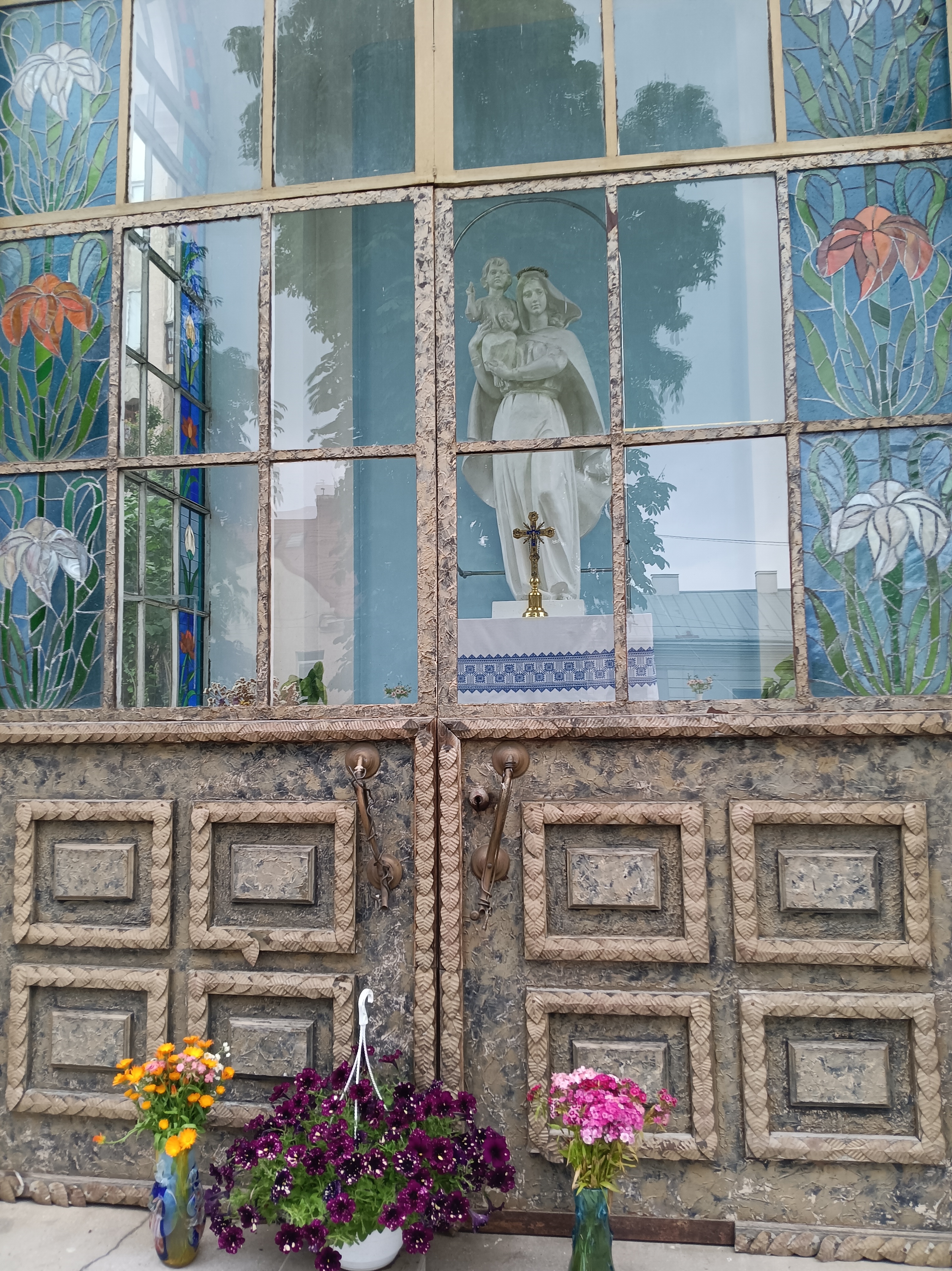
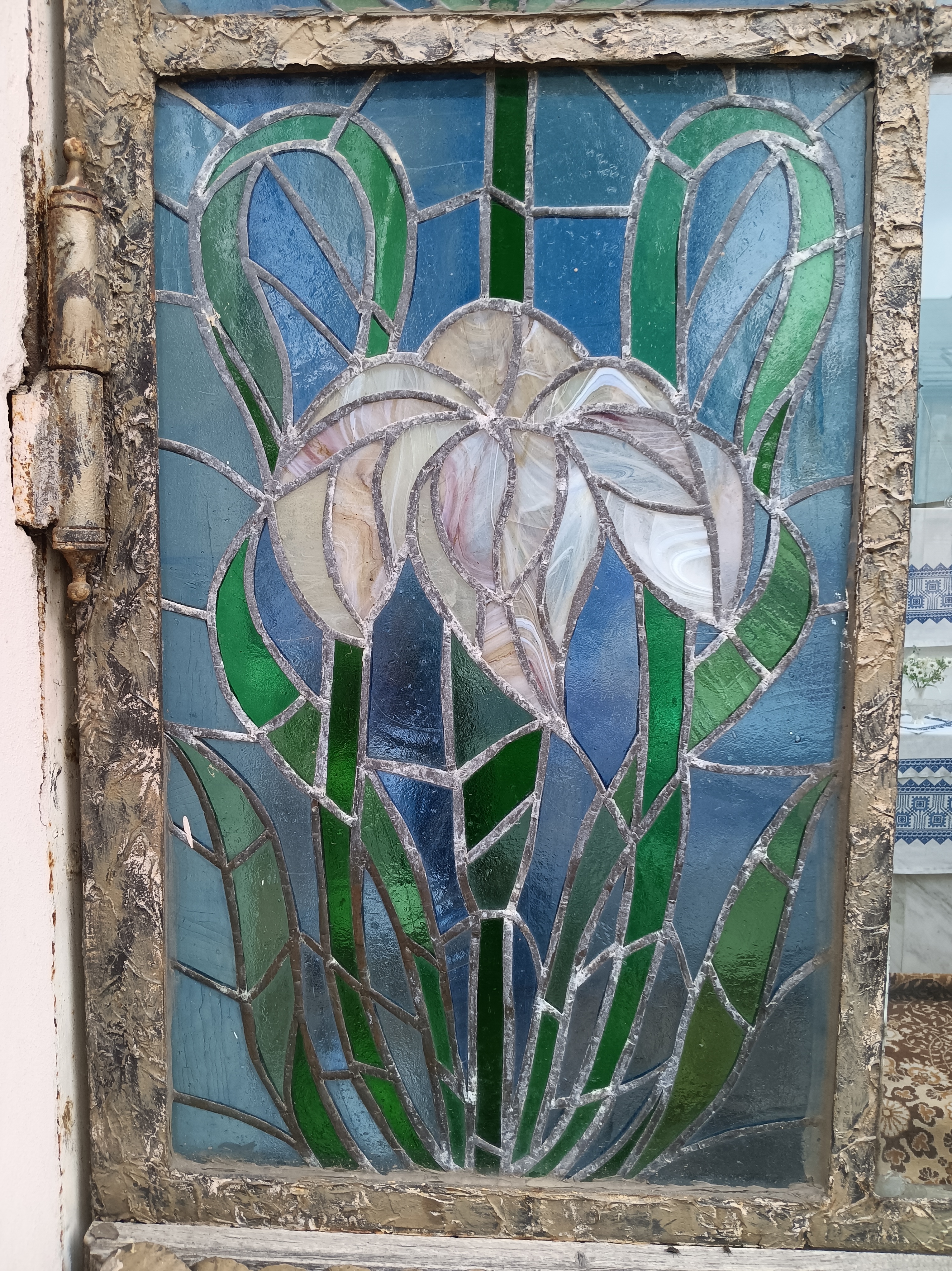
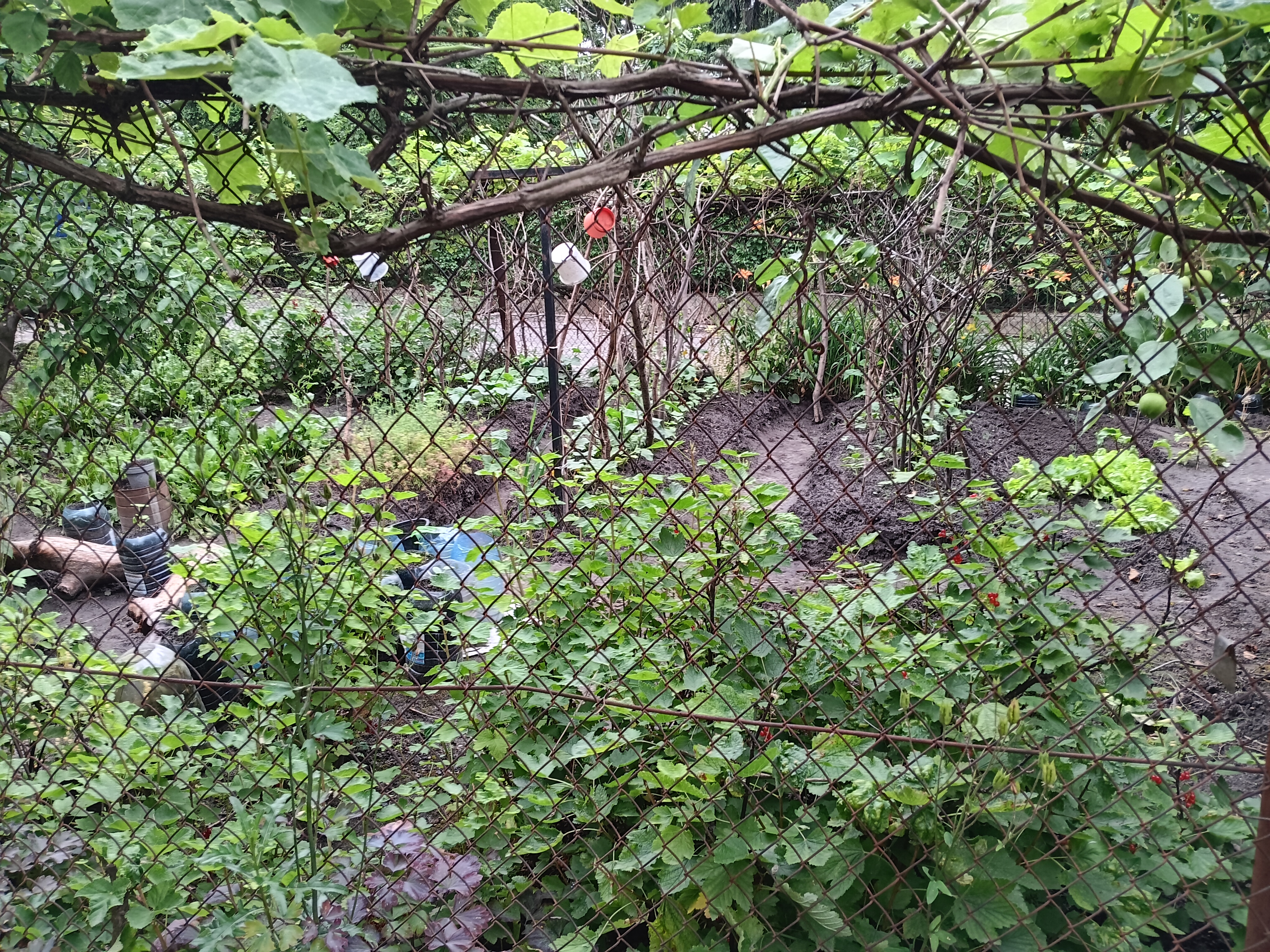
Later I discovered that fruit and vegetables are grown within city limits in small garden plots that people nurture. On half the space of my Delaware gardens they grow twice the fruit. The soil in the Lviv gardens is a dark and black. One such plot nestled in front of a large residential appartment complex adjacent to a religious shrine. Three sides of the shrine are framed with stained glass window pains similar to those my wife Dragonfly Leathrum makes. Looking closely, I discern identical designs of the flowers, however, the variation of the glass color and its arrangement is not. It is only now that I see the design and its symmetries, but I do recall the soothing and calming effect the shapes and colors had on me when I walked past it 15 days ago.
The tiny garden contained an apple tree, several Red Currants bushes, grapes growing up and along the fence, beans, carrots, beets, and cucumber. The stage of all these plants was similar to those that I grow in my own garden. A plastic bag of kitchen scraps for a compost was hanging over the door to enter the plot. It almost seems that neigbors left these for the owner to work into the soil. My sister Christina does the same for me when she visits sundays and leaves her kitchen scraps for my compost.
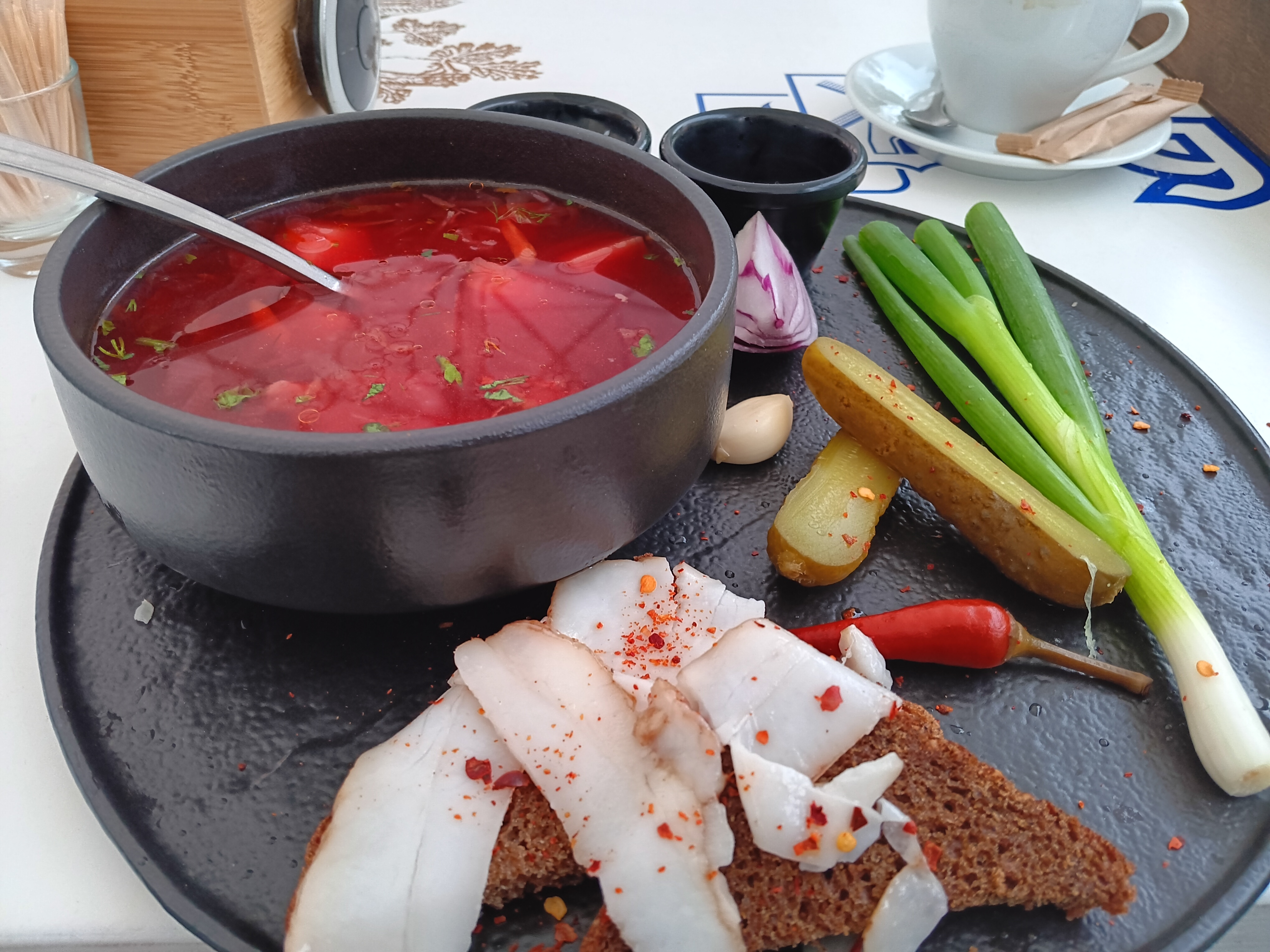
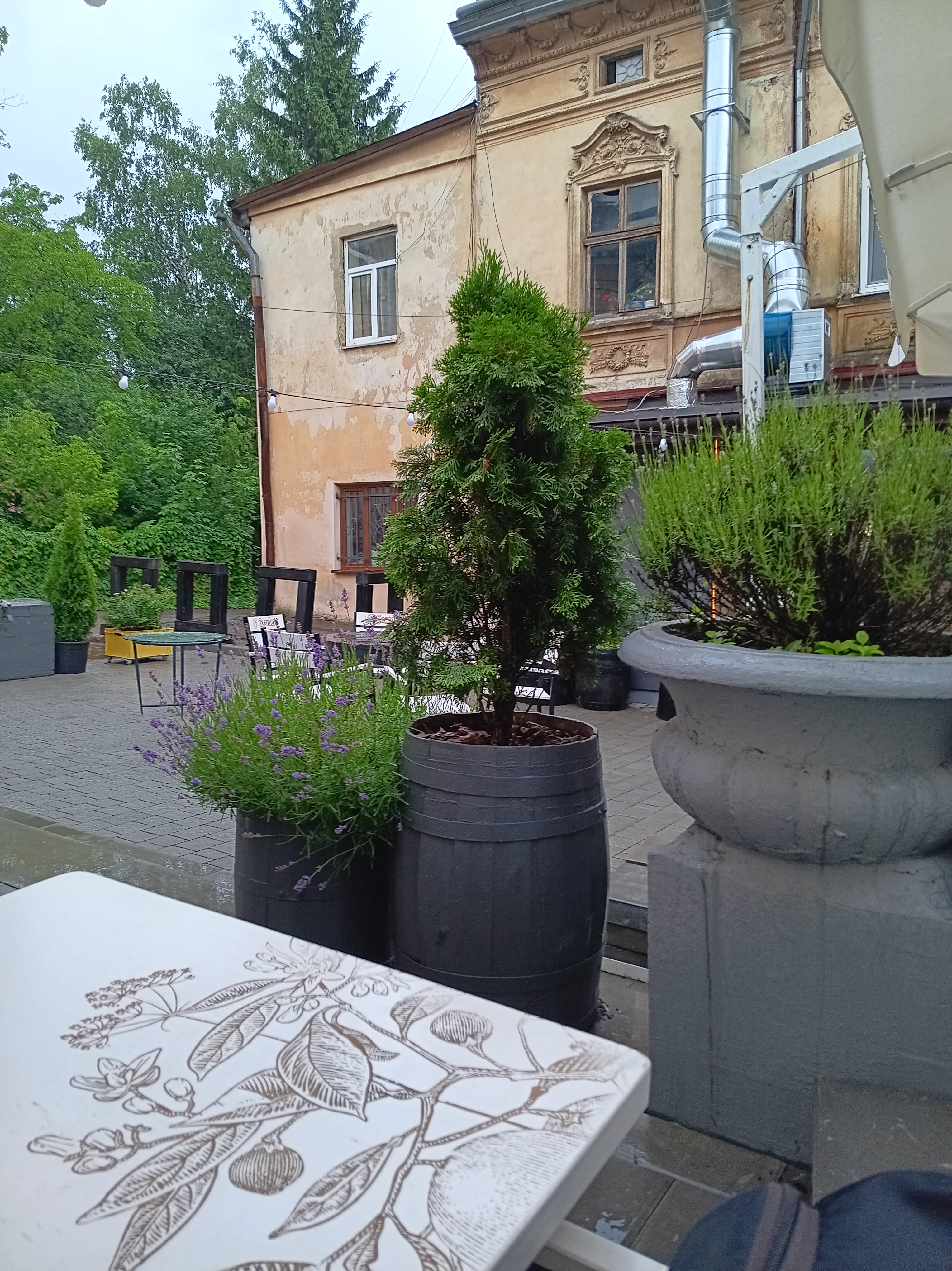
Rain moved me away from the shrine and its adjacent garden to seek shelter. I quickly found a restaurant with covered outdoor seating. My first meal since arriving in Ukraine was Borscht. Tiny rib bones with meat were in the soup, the pure white pork belly fat was on dark rye bread, and a shot of vodka came with it at the end. The presentation of the plate, too, reveals artful intent. The red onion, pepper, pickles, garlic, and scallion are all arranged carefully. Even the sprinkles of red chili flakes on the white fat are no accident and like a painting complement the red of the soup. The outstanding restaurant has a website, e.g., https://marinad-meat-bar.choiceqr.com/, as I just learnt 😉
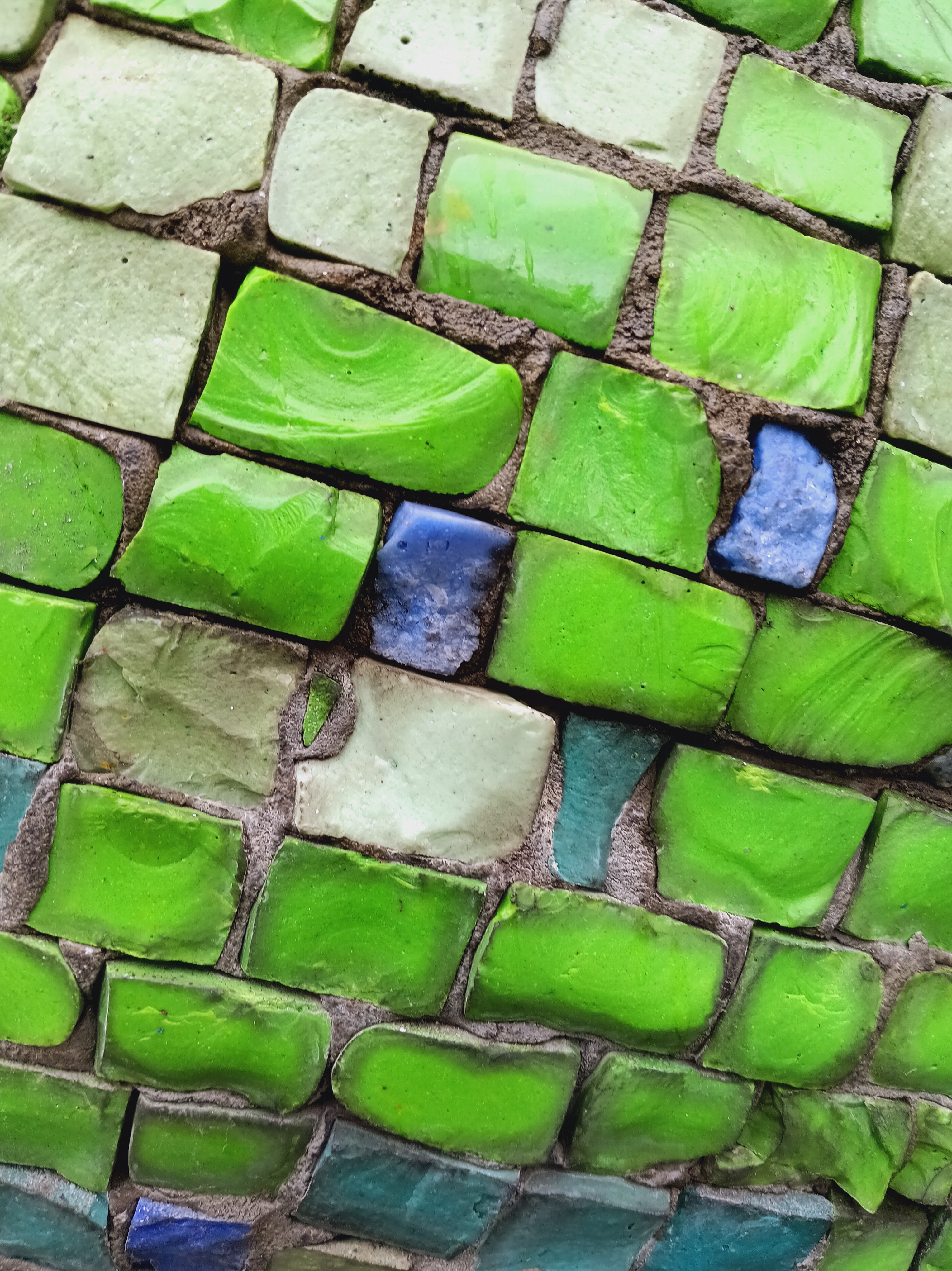
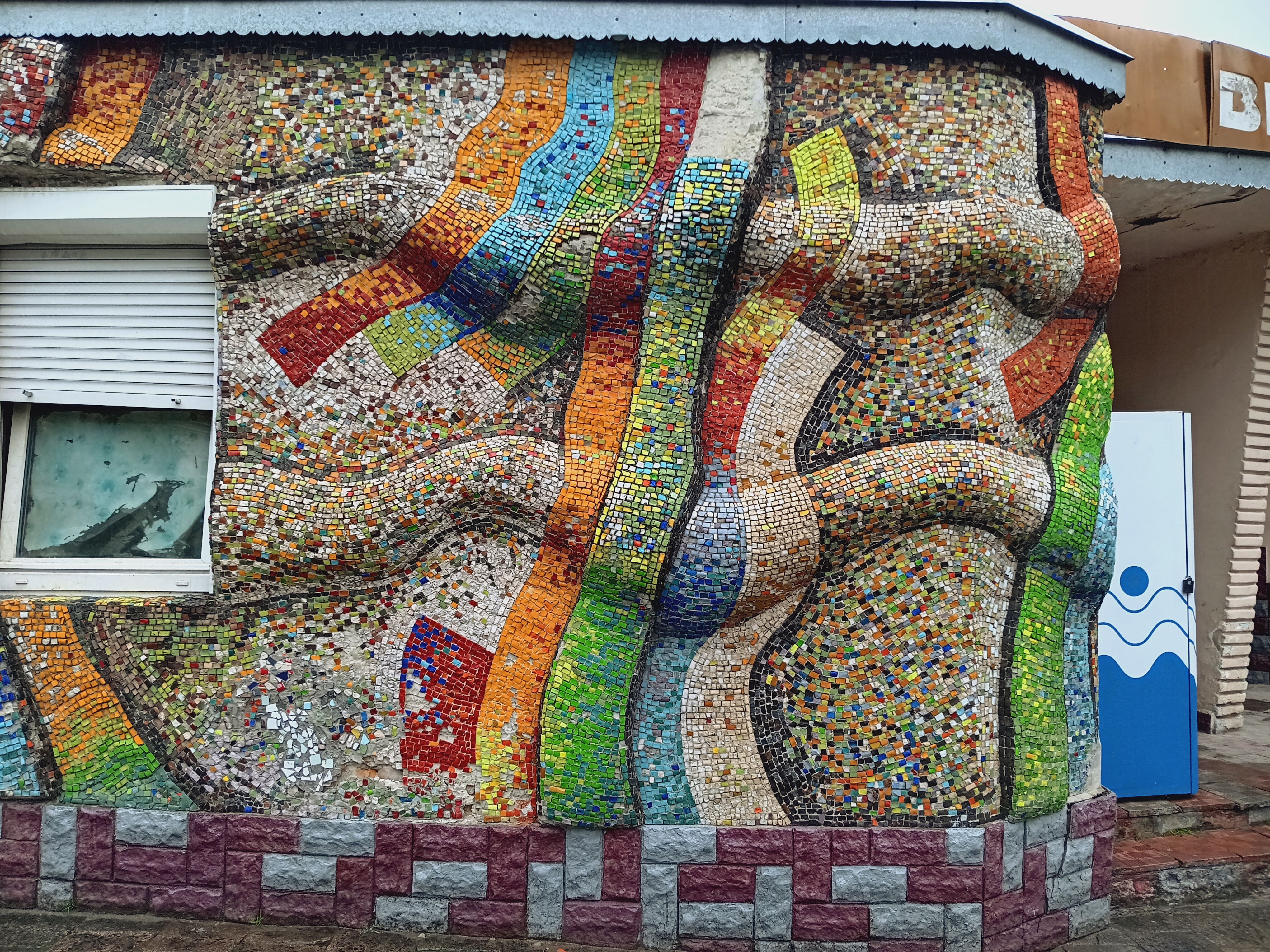
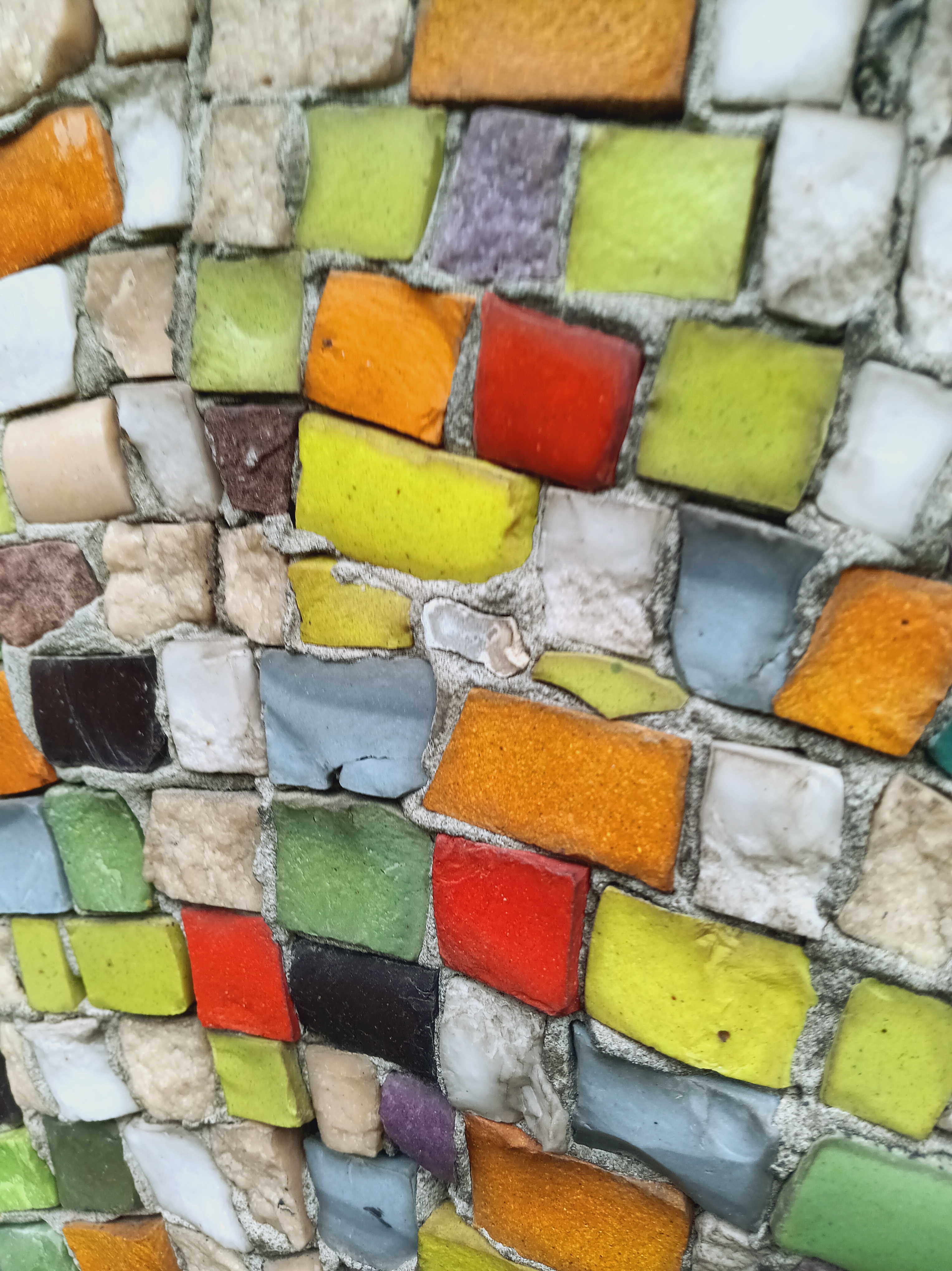
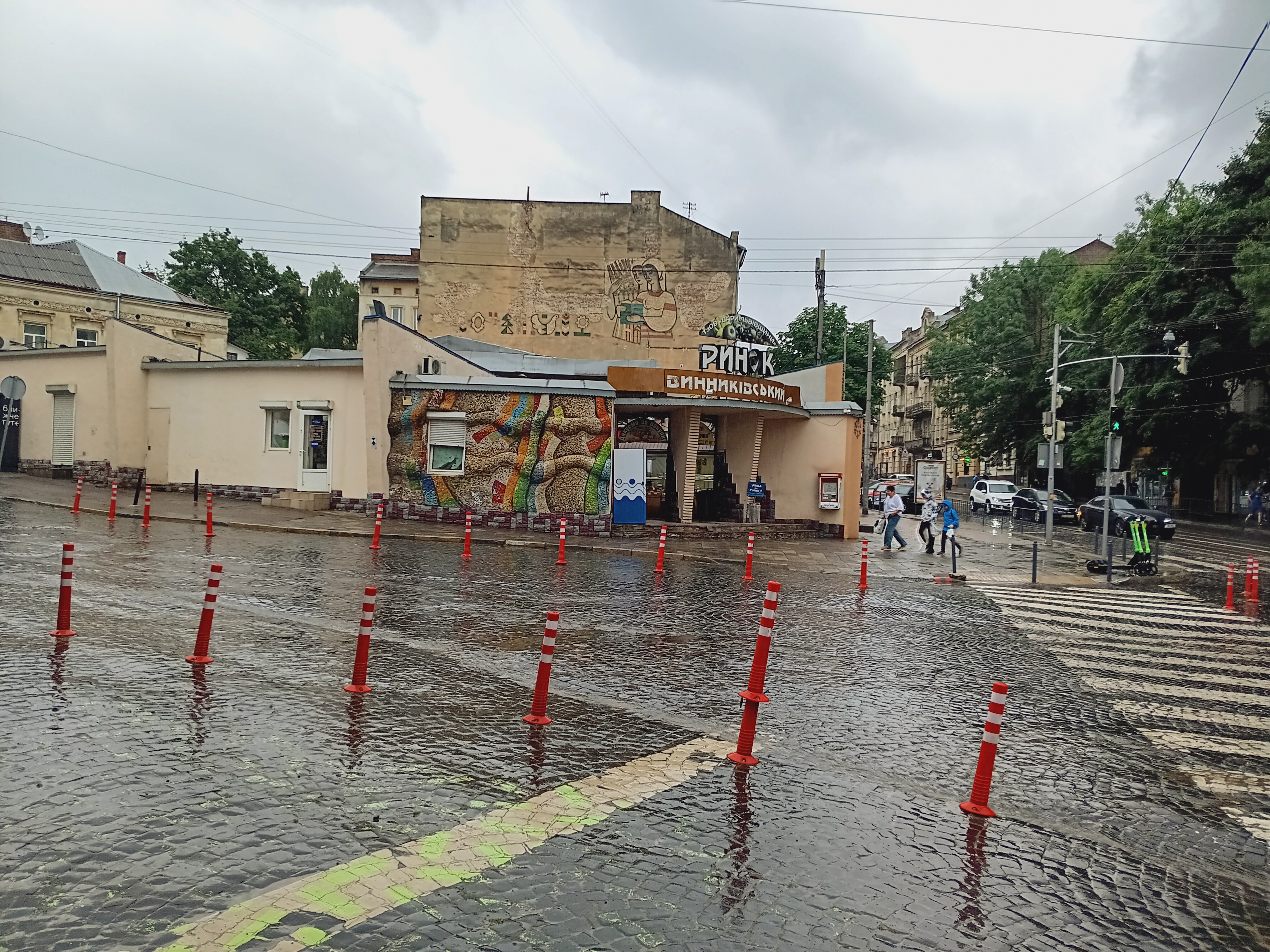
Talking about art in public places, I return to a mosaic sculpture at the farmer’s market. The market sits on a wide corner at the intersection of two large cobblestone streets. A tram line goes towards the shrine and the restaurant where I had my late lunch. A low wall encloses the fruit and vegetable stands inside and on one side this wall contains an exquisite mosaic of tiny colorful tiles. From afar colorful strands emerge that intersect and overlap smoothly without any color or strand dominating. Someone had to design this and someone had to put this together and I do not know who did this when, but I admire their love, care, and dedication to colorful and diverse cultures.
Notice also the mural on the wall above the market of the residential building. Two women tend to something and a line of symbols emerges along the base. Like most street art in Lviv, this one is not signed by the artist(s) either. I discern a peace dove and a sunflower … Again I only now notice this detail in the photo.





 Icy Seas