
The Russian dictator Vladimir Putin claims Ukraine based on a false reading of “Kyivan Rus” (see map below) about 1100 years ago. With equal ignorance I here claim it for Sweden or Denmark or Lithuania or Poland, because the Kyivan Rus were a mishmash of Slavic, Viking, and nomadic tribes who settled and ruled the forests and steppes between the Baltic and Black Seas between 800 to 1100 AD. Furthermore, while “Rus” is the root for “Russia” (or “Russland” in German), “Rus” derives from the Old Norse “rods” which means “men who row.”
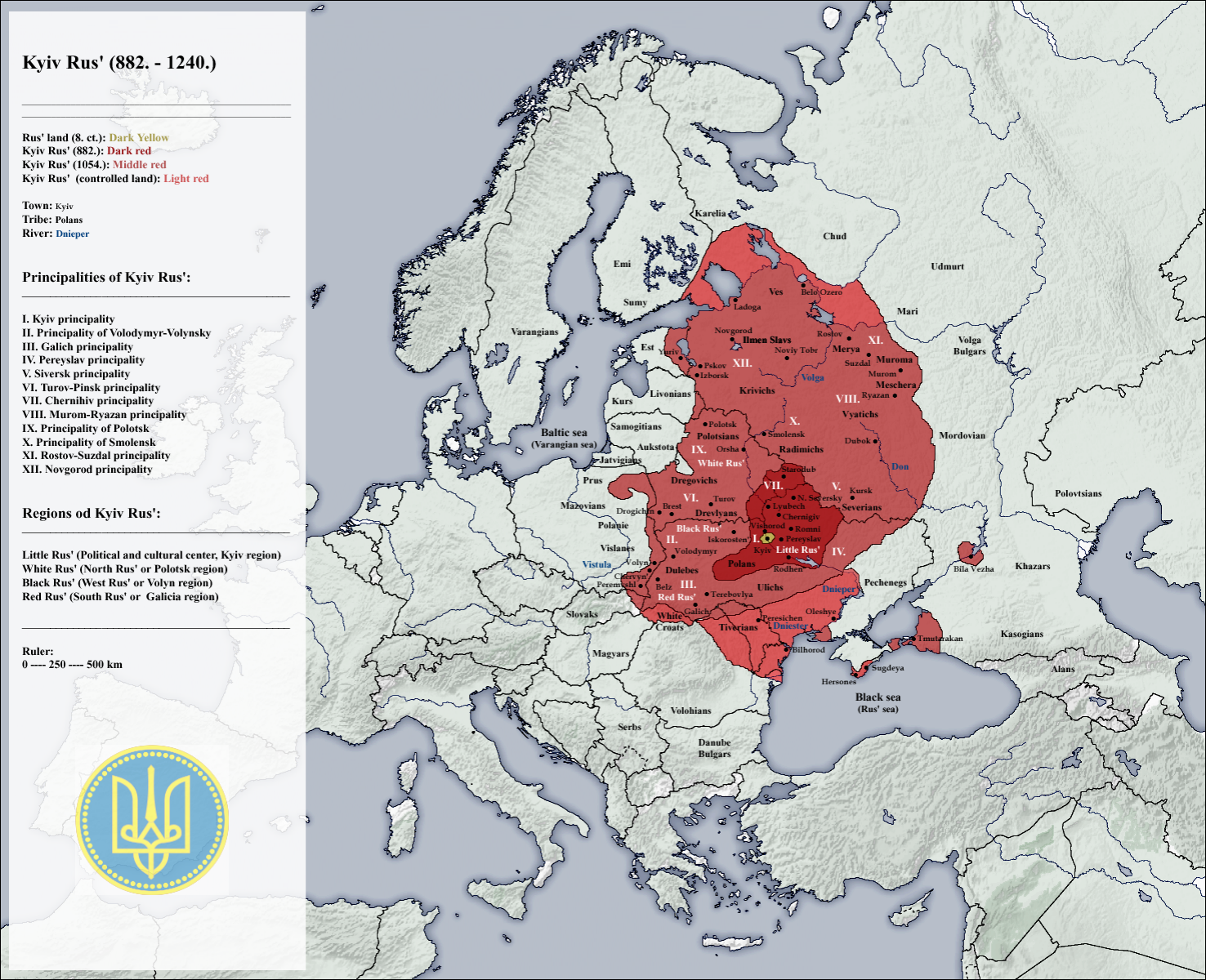
Putting another spin on old histories, I proclaim that Russia is, historically, a fringe principality that belongs to Ukraine. So, lets call Putin’s claim to Ukraine what it is: A colonial, imperialistic land grab along the same lines of an Adolf Hitler and a Joseph Stalin who divided Eastern Europe in 1939 with no regard to the people they both oppressed and slaughtered. Visiting Lviv in the summer of 2024, I find the bloody histories of these “Bloodlands” (Snyder, 2010) everywhere:
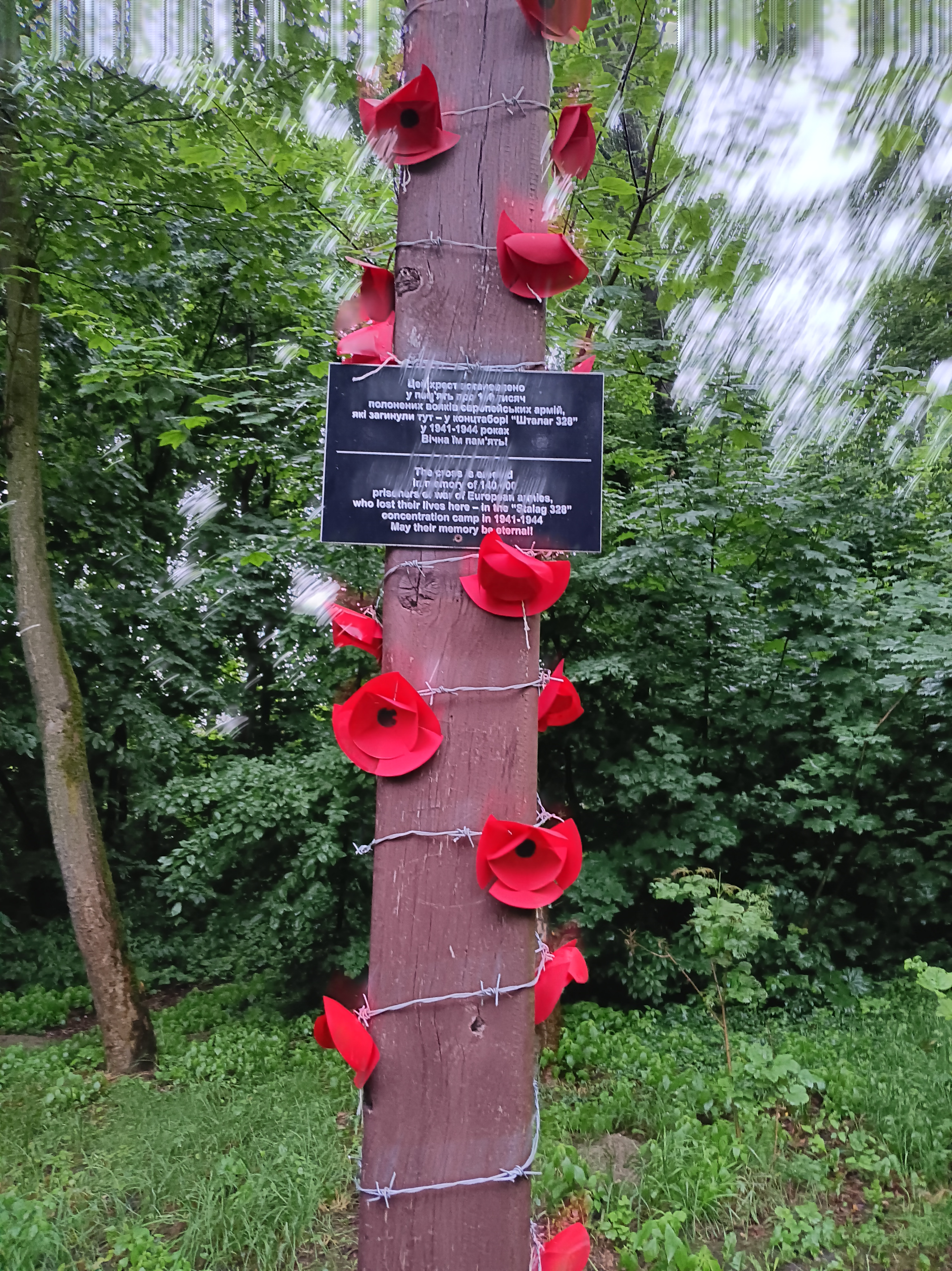
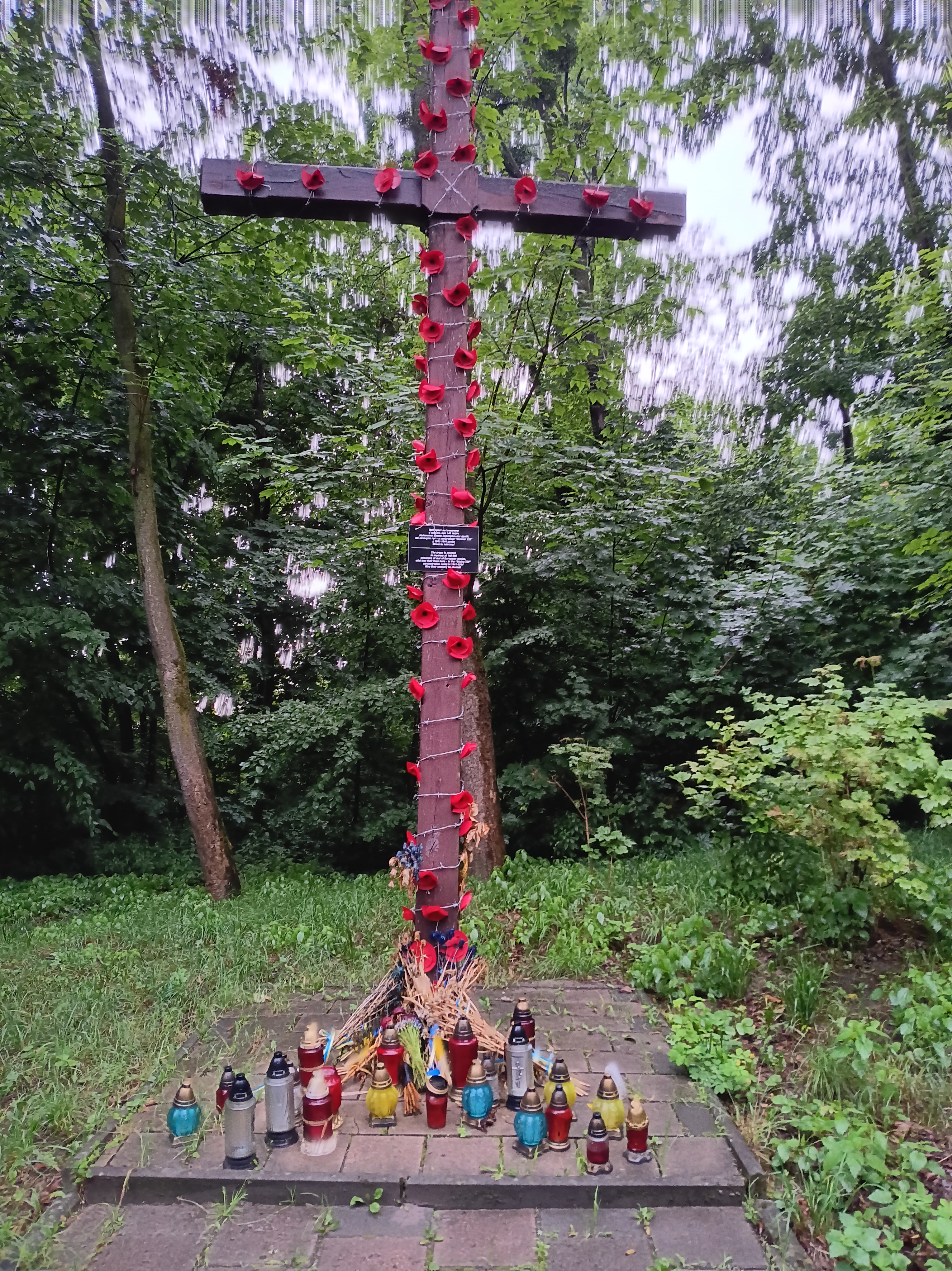
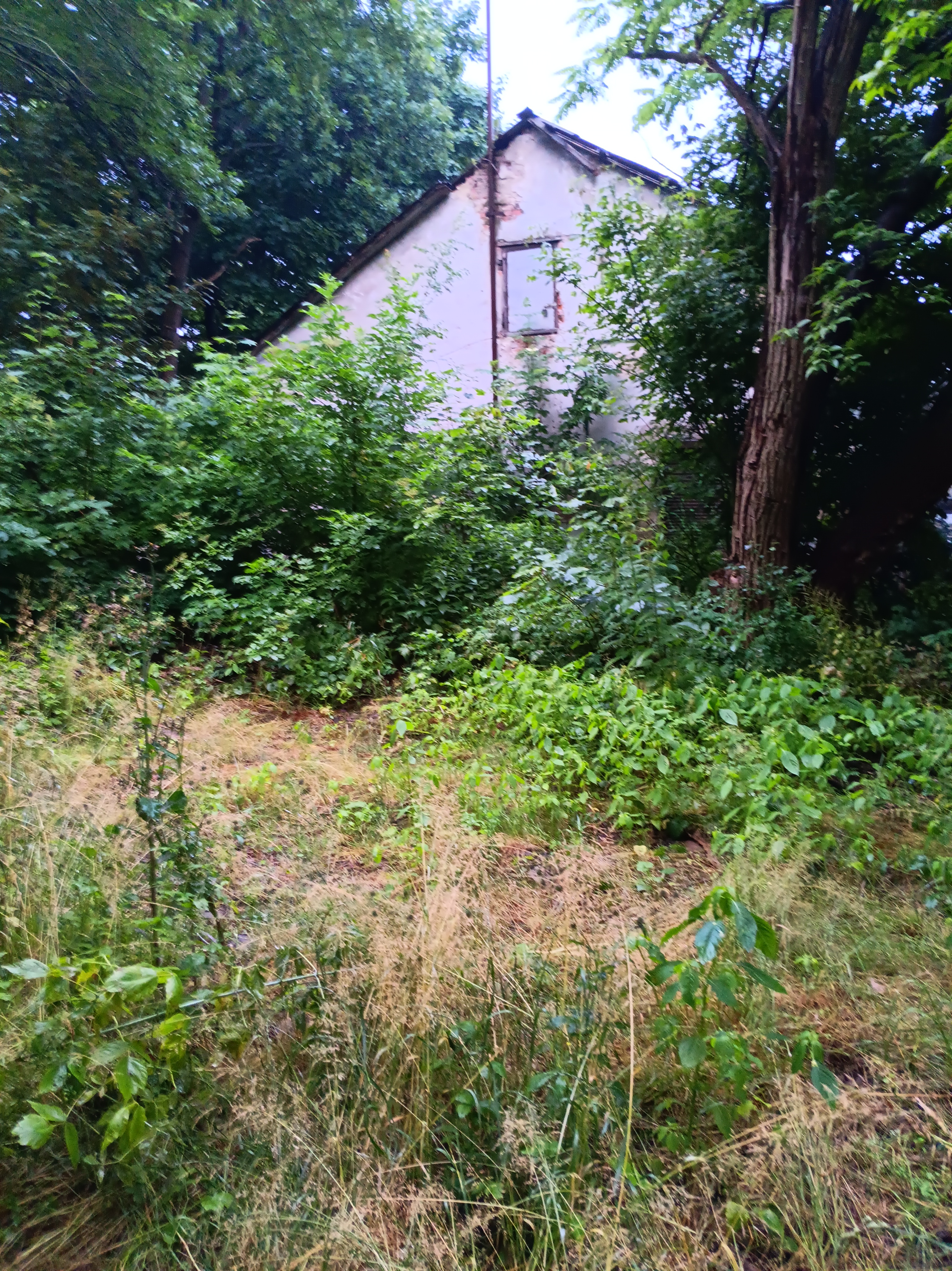
On my evening stroll on my first day in Lviv I stumble across an overgrown and unkept green space at the end of a small and winding residential street up a hill. Along my accidental path I find a 10 feet high wooden cross near semi-collapsed and overgrown one-story buildings that resemble barracks. Red poppies and barbed wire enclose the cross while burnt candles litter its base. An inscription in both Ukrainian and English tells me, that I am standing within Stalag-328 where 140,000 prisonors of war (POW) were murdered 1941-44. Nazi-Germany maintained this POW camp where the death rate among its Soviet, Belgian, French, and Italian soldiers exceeded 50%.
Half an hour later I find a huge 3-story building along a busy road that covers an entire city block. Later I find out, that this is the St. Bridget’s Convent for Women built in the 17th century, but it serves as a prison for the last 250 years which perhaps explains its decrepit look on Horodotska Street. On one of its walls I find a plaque in Ukrainian, Polish, and English stating that the Stalin’s Secret Police, the NKVD, shot 1,172 citizens of Lviv in this building on 19th of June 1941. This massacre at the Brygidki prison was part of a mass killing throughout Soviet occupied Poland and Ukraine.
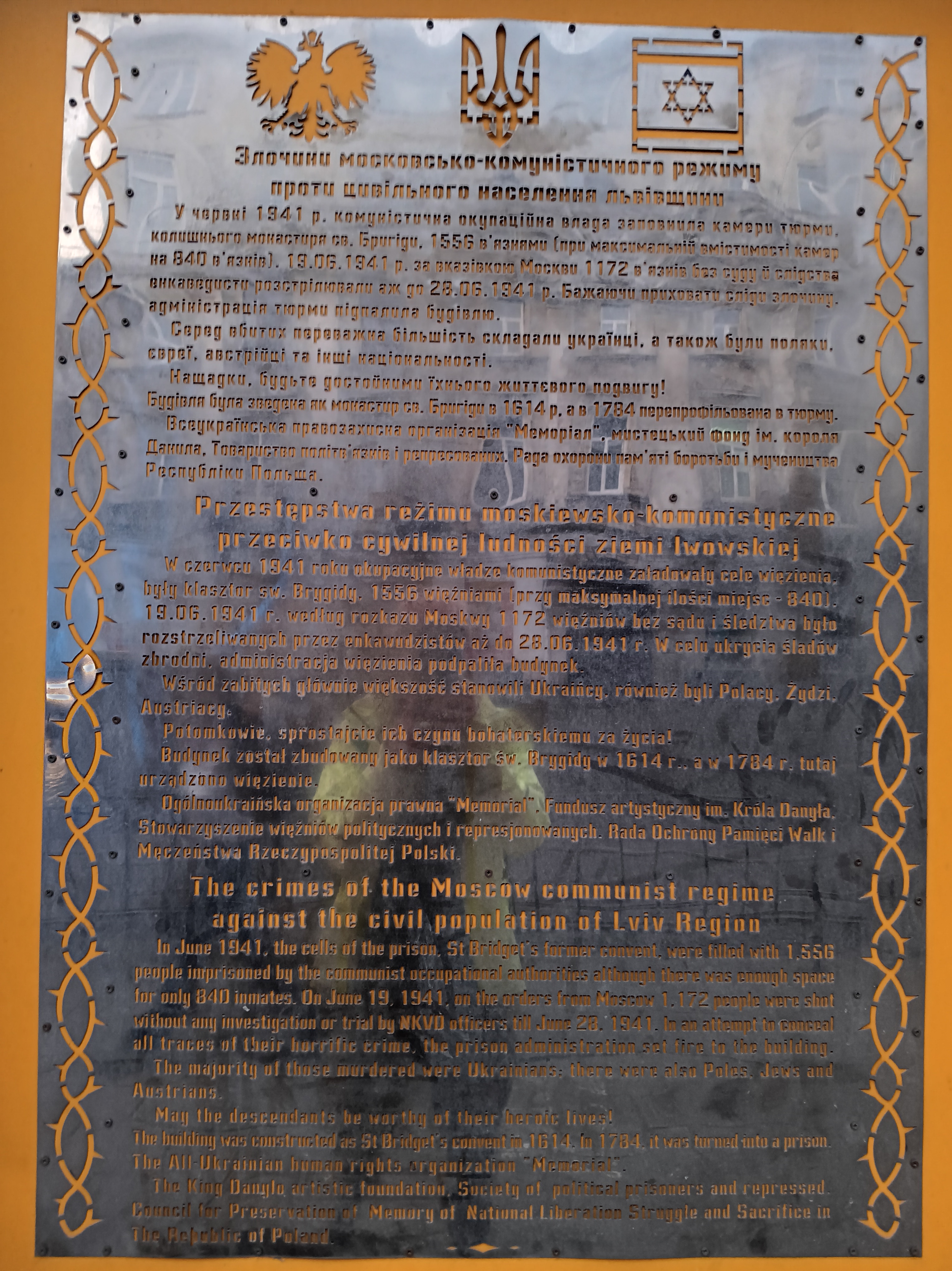
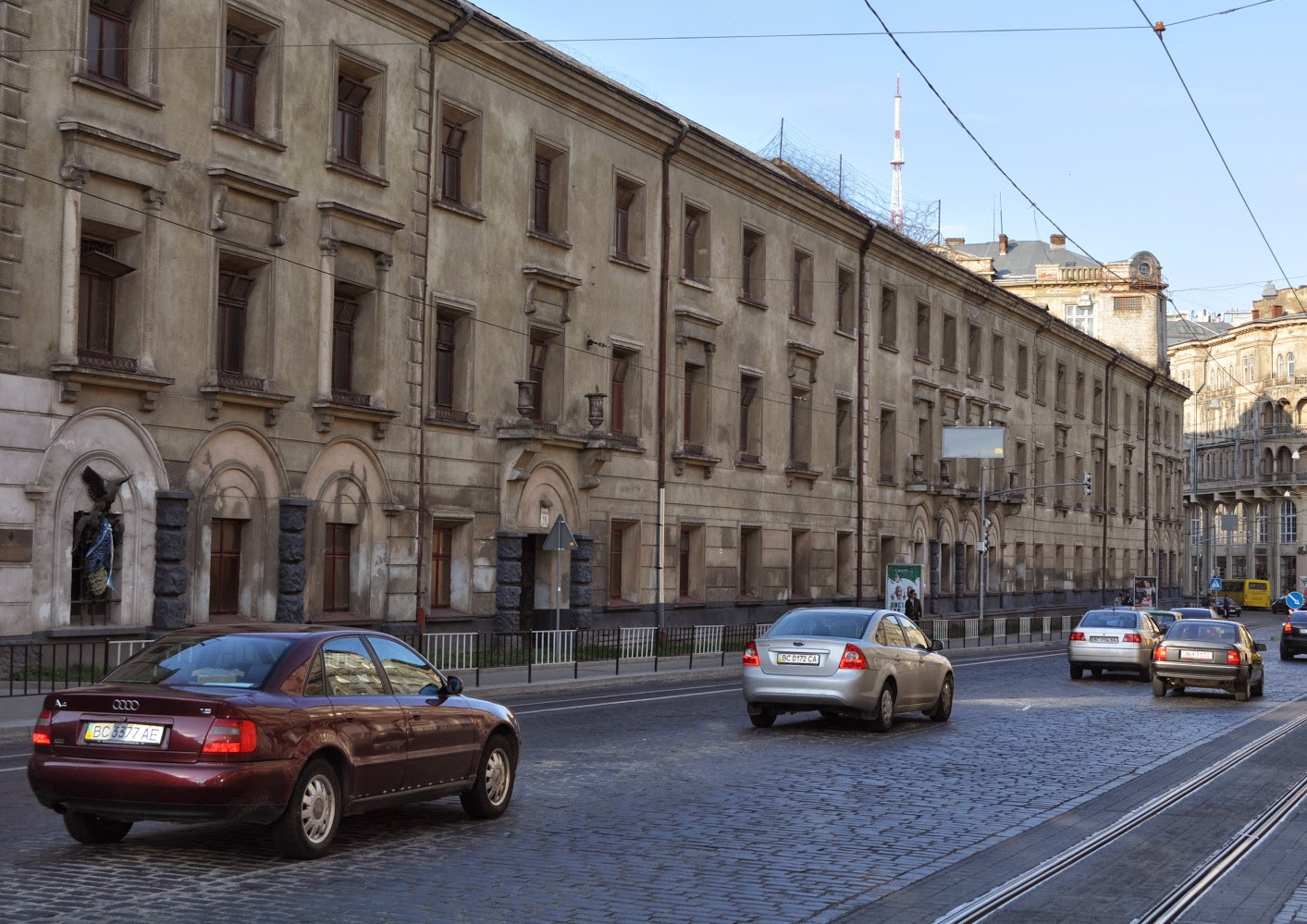
For context, the Hitler-Stalin treaty of 1939 divided Poland such that Lviv was occupied by Stalin’s troops from 1939-41. About 1.25 Mil. “Enemies of the People” of Polish and Ukrainian descent where deported in 2 years. This occupation ended when Nazi-Germany invaded the Soviet Union and captured Lviv on 30th of June 1941. Throughout Lviv, Poland, and Ukraine the NKVD committed massacres of local populations. In Lviv alone about 7,000 Ukrainian, Polish, and Jewish citizen were shot or blow up in their prison cells days before Hitler’s troops entered the city to start another massive killing cycle.
Immediately after German troops occupied Lviv progroms of the Jewish population started. Encouraged and supported by German authorities members of the Organization of Ukrainian Nationalists (OUN) belonging to militias of Stepan Bandera participated in the progroms June 30 to July 2 and July 25 to July-30 (Himka, 2011). More than 6,000 Jews were murdered this first month of German occupation of Lviv. Inciting the local population to round-up, humiliate, and kill Jewish men, women, and children, German propaganda justified the progroms with the NKVD massacres by falsely blaming the Jewish population for it. While OUN leadership never directly endorsed participation in the progroms, they also did nothing to stop their members who participated enthusiastically. Their hatred of Poles and Jews, however, was part of an ideological program modeled on the German and Italian totalitarian regimes headed by Adolf Hitler and Benito Mussolini.
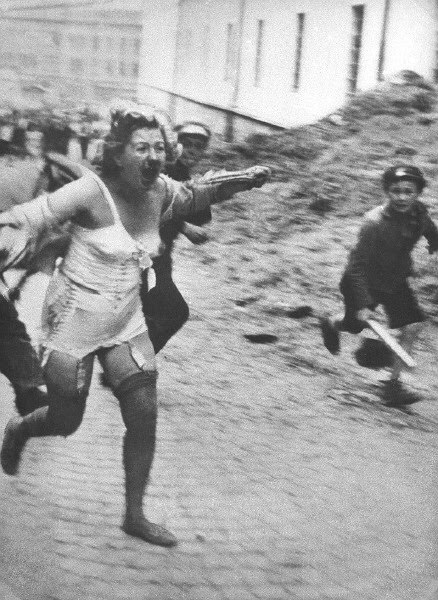
“Jewish woman chased by Ukrainian crowd during the pogrom. Yad Vashem Photo Collection, 80DO2″.
The photo above was taken the first day of the Lviv Progrom July-1, 1941 by an unknown photographer who stands on Vesela Street a block north-east of the Opera House. I walked those streets admiring street art and murals not knowing what had happened on these streets 83 years before: A grown woman has her dress ripped off, has her face bloodied, and is chased with wodden sticks by a mob of teenagers. She has only shoes and undergarments left to protect her, as she runs up a hill in terror while a large crowd of spectators in the background care not. Himka (2011) reproduces this photo and places it into a larger context.
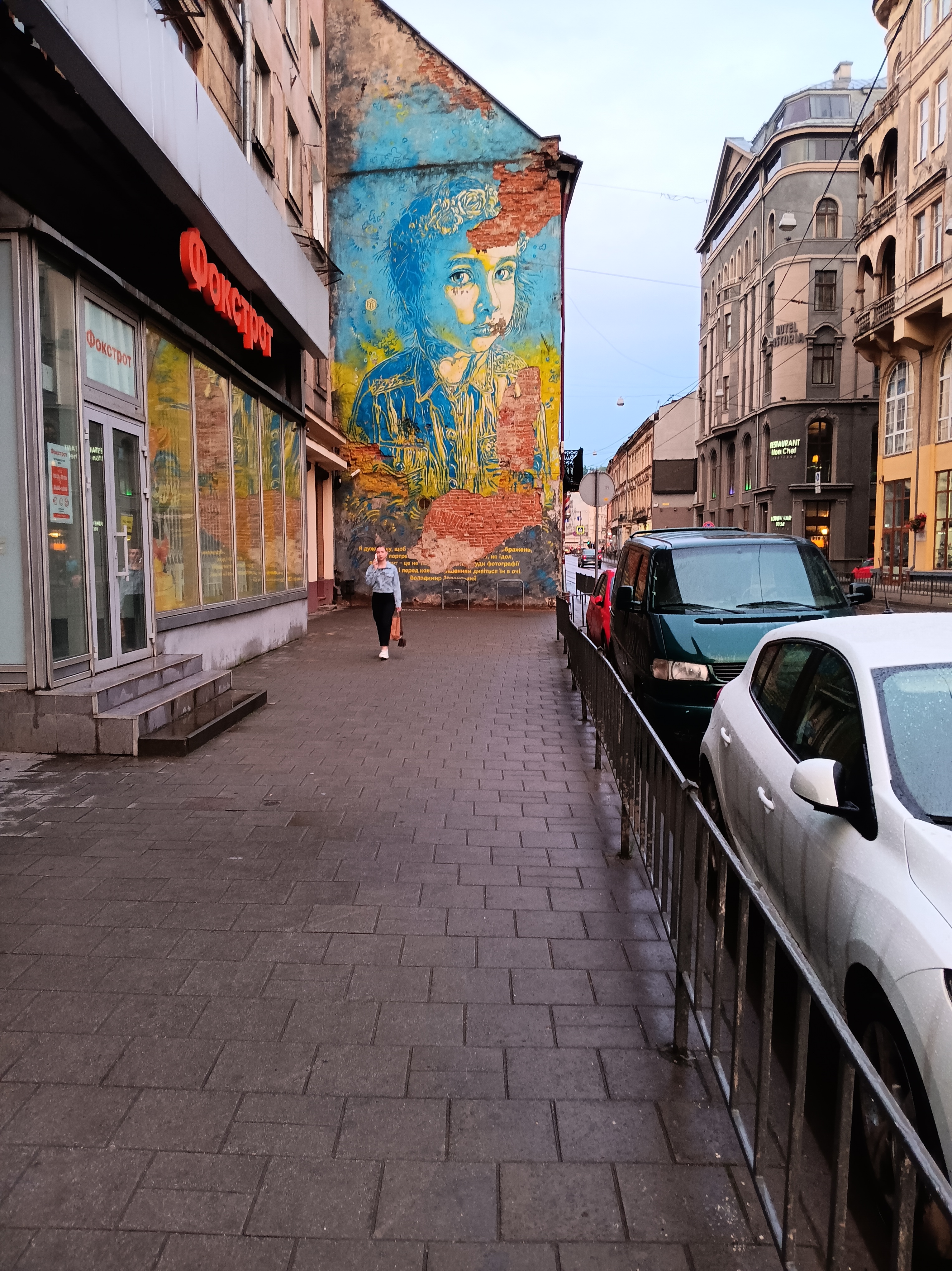
On my way home from Brygidki Prison I pass a beautiful mural that brings me back into the present. The blue and yellow of the mural reminds me of the colors of the Ukrainian flag. The braided flowers on the head perhaps symbolize this person as a women from Ukrainian. In my present sad mind, I see the the same human in both the symbol of a Ukrainian woman in this mural and the actual Ukrainian women in the 1941 photo. The paint peeling reveals red brick and an arch, but I also see an accidental thumbs-up sign in red. The mural is about two blocks west of the Opera House and thus near the center where the Lviv progroms took place.
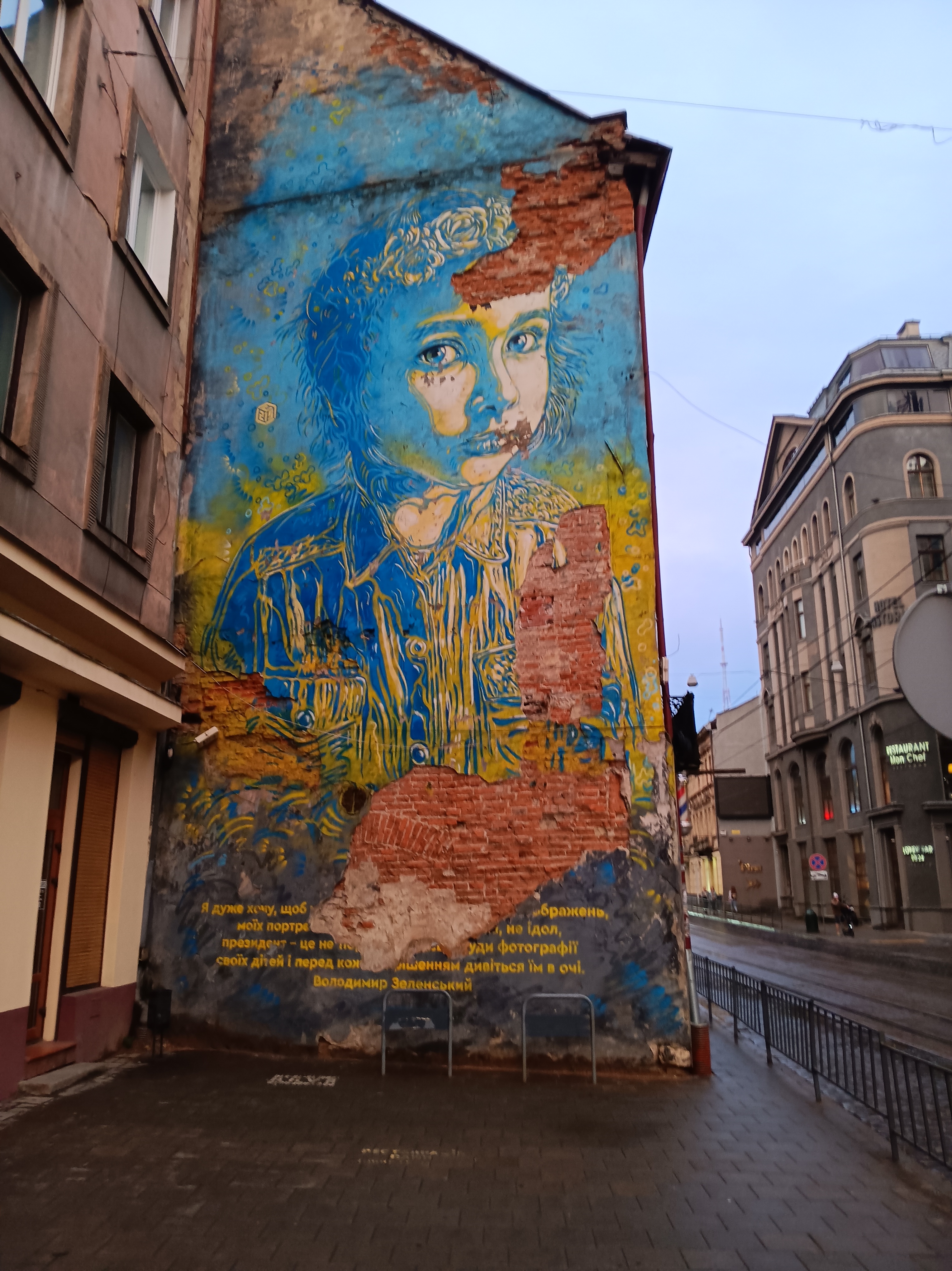
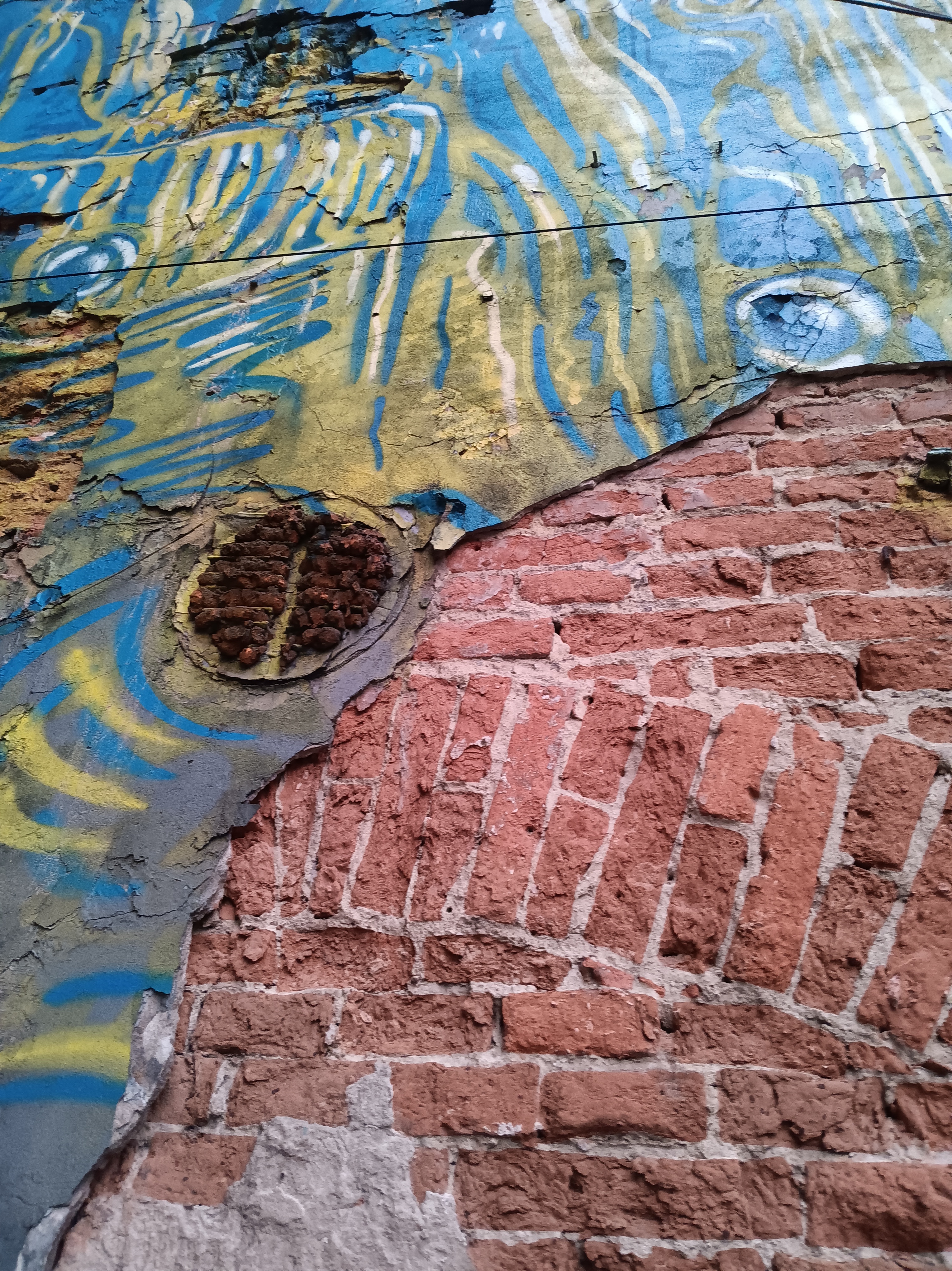
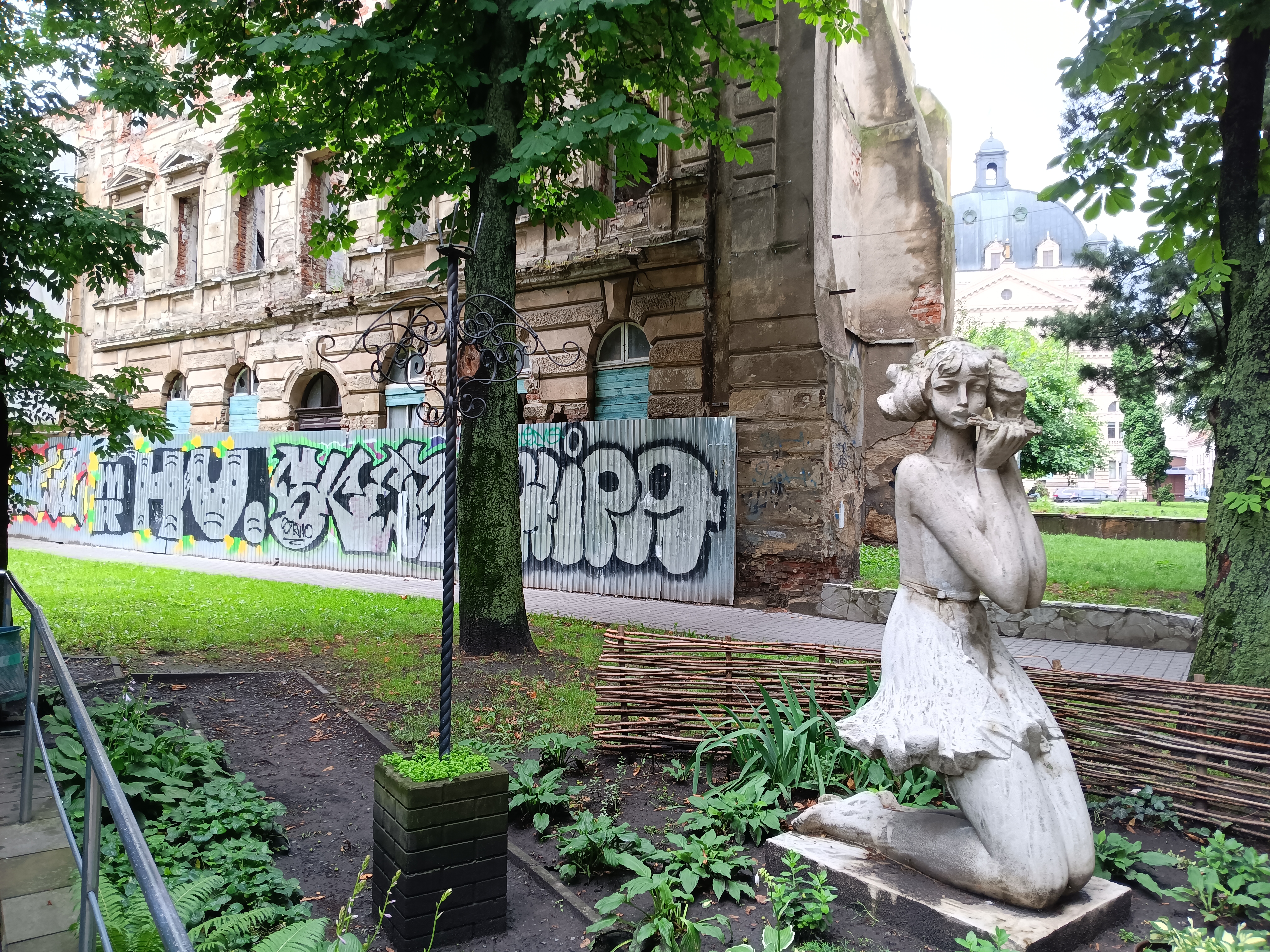
The bottom photo shows the Opera House from the north. There probably is a story in the small peaceful statue and the building directly behind it, but I do not (yet) know it.
Later that day my first Air Raid Alarm woke me up at night. In this war Vladimir Putin wants to re-establish the old Soviet Empire with the boundaries that Hitler and Stalin had agreed upon in 1939. The past is in the present and both are insane.
P.S.: Edited Oct.-20, 2024 by rewriting the last paragraph and removing some ill-fitting photos.
References:
Himka, J.-P., 2011: The Lviv Pogrom of 1941: The Germans, Ukrainian Nationalists, and the Carnival Crowd. Canadian Slavonic Papers, Vol. 53, No. 2/4, 209-243.
Plokhy, S., 2021: The Gates of Europe, a History of Ukraine, Basic Books, New York, NY.
Snyder, T., 2010: Bloodlands, Europe between Hitler and Stalin, Basic Books, New York, NY.

 Icy Seas